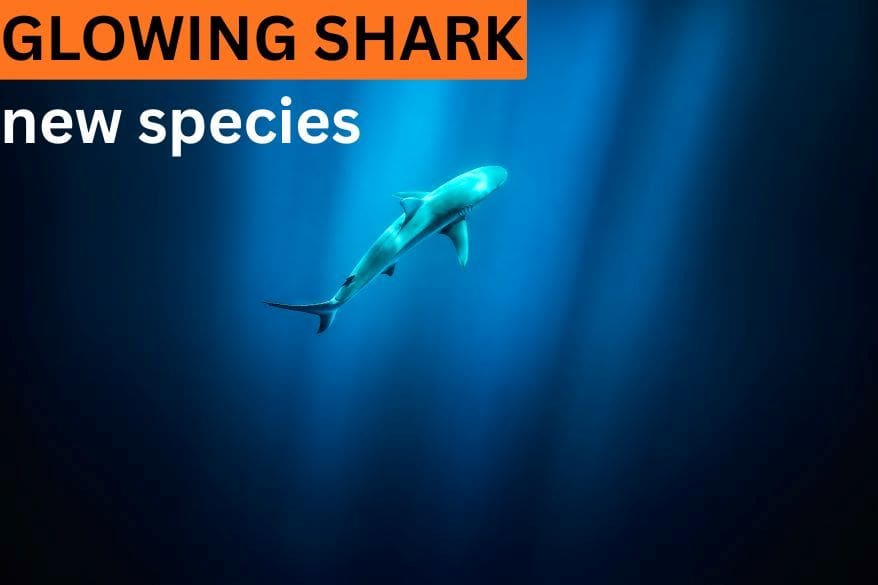
The West Australian Lanternshark grows to a maximum length of only 407 millimeters. It inhabits the deep oceans...
Deep-Sea Surprises: Lantern Shark and Porcelain Crab
Estimated reading time: 4 minutes
Researchers discovered two new species of deep-sea animals: a porcelain crab and a lantern shark. They made these discoveries using specimens collected during a 2022 expedition aboard the CSIRO research vessel (RV) Investigator. Various study teams documented the results in publications released in September 2025. In addition, they named the West Australian Lanternshark and the new Porcelain Crab species after these discoveries. During an upcoming expedition on RV Investigator, the Commonwealth Scientific and Industrial Research Organization will survey the deep-sea biodiversity of the Coral Sea Marine Park for Parks Australia. Several researchers expect to discover new species, especially another lantern shark or related organisms in the deep-sea habitat.
The West Australian Lanternshark grows to a maximum length of only 407 millimeters. It inhabits the deep oceans. This shark has a thin body and two small dorsal fins, each capped with a sharp spine. It has large eyes which are adapted to the darkness of deep waters. The lantern shark, with its distinctive features, is especially intriguing to scientists studying deep-sea adaptations. On the other hand, the Porcellanella brevidentata has length of around 15 millimeters. Its color is an opalescent hue that is somewhere between white and golden. Consequently, it is able to conceal itself behind the white leaves of its sea pen host because to this adaptation.
Hai X. L., Bonnie Y., Yi-Xuan Li, Yi-Tao Lin, Andrew M. H., Zhi Wang, Marissa M., Jian-Wen Qiu conducted the study and published it unde rthe title “Integrative Phylogenetic and Morphological Analyses Reveal Two New Species of Porcellanid Crabs and Resurrect Porcellanella picta Stimpson, 1858 (Decapoda: Porcellanidae)” in September 2025. Notably, the identification of the lantern shark highlights the diversity of the region.
ENTECH STEM Magazine has included this research in its list of the Top 10 Biology Discoveries of 2025.
Potential Benefits of the discoveries of Lantern shark and Porcelain Crab
Biodiversity Conservation and Management
- The identification of new species can contribute to a better understanding of global biodiversity and also help inform conservation efforts regarding the lantern shark and other rare deep-sea animals.
- This knowledge can be used to support the establishment and management of marine protected areas in order to ensure the protection of these newly discovered species and their habitats.
Ecosystem Monitoring and Lantern Shark and Porcelain Crab Research
- These new deep-sea species can serve as indicators of the health as well as the stability of their respective ecosystems.
- By monitoring the populations and distribution of these species, researchers can gain insights into the overall conditions of the deep-sea environments, which can inform policy decisions and guide future research priorities.
Bioprospecting and Biotechnology
- The discovery of new species, particularly in the deep-sea, may uncover novel biological compounds or adaptations with potential applications in the fields of medicine, agriculture, and industrial processes.
- This bioprospecting approach can lead to the development of new drugs, materials, or biotechnological solutions that can benefit various aspects of daily life.
Educational and Outreach Opportunities
- The fascination with new species discoveries can be leveraged to engage the public, particularly students, in learning about marine biology, biodiversity, and the importance of scientific exploration.
- Incorporating these findings into educational curricula and outreach programs can not only inspire future generations of scientists but also raise awareness about the value of protecting the world’s ecosystems.
Potential Educational and Career Opportunities: Lantern Shark and Porcelain Crab
Marine Biology and Biodiversity
- Studying the taxonomy, morphology, and ecological roles of the newly discovered lanternshark and porcelain crab species
- Investigating the distribution, population dynamics, and habitat preferences of these deep-sea organisms
- Exploring the evolutionary relationships and adaptations of these species to the unique deep-sea environment
Deep-Sea Ecology and Ecosystem Dynamics
- Examining the interactions between the newly discovered species and other members of the deep-sea community
- Analyzing the impact of environmental factors, such as temperature, pressure, and food availability, on the survival and reproduction of these species
- Developing a better understanding of the complex trophic relationships and energy flow within deep-sea ecosystems
Conservation Biology and Marine Protected Area Management
- Assessing the conservation status and threats faced by the newly discovered species
- Designing and implementing effective monitoring and management strategies for the protection of these species and their habitats
- Collaborating with policymakers and conservation agencies to inform the establishment and management of marine protected areas
Reference
Loke, H. X., Heung, B. Y. W., Li, Y. X., Lin, Y. T., Hosie, A. M., Wang, Z., … & Qiu, J. W. (2025). Integrative Phylogenetic and Morphological Analyses Reveal Two New Species of Porcellanid Crabs and Resurrect Porcellanella picta Stimpson, 1858 (Decapoda: Porcellanidae). Ecology and Evolution, 15(10), e72131. https://doi.org/10.1002/ece3.72131
Additionally, to stay updated with the latest developments in STEM research, visit ENTECH Online. Basically, this is our digital magazine for science, technology, engineering, and mathematics. Also, at ENTECH Online, you’ll find a wealth of information about many topics, including fascinating discoveries such as the lantern shark.
- Author
- Latest Posts

I am a Master’s qualified in Science with focus on Zoology and Entomology and am a passionate, curiosity-driven science enthusiast aiming to transform complex scientific ideas in a manner that are easy to understand hence, educate, and inspire.
I have an experience of working on the projects in the field of Entomology which has provided me hands-on experience with various research techniques. Besides, I have also gained experience of lab work as well as developed communication skills during the course of my bachelors and masters.
With a strong foundation in life sciences and a growing interest in Medical and Biological research, I have cultivated a writing style that merges scientific facts with creativity.
My experience in teaching has also taught me to develop an understanding of what are the interests of people and how to communicate them effectively.
I am committed to lifelong learning, actively engaging in Interdisciplinary learning, so as to broaden my perspective.