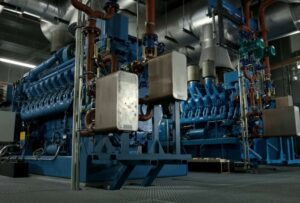
Scientists at Nagoya University have solved aluminum’s high-temperature weakness using 3D printing. This could make 3d printing of a car lighter, stronger, and more efficient.
Revolutionary 3D Printing Breakthrough Makes Cars Lighter and Stronger!

Estimated reading time: 4 minutes
Scientists at Nagoya University have solved aluminum’s high-temperature weakness using 3D printing. This could make 3d printing of a car lighter, stronger, and more efficient.
The Aluminum Problem That Engineers Have Faced for Decades
Aluminum is everywhere in modern vehicles. As a matter of fact, it’s lightweight and relatively strong. However, at temperatures above 200°C, aluminum loses its strength dramatically. To illustrate, engine parts and turbine components need materials that stay strong under extreme heat. Prior to this breakthrough, engineers used heavier metals like steel. With this in mind, vehicles became heavier and consumed more fuel. To put it another way, aluminum’s heat weakness limited its automotive applications.
Why Traditional Manufacturing Falls Short
In general, conventional aluminum alloys crack or become brittle at high temperatures. What’s more, adding strengthening elements like iron usually makes aluminum too fragile. As can be seen, this created a major engineering challenge.
Also Read: Basics of Automobile Engineering
How 3D Printing Changes Everything
Nagoya University researchers developed a groundbreaking solution using metal 3D printing. To explain, they used a process called laser powder bed fusion. As has been noted, this technique melts and cools metal powders incredibly fast. At this point, something amazing happens during rapid cooling. Elements like iron, normally avoided in aluminum, get trapped in special atomic structures. As a result, these elements strengthen the aluminum instead of weakening it.
The Science Behind the Breakthrough
In detail, the researchers created Al-Fe-Mn-Ti alloys (aluminum-iron-manganese-titanium). To sum up, these new alloys remain strong and flexible up to 300°C. What’s more, they outperform all other 3D-printed aluminum materials currently available. Another key point involves the cooling speed. In like manner, rapid solidification prevents the formation of brittle iron structures. Instead, it creates strengthening micro- and nano-structures throughout the material.
Real-World Applications for Vehicle Manufacturing
For the most part, these new alloys enable lightweight compressor rotors and turbine components. In addition, automotive engineering applications could revolutionize vehicle design. By comparison, traditional materials are much heavier and less efficient. Above all, lighter vehicles consume less fuel and produce fewer emissions. At the same time, the new alloys use low-cost, recyclable elements. With attention to sustainability, this breakthrough supports environmental goals.
Also Read: Combustion of Aluminum Particles
STEM Career Opportunities in Advanced Manufacturing
At this instant, students interested in science and engineering have exciting opportunities ahead. To enumerate, several career paths connect directly to this research.
Materials Science and Engineering Careers
As an illustration, materials engineers design and test new alloys like these aluminum composites. In essence, they study how elements behave under different conditions. Entry-level roles include materials engineer, quality control analyst, and research assistant. Being that materials science combines chemistry, physics, and engineering, it offers diverse opportunities. For the purpose of understanding career paths, students can explore STEM careers in advanced manufacturing.
3D Printing and Additive Manufacturing
Sooner or later, additive manufacturing will transform how we make products. At present, universities offer specialized programs in 3D printing technology. To point out, these programs cover CAD design, materials science, and hands-on laboratory work. Take the case of Carnegie Mellon University and Penn State University. In fact, they provide dedicated master’s programs in additive manufacturing. Moreover, many institutions integrate 3D printing into engineering curricula.
Automotive and Mechanical Engineering
In reality, automotive engineering focuses on vehicle design and lightweight materials. So far, mechanical engineering degrees often include automotive concentrations. All things considered, these programs emphasize hands-on learning through labs and maker spaces. In this case, students learn about vehicle design, advanced manufacturing, and sustainability. At length, graduates work in automotive manufacturing, motorsports, and renewable energy sectors.
Educational Pathways for High School Students
At first, high school students can explore STEM through electives and robotics clubs. To be sure, many schools now offer 3D printing labs and engineering programs. As well as classroom learning, students benefit from maker spaces and design competitions. In short, no extensive prior knowledge is needed to start learning engineering concepts. Together with math, physics, and chemistry, students develop technical skills in CAD software and programming.
Industry Trends and Future Outlook
By and large, 3D printing revolutionizes manufacturing across multiple industries. In similar fashion, materials engineering drives innovation in automotive and aerospace applications. All in all, these fields offer strong job prospects and competitive salaries. To that end, the Nagoya University research demonstrates how innovative thinking solves real-world problems. In conclusion, it opens exciting opportunities for future scientists and engineers.
References:
- Takata, N., Kodaira, H., Sekizawa, K., Suzuki, A., & Kobashi, M. (2025). Design of high-performance sustainable aluminum alloy series for laser additive manufacturing. Nature Communications, 16, Article 67281. https://doi.org/10.1038/s41467-025-67281-8
- Nagoya University. (2025, December 16). How 3D printing creates stronger vehicle parts by solving aluminum’s high-temperature weakness. Nagoya University News. https://en.nagoya-u.ac.jp/news/articles/how-3d-printing-creates-stronger-vehicle-parts-by-solving-aluminums-high-temperature-weakness/
- Author
- Latest Posts

Charudatta Pathak was a student at St. Aloysius High School in Bhusawal, established in 1874, making it one of India’s oldest convent institutions. He earned his bachelor’s degree in mechanical engineering from SSVPS College of Engineering, Dhule in 1995, demonstrating exceptional academic achievement. Thereafter, he launched his career as a CNC programmer in a toolroom. He has utilized FANUC, Deckel, Maho, and Mikron controllers to operate 2-axis and 3-axis machines for the fabrication of jigs, fixtures, dies, and molds. He commenced his career as an academic in 1996, when he assumed the role of lecturer at SSVPS College of Engineering, Dhule. Additionally, he earned his post-graduate degree in CAD/CAM from L. D. College of Engineering, Ahmedabad, in 2000, and then acquired a Ph.D. from COEP in 2011 while concurrently engaged in teaching. Until 2023, he occupied many academic roles, including lecturer, assistant professor, professor, dean, principal, director, and vice chancellor at both public and private universities throughout India. From 2008 to 2010, he served as the project lead in the CAE department of a European multinational firm. During his 28-year professional tenure, he identified a need for dependable books targeted at students in grades 8 to 12, particularly for nascent career planning. He founded ENTECH Digital Magazine, a free monthly publication available on entechonline.com and magzter.com. Teens with a strong interest in Science, Technology, Engineering, and Mathematics (STEM) who aspire to pursue careers in these fields may find ENTECH Digital Magazine beneficial.