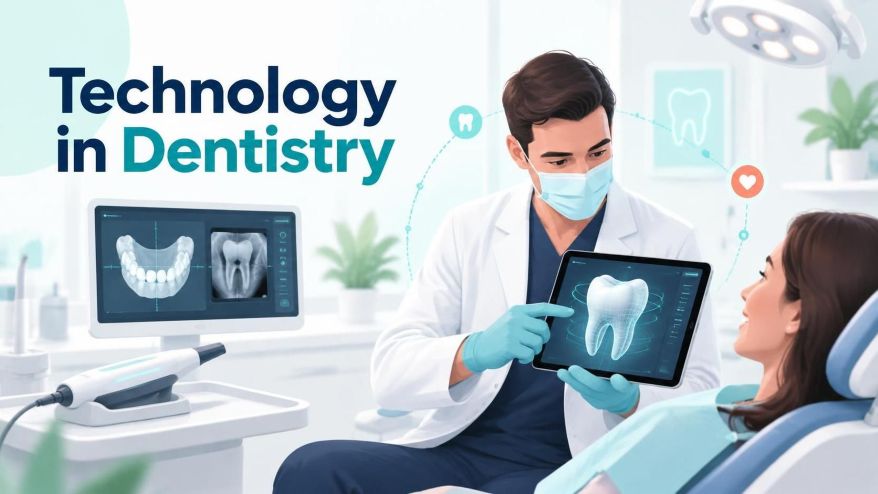
Discover how AI and modern technology are transforming dentistry, from digital scanners and imaging to treatment planning. Learn about the tools and resources shaping the future of oral health.
Modern dentistry is becoming more precise, efficient, and data-driven. In particular, the integration of AI and technology in dentistry – such as digital imaging, intraoral scanners, and 3D printing—is fundamental in changing how dentists diagnose problems, plan treatments, and create restorations. These tools not only help clinicians work more accurately but also give patients clearer information about their oral health.
Understanding these advances matters for anyone interested in science, technology, or healthcare careers. The field combines engineering, materials science, software, and clinical practice. Resources that explain both the technology and its real-world use can help students and curious readers see how these systems actually work.
Dental Reviewed covers developments in dental technology, equipment performance, and related research. The platform publishes independent equipment evaluations, industry updates, and educational content aimed at both professionals and general readers.
Why Technology Matters in Dentistry?
Dentists rely on specialized tools for almost every stage of care. Diagnostic imaging helps identify problems that are not visible to the eye. Digital scanners capture detailed 3D models of teeth instead of traditional molds. CAD/CAM systems design and manufacture crowns and other restorations. Artificial intelligence is now being tested and used to highlight features on radiographs and support treatment planning.
Each of these technologies affects speed, accuracy as well as patient experience in dentistry. A scanner that captures difficult areas more reliably can reduce the need for remakes. Imaging software that integrates cleanly with practice systems can save time. New materials may offer better aesthetics or durability, but only if they perform consistently in clinical conditions.
Independent evaluations help separate marketing claims from practical performance. Factors such as ease of use, software compatibility, maintenance needs, and long-term costs often matter as much as headline specifications.
How AI Is Entering Dental Practice
Artificial intelligence is one of the faster-moving areas in dental technology. In fact, the broader adoption of AI and technology in dentistry is reshaping how clinics handle both diagnostic and operational tasks. Some systems analyze dental radiographs to flag potential cavities, bone loss, or other findings for the dentist to review. Meanwhile, other platforms assist with treatment planning or administrative tasks.
A 2026 survey of 300 licensed dentists examined how professionals were adopting these tools in everyday workflows. The results showed growing interest alongside practical questions about reliability, integration, and the continued need for professional judgment. AI can highlight patterns in images, but final decisions still rest with the clinician.
Broader research also explores related issues. Dental Reviewed has examined topics such as the financial accessibility of dental care across different regions and the role of anxiety in patient behavior. These factors influence whether people receive care and how technology is used during appointments.
AI and technology in dentistry: What Makes Independent Equipment Reviews Useful?
Dental equipment is expensive and expected to last for years. An intraoral scanner, imaging system, or dental chair can change daily workflows. Performance in a real clinical setting often differs from controlled demonstrations.
Reviews written by practicing dentists and other dental professionals evaluate products on criteria such as build quality, ease of use, clinical performance, manufacturer support, and overall value. Scoring systems allow readers to compare assessments more easily. These evaluations do not replace hands-on testing or supplier discussions, but they can help identify important questions before a major purchase.
Long-term costs also matter. Many digital systems involve subscriptions, software licenses, training and also proprietary accessories. Looking beyond the initial price gives a clearer picture of total ownership cost.
Oral Health Education and Emerging Topics
Patients increasingly look for information before appointments. Clear explanations of conditions such as enamel defects, gum inflammation, or the reasons for procedures like root canals and implants can help people understand their options and know when to seek care. Educational content that translates clinical terms into plain language supports this process.
The same is true for consumer products. Electric toothbrushes, specialized toothpastes, and other oral-care items make specific claims. Discussions of available evidence around ingredients and functions give readers additional context alongside professional advice.
Beyond consumer products, the continuous emergence of AI and technology in dentistry is drastically altering patient education and treatment expectations. To keep professionals and patients informed, the Dental Reviewed blog publishes coverage of industry developments, scientific findings, professional topics, and oral health education. Articles range from new technologies to established treatment approaches and practical considerations for different readers.
AI and Technology in Dentistry: Careers and the Next Generation
Dental students and early-career professionals must master both clinical knowledge and the tools they will use. Understanding how digital impressions work is useful; comparing different scanner systems and seeing how they fit into real workflows adds practical context. Resources that cover equipment, materials, software, and practice considerations can supplement formal education.
For students interested in STEM, dentistry offers clear intersections with engineering (scanner hardware and imaging), computer science (AI and practice software), and materials science (restorative materials and 3D printing). Following how these technologies evolve provides a concrete view of applied science in healthcare.
AI and technology in dentistry: Looking Ahead
AI and digital tools will continue to influence diagnostics, treatment planning, and laboratory work. Their value depends on clinical evidence, integration with existing systems, and whether they solve real problems for patients and practices. Independent reporting and evaluations help track which developments move from technical capability to everyday use.
For readers exploring technology in healthcare, following these changes offers insight into how engineering, data, and clinical practice come together. Platforms that combine equipment analysis, research, and education – such as Dental Reviewed – provide one ongoing source of context as the field advances.
This article provides a clear and balanced overview of how AI and digital technologies are influencing modern dentistry. It correctly emphasizes that tools such as intraoral scanners, imaging systems, and AI-assisted radiograph analysis improve efficiency and diagnostic support, while final clinical decisions remain with the practitioner. The discussion of practical factors—software integration, long-term costs, and real-world performance—adds useful context beyond manufacturer specifications.
The piece also appropriately notes the growing but measured adoption of AI, supported by reference to recent professional surveys, and links technological advances to broader issues such as access to care.
Note: The article includes external links to third-party services; readers should independently evaluate any referenced platforms before engaging.
I am an inspirational writer and emerging science blogger with a deep-rooted passion for understanding and sharing the wonders of the world around us. My journey began with a Bachelor of Science in Chemistry from AKI’s Poona College of Arts, Commerce and Science, where I developed not only a strong foundation in scientific principles but also a mindset that values curiosity, observation, and critical thinking. Studying chemistry has taught me to approach problems with logic, to look beyond the obvious, and to see patterns where others might only see complexity. These experiences have shaped the way I perceive life and influence the way I express my thoughts, both scientifically and creatively.
I have always believed that knowledge is only as powerful as the way it is shared. This belief has guided me to create content that bridges the gap between science and everyday life. I aim to simplify complex scientific ideas so they become approachable, relatable, and engaging for everyone—whether someone has a formal background in science or is simply curious about the world. Science, in my view, is not confined to textbooks and laboratories; it is a way of thinking, understanding, and connecting with the world around us. By making science accessible, I hope to inspire curiosity, ignite learning, and encourage people to see the beauty and relevance of scientific discovery in their daily lives.
Alongside my love for science, I am deeply passionate about motivational writing. I believe words carry the power to transform perspectives, encourage self-reflection, and inspire action. By combining analytical thinking with creativity, I create content that is intellectually stimulating yet emotionally resonant. Whether I am breaking down a chemical concept, exploring a scientific phenomenon, or crafting motivational narratives, my goal is to communicate ideas in a way that is clear, meaningful, and impactful.
Through my work, I strive to empower my readers - not just by helping them understand the science around them, but by inspiring them to grow, learn, and realize their full potential. Every article, post, or story I write reflects my commitment to turning knowledge into inspiration. I want to spark curiosity, encourage self-improvement, and show that learning and personal growth are deeply connected. For me, writing is not just a craft; it is a way to touch minds, connect hearts, and make ideas come alive in a way that truly resonates.