The superior temporal gyrus extracts critical speech features and resets neural activity to mark word boundaries. This allows the brain to transform fluent sound streams into understandable words in real time.
Speech Processing in the Brain: Understanding Language and Communication

Speech feels effortless when you chat with friends. Every conversation hides a complex journey, though. Sound first enters your ear as a pressure wave. Delicate hairs inside the cochlea turn those waves into electrical signals. Nerves then carry the signals toward the brain. Speech processing in brain regions begins in earnest at this point. Different areas split the workload with remarkable neatness. Some regions decode basic sounds very early. Other zones attach meaning within milliseconds. This entire sequence runs far faster than speech itself. You rarely notice any of the effort. Your brain also fills gaps automatically as you listen. It predicts words before they finish completely. It filters distracting background noise as well. Understanding this machinery explains why talking feels so natural. So far, scientists have mapped most of the route.
Key Takeaways: Speech Processing in Brain
- The auditory cortex starts decoding every spoken word.
- The temporal lobe stores the brain’s main language tools.
- Word boundaries get marked without any silent gaps.
- Prediction makes speech processing in brain feel instant.
- Speech comprehension blends sounds, memory, and context.
The Auditory Cortex: A Hub for Speech Processing in the Brain
While studying speech processing in Brain, the auditory cortex sits near the top of the hearing pathway. It receives raw sound before any other cortex. This region lives inside the temporal lobe too. Neurons here respond in a precise, ordered way. Frequencies map neatly across its folded surface. Speech sounds claim a large share of that map. Researchers have watched this cortex at work closely. For example, scientists in one famous study reconstructed intelligible speech directly from these neural signals. The results amazed many hearing specialists. In fact, brains store far more than simple loudness. They keep rich acoustic detail for every voice. Each neuron prefers a small range of sounds. As a result, together, these cells form a living sound map. That map supports every later language stage. Ultimately, each conversation leans on this busy region.
Specialised Neurones Handle Speech Processing in the Brain
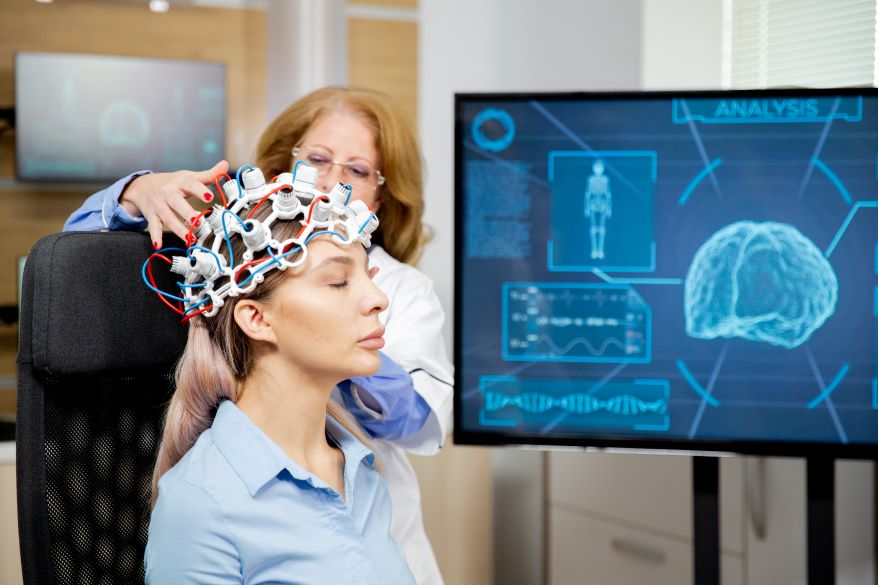
While studying speech processing in the brain, different neurones answer to different features of sound. For instance, some detect the start of a tone, while others track rapid changes in pitch. This division of labor speeds up the whole system. In fact, specialised cells work in parallel all the time. However, their teamwork begins below the cortex as well. First, brainstem relays sharpen the signal; then, cortex neurons refine that sharpened input. Moreover, studies of speech information processing show a clear segmentation window. Specifically, the brain gathers sounds in small time chunks, and each chunk lasts for tens of milliseconds. Remarkably, this rhythm matches the pace of spoken syllables neatly. It also matches the flow of natural conversation. As a result, in effect, the cortex slices speech into manageable pieces. Ultimately, every slice carries enough detail for meaning.
Sound Features Shape Neural Responses
Speech carries more than words alone. Pitch, loudness, and rhythm travel along together. The auditory cortex tracks every one of these features. It separates a friend’s voice from background noise. It follows fast talkers without losing track. Neural populations lock onto these acoustic cues. Their responses change with attention too. Listeners who focus on one voice boost its signal. This boost happens inside the auditory cortex itself. Attention thus shapes what the brain hears clearly. Such effects appear within fractions of a second. They help people follow one speaker in a crowd. As can be seen, the cortex is not a passive receiver. It actively selects useful parts of sound. This selection feeds the next stage of language work.
The Temporal Lobe and Its Language Centers
The temporal lobe carries a heavy language workload. It hosts the auditory cortex on its upper surface. It also holds several famous speech zones. Damage to this lobe affects hearing and talking. People may understand words but cannot speak properly. Others speak fluently yet grasp little meaning. These patterns guided early brain science. Modern imaging confirms most of those claims. The left hemisphere usually controls spoken language processing. The right side adds tone and emotion. Both sides work together during conversation. Temporal lobe circuits run the whole process. They connect sound analysis to memory systems. The temporal structure of natural language processing follows a layered hierarchy in the brain. Small sound units map to lower layers. Larger meanings map to higher layers neatly.
The Temporal Lobe Houses Language Centers
Wernicke’s area anchors comprehension on the left side. It rests in the posterior temporal region. This zone links sounds to their meanings. The link happens through dense neural wiring. Damage here produces fluent but empty speech. Listeners hear real words with little sense. Broca’s area sits farther forward instead. It handles speech production and grammar. These two centers talk continuously during talk. Their conversation forms the basis of language. Most experts treat them as parts of one network. Flow moves from hearing to meaning to response. Neuroanatomy studies describe this pathway in detail. The pathway explains classic aphasia patterns. Specific injuries cause specific language losses. This mapping helped doctors for over a century.
How the Temporal Lobe Aids Speech Processing in Brain
The temporal lobe connects fresh sounds to stored words. Memory systems live close to speech zones here. This closeness speeds up word recognition greatly. Hearing “apple” activates stored knowledge fast. Sound, meaning, and memory fuse within this lobe. Such fusion makes comprehension feel automatic. The lobe also tracks sentence structure carefully. It notes who did what to whom quickly. Grammar rules engage separate temporal networks. These networks respond within milliseconds of input. Brain scans reveal their rapid activity clearly. Large language models mimic this hierarchy nowadays. Their layered design mirrors temporal lobe structure. Yet real brains still outperform these models. They handle noise, accents, and speed with ease. In short, the temporal lobe orchestrates meaning efficiently. Every conversation depends on its swift work.
Word Boundaries: A Speech Processing in Brain Challenge
People seem to hear individual words without effort. However, spoken sentences contain few clear pauses, and words often run together in fast speech. Despite this, listeners still split the sound stream accurately. As a result, this skill rests on word boundaries detected by the cortex. Critically, no visible gap marks where a word begins; instead, the brain finds edges through other clever cues. For example, stress patterns offer one strong signal, while vowel timing provides another useful clue. Additionally, unexpected changes in pitch also help. Remarkably, all these cues combine within a few hundred milliseconds, and brain cells mark each boundary as it passes. Furthermore, this marking occurs even during continuous chatter. In fact, the process runs automatically and quietly. Ultimately, it supports speech processing in the brain from beginning to end.
Frequently Asked Questions: Speech Processing in Brain
Where does speech processing in the brain start?
Speech processing in brain circuits begins in the auditory cortex. Sound signals arrive there first. Cortical neurones then decode their features
What part of the brain controls language?
The temporal lobe holds most language centres. Wernicke’s area handles comprehension there. Broca’s area manages speech production nearby.
Why does prediction matter during listening?
Prediction lets the brain prepare for upcoming words. Prepared brains understand speech faster. Prediction also repairs unclear or missing sounds.
References
- Zhang, Y., Leonard, M. K., Bhaya-Grossman, I., Gwilliams, L., & Chang, E. F. (2025). Human cortical dynamics of auditory word form encoding. Neuron. https://doi.org/10.1016/j.neuron.2025.10.011
- Li, Z., & Zhang, D. (2024). How does the human brain process noisy speech in real life? Insights from the second-person neuroscience perspective. Cognitive neurodynamics, 18(2), 371–382. https://doi.org/10.1007/s11571-022-09924-w
- Author
- Latest Posts

Ashwini Kshirsagar holds a graduate degree in Chemistry and a postgraduate degree in Environmental Science from Shivaji University, Kolhapur. With a strong foundation in scientific principles and a creative flair, she blends her expertise in environmental science with skills in technical writing, graphic design, and video editing. Proficient in Adobe software, Ashwini excels at transforming complex scientific concepts into clear, engaging, and visually compelling content. Her unique ability to merge science and storytelling allows her to create impactful communication materials that are both informative and accessible to a wide audience.