Cancer metabolism explained covers how tumor cells use fuel.
Cancer Biochemistry Explained: Tumor Metabolism, Oxidative Stress, Vitamins and New Therapies

Estimated reading time: 15 minutes
Cancer starts in a single cell. That cell, however, ignores normal rules. It divides without stopping. Meanwhile, its biochemistry also changes completely. Cancer metabolism explained simply starts with glucose. Tumor cells, for example, consume sugar at wild rates. They then rebuild it into new cell parts. As a result, this behavior fuels rapid growth. Scientists call this metabolic reprogramming. Above all, cancer is a metabolic disease too. Mutations, in turn, drive the change. They alter enzymes and signaling pathways. Moreover, every tumor type shows its own pattern. Therefore, understanding this science matters deeply. New drugs now target these metabolic steps. Consequently, the results give patients fresh hope. Every cell burns fuel for energy. Normally, mitochondria power most healthy cells. Cancer cells, however, flip this switch. Instead, they favor a different chemical route. Ultimately, that simple idea changes cancer treatment. Let’s explore the chemistry behind cancer.
Key Takeaways
- Cancer metabolism explained covers how tumor cells use fuel.
- Mutations change DNA repair and drive tumor growth.
- The Warburg effect describes aerobic glycolysis in cancer.
- Oxidative stress damages DNA and supports tumor signals.
- Vitamins affect cancer risk in dose-dependent ways.
- Platinum drugs and immunotherapy treat cancer biochemically.
What Makes Cancer Cells Biochemically Different?
Cancer cells break most cell rules. However, normal cells stop dividing when damaged. In contrast, cancer cells divide without any brakes. Their DNA carries many mutations. These mutations, in turn, activate growth genes. They also silence protective genes. Moreover, cancer cells resist death signals too. They recruit blood vessels for food. In addition, cancer cells even spread to distant organs. This process is called metastasis. Biochemically, cancer cells reprogram their fuel use. Instead, they prioritize growth over efficiency. Ultimately, every change traces back to chemistry. Scientists study these traits as cancer hallmarks. Therefore, understanding them guides new therapies. For example, the hallmarks frame drug design. Each hallmark offers a target. Meanwhile, healthy cells follow a strict schedule. Checkpoint proteins pause the cycle. Cancer cells, however, lose these checkpoints. Mutations hit the genes that build them. Consequently, repair fails and errors pile up. As a result, abnormal proteins accumulate quickly.
Cancer Metabolism Explained in Simple Terms
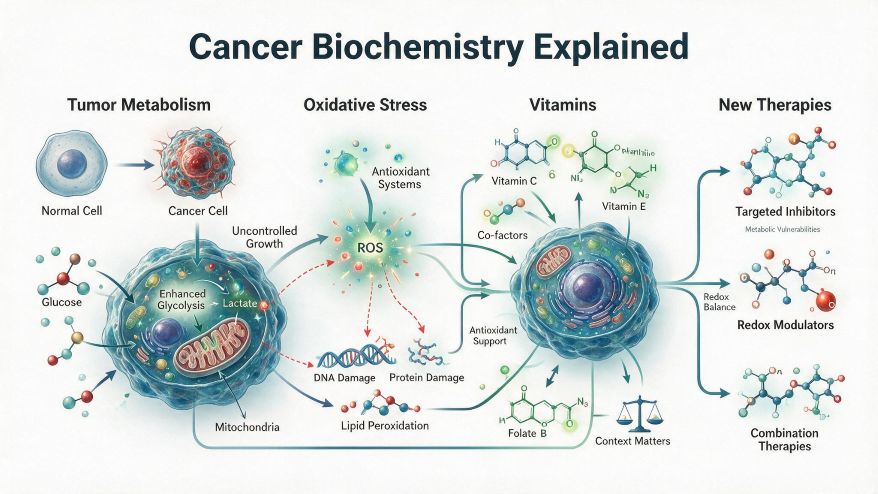
Cancer metabolism explained in simple terms starts with fuel. Tumor cells use glucose, glutamine, and fats. They need these for building blocks. Each division demands new membranes. Every division also needs fresh DNA. So metabolism must supply raw materials. Healthy cells use oxygen for energy. Cancer cells mix many fuel pathways. This flexibility keeps them alive. It also helps them resist drugs. Metabolism changes appear early in cancer. Some scientists call them hallmarks. Others treat them as drug targets. The key idea stays simple. After all, cancer cells are metabolic opportunists. They use whatever nutrients exist. Glutamine feeds many tumor types. Lipids build new cell membranes. So cancer metabolism explained is practical chemistry. This view reshapes cancer treatment worldwide. One review ties metabolism to precision therapy.
Cancer Metabolism Explained: Tumor Metabolism
Tumor metabolism differs from normal cell chemistry. Cancer cells prefer quick energy routes. They convert glucose into lactate. This happens even with oxygen present. Aerobic glycolysis defines this pattern. In contrast, healthy cells oxidize glucose fully. Tumor metabolism also uses glutamine heavily. That amino acid feeds the TCA cycle. Cancer cells import fatty acids too. They build lipids from these imports. Every pathway feeds cell division. Enzymes control each metabolic step. Mutations often change these enzymes. For example, IDH mutations alter metabolism. Some drugs now block these enzymes. Pyruvate kinase controls a key step. Lactate production marks active tumors. So cancer metabolism explained links genes to fuels. This link opens new treatment doors. Scientists keep mapping tumor metabolic networks. New imaging scans track glucose uptake. PET scans use this very trick. Doctors watch tumors light up. Each scan reveals metabolic activity.
Cancer Metabolism Explained: How Tumors Feed
Cancer metabolism explained shows how tumors feed. In particular, tumors need constant nutrient supply. To achieve this, they grow blood vessels for delivery. This process is called angiogenesis. These new vessels bring glucose and oxygen. They also bring amino acids and fats. Meanwhile, cancer cells sense nutrient levels. As a result, they adjust pathways as supplies change. However, starvation does not stop them easily. Instead, they scavenge proteins through autophagy. In addition, cells even recycle their own parts. This survival skill, therefore, drives tumor growth. Scientists call this metabolic plasticity. Consequently, targeting it may stop resistance. Some drugs, for example, cut off blood flow. Others block nutrient transporters. GLUT1 moves glucose into cells. Similarly, autophagy recycles cellular components. Thus, cancer metabolism explained becomes a therapy map. Nevertheless, each new target needs careful testing. Scientists then test these drugs in clinical trials. So far, early results show real promise.
Cancer Metabolism Explained: The Warburg Effect
Otto Warburg studied tumor chemistry in the 1920s. In particular, he noticed cancer cells ferment glucose. They made lactate even with oxygen. Meanwhile, healthy cells prefer oxidative respiration. This strange choice, therefore, puzzled scientists. Warburg won a Nobel Prize for this work. His observation became the Warburg effect. The effect describes aerobic glycolysis. Cancer cells burn glucose inefficiently. Yet, they still thrive and multiply. So, how can this be beneficial? The answer lies in biosynthesis. Specifically, glycolysis feeds side pathways. These pathways make nucleotides and amino acids. They also produce NADPH for defense. As a result, waste becomes useful building material. Lactate itself shapes tumor behavior. As well as fueling growth, aerobic glycolysis supports division. This, in turn, explains a key cancer mystery. The Warburg effect now guides imaging and drugs. For example, FDG-PET scans rely on this principle. Therefore, modern research still builds on Warburg’s insight.
The Warburg Effect in Cancer Metabolism Explained
Why do cancer cells keep this inefficient route? The Warburg effect offers several payoffs. First, glycolysis works without oxygen. Tumors often outgrow their blood supply. So oxygen runs low inside them. Glycolysis still produces ATP quickly. Second, intermediates feed biosynthetic pathways. The pentose phosphate pathway makes ribose. That sugar builds DNA and RNA. Glycolysis also provides serine and glycine. These amino acids support methylation reactions. Third, lactate acidifies the surroundings. This acidity helps tumors invade tissue. It also weakens immune attack. So the effect is not wasteful. It is a clever survival strategy. Scientists now target this pathway. New drugs block glycolysis enzymes. Others interfere with lactate export. So immune cells attack tumors better. These efforts show real promise. Clinical trials test these metabolic inhibitors. Early data look encouraging for patients.
DNA Damage and Mutations
Every cell faces daily DNA damage. For example, sunlight, chemicals, and errors cause it. Fortunately, cells repair most damage quickly. Specialized proteins find the breaks. In particular, DNA repair systems fix many lesions. Base excision repair handles small changes. Meanwhile, nucleotide excision repair removes bulky damage. Mismatch repair fixes copying errors. However, double-strand breaks need heavy machinery. Cells use two main repair routes. First, non-homologous end joining works fast. In contrast, homologous recombination reads a template. If repair fails, permanent mutations remain. Those mutations can, in turn, switch on cancer genes. They can also switch off protectors. Consequently, repair defects link to many cancers. BRCA mutations, for example, disable one repair route. Therefore, repair science matters for cancer.
New drugs, moreover, exploit these repair weaknesses. PARP inhibitors trap repair proteins. As a result, cancer cells then die from DNA breaks. Healthy cells survive the treatment. This idea, therefore, changed ovarian cancer care. Ultimately, the repair machinery offers a real target.
Mutations accumulate over many years. Each mutation gives a small advantage. Cells with advantages divide more. Eventually, a tumor emerges. Scientists call this multistep carcinogenesis. Most mutations are harmless passengers. A few act as cancer drivers. Drivers push cells toward malignancy. Oncogenes promote growth when mutated. Tumor suppressors normally restrain growth. When suppressors fail, growth explodes. Mutation patterns differ across cancers. Lung cancer shows many mutations. Childhood cancers show fewer changes. Each tumor carries a unique mutation profile. That profile guides treatment choices. Doctors call this genomic profiling. It personalizes cancer care. Researchers map these profiles with DNA sequencing. The data reveal which drugs might work. As a result, therapy becomes more precise. Every tumor tells its own genetic story. Understanding that story saves lives. In short, mutations are the engine of cancer.
Oxidative Stress and Cancer

Cells burn oxygen to make energy. This process creates reactive species. These molecules are called ROS. ROS can damage DNA, lipids, and proteins. Low levels act as signals. In contrast, high levels cause oxidative stress. Oxidative stress occurs when damage wins. The balance depends on antioxidants. Cells make antioxidant enzymes. They also use dietary antioxidants. Enzymes such as catalase fight free radicals. Vitamins C and E neutralize radicals. When defenses fail, mutations accumulate. Cancer cells raise ROS for their own benefit. They use ROS to drive growth signals. Yet too much ROS kills them. This double edge fascinates researchers. Our science magazine explores how antioxidants work in the body. Some supplements behave differently at high doses. So balance matters more than extremes. Healthy diets deliver antioxidants naturally. Colorful fruits and vegetables help most.
How Oxidative Stress Helps Tumors
Oxidative stress and cancer metabolism explained connect deeply. ROS shape how tumors use fuel. They activate stress response pathways. These pathways protect cancer cells. NRF2 is a master regulator here. It turns on antioxidant genes. Many tumors hijack NRF2 activity. This gives them drug resistance. ROS also stabilize HIF1 protein. HIF1 drives glycolysis in tumors. So oxidative stress supports the Warburg effect. At the same time, excess ROS triggers death. Drugs can push ROS past a limit. Then cancer cells self-destruct. Scientists exploit this toxic threshold. They design drugs that raise ROS. Some agents block antioxidant defenses. This strategy kills resistant tumors. NRF2 and HIF1 are key targets. New research explores both carefully. Clinical trials test these approaches now. Early results show durable responses. This field grows quickly.
Vitamins, Nutrients and Tumor Growth
Vitamins are small molecules with big jobs. They help enzymes perform chemistry. Some vitamins act as antioxidants. Others influence gene activity. Diet supplies most vitamins daily. Cancer risk depends on vitamin status. Vitamin D shows protective links. Folate supports DNA synthesis safely. High-dose supplements may backfire. Beta-carotene pills raised lung cancer risk. That finding shocked researchers. So dose matters for every nutrient. Nutrient balance affects tumor growth. Tumors also steal nutrients aggressively. They demand glucose and glutamine. Cancer cells store lipids for membranes. So nutrition interacts with cancer constantly. Some nutrients fuel tumor metabolism directly. Vitamin B7, also called biotin, supports cell division. ENTECH reports new evidence on this vitamin. Patients should ask doctors before supplements. Whole foods beat pills for most people. Every plate sends chemical signals.
Nutrients do not cause cancer alone. However, they modify risk in complex ways. Obesity raises risk for many cancers. Excess fat, in turn, alters hormone levels. Those hormones then drive cell division. So, body weight shapes cancer risk. Meanwhile, healthy eating patterns help prevention. Mediterranean-style diets show benefits. In particular, fiber, vegetables, and fruits matter. Processed meats, however, raise colorectal risk. Alcohol also increases several cancer types. Therefore, each choice sends a chemical message. Scientists study these effects closely. Moreover, nutrient status also affects therapy. Malnourished patients, for example, tolerate drugs poorly. Good nutrition, meanwhile, supports treatment outcomes. As a result, doctors now include diet advice. Cancer metabolism explained includes nutrition. Ultimately, patients gain power from knowledge. Every meal becomes a decision. Registered dietitians guide cancer patients daily. They tailor plans to each tumor type. Consequently, care becomes more complete. Research backs this whole-person approach.
Metal-Based Anticancer Drugs
Some metals poison cancer cells selectively. In particular, platinum leads this drug family. Cisplatin entered clinics in 1978. It treats testicular and ovarian cancer. The drug binds DNA tightly. As a result, it forms crosslinks between bases. These crosslinks, in turn, block replication. Cells then trigger programmed death. Thus, this mechanism explains cisplatin power. Carboplatin and oxaliplatin followed. Moreover, each platinum drug acts a bit differently. Side effects include kidney stress. Nausea and nerve damage occur too. Therefore, researchers improved dosing schedules. They also developed safer analogs. Cisplatin remains a chemotherapy cornerstone. Meanwhile, crosslinks stall the replication machinery.
Metal drugs have saved countless lives. In addition, other metals now enter clinical testing. Ruthenium complexes show anticancer activity. Gold compounds, for example, target mitochondria directly. Copper chelators, meanwhile, starve tumor cells. Each metal offers unique chemistry. Furthermore, scientists tune the ligands around metals. These changes, consequently, alter drug behavior. So, metal chemistry stays very active. Finally, new agents aim to beat resistance.
How do cancer cells resist platinum drugs? Cancer cells pump the drug back out. They also repair DNA crosslinks. Some cells avoid drug uptake. This resistance limits long-term success. Scientists study resistance pathways. They design drugs that bypass them. Nanoparticles deliver metals precisely. Tumor-targeted carriers reduce side effects. Imaging agents track drug delivery. Combination therapy improves responses. Platinum plus immunotherapy works well. Metal complexes can also attack enzymes. Some inhibit thioredoxin reductase. Others disrupt redox balance. These mechanisms differ from cisplatin. So metals offer broad chemical tools. Ruthenium and gold complexes lead research. Clinical trials continue worldwide. Hope grows for resistant tumors. Personalized testing predicts which metal works. Doctors check DNA repair status first. They match patients to platinum or alternatives. This precision improves outcomes. In fact, metal-based drugs remain essential weapons.
Personalized Cancer Medicine
Personalized medicine treats each tumor uniquely. First, doctors sequence tumor DNA. The results, in turn, reveal driver mutations. Each driver then suggests specific drugs. As a result, this approach replaces one-size-fits-all care. Biomarkers guide therapy selection. For example, PD-L1 levels predict immunotherapy response. Similarly, HER2 status directs targeted antibodies. EGFR mutations, meanwhile, choose kinase inhibitors. BRCA defects point to PARP drugs. Therefore, molecular testing shapes every step. Liquid biopsies detect tumor DNA in blood. These tests, moreover, track treatment response. They also catch early resistance. Consequently, personalization improves survival rates. It reduces useless treatments.
In addition, patients avoid harsh side effects. Biomarkers connect lab science to bedsides. Genomic panels now test hundreds of genes. Tumor boards, meanwhile, review each molecular profile. They choose therapy from the evidence. Thus, precision oncology keeps expanding fast. Every new biomarker opens another door. Cancer metabolism explained feeds this precision model. Metabolic enzymes, in turn, appear in panels. Doctors target them with new drugs.
Precision therapy still faces real challenges. Tumor samples vary inside one patient. A single biopsy may miss diversity. Resistance often follows targeted therapy. Cancer cells mutate under pressure. So combinations become necessary. Data sharing accelerates discovery. Researchers build massive genomic databases. They match rare mutations to drugs. Artificial intelligence finds hidden patterns. AI scans images and molecular data. This speed helps clinical decisions. Costs are falling steadily. In fact, sequencing a genome costs less now. More patients gain access yearly. Personalized care becomes standard practice. Still, scientists need more evidence. Each trial adds crucial knowledge. Precision medicine changes cancer care. Guidelines update as evidence arrives. Clinical teams adapt treatment plans quickly. Patients benefit from this learning loop. The future looks remarkably bright. Every discovery refines the next choice. So precision medicine keeps improving.
Emerging Therapies
Immunotherapy trains your immune system to fight. Normally, cancer cells hide from attack. However, checkpoint inhibitors expose their disguise. PD-1 blockers release T cell brakes. As a result, T cells then destroy tumor cells. Some patients achieve lasting remissions. Meanwhile, CAR-T therapy engineers patient cells. First, doctors remove T cells and modify them. Then, the cells return ready for battle. This therapy excels against blood cancers. However, solid tumors remain more difficult. Therefore, researchers combine drugs for better results. Vaccines also teach the immune system precisely. They target neoantigens on tumors. In addition, immunotherapy now treats many cancer types. Bispecific antibodies, for example, grab two targets at once. Oncolytic viruses, meanwhile, infect and burst tumor cells. Antibody-drug conjugates deliver poisons directly. Thus, each platform adds a new weapon. Clinical trials, moreover, test many combinations now. However, side effects still need careful management. So, emerging therapies expand treatment options.
New therapies target tumor metabolism directly. Drugs block glycolysis enzymes. Others inhibit glutamine consumption. Some starve tumors of amino acids. These agents pair with immunotherapy. Metabolic stress weakens tumor defenses. Then immune cells attack more easily. Early trials show promising signals. Combination schedules keep improving. Doctors personalize each regimen. Biomarker testing selects the right drugs. Resistance remains a stubborn problem. Tumor evolution outpaces single drugs. So combination therapy stays essential. Cancer metabolism explained guides this work. Metabolic imaging monitors treatment response. The field advances rapidly. Each year brings fresh hope. Metabolic therapy may transform care. Researchers also test new delivery systems. Nanoparticles carry drugs to tumor sites. Smart carriers release medicine on demand. These advances lower side effects. Patients may receive shorter treatments. In conclusion, research funding keeps growing worldwide.
FAQs About Cancer Biochemistry
What does cancer metabolism explained mean?
It explains how tumor cells use fuel. Growth depends on these choices. Metabolism sets the pace of tumors.
What is the Warburg effect in simple words?
Aerobic glycolysis makes energy without oxygen. This process also produces lactate. Cancer cells favor this quick route.
Can vitamins treat or prevent cancer?
No single vitamin cures cancer. Balanced diets may lower risk. Supplements need doctor guidance.
How do platinum drugs kill cancer cells?
They bind DNA and block division. Damaged cells trigger programmed death.
What are emerging cancer therapies?
Immunotherapy, CAR-T, and metabolic drugs lead. Clinical trials keep testing new options.
References:
- Gabizon-Peretz, S., & Kluger, H. M. (2026). Advances in cancer immunotherapy for solid tumors. Advanced Science, 13(35), e76020. https://europepmc.org/articles/PMC13292180
- Garutti, M., de Scordilli, M., Alberti, M., Mazzeo, R., Michelotti, A., Fagioli, S., Del Conte, A., Casirati, A., Caccialanza, R., Bartolini, E., & Puglisi, F. (2025). Vitamins and minerals and their role in cancer: A comprehensive review. Frontiers in Nutrition, 12, 1686777. https://europepmc.org/articles/PMC12832475
- Gold, J. M., & Patel, P. (2026). Cisplatin. In StatPearls. StatPearls Publishing. https://www.ncbi.nlm.nih.gov/books/NBK547695/
- Lewis, T., & Dimri, M. (2026). Biochemistry, DNA repair. In StatPearls. StatPearls Publishing. https://www.ncbi.nlm.nih.gov/books/NBK560563/
- Stone, W. L., Pham, T., & Mohiuddin, S. S. (2026). Biochemistry, antioxidants. In StatPearls. StatPearls Publishing. https://www.ncbi.nlm.nih.gov/books/NBK541064/
- Tang, S., Zhao, J. J., & Wong, A. H. (2026). Toward precision cancer immunotherapy. Advanced Science, 13(35), e75907. https://europepmc.org/articles/PMC13292166
- Wang, C., Wang, J., Miao, L., Wei, L., Liu, X., Lu, Y., Xiang, L., & Zhang, M. (2026). Cancer metabolism: From the Warburg effect to precision therapy. Frontiers in Immunology, 17, 1793553. https://europepmc.org/articles/PMC13199260
Editorial Note: This article was written by Juveriya Khan and reviewed for editorial accuracy by our editorial team. It has not yet undergone independent review by a professional.
- Author
- Latest Posts

I am an inspirational writer and emerging science blogger with a deep-rooted passion for understanding and sharing the wonders of the world around us. My journey began with a Bachelor of Science in Chemistry from AKI’s Poona College of Arts, Commerce and Science, where I developed not only a strong foundation in scientific principles but also a mindset that values curiosity, observation, and critical thinking. Studying chemistry has taught me to approach problems with logic, to look beyond the obvious, and to see patterns where others might only see complexity. These experiences have shaped the way I perceive life and influence the way I express my thoughts, both scientifically and creatively.
I have always believed that knowledge is only as powerful as the way it is shared. This belief has guided me to create content that bridges the gap between science and everyday life. I aim to simplify complex scientific ideas so they become approachable, relatable, and engaging for everyone—whether someone has a formal background in science or is simply curious about the world. Science, in my view, is not confined to textbooks and laboratories; it is a way of thinking, understanding, and connecting with the world around us. By making science accessible, I hope to inspire curiosity, ignite learning, and encourage people to see the beauty and relevance of scientific discovery in their daily lives.
Alongside my love for science, I am deeply passionate about motivational writing. I believe words carry the power to transform perspectives, encourage self-reflection, and inspire action. By combining analytical thinking with creativity, I create content that is intellectually stimulating yet emotionally resonant. Whether I am breaking down a chemical concept, exploring a scientific phenomenon, or crafting motivational narratives, my goal is to communicate ideas in a way that is clear, meaningful, and impactful.
Through my work, I strive to empower my readers – not just by helping them understand the science around them, but by inspiring them to grow, learn, and realize their full potential. Every article, post, or story I write reflects my commitment to turning knowledge into inspiration. I want to spark curiosity, encourage self-improvement, and show that learning and personal growth are deeply connected. For me, writing is not just a craft; it is a way to touch minds, connect hearts, and make ideas come alive in a way that truly resonates.