mRNA, tRNA, and rRNA work together.
Central Dogma Explained: DNA to RNA to Protein

Estimated reading time: 12 minutes
Every living cell follows one central rule. DNA stores the master instructions. RNA carries those instructions outward. Proteins then perform the actual work. Scientists name this flow the central dogma of molecular biology. That phrase sounds very technical. But the concept is quite simple. In short, DNA makes RNA. RNA then makes protein. Every cell on Earth runs this program. Your body repeats it constantly. In fact, your eye color, muscles, and digestion depend on it. After all, Proteins build and operate nearly everything. So this one rule explains life at the molecular level. The same path runs in plants and animals. Even bacteria follow this exact flow. Understanding it makes biology far more enjoyable. You already use this system without thinking. Your blood, bones, and brain all prove it.
Central Dogma of Molecular Biology: Key Takeaways
- The central dogma of molecular biology describes the flow of genetic information from DNA to RNA to proteins.
- This process involves three main steps: DNA replication, transcription of DNA into RNA, and translation of RNA into proteins.
- Accurate DNA replication is critical to maintain genetic stability and support cell function.
- Proteins perform essential tasks in cells, influencing growth, health, and bodily functions.
- Understanding the central dogma helps in drug discovery and biotechnology, influencing fields like medicine and agriculture.
What Is the Central Dogma of Molecular Biology?
Every living cell reads its DNA like a recipe book. The central dogma of molecular biology describes this reading process. This idea tracks how genetic information flows. The path runs from DNA to RNA to protein. Scientists first proposed this flow in the 1950s. Francis Crick named the central dogma in 1958. His idea organized the whole field of molecular biology. Today, textbooks still teach this same framework (Alberts et al., 2002). In simple terms, the dogma has two main steps. Transcription copies DNA into messenger RNA. Translation then turns RNA into protein. Each step uses specific cellular machines. These machines read the code with great care. This flow builds every protein your body needs. Proteins then shape your growth, health, and daily life. Even the smallest bacteria follow this path. So the dogma unites all known life forms.
Why does this flow matter so much? Because proteins run nearly every cell process. Enzymes speed up chemical reactions. Some proteins build cell structures. Others transport molecules across membranes. Hormones often act through proteins too. So protein production affects almost everything. When this flow fails, disease can appear. Faulty proteins cause many health problems. Scientists study these failures to find new drugs. The central dogma of molecular biology guides that research. It shows where problems can start. This framework also helps predict effects. In fact, drug design often targets these steps. Above all, the dogma connects genes to visible traits. Your height, hair color, and blood type come from proteins.
The Central Dogma of Molecular Biology Explained
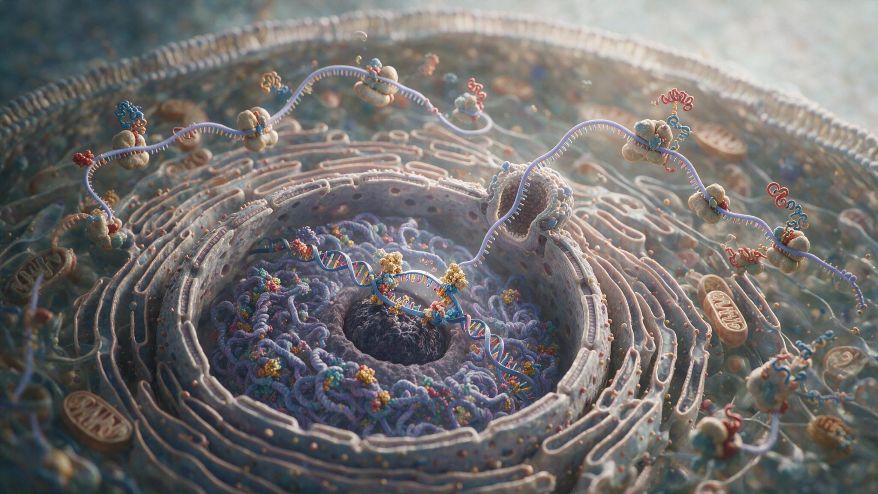
Think of the dogma as a one-way street. Information flows from DNA to RNA. RNA then moves the message to proteins. This direction holds true for most life. Each transfer step uses a different machine. DNA polymerase copies DNA during replication. RNA polymerase makes RNA from a DNA template. As a result, Ribosomes build proteins from RNA instructions. These three machines handle the whole flow. The code itself stays in the same language. DNA and RNA both use nucleotide bases. Proteins use amino acids instead. So a translation step changes the language. That is why cells need a messenger. Messenger RNA carries the message safely. In short, this chain is the central dogma of molecular biology (Alberts et al., 2002). Every step depends on precision. A single error can change the final protein. Cells fix most errors quickly. So the chain usually ends well.
Three Steps of the Central Dogma of Molecular Biology
To enumerate the steps clearly, start with DNA replication. This step copies the DNA before cell division. DNA polymerase does this copying job. Each new cell then gets a full set of genes. The second step is transcription. Here, RNA polymerase makes a messenger RNA copy. This copy leaves the nucleus with the code. The third step is translation. Ribosomes read the messenger RNA here. Transfer RNA delivers the correct amino acids. The ribosome links them into a protein chain. Each step builds on the previous one. So the final protein reflects all three steps. Errors can happen at any stage. Cells fix most mistakes quickly. So these steps are the central dogma of molecular biology. This three-step path appears in every organism. It works the same way in you and me.
1. DNA Replication
Cells must copy their DNA before they divide. This process is called DNA replication. It happens during a phase called interphase. DNA polymerase is the main enzyme involved. This enzyme reads the old DNA strands. It builds new strands that match exactly. The double helix unzips into two single strands. Each strand then acts as a template. New bases pair with the old ones. Adenine pairs with thymine, and guanine pairs with cytosine. So each new DNA molecule has one old strand. This method is called semi-conservative replication. It keeps genetic information stable across generations. Even tiny errors can change a gene message.
Why does accurate copying matter so much? Because the message must stay clear. Mistakes in DNA become mutations. Most mutations are harmless or neutral. A few can cause disease. Some can even help evolution. Cells check their work during replication. Proofreading enzymes remove most errors. This quality control keeps proteins working well. So replication is more than a copy job. It protects the code that builds you. Accurate DNA keeps the central dogma of molecular biology running smoothly. In fact, this protection is vital for every living thing. Your cells copy your DNA billions of times. Each copy must be correct enough to work. This process also helps cells heal wounds. New skin cells need fresh DNA copies. Blood cells renew themselves the same way. So accurate replication supports constant repair.
DNA Replication in the Central Dogma of Molecular Biology
Some scientists count replication as step zero. Others call it the first step of the dogma. Either way, replication prepares the DNA. The flow of genetic information starts here. Replication makes an exact DNA copy. That copy carries the same instructions. Transcription later reads these instructions. So replication quietly supports everything after it. Without replication, cells could not divide. Then growth would stop completely. As a result, no organism could survive. This chain shows why replication matters. It is the foundation of the central dogma of molecular biology. Cells invest huge energy in this process. Their survival depends on getting it right. Your body balances this cost every day. The payoff is a working set of genes. That set builds every protein you own. So the effort pays off completely.
2. Transcription: DNA to RNA
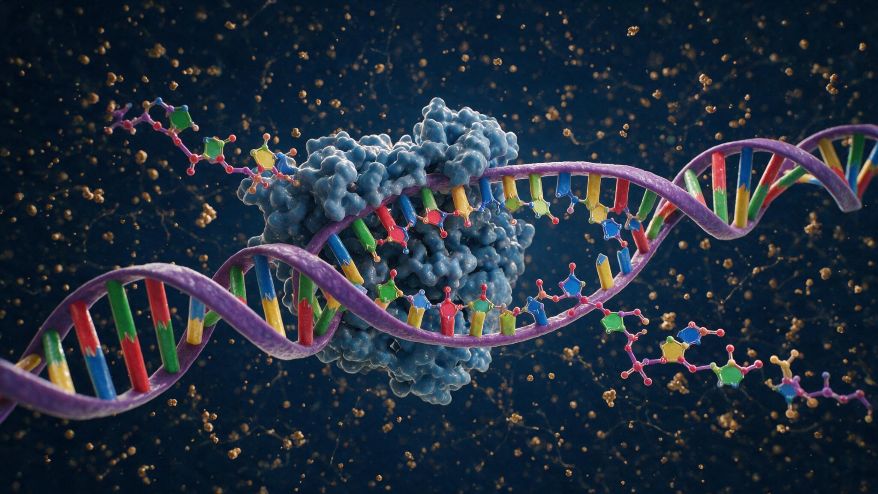
Transcription copies a gene from DNA into RNA. This step happens inside the nucleus. RNA polymerase performs the main work. This enzyme reads one DNA strand. It builds a matching RNA strand. The RNA copy is called messenger RNA. Messenger RNA carries the code outside the nucleus. The DNA stays safely inside. Only one gene gets copied at a time. So cells control exactly what gets made. This control is called gene expression. Cells can turn genes on or off. In short, transcription is the first reading of a gene. It changes the storage form into a working form. This step drives the central dogma of molecular biology forward. RNA polymerase is one of the busiest enzymes in your cells. This process runs thousands of times daily. Each gene can be read many times.
New RNA needs editing before it works. Cells add a cap to one end. They add a tail to the other end. Splicing removes extra pieces called introns. The remaining pieces are called exons. Exons hold the final protein code. This editing produces mature messenger RNA. Mature mRNA then travels to the cytoplasm. This journey happens through nuclear pores. Once outside, mRNA meets the ribosome. The ribosome waits to start translation. So transcription ends with a ready message. The whole process takes only minutes. Cells do this for thousands of genes daily. Above all, transcription turns stored DNA into usable instructions. This editing step keeps the code accurate. A clean message builds a clean protein. Splicing mistakes can cause serious disease. So cells check their RNA with care.
Types of RNA
- Messenger RNA (mRNA) carries the protein code from DNA to ribosomes.
- Transfer RNA (tRNA) delivers amino acids to the growing protein chain.
- Ribosomal RNA (rRNA) builds the core of ribosomes.
- Noncoding RNA (ncRNA) regulates gene activity without coding for proteins.
Also Read: Biochemistry
3. Translation: RNA to Protein
Translation builds a protein from the RNA message. First, ribosomes do this work in the cytoplasm. A ribosome reads the mRNA three bases at a time. Each group of three bases is a codon. Specifically, every codon codes for one amino acid. Meanwhile, transfer RNA brings the matching amino acid. The ribosome then links amino acids together. As a result, this chain grows into a polypeptide. The chain then folds into a working protein. In turn, folding gives each protein its shape. Shape, therefore, decides what the protein can do. So, the sequence of codons controls the final result. Remarkably, this process is both fast and precise. Cells repeat it millions of times each day. Thus, translation completes the central dogma of molecular biology. In fact, your body performs this step constantly. Every heartbeat needs new proteins. Even your eyes use freshly built proteins.
Translation needs a codebook called the genetic code. In other words, the code links codons to amino acids. Most amino acids, moreover, come from multiple codons. This feature, therefore, makes the code forgiving. As a result, some mutations cause no change. Others, however, change one amino acid only. Meanwhile, the ribosome checks each step carefully. Special proteins also assist this whole process. They help the ribosome start and stop. A start codon, for example, begins every protein. The stop codon, in contrast, ends every protein. So, the ribosome knows exactly when to act. In fact, this system works in all organisms. The genetic code is nearly universal. Consequently, that shared code links all life together. The code works the same in almost all species. Remarkably, this unity is a stunning fact of biology. Scientists, therefore, use it to read any genome. Ultimately, the code is truly universal.
Ribosomes Read the Genetic Code
Ribosomes are tiny molecular factories. In fact, each ribosome has two subunits. One is small, and one is large. The small subunit reads the mRNA. Meanwhile, its large partner links amino acids. Together, they build the protein chain. Ribosomes float free in the cytoplasm. However, some attach to the endoplasmic reticulum. Free ribosomes make cell proteins. In contrast, attached ribosomes make export proteins. Thus, each location serves a different purpose. rRNA forms the structural core here. So, ribosomes are part machine and part RNA. They translate the message with high fidelity. In sum, ribosomes turn code into action. Moreover, their accuracy decides protein quality. Consequently, small errors here can change everything. Therefore, cells protect this step very carefully. Ultimately, ribosomes never take the code lightly. Every protein owes its start to them. That makes them essential for life.
Why Protein Synthesis Matters in the Central Dogma of Molecular Biology?
Protein synthesis builds the molecules that run life. Enzymes catalyze almost every reaction. Structural proteins support bones and skin. Transport proteins move oxygen and nutrients. Immune proteins fight off infections. Hormone receptors receive chemical signals. Muscle proteins power every movement. So proteins touch every bodily system. That is why the central dogma of molecular biology matters. It creates the workforce of the cell. Without it, no enzyme could exist. As a result, no reaction would run. Therefore, all life depends on protein synthesis. The process also keeps cells in balance. Even your thinking depends on protein signals. Your memory relies on new proteins too. Growth needs them around the clock. Healing after injury depends on them. So proteins are true life builders. Every cell proves this every second.
Doctors use this knowledge every day. For example, many drugs target protein machinery. Antibiotics block bacterial ribosomes. Meanwhile, cancer drugs stop fast cell division. Gene therapy can fix broken instructions. In addition, new treatments often edit DNA directly. Scientists can now rewrite single genes. As a result, this science helps treat rare diseases. You can also see the same process in plants too. Plant genes control flower color and shape. Those proteins, in turn, build the plant’s body. Therefore, the dogma applies across all kingdoms. Understanding it opens many career paths. In particular, biotech, medicine, and farming all use it. In short, protein synthesis shapes our future. Moreover, this field grows stronger every year. New discoveries arrive almost weekly. Consequently, students can join this exciting work. The central dogma is their starting map. Ultimately, this map shapes crops and cures alike. It will guide science for decades.
Frequently Asked Questions: Central Dogma Molecular Biology
What is the central dogma of molecular biology?
This idea of central dogma of molecular biology, maps the flow of genetic information.
DNA stores the code. RNA carries the code. Proteins do the work. The flow runs from DNA to RNA to protein.
Why is it called a dogma?
Francis Crick chose that word in 1958. Dogma means a firm belief. The name stayed over time. Today, scientists treat it as a framework. This framework still guides modern biology.
Can the dogma ever run backward?
Yes, in a few special cases. Retroviruses use reverse transcriptase. This enzyme copies RNA into DNA. HIV works this way. Most cells still follow the main direction.
What are the three main steps in central dogma molecular biology?
Replication copies the DNA. Transcription makes RNA from DNA. Translation builds protein from RNA. These steps define the whole flow. Each step uses specific enzymes.
Why should students study central dogma of molecular biology?
It explains how genes work. This idea shows how traits appear. It guides drug discovery. This work helps treat genetic disease. In short, it connects DNA to daily life. Genes become proteins, and proteins become you.
References:
- Alberts, B., Johnson, A., Lewis, J., Raff, M., Roberts, K., & Walter, P. (2002). How cells read the genome: From DNA to protein. In Molecular Biology of the Cell (4th ed.). Garland Science. https://www.ncbi.nlm.nih.gov/books/NBK21050/
- Chaudhry, R., & Khaddour, K. (2026). Biochemistry, DNA replication. StatPearls Publishing. https://www.ncbi.nlm.nih.gov/books/NBK482125/
- Hoerter, J. E., & Ellis, S. R. (2026). Biochemistry, protein synthesis. StatPearls Publishing. https://www.ncbi.nlm.nih.gov/books/NBK545161/
- LaPelusa, A., & Kaushik, R. (2026). Physiology, proteins. StatPearls Publishing. https://www.ncbi.nlm.nih.gov/books/NBK555990/
- Lozano-Villada, S., & Puthanveettil, S. V. (2026). Noncoding RNAs orchestrating the central dogma. The Journal of Biological Chemistry. https://doi.org/10.1016/j.jbc.2025.110933
- Mercadante, A. A., Dimri, M., & Mohiuddin, S. S. (2026). Biochemistry, replication and transcription. StatPearls Publishing. https://www.ncbi.nlm.nih.gov/books/NBK540152/
- Wang, D., & Farhana, A. (2026). Biochemistry, RNA structure. StatPearls Publishing. https://www.ncbi.nlm.nih.gov/books/NBK558999/
Editorial Note: This article was written by Juveriya Khan and reviewed for editorial accuracy by our editorial team. It has not yet undergone independent review by a professional.
- Author
- Latest Posts

I am an inspirational writer and emerging science blogger with a deep-rooted passion for understanding and sharing the wonders of the world around us. My journey began with a Bachelor of Science in Chemistry from AKI’s Poona College of Arts, Commerce and Science, where I developed not only a strong foundation in scientific principles but also a mindset that values curiosity, observation, and critical thinking. Studying chemistry has taught me to approach problems with logic, to look beyond the obvious, and to see patterns where others might only see complexity. These experiences have shaped the way I perceive life and influence the way I express my thoughts, both scientifically and creatively.
I have always believed that knowledge is only as powerful as the way it is shared. This belief has guided me to create content that bridges the gap between science and everyday life. I aim to simplify complex scientific ideas so they become approachable, relatable, and engaging for everyone—whether someone has a formal background in science or is simply curious about the world. Science, in my view, is not confined to textbooks and laboratories; it is a way of thinking, understanding, and connecting with the world around us. By making science accessible, I hope to inspire curiosity, ignite learning, and encourage people to see the beauty and relevance of scientific discovery in their daily lives.
Alongside my love for science, I am deeply passionate about motivational writing. I believe words carry the power to transform perspectives, encourage self-reflection, and inspire action. By combining analytical thinking with creativity, I create content that is intellectually stimulating yet emotionally resonant. Whether I am breaking down a chemical concept, exploring a scientific phenomenon, or crafting motivational narratives, my goal is to communicate ideas in a way that is clear, meaningful, and impactful.
Through my work, I strive to empower my readers – not just by helping them understand the science around them, but by inspiring them to grow, learn, and realize their full potential. Every article, post, or story I write reflects my commitment to turning knowledge into inspiration. I want to spark curiosity, encourage self-improvement, and show that learning and personal growth are deeply connected. For me, writing is not just a craft; it is a way to touch minds, connect hearts, and make ideas come alive in a way that truly resonates.