VR Fitness for Disabilities: A New Hope in Rehab
VR fitness helps people with motor disabilities stay active through immersive, engaging virtual reality experiences that improve health, motivation, and accessibility.

VR Fitness for Disabilities: A New Hope in Rehab
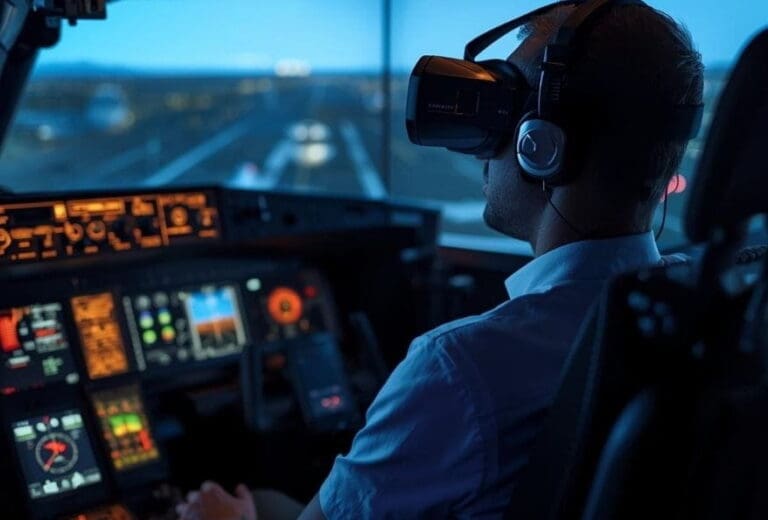
VR Flight Training: Can You Really Learn to Fly Virtually?

How to Celebrate Work Anniversaries and Retirements Virtually
The Future Isn’t Automated It’s Adaptive: Rebuilding Careers in a Tech Changing World
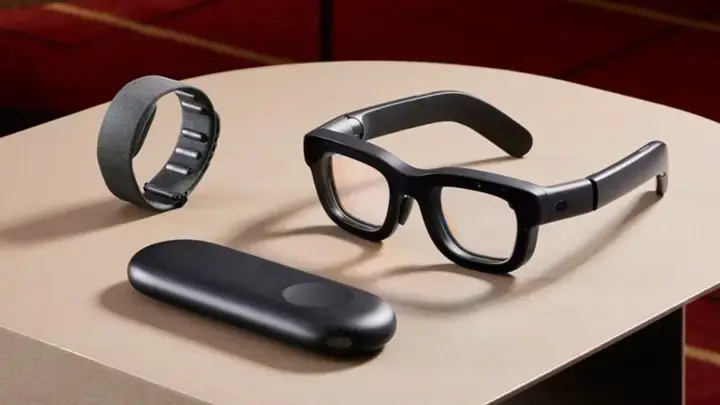
Orion AI Glasses: Meta’s First True Augmented Reality Glasses
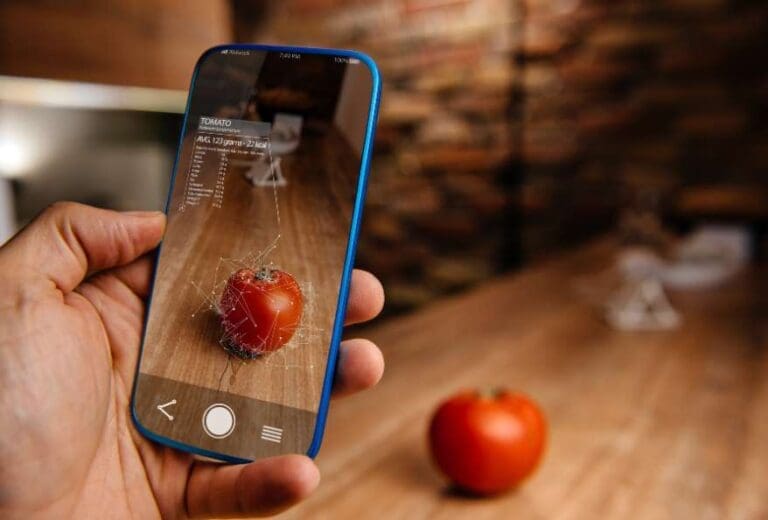
Ultimate Guide to Augmented Reality: Merging Digital and Physical Worlds
Augmented Reality (AR) is a technology that combines digital information with the physical world. It overlays computer-generated content, such as images, animations, text, and 3D objects, onto a user’s real-world surroundings. Unlike Virtual Reality (VR), which creates a completely digital environment, Augmented Reality enhances the environment people can already see.
AR technology uses cameras, sensors, software, and display systems to understand physical surroundings and position digital content within them. For example, a smartphone application can display a virtual piece of furniture inside a real room. Similarly, an AR headset can show instructions or technical information while a user works with physical equipment.
Today, Augmented Reality is finding applications across education, healthcare, manufacturing, retail, entertainment, architecture, and engineering. As a result, it is becoming an important part of modern computing and human-computer interaction.
At ENTECH Magazine, this category explores the technologies, engineering principles, applications, and innovations shaping the development of Augmented Reality.
Augmented Reality combines several hardware and software technologies to create interactive digital experiences. These technologies help devices understand their surroundings, track movement, and display digital content accurately.
Computer vision allows computers to interpret visual information from cameras and other imaging devices. AR applications use this technology to recognise objects, surfaces, images, and environmental features.
For example, an AR application can identify a particular image or object and display related digital content over it. Furthermore, object recognition allows applications to interact with physical environments in more meaningful ways.
AR devices use sensors such as accelerometers, gyroscopes, cameras, and depth sensors to understand movement and orientation.
These components help applications determine where a device is positioned and how it moves. Consequently, digital objects can remain aligned with physical surroundings as users move around.
Spatial mapping allows AR systems to understand the geometry and layout of physical environments. Some systems use depth cameras, LiDAR, and other sensors to create digital representations of surrounding spaces.
Simultaneous Localization and Mapping (SLAM) is another important technology. It helps a device estimate its position while building or updating a map of its surroundings.
Together, these technologies allow AR applications to place digital objects within physical spaces more accurately.
Augmented Reality experiences can run on smartphones, tablets, smart glasses, and specialised head-mounted displays.
Software development platforms provide tools for building AR applications. These include ARKit, ARCore, and other development frameworks that support features such as motion tracking, object recognition, and spatial understanding.
In addition, 3D graphics engines and rendering technologies help developers create interactive digital content.
Augmented Reality has applications across several industries. It can improve how people interact with information, understand complex objects, and perform different tasks.
AR can make learning more interactive by connecting digital information with physical objects and environments. Students can explore 3D models of the human body, examine scientific structures, and visualise mathematical concepts through compatible devices.
Similarly, AR-based educational applications can help explain complex engineering and scientific topics. This provides an additional way to understand concepts that may be difficult to visualise through textbooks alone.
Healthcare professionals and medical educators use AR technologies for visualisation, training, and certain forms of procedural assistance.
For example, AR applications can display anatomical models and medical information within a visual environment. They can also support medical training by helping learners explore three-dimensional representations of body structures.
However, clinical applications require careful evaluation of accuracy, safety, and suitability.
Manufacturing facilities can use AR to display technical instructions, equipment information, and maintenance guidance. Workers may access digital overlays while examining machinery or performing specific tasks.
Furthermore, AR can support product assembly, equipment inspection, and technical training. These applications can help workers access relevant information without constantly switching between physical equipment and separate reference materials.
Retail businesses use AR to help customers visualise products before making purchasing decisions.
For example, virtual try-on applications allow users to preview accessories, clothing, or cosmetics. Similarly, furniture retailers can offer AR tools that display virtual furniture within a customer’s actual room.
As a result, AR creates more interactive shopping experiences and helps customers understand how products may look in real-world settings.
Gaming is one of the most recognised application areas for Augmented Reality. AR games combine digital characters and objects with physical surroundings.
Beyond gaming, entertainment applications include interactive experiences, digital storytelling, live event visualisations, and location-based content.
These applications demonstrate how AR can connect digital media with physical environments.
Architects and engineers can use AR to visualise digital building models within actual locations. This allows project teams to examine design concepts and understand how planned structures relate to their surroundings.
In addition, AR can work with Building Information Modeling (BIM) systems to display technical building information during design reviews and construction activities.
Augmented Reality is part of a broader technology ecosystem known as Extended Reality (XR). This ecosystem includes AR, VR, and Mixed Reality (MR).
Although these technologies share certain components, they offer different experiences.
Understanding these differences helps explain how immersive technologies support different applications across industries.
Despite its growing applications, Augmented Reality still faces several technical and practical challenges.
Hardware limitations can affect display quality, battery life, processing performance, and user comfort. Similarly, accurate tracking and spatial mapping can become difficult in environments with changing lighting or limited visual features.
Developers must also address software compatibility, content creation costs, and integration with existing systems.
Privacy and data security are additional considerations. AR applications may collect information through cameras, sensors, and location-based services. Therefore, responsible data collection, secure storage, and appropriate access controls are important.
Overcoming these challenges will help make AR systems more reliable and accessible.
Advances in artificial intelligence, spatial computing, wearable hardware, and computer vision continue to expand the possibilities of Augmented Reality.
Some important developments include:
Furthermore, improvements in display technology, tracking systems, and 3D content generation are creating opportunities for more practical AR applications.
Understanding Augmented Reality involves exploring several interconnected fields, including computer science, electronics, computer vision, robotics, 3D graphics, and human-computer interaction.
ENTECH Magazine brings these subjects together through educational articles, technology explainers, engineering insights, and coverage of emerging innovations. This category explores AR technologies, development platforms, spatial computing, motion tracking, computer vision, immersive applications, and industry developments.
Whether you are a student exploring immersive technologies, an educator interested in interactive learning, or a technology enthusiast following developments in digital experiences, these resources offer useful insights into the evolving world of Augmented Reality.
Explore our Augmented Reality articles to understand how digital information interacts with the physical world and how this technology is transforming the way people learn, work, communicate, and experience their surroundings.