
Category: Top 10 Mathematics Discoveries in 2025



Top 10 Mathematics Discoveries in 2025: A Year of Breakthroughs
Introduction
Mathematics in 2025 amazed people all around the world. At first, the year seemed to be just another chapter in the long history of numbers and shapes. All of a sudden, researchers announced big discoveries, one after another. To point out, these breakthroughs changed the way we think about puzzles, science, and even computers. In effect, this post shares the top 10 mathematics discoveries of 2025 in a way everyone can understand. All things considered, you will see that math is not just for experts. It shapes our world in new and exciting ways.
Hilbert’s Sixth Problem Finally Solved
To begin, let’s talk about Hilbert’s sixth problem. Over one hundred years ago, David Hilbert asked if we could link the laws of particles, such as those in gases, to the equations that describe fluids, like water. For the most part, scientists used the equations separately. At last, in 2025, a group of mathematicians built a bridge between these two worlds. To explain, they showed that the way particles move can actually produce the equations we use for flowing liquids. As a result, this helps scientists and engineers model everything from weather to car engines with more confidence.
New Tools for Random Hyperbolic Geometry
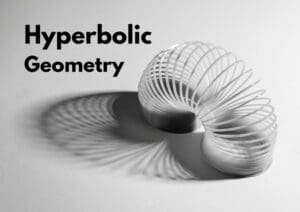
In similar fashion, mathematicians worked on strange shapes called hyperbolic spaces. These spaces curve in a way that is hard to picture. With this in mind, researchers developed new tools and computer programs to study these areas. To illustrate, these tools make it easier to model things like internet networks or even the universe itself. At the present time, more people can now explore these shapes and use them in new technology.
Dudeney’s Four-Piece Puzzle Answered
After that, the famous Dudeney puzzle took the spotlight. This puzzle asks if you can cut a triangle into just a few pieces and rearrange them to make a square. At first, many tried to do it with three pieces, but no one succeeded. In 2025, mathematicians proved that four is the smallest number of pieces needed. To put it another way, three simply will not work, no matter how clever you are. With this intention, puzzle makers and teachers now have a clear answer for this classic challenge.
AI Discovers New Theorems
At this time, artificial intelligence is changing math just as it has changed art and writing. So far, computers could only help check proofs or do calculations. What’s more, a new AI called LeanConjecturer can actually create new math ideas and even prove them. To sum up, it made over twelve thousand new statements in one year. With attention to this, mathematicians now have a smart assistant that helps them find new patterns and ideas.
The Noperthedron: A Unique Shape
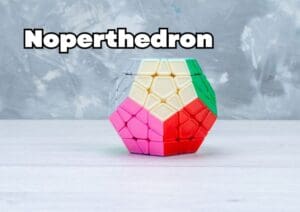
Take the case of the Noperthedron, a new three-dimensional shape that surprised experts. Most shapes like cubes or pyramids allow a copy of themselves to pass through a hole in them. In contrast, the Noperthedron does not let this happen. To put it differently, it is a solid shape with a unique property. Such discoveries help architects and scientists design stronger and more interesting objects.
Kakeya Sets Fill All of Space
In like fashion, another geometric mystery was solved. Mathematicians proved that Kakeya sets in three dimensions always fill the space completely. To explain, a Kakeya set is a strange shape where you can turn a stick in every direction inside it. For a long time, people wondered how much space these sets could cover. In 2025, it became clear that they always fill the whole space in three dimensions. This result has effects on how we process signals and even on how we understand sound and light.
Prime Walks: Seeing Patterns in Primes
Prime numbers hold many mysteries. In 2025, mathematicians introduced something called “Prime Walks.” As an illustration, this is a new way to see patterns among prime numbers using paths on a grid. With this intention, people can spot patterns and clusters that are hard to see with long lists of numbers. At any rate, this approach helps both students and researchers understand primes in a fresh way.
Better Wind Turbine Math
With attention to clean energy, another team improved the math behind wind turbines. They created a better theory for predicting how air moves through turbine blades. In effect, this allows engineers to build turbines that catch more wind and make more power. All in all, this discovery supports the push for more sustainable energy.
Gödel and Cryptography
To sum up, logicians connected Gödel’s famous ideas about what math can prove with the field of cryptography. In detail, they showed how certain logical puzzles can help make data safer. At the same time, this helps create better ways to share secrets online without fear of being hacked.
Fourier Analysis: A Surprising Counterexample
At last, a famous idea in Fourier analysis was proven false by a smart counterexample. To explain, many believed the restriction conjecture must always be true. In 2025, someone found a case where it was not. As a result, mathematicians now need to rethink how they use these tools in physics and engineering.
Conclusion
All things considered, 2025 was a year of surprises, clear answers, and new questions. These ten discoveries show that mathematics is alive and growing. At the present time, math connects with science, computers, and even art in new ways. So long as people keep asking questions, new mathematical wonders will keep appearing year after year.