Humans share 99.9% of their genome; the 0.1% of variation drives most differences in drug response.
Decoding Drug Response: Your Genome, Your Personalized Medicine
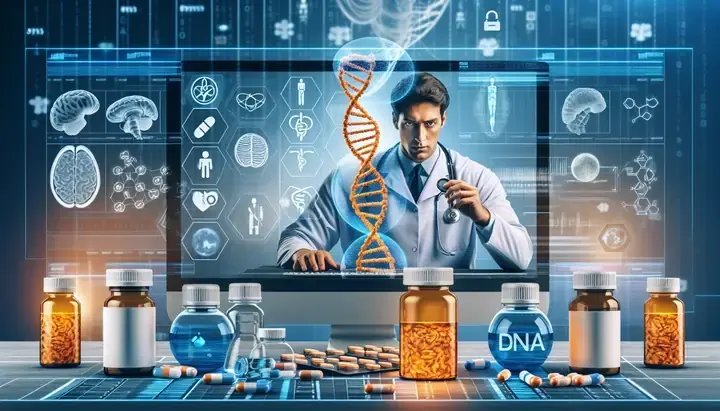
Why does one painkiller make you drowsy for a whole day while your friend stays wide awake? Why can a drug save one patient’s life and do nothing for another? The answer is written in your DNA. Humans share about 99.9% of their genetic code, yet that tiny 0.1% of variation decides how a medicine is absorbed, transformed, and cleared. Personalized medicine studies exactly this variation so that each patient receives the right drug, at the right dose, the first time. This guide explains how genes govern drug response, how pharmacogenomics is changing prescribing, and where DNA-guided medicine is heading.
Key Takeaways
- Humans share 99.9% of their genome; the 0.1% of variation drives most differences in drug response.
- CYP enzymes, especially CYP2D6, metabolise the majority of prescribed drugs; inherited variants create poor, intermediate, normal, and ultra-rapid metabolizers.
- Pharmacogenomics uses genetic information to choose the right drug and dose before prescribing.
- Real-world examples — codeine, warfarin, clopidogrel, irinotecan — already carry FDA pharmacogenomic labeling and CPIC guidance.
- Limits remain: cost, access, ancestry bias in genomic databases, and privacy. A gene test guides, but does not replace, clinical judgment.
What Is Personalized Medicine?
Personalized medicine — also called precision medicine — tailors prevention, diagnosis, and treatment to the individual patient, most often using their genetic makeup. Instead of one-size-fits-all dosing, the goal is one-patient, one-therapy. The same drug can act as a lifesaver in one body and a hazard in another, so doctors are learning to predict the outcome before prescribing. The discipline sits at the meeting point of genetics, pharmacology, and clinical practice, and it is already reshaping how common drugs are choose.
Why Do the Same Drugs Affect People Differently?
Drug response varies because the enzymes that process medicines differ between people. Four inherited phenotypes are recognised: poor, intermediate, normal, and ultra-rapid metabolizers. A poor metabolizer may feel no effect from a standard dose, because the drug is clear too slowly or never activated. An ultra-rapid metabolizer can convert a prodrug into its active form so quickly that blood levels become toxic. The same prescription, the same dose, the same pharmacy — and yet the outcome can be completely different, purely because of a few letters of DNA.
The Journey of a Drug Through Your Body

The variations that matter most are single-nucleotide polymorphisms (SNPs) — single-letter changes in the DNA sequence that can alter an enzyme’s structure or activity. Several techniques, for example, read these differences: Sanger sequencing, whole-exome sequencing, and real-time PCR (qPCR) all map the relevant parts of the genome. Moreover, modern pharmacogenomic panels go further, genotyping dozens of drug-metabolism genes at once with microarrays. For a close look at how genomes are read letter by letter,. For readers new to the field, ENTECH’s beginner’s guide to biochemistry explains the enzyme chemistry behind these reactions.
The Genes That Govern Drug Metabolism
A small family of enzymes does most of this work: the cytochrome P450 (CYP) system. In fact, CYP enzymes metabolise roughly 70–80% of clinically prescribed drugs, and one member, CYP2D6, is among the most studied genes in pharmacology. People inherit one CYP2D6 allele from each parent, and, therefore, the combination determines how much enzyme they produce. At least one functional allele usually keeps metabolism running normally. Meanwhile, duplicated or multiplied functional copies push activity higher, while loss-of-function variants slow it down. As a result, each pattern shifts how quickly a drug is activates or inactivates in that patient’s body.
CYP2D6: A Case Study in Pharmacogenomics
The clearest demonstration of CYP2D6 in action comes from a 2006 case report in The Lancet. Specifically, a mother prescribed codeine for post-partum pain turned out to be an ultra-rapid metabolizer. CYP2D6 converts codeine into morphine by O-demethylation, and, in her case, extra enzyme copies produced unusually high morphine levels, which passed into her breast milk and became fatal for her newborn. As a result, the case became a sentinel event in pharmacogenomics and directly informed later regulatory warnings about codeine during breastfeeding.
Pharmacogenomics: When Pharmacology Meets Genomics
Pharmacogenomics is the fusion of pharmacology and genomics: it studies how an individual’s genetic variations affect drug response. If the relevant genes are known, clinicians can predict which medicine will work best and which may cause harm — before the first dose. The payoff is practical: fewer failed prescriptions, fewer adverse reactions, less wasted time, and lower healthcare costs. Readers who want the broader picture of how traits are inherit can start with ENTECH’s guide to genetic inheritance and variation.
How Doctors Detect Your Genetic Variations
The variations that matter most are single-nucleotide polymorphisms (SNPs) — single-letter changes in the DNA sequence that can alter an enzyme’s structure or activity. Several techniques, for example, read these differences: Sanger sequencing, whole-exome sequencing, and real-time PCR (qPCR) all map the relevant parts of the genome. Moreover, modern pharmacogenomic panels go further, genotyping dozens of drug-metabolism genes at once with microarrays. For a close look at how genomes are read letter by letter, see ENTECH’s article on material-genome imaging
.
Personalized Medicine in Practice Today
The FDA lists dozens of drugs whose labels include pharmacogenomic information, and guideline bodies such as CPIC translate genotype data into concrete dosing recommendations. Personalized prescribing is no longer hypothetical. The table below contrasts the traditional approach with the personalized approach.
| Aspect | Traditional prescribing | Personalized medicine |
| Drug choice | Based on diagnosis and population averages | Based on the patient’s genotype and drug–gene interaction |
| Dose | Standard label dose for all | Adjusted for metabolizer phenotype (e.g., CYP2D6, CYP2C19) |
| Genetic data | Rarely used | Genotyping panel or sequencing informs the decision |
| Trial and error | Common — several attempts to find the right drug | Reduced — the right target is chosen first |
| Adverse events | Discovered after the fact | Anticipated and avoided where markers exist |
| Outcome focus | Reactive response to symptoms | Proactive match of drug, dose, and patient |
| Examples | Standard codeine, warfarin, clopidogrel dosing | CPIC-guided codeine, warfarin, clopidogrel, irinotecan, and thiopurine dosing |
Well-known examples include codeine and tramadol (CYP2D6), warfarin (CYP2C9 and VKORC1), clopidogrel (CYP2C19), irinotecan (UGT1A1), and mercaptopurine (TPMT and NUDT15). For each, moreover, a simple genetic test can change a standard prescription into a safer, more effective one.
What Personalized Medicine Cannot Do Yet
Honesty about limits builds trust. Most drug–gene pairs are still unknown, and genetic testing has real costs. Pharmacogenomic databases remain skewed toward populations of European ancestry, so results are less reliable for many patients worldwide. Privacy concerns also slow adoption. A gene test informs, but never replaces, clinical judgment. Personalized medicine is a powerful layer on top of good medicine, not a substitute for it.
The Future of Personalized Medicine
As sequencing becomes cheaper and pharmacogenomic data move into electronic health records, genotype-guided prescribing will become routine rather than exceptional. Direct-to-consumer panels already return drug-response information to patients, as well as AI systems are learning to match complex genomic profiles to drug options. However, Once genotype profiling is broadly accessible, personalized medicine will play a major role in everyday treatment decisions — from painkillers to chemotherapy.
Frequently Asked Questions
1. What is personalized medicine?
Personalized medicine tailors prevention, diagnosis, and treatment to each patient’s genetic makeup, replacing one-size-fits-all dosing.
2. How do genes affect drug response?
Genes code for the enzymes that activate or break down drugs. Variations in genes such as CYP2D6 change enzyme speed, so the same dose works differently in different people.
3. What is pharmacogenomics?
Pharmacogenomics combines pharmacology and genomics to predict how an individual will respond to a drug before it is prescribe.
4. Can I get a genetic test for my medications?
Yes. Pharmacogenomic panels and targeted tests exist, and results can guide prescribing. Always discuss testing with a doctor or pharmacist first.
5. Is personalized medicine the same as gene therapy?
No. Personalized medicine matches existing drugs to your genes; gene therapy changes or replaces genes to treat disease. They are different tools in the same toolkit.
References
- The Editors of The Lancet. Expression of Concern: Pharmacogenetics of morphine poisoning in a breastfed neonate of a codeine-prescribed mother. The Lancet. 2026. doi:10.1016/S0140-6736(26)00245-x
- U.S. Food and Drug Administration. Table of Pharmacogenomic Biomarkers in Drug Labeling. fda.gov
- Author
- Latest Posts

Nida e Falak is an Assistant Professor of Biotechnology at Khalsa College, Patiala, and an avid science communicator dedicated to making complex biological sciences accessible and engaging. She holds a Master’s degree in Biotechnology from Delhi Technological University (DTU).
With a deep academic background in biotechnology and life sciences, Nida’s writing covers cutting-edge medical research and physiological systems. Her published work explores topics such as the neurobiology of the placebo effect, the gut-brain axis, personalized precision medicine, and the cellular mechanisms behind autoimmunity and cancer development.
As an author for ENTECH Magazine, Nida bridges high-level biomedical research with clear, intuitive science storytelling—fostering curiosity and deepening public understanding of life sciences and human health.
- Author
- Latest Posts

I am an inspirational writer and emerging science blogger with a deep-rooted passion for understanding and sharing the wonders of the world around us. My journey began with a Bachelor of Science in Chemistry from AKI’s Poona College of Arts, Commerce and Science, where I developed not only a strong foundation in scientific principles but also a mindset that values curiosity, observation, and critical thinking. Studying chemistry has taught me to approach problems with logic, to look beyond the obvious, and to see patterns where others might only see complexity. These experiences have shaped the way I perceive life and influence the way I express my thoughts, both scientifically and creatively.
I have always believed that knowledge is only as powerful as the way it is shared. This belief has guided me to create content that bridges the gap between science and everyday life. I aim to simplify complex scientific ideas so they become approachable, relatable, and engaging for everyone—whether someone has a formal background in science or is simply curious about the world. Science, in my view, is not confined to textbooks and laboratories; it is a way of thinking, understanding, and connecting with the world around us. By making science accessible, I hope to inspire curiosity, ignite learning, and encourage people to see the beauty and relevance of scientific discovery in their daily lives.
Alongside my love for science, I am deeply passionate about motivational writing. I believe words carry the power to transform perspectives, encourage self-reflection, and inspire action. By combining analytical thinking with creativity, I create content that is intellectually stimulating yet emotionally resonant. Whether I am breaking down a chemical concept, exploring a scientific phenomenon, or crafting motivational narratives, my goal is to communicate ideas in a way that is clear, meaningful, and impactful.
Through my work, I strive to empower my readers – not just by helping them understand the science around them, but by inspiring them to grow, learn, and realize their full potential. Every article, post, or story I write reflects my commitment to turning knowledge into inspiration. I want to spark curiosity, encourage self-improvement, and show that learning and personal growth are deeply connected. For me, writing is not just a craft; it is a way to touch minds, connect hearts, and make ideas come alive in a way that truly resonates.




Great work
Keep it up👍
🔥🔥🔥🔥
Very interesting concept explained so nicely! Well done!!
Brilliant work nida …such information would help for precise treatment of difficult cases…
“You’ve put an impressive amount of work into this.”
Great work keep it up…
Such a wonderful information
Keep it good job
Good job keep it up
It is very interesting thanks
It was so informative and helpful 👍
Well crafted and engaging. Concise ideas presented in a very simple way.
Thank you Nida!!!!
it was so informative and helpful..
Keep it up girl..
Thank you!!!!
it was so informative and helpful..
Keep it up girl..
It’s is very useful
YOUR EXPLANATION IS A FANTASTIC KEEP IT….
Very useful information
It is very helpful thanks
Such a very good information dear
“You’ve put an impressive amount of work into this.”
Great work keep it up…
Very simple and easy explanation for students as well as for general knowledge for people … good work who ever has wrote this . Well done
“Your article is brilliantly crafted, blending clarity and depth with such ease. I am truly impressed by how you made complex ideas so accessible while keeping it engaging throughout!”
👍🏻
Loved how this article made a complex topic like pharmacogenomics so engaging. Kudos to the author for shedding light on the future of personalized medicine!
Great article, very informative and concise.
Very informative. All the best. Keep it up.
Engaging and well crafted. Shedding light on the use of medicines. Best wishes and keep it up.