Discover how trillions of microbes influence neuroplasticity, mood, and health through the microbiota-gut-brain axis.
Gut-Brain Axis: Can Microbes Influence Neuroplasticity and Neural Circuits?
Estimated reading time: 9 minutes
Most people think of their gut as just a food-processing unit. But what if I told you it is a sophisticated communication center that directly talks to your brain? Welcome to this fascinating concept of the gut-brain axis. Indeed, where tiny microbes wield incredible influence over your mental landscape.
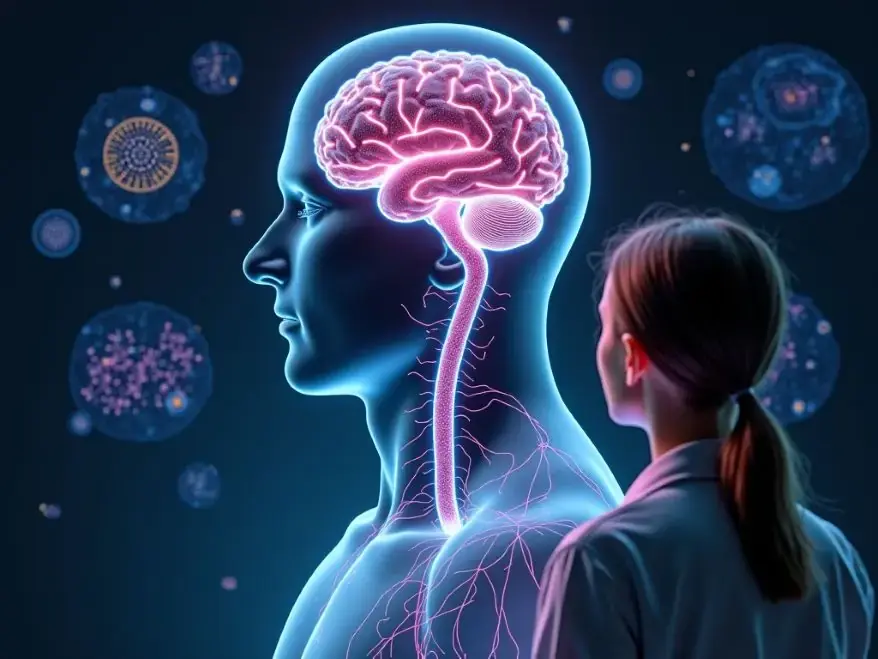
Your gut houses trillions of microbes that form the gut microbiome. A community that possesses the tendency to influence brain function. This connection, known as the microbiota-gut-brain axis. It serves as a two-way communication system between your gut and brain. The microbiota in your gut plays a vital role in neurodevelopment and neuroplasticity. They produce molecules like short-chain fatty acids (SCFAs) that affect how neurons grow and connect. By modulating the gut-brain axis, you can potentially improve brain function and overall well-being.
Understanding the gut microbiota: A Microscopic metropolis

The human gut microbiota represents a remarkable ecosystem of trillions of microorganisms. Those play a pivotal role in our overall health. Beyond simple digestion, these microscopic inhabitants maintain complex biological interactions. Hence, that profoundly impacts our neurological functioning. Recent scientific research has illuminated the intricate connections between gut microbiota diversity and brain health. Therefore, it reveals a fascinating communication network known as the gut-brain axis.
Each individual’s microbiome is as unique as a fingerprint, shaped by genetics, diet, environment, and lifestyle. The diversity and composition of these microorganisms can dramatically impact brain health. Thus, influencing everything from neurodevelopment to cognitive performance. Moreover, research increasingly suggests that maintaining a healthy, diverse microbiome could be key to preventing neurological disorders.
The Gut-Brain Axis: A communication Highway
Imagine a constant, bidirectional communication highway connecting your gut and brain. The microbiota-gut-brain axis serves precisely this function, transmitting critical signals through neural, immune, and hormonal pathways. This superhighway allows gut microbes to send messages that profoundly influence brain function, mood, and behavior.
The human gut microbiota is a diverse community of microorganisms. It is primarily composed of bacteria from the Firmicutes and Bacteroidetes phyla. With smaller proportions of Actinobacteria, Proteobacteria, and Verrucomicrobia. Key genera include Lactobacillus, Bacteroides, Bifidobacterium, Faecalibacterium, and Akkermansia. Each plays a vital role in breaking down complex carbohydrates, synthesizing vitamins, and modulating inflammation. Therefore, influences not just gut health but also systemic functions. Also, including those of the brain, through the gut-brain axis.

Often called the “second brain,” the enteric nervous system contains millions of neurons that communicate complex signals. These neural networks do more than regulate digestion. Moreover, they play a crucial role in mood regulation and cognitive processing. The vagus nerve is a primary communication channel, rapidly transmitting information between the gut and brain. Remarkably, approximately 80% of vagal nerve fibers carry information from the gut to the brain. Thus, highlighting the gut’s significant role in neurological processes. Through this gut-brain axis, gut microbiota can modulate neurotransmitter production. Also, regulate inflammation and influence emotional states.
Experimental studies highlight the importance of these neural pathways. For example, researchers observed that germ-free animals which are lacking gut microbiota. Further, showed brain abnormalities and behavioral changes. Specific bacterial strains were also found to alter behavior. Therefore, demonstrates the microbiota’s influence on the brain.
Immune System Interactions and Microglial Function
Your immune system serves as another bridge between the gut and brain. Gut microbiota influences immune responses. Thus, by interacting with immune cells and producing metabolites that regulate inflammation. This interaction is crucial because chronic inflammation can harm the brain and impair cognitive function.
Microglia, the brain’s resident immune cells, play a vital role in maintaining brain health. They remove damaged neurons and support neuroplasticity. However, their function depends on signals from the gut microbiota. Studies show that germ-free mice have underdeveloped microglia, leading to impaired brain function. By shaping microglial activity, gut microbiota help protect your brain from damage. Also, support its ability to adapt and learn through the gut-brain axis.

Endocrine Pathways and Neurotransmitter Synthesis
Gut microbiota also communicates with the brain through endocrine pathways. They produce hormones and neurotransmitters, influencing mood, behavior, and overall brain function. For instance, certain gut bacteria synthesize serotonin, a neurotransmitter that regulates mood and anxiety. In fact, about 90% of the body’s serotonin is produced in the gut.
Research shows that the microbiota can affect stress responses by altering cortisol levels, a hormone linked to stress. Rodent studies reveal that mice raised in sterile environments exhibit heightened stress responses. Thus, have difficulties in social interactions. These findings highlight the microbiota’s role in regulating hormones and neurotransmitters. Hence, essential for maintaining emotional balance and cognitive function.
Humoral Pathways and the Role of SCFAs
Your gut microbiota produces a variety of metabolites that influence your brain through humoral pathways. Among these, short-chain fatty acids (SCFAs) play a crucial role. Short-chain fatty acids, such as acetate, propionate, and butyrate, are produced when gut bacteria ferment dietary fibers. These molecules travel through your bloodstream, crossing the blood-brain barrier to impact brain function.
SCFAs regulate inflammation, which is vital for brain health. Chronic inflammation can damage neurons and impair cognitive abilities. SCFAs help by reducing pro-inflammatory signals and promoting anti-inflammatory responses. For example, butyrate strengthens the gut lining, preventing harmful substances from entering your bloodstream and reaching your brain. This protective mechanism highlights the importance of a healthy gut microbiota.

Research has shown that SCFAs influence brain activity in several ways. They modulate the production of neurotransmitters like dopamine and serotonin. Thus, it affects mood and behavior. SCFAs also support the growth of brain cells and enhance synaptic plasticity, the brain’s ability to adapt and learn. These effects demonstrate how gut microbiota communicate with your brain through humoral pathways.
To boost SCFA production, you can include fiber-rich foods like fruits, vegetables, and whole grains in your diet. These foods nourish your gut bacteria, enabling them to produce SCFAs that benefit your brain. By understanding the role of SCFAs, you can appreciate how your gut microbiota contributes to your mental and emotional well-being.
Neuroplasticity
Neuroplasticity represents one of the most fascinating capabilities of the human brain. It has a remarkable ability to continuously reshape and reorganize itself in response to experiences, learning, and environmental challenges. Previous scientific beliefs considered the brain a static organ. Hence, modern neuroscience reveals a dynamic, constantly evolving neural landscape that adapts and transforms throughout our lifetime.
At its core, neuroplasticity involves intricate mechanisms that enable the brain to modify its structural and functional connections. These mechanisms operate across multiple levels. Therefore, from molecular changes within individual neurons to comprehensive network reconfigurations. Researchers have discovered that neurons can form new connections and strengthen existing pathways. Also, eliminate less active synaptic connections based on ongoing experiences and stimuli.

Mechanisms linking gut microbiota to neuroplasticity
Neuroplasticity involves two key mechanisms: synaptic plasticity, where neurons strengthen or weaken their connections based on activity. Secondly, neurogenesis is the creation of new neurons. Your gut microbiota, the trillions of microbes in your digestive tract, play a crucial role in supporting these brain functions.
Role in Synaptic Plasticity and Neurogenesis
Studies show that when gut microbes are absent or disrupted, neuroplasticity suffers. Germ-free mice exhibit lower levels of brain-derived neurotrophic factor (BDNF). It is a protein essential for both synaptic strength and the formation of new neurons. Similarly, antibiotic treatments that disturb the gut microbiome reduce neurogenesis. Thus, probiotics help in restoring it. This suggests that gut microbes send essential signals that influence how the brain rewires and repairs itself.
This connection starts early in life. During infancy, the shift from a milk-based diet to solid foods reshapes the gut microbiota. Therefore, this transition coincides with intense synaptogenesis and, hence, neurodevelopment. It’s a striking example of how closely gut health and brain function are linked.
Influence on Myelination and Dendritic Morphology
The influence doesn’t stop at signaling; gut microbes also impact brain structure. They contribute to myelination, the process of insulating nerve fibers with myelin sheaths for faster impulse travel. Also, shape dendritic morphology. Thus, it includes the length, branching, and density of dendrites that connect neurons. In studies, changes in microbiota composition have been shown to alter myelin thickness in the hippocampus. Also, modify dendritic structure, particularly in regions involved in learning and memory.
Microglial Maturation and Function
Another critical player is the microglia, the brain’s immune cells. Microglia clear cellular debris, remove excess synapses, and support repair, all vital for healthy neuroplasticity. However, without signals from gut microbes, microglia remain immature and less effective. Various studies prove that restoring microbiota, through colonization or probiotics, can improve microglial function and brain adaptability.
Conclusion
The microbiota-gut-brain axis reveals how gut microbiota influences your brain health and behavior. Therefore, these microbes shape neurodevelopment, regulate mood, and support cognitive function. Therapies targeting gut microbiota, such as probiotics and dietary changes, show promise for managing neurological and neurodevelopmental disorders. By exploring these connections, you can unlock new ways to improve mental well-being. Continued research and collaboration across fields will deepen our understanding. Hence, leads to innovative treatments that benefit your gut and brain. Maintaining a healthy gut through diet and lifestyle isn’t just good for your body; it’s vital for your mind. That’s the gut feeling that you are what you eat.
Additionally, to stay updated with the latest developments in STEM research, visit ENTECH Online. Basically, this is our digital magazine for science, technology, engineering, and mathematics. Further, at ENTECH Online, you’ll find a wealth of information.
References
- Murciano-Brea, J., Garcia-Montes, M., Geuna, S., & Herrera-Rincon, C. (2021). Gut microbiota and neuroplasticity. Cells, 10(8), 2084. https://doi.org/10.3390/cells10082084
- Yassin, L. K., Nakhal, M. M., Alderei, A., Almehairbi, A., Mydeen, A. B., Akour, A., & Hamad, M. I. K. (2025). Exploring the microbiota-gut-brain axis: impact on brain structure and function. Frontiers in Neuroanatomy, 19. https://doi.org/10.3389/fnana.2025.1504065
- Damiani, F., Cornuti, S., & Tognini, P. (2023). The gut-brain connection: Exploring the influence of the gut microbiota on neuroplasticity and neurodevelopmental disorders. Neuropharmacology, 231, 109491. https://doi.org/10.1016/j.neuropharm.2023.109491
- Carabotti, M., Scirocco, A., Maselli, M. A., & Severi, C. (2015, June 1). The gut-brain axis: interactions between enteric microbiota, central and enteric nervous systems. https://pmc.ncbi.nlm.nih.gov/articles/PMC4367209/
Disclaimer: We do not intend this article/blog post to provide professional, technical, or medical advice. Therefore, please consult a healthcare professional before making any changes to your diet or lifestyle. In fact, we only use AI-generated images for illustration and decoration. Their accuracy, quality, and appropriateness can differ. So, users should avoid making decisions or assumptions based only on the text and images.
- Author
- Latest Posts

Nida e Falak is an Assistant Professor of Biotechnology at Khalsa College, Patiala, and an avid science communicator dedicated to making complex biological sciences accessible and engaging. She holds a Master’s degree in Biotechnology from Delhi Technological University (DTU).
With a deep academic background in biotechnology and life sciences, Nida’s writing covers cutting-edge medical research and physiological systems. Her published work explores topics such as the neurobiology of the placebo effect, the gut-brain axis, personalized precision medicine, and the cellular mechanisms behind autoimmunity and cancer development.
As an author for ENTECH Magazine, Nida bridges high-level biomedical research with clear, intuitive science storytelling—fostering curiosity and deepening public understanding of life sciences and human health.