Digital technology helps scientists track species and spot changes quickly. These tools protect ecosystems and keep genetic diversity alive.
Saving Our Planet with Digital Tools
Estimated reading time: 3 minutes
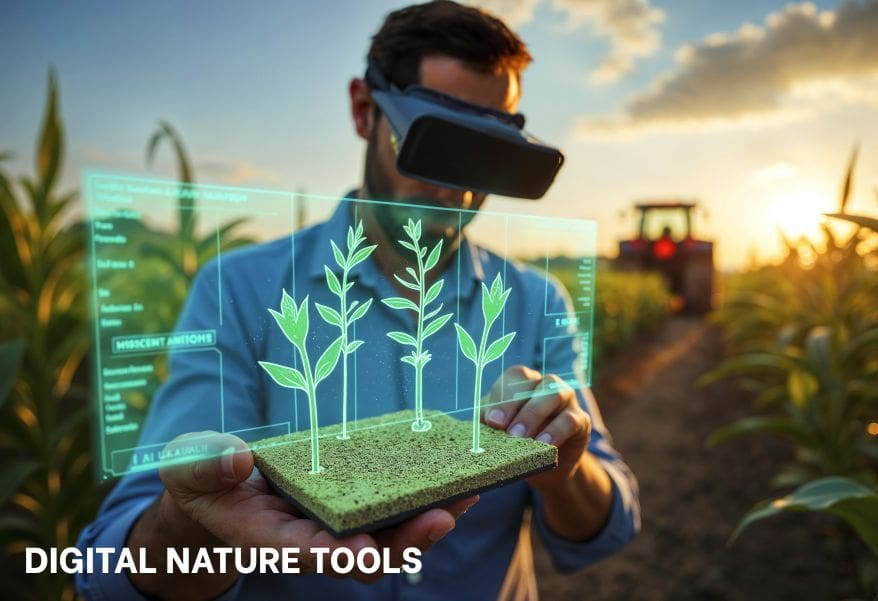
Digital technology is changing how we protect nature. It helps scientists track species and spot changes quickly. As a result, using remote sensing, satellites now watch every corner of the planet. They record forest loss, wetland shifts, and coral bleaching. In addition, drones map ghost roads and damaged habitats with sharp accuracy.
Helena Freitas and António C. Gouveia conducted the study and published it under the title “Biodiversity futures: digital approaches to knowledge and conservation of biological diversity” in February 2025. They work with experts from many nations and local groups. In several regions, indigenous communities and citizen scientists share critical observations. In this way, people use mobile science apps to report animal sightings or track trees.
ENTECH STEM Magazine has included this research in its list of Top 10 Environmental Sciences Discoveries and Innovations of 2025.
At the same time, AI studies huge datasets. It finds trends that signal extinction risks or recovery. Because of this, researchers can act faster. These tools protect ecosystems and keep genetic diversity alive. They also support human well-being, since healthy nature means healthy lives. As a result, digital tools have become key to meeting global biodiversity goals like “Life on Land.”
The Global Science Team behind Digital Nature Tools
Meanwhile, non-profits and policymakers guide global projects. Through cooperation, they build inclusive networks that protect biodiversity. Every group adds a unique skill. Together, they help stop species loss and keep nature’s systems in balance.
Digital Nature Tools in Everyday Life
Digital tools also support your daily life. Mobile apps let users record bird sounds, report plastic waste, or identify plants. For example, the HumBug Project uses sensors to detect mosquito species by their sound. This helps scientists fight mosquito-borne diseases early.
Farmers also use smart systems with AI sensors to monitor crop health. As a result, farms grow food more efficiently and waste less water. Similarly, smart city models merge nature and technology. They use data to improve green spaces and reduce pollution. Eco-games and digital learning activities teach young people about biodiversity and folklore. As a result, these small steps together build a stronger awareness of how to care for the Earth.
Is the Tech Ready Yet?
Most tools already work well. Satellites and camera traps collect vital data daily. However, challenges still exist. Battery failures, poor internet access, and AI data bias can slow progress. Despite this, global investment is growing fast. The next step is responsible technology use. We must share open data and cut e-waste. With sustainable design, digital conservation will expand safely and effectively.
Green Careers for Tomorrow
The shift to digital conservation opens new career paths. As a result, students now study data science, bioacoustics, and metagenomics. In addition, they use new tools to scan oceans, track species, and manage carbon footprints. Finally, many even create virtual labs and automated biodiversity monitors. Because of these roles, future experts will help meet sustainability goals. Green jobs are not only possible – they are already growing fast. In every lab, field, and classroom, technology and nature now work together to protect our planet.
Digital Nature Tools: A Clearer Picture
Think of a forest like a giant jigsaw puzzle. Many pieces were missing for years. But digital tools act like a flashlight, helping scientists find and fit those pieces together again. Piece by piece, we’re rebuilding a complete picture of life on Earth.
Additionally, to stay updated with the latest developments in STEM research, visit ENTECH Online. Basically, this is our digital magazine for science, technology, engineering, and mathematics. Also, at ENTECH Online, you’ll find a wealth of information.
Reference
Freitas, H., & Gouveia, A. C. (2025c). Biodiversity futures: digital approaches to knowledge and conservation of biological diversity. Web Ecology, 25(1), 29–37. https://doi.org/10.5194/we-25-29-2025
- Author
- Latest Posts

Ashwini Kshirsagar holds a graduate degree in Chemistry and a postgraduate degree in Environmental Science from Shivaji University, Kolhapur. With a strong foundation in scientific principles and a creative flair, she blends her expertise in environmental science with skills in technical writing, graphic design, and video editing. Proficient in Adobe software, Ashwini excels at transforming complex scientific concepts into clear, engaging, and visually compelling content. Her unique ability to merge science and storytelling allows her to create impactful communication materials that are both informative and accessible to a wide audience.