Discover the exoplanet atmosphere composition of Eps Ind Ab, revealing potential ammonia and hidden layers through innovative studies
Exoplanet Atmosphere Composition and Clouds Found by JWST
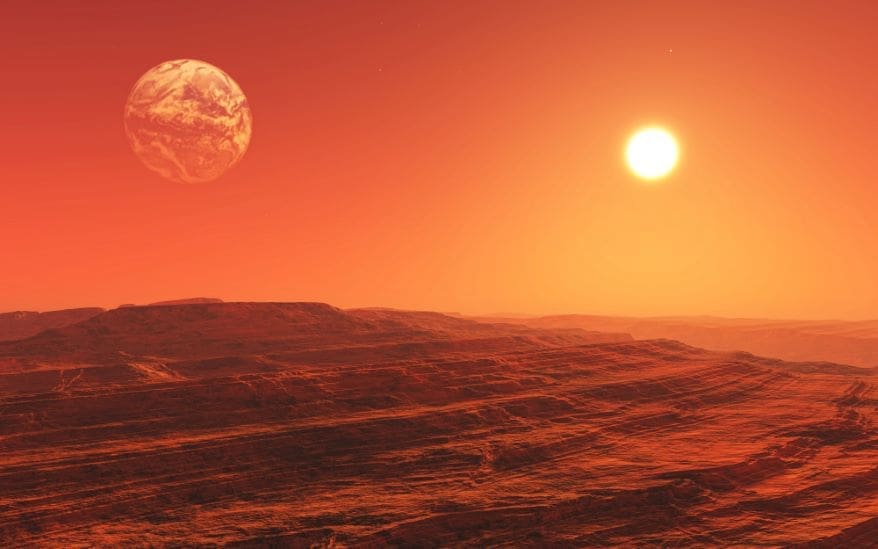
A space telescope saw a cold planet far away. Its name is Eps Ind Ab. It orbits a nearby star. Its temperature is low and near earth-like winter. In this case, that makes it special. Scientists studied its light. They explored its exoplanet atmosphere composition in detail. Researcher found signs of ammonia gas. They also saw thick clouds. To explain, these clouds may hide deeper layers. In short, this study changes how scientists read planets. With this in mind, students can link school science to real space work.
TL;DR ‘Exoplanet Atmosphere Composition’
Scientists studied a cold planet named Eps Ind Ab. They analyzed its light to understand exoplanet atmosphere composition. In this case, they found ammonia gas as well as thick clouds. To explain, these clouds may hide deeper layers and change signals. In short, the study shows how real planets differ from simple models.
Key Takeaways
- The planet shows ammonia gas
- Thick clouds hide deeper layers
- JWST studies very cold planets
- Old models need changes
- STEM skills help explain space
What Did Scientists Find?

Ammonia and Cloud Layers
Scientists measured light from the planet using two close wavelengths. In this case, they studied the exoplanet atmosphere composition. They saw a drop in light, which shows ammonia gas. However, the drop was weak. To explain, ammonia should block more light. Something reduced the signal. In short, scientists think clouds caused this effect. These clouds likely contain frozen water. As has been noted, cold planets form such clouds. With this in mind, clouds block deeper gas, so ammonia looks weaker.
Why Exoplanet Atmosphere Composition Is Important
In this case, it improves how we read exoplanet atmosphere composition. Older models used clear skies. However, real planets have complex clouds. To put it differently, planets are not simple systems. They act like active and changing worlds. With this in mind, models must improve. In short, better models help scientists read data well. In addition, they help plan future space missions.
How School Science Fits Here
Your Classroom Knowledge Works
Students learn about light and atoms in school. These ideas apply to exoplanet atmosphere composition. For example, spectra show different gases. Physics explains how light travels through space. Math helps compare signals clearly. In this case, all subjects work together. To put it differently, this is real STEM use in action.
Topics You Already Study
- Light and wavelengths
- Gases and molecules
- Graphs and data
- Heat and energy
- Motion and gravity
These topics connect in real science. After all, space research uses them together.
How the Telescope Helped
Power of JWST
The James Webb Space Telescope sees heat using infrared light. In this case, it helps study exoplanet atmosphere composition. This method finds very cold objects. Older tools often missed them. However, JWST detects very faint signals. In this way, it opens new paths in space research. To put it differently, scientists can now study planets near room temperature. In short, more Earth-like worlds can be explored.
How Observations Work
Scientists used special filters to study light. In this case, they explored exoplanet atmosphere composition. One filter shows ammonia effects. Another shows nearby light. By comparison, the difference reveals gas clearly. This method is simple and clear. It works from far away. To put it differently, no sample is needed.
Tools Scientists Use
- Infrared sensors for heat
- Filters for light bands
- Cameras for images
- Models for predictions
- Software for analysis
These tools support modern science. At any rate, coding skills also matter.
What Makes This Planet Special?
A Cold Giant Planet
Eps Ind Ab is very large and massive. It is about seven times Jupiter. In this case, it helps study exoplanet atmosphere composition. However, it is cold, unlike most giant planets. Most giants are very hot. This one is not. It helps scientists study cooler worlds. In contrast, hot planets behave in other ways. To put it differently, this planet fills an important gap.
A Puzzle Still Remains
Scientists still study the weak ammonia signal. In this case, they analyze Exoplanet atmosphere composition. One idea suggests low nitrogen levels. Another points to cloud blocking. However, clouds fit best. To put it differently, clouds may hide deeper gas. In short, more data is needed. Future studies will test this idea..
Careers You Can Choose
From School to Space Jobs
This discovery links to many careers. Students can study physics or space science. Engineers build telescopes. Chemists study gases. Programmers study data. In short, many paths exist.
Career Options
- Space scientist studying planets
- Data expert studying signals
- Engineer building tools
- Chemist studying gases
- Programmer writing code
Each job helps discoveries grow. Sooner or later, new students will join.
What Comes Next?
Better Planet Models
Scientists will improve models. They will add cloud effects. This gives better results. In the long run, it helps find habitable worlds. With attention to detail, small clues matter.
More Discoveries Ahead
More planets will be studied soon. Scientists will compare results. This builds better knowledge. As can be seen, science grows step by step. Each study adds new facts.
Frequently Asked Questions
What is Exoplanet atmosphere composition?
Exoplanet atmosphere composition shows the gases around a planet. In this case, it includes gases like ammonia and methane. To put it differently, it tells what the planet air contains.
Why is Exoplanet atmosphere composition important?
It helps scientists understand planet conditions. In this case, it shows temperature and possible clouds. To explain, it also helps search for life signs.
What tools are used to study Exoplanet atmosphere composition?
Telescopes like the James Webb Space Telescope are used. In this case, they detect infrared light signals. In short, these tools study planets from far away.
Can Exoplanet atmosphere composition change over time?
Yes, it can change due to weather and chemistry. In this case, clouds and gases shift often. To put it differently, planets have active atmospheres
References (APA Style)
Matthews, E. C., Mang, J., Carter, A. L., et al. (2026). A second visit to Eps Ind Ab with JWST: New photometry confirms ammonia and suggests thick clouds in the exoplanet atmosphere of the closest super-Jupiter. The Astrophysical Journal Letters, 1002(L5). https://doi.org/10.3847/2041-8213/ae5823
- Author
- Latest Posts

I completed my Master of Science from the University of Allahabad in 2017 with a strong academic background in life sciences and chemistry. My specialization included Molecular Biology, Microbiology, Genetics, Plant Breeding, Phycology, Paleobotany, and Bioinformatics, along with Organic Chemistry, Inorganic Chemistry, and Physical Chemistry. This multidisciplinary training provided me with a comprehensive understanding of biological systems and analytical scientific approaches.
After completing my postgraduate studies, I gained valuable professional experience in both the education and social development sectors. I worked at A.M. Oxford Public School, where I was actively involved in guiding students toward academic excellence. In this role, I focused on creating an engaging learning environment, encouraging critical thinking, and nurturing students’ curiosity for scientific learning. My experience as an educator strengthened my communication, mentoring, and classroom management skills.
In addition to my teaching experience, I worked with Jeevan Jagriti Foundation, where I contributed to community-based initiatives aimed at improving educational access and awareness among underprivileged sections of society. Through this work, I participated in programs designed to support social development and promote the value of education in marginalized communities.
These professional experiences helped me develop strong interpersonal, leadership, and organizational skills while reinforcing my commitment to education and community service.