A new approach to seed development Fertilization Triggers Phloem End Gate that controls nutrient flow into developing seeds, directly influencing their final size. To begin with, the innovation reveals the Phloem end gate—a fertilization-dependent ring-shaped structure…
Fertilization Triggers Phloem End Gate for Optimal Seed Growth
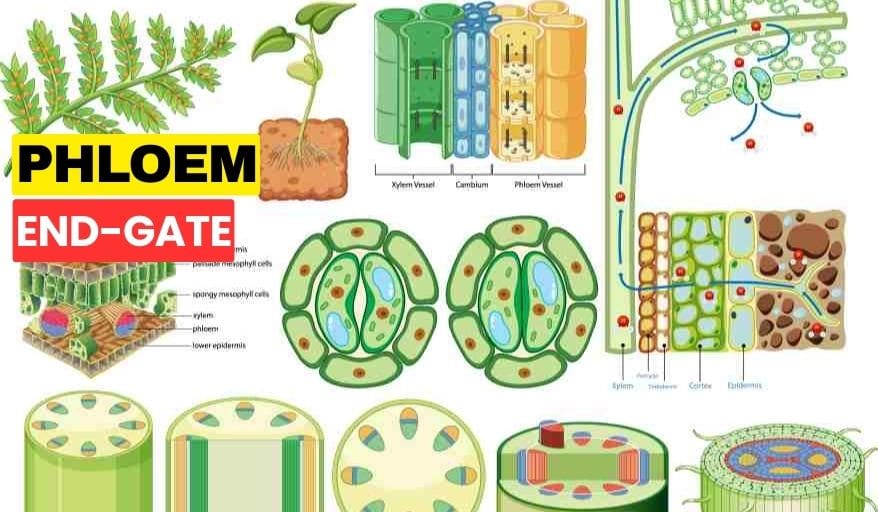
A new approach to seed development Fertilization Triggers Phloem End Gate that controls nutrient flow into developing seeds, directly influencing their final size.
To begin with, the innovation reveals the Phloem end gate—a fertilization-dependent ring-shaped structure at the seed’s chalazal region—that regulates nutrient flow and seed size. Particularly, pre-fertilization on callose blocks phloem unloading to conserve resources. Upon fertilization, signals trigger AtBG_ppap gene expression, degrading callose for nutrient influx. Additionally, overexpression boosts seed size by 16.5% in Arabidopsis and 9% in rice without affecting plant growth. Ultimately, this Phloem end gate optimizes seed development, enhancing crop yields for food security.
Key Takeaways
- Novel Phloem Gate Discovery: To begin with, a fertilization-dependent ring-shaped structure exists at the ovule’s chalazal end. Specifically, it acts as a “gateway.” In addition, it blocks nutrient flow pre-fertilization via callose deposition.
- Callose Regulation Mechanism: To begin with, post-fertilization signals degrade callose. As a result, this enables phloem unloading. Specifically, nutrients, hormones, and RNAs flow into the seed
- Key Gene Identified: AtBG_ppap (beta-1,3-glucanase) is upregulated by central cell fertilization. Specifically, it mediates callose breakdown. Additionally, mutants show incomplete degradation and 8.4% smaller seeds.
- Seed Size Boost: Overexpression enlarges Arabidopsis seeds by 16.5% and rice by 9%, without impacting plant growth or yield.
- Breeding Implications: First new plant tissue in 160 years offers precise control for crop yield enhancement, optimizing maternal resource allocation.
Also read: Discovering Growth: Key Functions of Plant Tissue Types
Where it’s used in practice
To begin with, this finding helps grow larger seeds in crops like rice and wheat, increasing food production by 9–16% without using more land. Additionally, home gardeners can grow bigger tomatoes and vegetables through simple gene changes. It also helps farming by using plant nutrients better and lowering waste in orchards. Finally, it improves seed nutrition for animal feed, helping keep food prices and nutrition stable around the world.
Business case
To begin with, farm companies get the AtBG_ppap gene method from Nagoya University. Next, CRISPR adds this gene to rice and wheat plants in test houses. Then, farm tests show 9–16% more crop growth and help get approval by 2027. In the end, seed packs may go on sale in 2028 to help farmers grow more food without using extra things.
Career and academic growth opportunities
- Plant developmental biology: To begin with, Grade 12 students can study how genes like AtBG_ppap work in plants.
- Crop biotechnology: This field uses CRISPR to increase rice and wheat growth by 9–16%.
- Plant physiology: It studies how food moves into seeds and how callose changes after fertilization. Besides, agricultural genomics studies how plants use nutrients for better crop growth.
- Sustainable breeding: This field uses these ideas to support food supply and farming jobs.
Conclusion: Fertilization Triggers Phloem End Gate
Firstly, scientists found a new plant part called the Phloem end gate. It is the first new plant tissue found in 160 years. It controls seed size by managing food flow into seeds. After fertilization, AtBG_ppap breaks down the Phloem end gate. This makes seeds 9–16% bigger in crops like rice without harming plant growth. The study by Ryushiro Kasahara’s team may help increase food production. It may also support jobs in crop science and plant breeding.
Also read: Plant Morphology: Identify Plant Parts and Their Roles
Frequently Asked Questions
What is the phloem end gate?
It’s a fertilization-dependent ring-shaped structure at the ovule’s chalazal end. Specifically, it acts as a “gateway” blocking nutrient flow pre-fertilization via callose deposition.
How does it regulate seed size?
Upon fertilization, signals upregulate AtBG_ppap gene, degrading callose for phloem unloading of nutrients. Additionally, overexpression boosts seed size by 16.5% in Arabidopsis and 9% in rice.
What are its implications for crops?
This optimizes maternal resource allocation, enhancing yields for food security without growth trade-offs.
Reference
Liu, X., Nakajima, K. P., Adhikari, P. B., Wu, X., Zhu, S., Okada, K., Kagenishi, T., Kurotani, K., Ishida, T., Nakamura, M., Sato, Y., Kawakatsu, Y., Xie, L., Huang, C., He, J., Yokawa, K., Sawa, S., Higashiyama, T., Bradford, K. J., . . . Kasahara, R. D. (2025). Fertilization-dependent phloem end gate regulates seed size. Current Biology, 35(9), 2049-2063.e3. https://doi.org/10.1016/j.cub.2025.03.033
- Author
- Latest Posts

I completed my Master of Science from the University of Allahabad in 2017 with a strong academic background in life sciences and chemistry. My specialization included Molecular Biology, Microbiology, Genetics, Plant Breeding, Phycology, Paleobotany, and Bioinformatics, along with Organic Chemistry, Inorganic Chemistry, and Physical Chemistry. This multidisciplinary training provided me with a comprehensive understanding of biological systems and analytical scientific approaches.
After completing my postgraduate studies, I gained valuable professional experience in both the education and social development sectors. I worked at A.M. Oxford Public School, where I was actively involved in guiding students toward academic excellence. In this role, I focused on creating an engaging learning environment, encouraging critical thinking, and nurturing students’ curiosity for scientific learning. My experience as an educator strengthened my communication, mentoring, and classroom management skills.
In addition to my teaching experience, I worked with Jeevan Jagriti Foundation, where I contributed to community-based initiatives aimed at improving educational access and awareness among underprivileged sections of society. Through this work, I participated in programs designed to support social development and promote the value of education in marginalized communities.
These professional experiences helped me develop strong interpersonal, leadership, and organizational skills while reinforcing my commitment to education and community service.