Renewable energy systems, battery technologies and circular economy solutions power sustainable transformation.
Eco-Friendly Tech: Innovations for a Sustainable Future in 2026
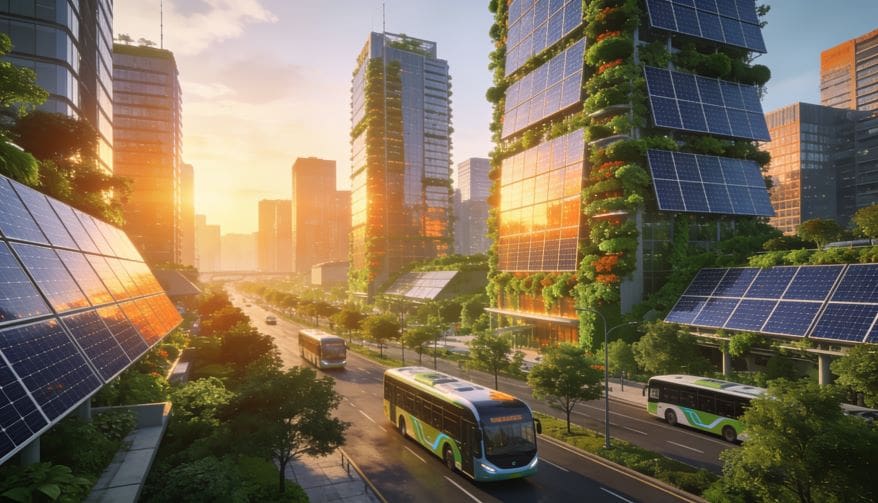
The climate crisis requires technological action on an urgent, global scale. Therefore, an individual’s best hope for achieving environmental sustainability is innovation in green technology. They’re grounded in environmental science principles and involve cutting-edge engineering. In fact, sustainable technology trends are transforming industries at their core. Meanwhile, in terms of technology, solar panels, wind turbines, and battery systems are ready. Additionally, smart grids enable energy distribution with unprecedented precision. Similarly, electric vehicles reduce reliance on fossil fuels in the transportation sector. Likewise, water purification systems solve scarcity challenges around the world. Furthermore, biodegradable materials replace persistent sources of plastic pollution. Finally, carbon capture removes existing emissions from the atmosphere.
By 2026, these innovations will no longer be experimental curiosities. Instead, they are alternative, economically competitive technologies to traditional ones. Consequently, organizations worldwide recognize environmental responsibility as a competitive advantage. In this article, we look at the most significant breakthroughs in green technology. Additionally, we describe how these systems work and how they are used in practice. As a result, knowing about these technologies enables you to make sustainable choices with confidence. Meanwhile, more and more schools and colleges are adding environmental science to their course lists. Consequently, young professionals enter the workforce with an environmental consciousness. Therefore, this generational shift is a huge win for technology adoption. At the same time, governments implement regulations to support green technology. Furthermore, incentive programs promote adoption by individuals and companies. Overall, from this perspective, the transition toward sustainability becomes increasingly feasible.
Key Takeaways: Green Technology Innovations
Green technology innovations reduce environmental impact and improve efficiency and performance.
- Renewable energy, battery technologies, and circular economy solutions drive sustainable transformation.
- Major industries such as healthcare, engineering, and manufacturing use eco-friendly technologies.
Smart systems optimize resource consumption for residential, commercial, and industrial uses. - Green technology trends focus on carbon neutrality and waste reduction.
- New materials are being developed as biodegradable alternatives to plastics.
- Investment in green technologies brings economic opportunities and job growth.
- Systemic solutions are needed to address issues such as cost barriers and infrastructure gaps.
- In the future, there will be great advances in energy efficiency and environmental restoration.
- Technology adoption should consider social equity and accessibility.
Green Technology Innovations & Sustainable Development
Science and innovation are the bedrock of sustainable technology. Environmental engineering uses principles of physics and chemistry to tackle environmental problems. Consequently, the need for green technologies arose from the unsustainability of traditional methods. The basic principle is that resource use is significantly reduced by efficiency. Additionally, finite fossil fuels are being replaced forever by renewable sources. Furthermore, circular design is built on the idea of waste-free material reuse. Together, these three principles form the basis of responsible technology development. As can be seen, renewable energy systems utilize natural power flows. For instance, the Earth’s surface gets nearly infinite energy from solar radiation. Likewise, predictable patterns of wind currents occur worldwide. Similarly, hydroelectric systems transform the movement of water into electricity.
Meanwhile, geothermal heat is constantly emitted from the Earth’s interior. As a result, the combination of sources provides both energy diversity and resilience. For example, battery technologies are methods for storing energy for future use. Previously, conventional batteries relied on chemical reactions that carried an environmental cost. However, lithium-ion batteries have become more efficient and use less toxic materials. Moreover, solid-state batteries offer even better performance characteristics. Likewise, flow batteries store energy in liquids called electrolytes. Overall, various technologies address different application requirements in different ways. For an understanding of innovation, look to advances in materials science. For instance, scientists create biodegradable polymers from plants. Similarly, mycelium-based materials are a total replacement for synthetic foams. In addition, algae-based products provide sustainable packaging. Innovations like these highlight the environmental promise of material science.
Renewable Energy Systems Science
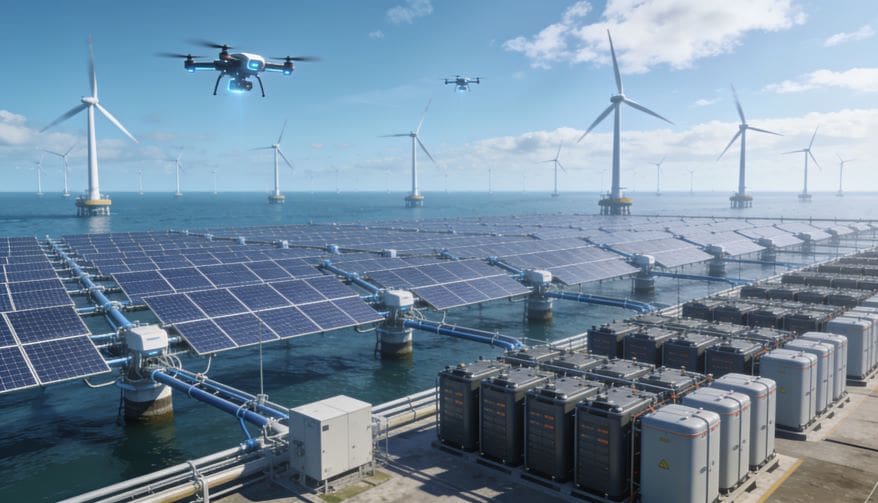
Renewable energy systems are based on well-established scientific principles. Photovoltaic cells change solar radiation directly into electricity. Silicon semiconductors absorb photons and emit electrons. Electric fields inside the cell guide the flow of the electrons. This creates direct current, which inverters convert to household power. Solar thermal systems harness the sun’s radiation to heat water. Concentrated solar power uses mirrors to concentrate the heat. Wind energy is a function of atmospheric dynamics and pressure gradient. Turbine blades catch moving air, converting motion to rotation.
Generator systems convert mechanical rotation into electrical current. Hydroelectric systems make good use of the gravitational potential energy. Turbine generators harness the energy of falling water through differences in elevation. Geothermal systems use heat from inside the Earth. Thermal gradients continually drive steam through turbines. They are scientifically valid and proven mechanisms. For example, solar panels show incredible gains in efficiency.
Best Sustainable Technology Trends to Watch in 2026
“Powerful sustainability solutions come from the convergence of multiple technologies.” Sustainable Technology Trends: Integrated Systems and Digital Optimization. Smart grid infrastructure intelligently manages the distribution of electricity. Demand is tracked in real time, and supply is adjusted to meet it. Distributed generation through rooftop panels reduces transmission losses. Microgrids can operate independently of the grid if the grid fails. For example, circular economy principles remove waste. Product design is geared towards material recovery from the outset. Material loops are closed via manufacturer take-back programs. Recycling technologies are good at recovering valuable elements. Waste: raw material for new production. This changes the fundamental nature of economic models.
Carbon capture and storage technology removes CO2 from the atmosphere. Direct air capture machines suck carbon out of the air around them. Industrial capture points capture emissions at source. The captured carbon is converted into chemicals. Some applications permanently sequester carbon underground. Thus, water technologies address critical scarcity. Desalination is an effective method for removing salt from seawater. Water reuse is made safe through wastewater treatment. Water-saving irrigation drastically reduces water use in agriculture. Rainwater harvesting systems collect local precipitation. Here, electric mobility fully substitutes for internal combustion.
Battery electric vehicles produce no tailpipe emissions. Heavy transport vehicles are powered by hydrogen fuel cells. Charging networks are expanding across developed countries. Sensor networks are also used in precision agriculture. Drones track crop health and irrigation requirements. Algorithms optimize the application of fertilizer and pesticides. Less chemical use saves soil and water. Higher yields drastically reduce the land requirement. With that in mind, building design is geared toward energy efficiency. Passive design reduces the need for heating and cooling. Smart building systems continuously optimize HVAC operations. Modern buildings are powered 100% by renewable energy integration. Biotechnology produces sustainable materials with this purpose in mind.
Intelligent Energy Management Systems and Smart Grids
Smart grid technology changes the way energy is distributed. Smart networks are flexibly balanced to supply and demand. The old grids were built around centralized power plants. Utilities sent info to consumers in one direction. This model is energy-inefficient and produces inefficiencies. Smart grids allow utilities to communicate in two ways. Consumers are active in energy management. The real-time price is the price of energy at this moment. Price signals respond automatically to demand. Load shifting reduces peak demand. Distributed energy resources integrate seamlessly into grids. Any power you don’t use from the solar panels on your roof goes back into the grid. It stores battery charges during low-demand periods.
Vehicle charging responds to electricity prices. Microprocessors and sensors watch every component on the grid. The measurement intervals are now reduced from months to seconds. That granular data enables optimization at scale.” Artificial intelligence can predict demand patterns accurately. Machine learning algorithms keep improving and improving. The forecasting accuracy is above 95 percent. The automation is quicker than a human operator—resulting in overall system efficiency improvements of 20 percent.
Real Life Applications: Green Technology Innovations
Green technologies are literally changing the face of the industry in every segment. The implementation strategies differ depending on the industry’s needs and limitations. Let me start listing applications: Manufacturing plants run on renewable energy. Solar installations are a total replacement for grid electricity. Wind supplements energy during good weather. Battery systems provide power during outages. Transportation companies systematically electrify their vehicle fleets. The charging infrastructure is growing fast in various regions. Fleet management software: optimization of routes and efficiency. Vehicle-to-grid technology allows cars to store electricity.
Biogas is produced from organic waste by anaerobic digestion. Plastic recycling technologies are effective in recovering materials. Composting provides soil amendments locally. Water systems collect and treat rain. Greywater recycling helps save fresh water. Wastewater treatment cleans water for irrigation. “Smart irrigation monitors soil moisture accurately. Smart meters monitor usage patterns all the time. Conservation efforts are motivated by behavioral feedback. The conservation price encourages less consumption. Community programs create shared infrastructure—neighborhoods powered by local renewable energy. Tool-sharing libraries reduce manufacturing requirements. Repair cafes extend product life indefinitely. Product-as-a-service models move away from ownership. Leasing agreements result in efficiency gains.
Technologies for Carbon Capture and Removal
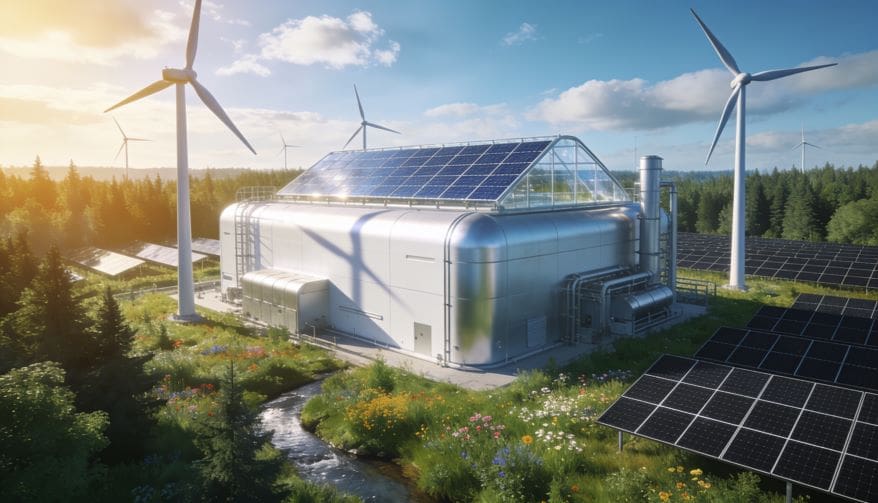
Carbon capture technology is a direct approach to reducing atmospheric emissions. Carbon removal technologies employ different mechanisms. For example, point-source capture targets emissions from industrial facilities. As a result, power plants with capture systems don’t release carbon into the atmosphere. Likewise, cement and steel manufacturing lock in process emissions. Meanwhile, direct air capture machines suck carbon out of the air. These systems constantly filter the surrounding air. Then, moisture is separated, and CO₂ is concentrated.
Meanwhile, storage methods are utilization-strategy dependent. For instance, geological storage permanently stores carbon underground. Consequently, the carbon is chemically incorporated into basaltic formations. Similarly, deep saline formations store pressurized gas, while enhanced oil recovery returns carbon to reservoirs. As a result, multi-century time frames mean permanent storage. In addition, use options to create valuable products. For example, carbon is converted into chemical feedstock for polymers. Likewise, captured carbon is used in making concrete. Consequently, building materials get stronger and more durable. Furthermore, captured carbon is converted into chemicals and fuels. For instance, it is possible to produce methanol and gasoline. Meanwhile, improved efficiency greatly reduces production costs. Therefore, lower cost drives commercial viability. Currently, costs range from $100 to $ 600 per ton. However, the target is $50–100 per ton. As a result, cost-competitiveness is closer to becoming a reality.
Practical Applications of Green Technology Innovations
Healthcare Sector
LED lighting retrofits help medical facilities reduce energy consumption. Fossil fuel dependence decreased with the use of renewable energy in hospitals. Waste management systems sustainably manage medical waste. Plastic medical supplies were replaced with biodegradable alternatives. Telehealth greatly reduces patient transport emissions. Water recycling systems reduce fresh water consumption in facilities.
Engineering & Manufacturing
Rooftop solar arrays to provide facility power (factory-installed). Industrial heat recovery systems capture waste energy. 3D printing reduces material waste in production. Electric forklift fleet replaces internal combustion equipment. Additive manufacturing produces parts with minimal waste. Raw materials need to be reduced by circular design principles.
Environmental remediation
Water purification systems powered by renewable energy. Wetland restoration projects naturally filter pollutants—stormwater management without chemicals (Bioswales). Riparian buffers help to prevent erosion and filter runoff—no diesel required for solar water pumping. Ecological monitoring networks measure the progress of restoration.
Teaching and research
Universities deploy renewable systems throughout their campuses. Research funding for sustainable technology development. Student projects for local sustainability solutions. Lab equipment powered by renewable electricity. Green building design as a tool for instruction—climate- and research-based technology development priorities.
Technology and Data Center
Refrigeration is replaced with ambient air for server cooling. Free-cooling methods substantially reduce energy use. Renewable energy drives the major operations of data centers. Liquid cooling systems can greatly improve efficiency. Use of waste heat by neighboring facilities. Intelligent scheduling matches computing with renewable availability.
Benefits of Green Technology Innovations
Reduce Emissions: Successfully cut greenhouse gas emissions and combat climate change.
- Cost Savings: Reduced operating costs through greater efficiency and energy independence
- Resource Conservation: Reduce consumption of finite natural resources in a systematic way
- Health Benefits: Reduced air pollution and related health effects
- Energy Independence: Reduced dependence on imported fossil fuels and fluctuating prices
- Job Creation: Jobs in renewables and green tech
- Innovation Driver: Promote technological advancement and competitive edges
- Corporate Responsibility: Improve brand image by being environmentally responsible
- Environmental Standards: Meet more stringent environmental standards
- Affordable Business Continuity: Build business resilience against resource scarcity
- Community Resilience: develop local capacity and reduce dependence on outside help
- Natural Capital: Recover ecosystem services and biodiversity
Emerging Innovations and Future Scope

Emerging technologies are accelerating progress toward sustainability. Consequently, future innovations will bring radical environmental improvements. For example, fusion energy research is becoming practical. Some private companies are nearing commercial demonstration. As a result, fusion plants would deliver unlimited clean power. Therefore, this could change the way the world receives its energy. Ultimately, fusion represents the ultimate solution for stabilizing the climate.
Meanwhile, perovskite solar cells achieve superior efficiency. In addition, tandem cells approach the theoretical maximum performance. Furthermore, manufacturing costs decrease through simpler processes. As a result, flexible, lightweight solar becomes possible. Likewise, building-integrated photovoltaics become invisible infrastructure. Consequently, perovskite technology could dominate within 15 years. Meanwhile, next-generation batteries transcend current limitations.
For instance, sodium-ion batteries use abundant materials. Similarly, lithium alternatives reduce dependence on critical materials. In addition, solid-state batteries are entering practical production. As energy density increases, vehicle range also improves. Furthermore, fast charging enables overnight replenishment. Therefore, solid-state technology could rule transportation by 2030. Meanwhile, green hydrogen promises to be a clean fuel. For example, electrolysis separates hydrogen from water. Then, renewable electricity powers efficient electrolysis. As a result, green hydrogen supplies heat to industry and transportation. Moreover, hydrogen can be used in existing infrastructure.
Likewise, ammonia synthesis can replace the Haber-Bosch process. Consequently, this will dramatically cut industrial emissions. In addition, it represents a breakthrough for carbon-neutral shipping fuels. Meanwhile, aviation biofuels are becoming cost-competitive. Similarly, synthetic fuels are made from carbon pulled from the air. Therefore, carbon-neutral aviation is technically feasible. Finally, demand reduction through efficiency and behavioral change further supports long-term sustainability.
Frequently Asked Questions
What are the top green technology innovations of 2026?
Technologies such as battery storage, solar PV, and wind energy are readily scalable—as is the commercial viability of carbon capture and removal technologies. Hydrogen fuel production is constantly becoming more efficient. Smart grid systems are highly effective at optimizing the integration of renewable energy. Sustainable technology trends are moving towards integrated solutions rather than stand-alone solutions.
How do renewable energy systems decrease carbon emissions relative to fossil fuels?
Renewable sources generate electricity without burning—no CO2 emissions during the generation phase. There is no more particulate matter, no more nitrogen oxides, no more sulfur dioxide.
What are the barriers to faster adoption of sustainable technologies?
The development of infrastructure requires substantial capital investment. Billions are spent on charging networks and grid upgrades. The maturity of the technology depends on the application. Some solutions are still experimental—battery technologies and circular economy solutions remain unproven. Costs impede; battery technologies and circular-economy solutions drive initial uptake.
Reference
- Tyagi, A., Soni, H., Vidhi et al. Green technologies and innovations towards sustainable manufacturing. Interactions 247, 279 (2026). https://doi.org/10.1007/s10751-026-02617-4
- Jayabal, R. (2024). Towards a carbon-free society: Innovations in green energy for a sustainable future. Results in Engineering, 24, Article 103121. https://doi.org/10.1016/j.rineng.2024.103121
- Tyagi, A., Soni, H., Vidhi, Pandey, A., & Mbohwa, C. (2026). Green technologies and innovations towards sustainable manufacturing. Interactions, 247(1), Article 279. https://doi.org/10.1007/s10751-026-02617-4
- Author
- Latest Posts

I’m a web developer and science writer with a Master’s degree in Computer Science (MSc) from Aurangabad University. I work in the tech space, building modern websites while staying up to date with the latest developments in the digital world. Alongside web development, I write about physics, chemistry, technology, robotics, mathematics, and groundbreaking innovations.
I’m passionate about turning complex scientific ideas into clear, engaging stories that anyone can understand. My goal is to make science and technology approachable and help readers stay informed about the fascinating changes shaping our world—because understanding science should be simple, inclusive, and accessible to all.