Semiconductor chips start with pure silicon wafers that must be very clean and smooth to work well.
How Semiconductor Chips Are Manufactured Step by Step
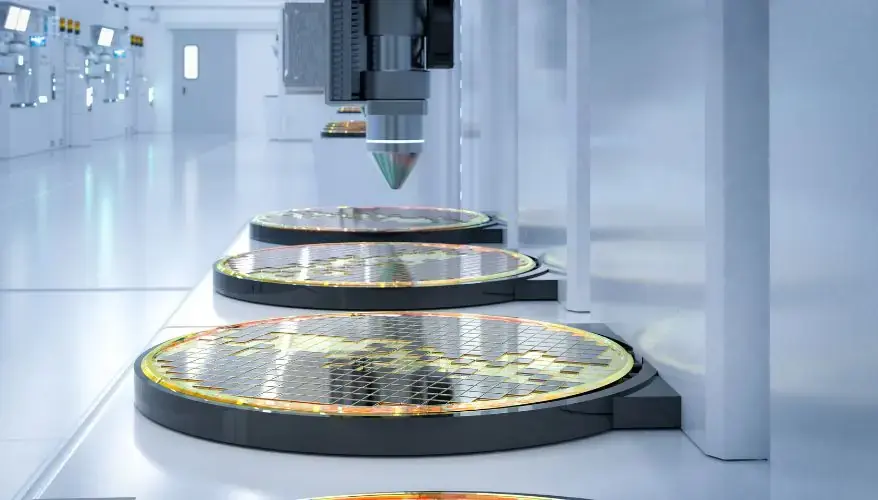
Estimated reading time: 11 minutes
Semiconductor chips manufacturing shapes many modern devices. Actually, it starts with pure silicon. Firstly, silicon wafers are made as the base for microchips. Each chip needs both, a clean space and advanced technology.
- We need the best raw materials for semiconductor chips.
- The process uses hard steps like lithography and etching.
- Skilled workers and costly machines make it harder.
- Testing and packaging check if each chip works right.
- The industry has problems from supply shortages and world issues.
Key Takeaways
- Semiconductor chips start with pure silicon wafers that must be very clean and smooth to work well.
- The manufacturing process has many precise steps like layering, patterning, etching, doping, and packaging to build tiny circuits.
- Cleanrooms keep dust and particles away, protecting chips from damage during production.
- Quality control and testing at every stage help find defects early and ensure chips work reliably.
- Making a chip takes several months and careful teamwork to create the powerful microchips used in many devices.
Semiconductor Chips Manufacturing Steps
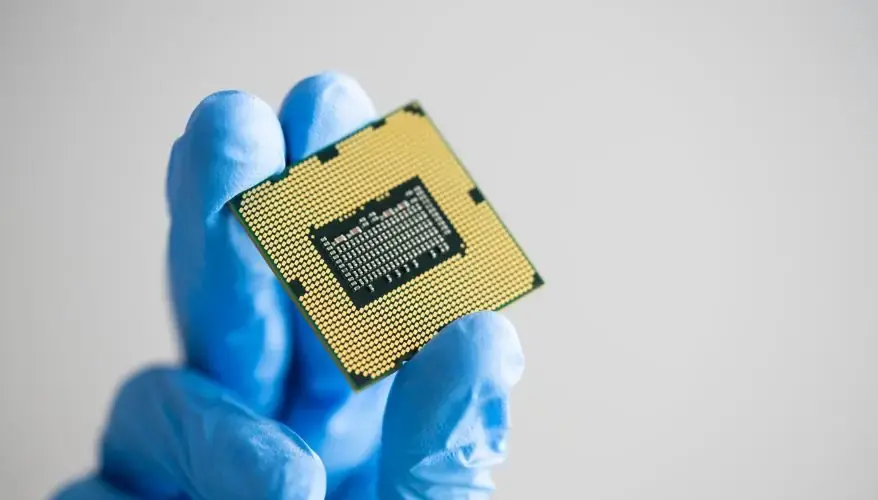
There are many steps in semiconductor chips manufacturing. Particularly, the manufacturing process uses special tools and strict rules. In fact, one must follow each step carefully to make good semiconductor chips.
The manufacturing process for a semiconductor chip takes about 26 weeks. There are about 1400 steps just to make the wafer. This long time shows how hard the process is.
Silicon Preparation
To begin with, the silicon needs to be 99.9999999% pure. In fact, even tiny dirt can ruin integrated circuits. Accordingly, to clean and purify silicon ball milling and acid etching can be used. Actually, this removes bad parts without much energy. Also, the monocrystalline silicon can be used for better results.
Semiconductors start with pure silicon. Most chips use silicon because it is common and has good electrical properties. During this, workers use many steps to clean and purify silicon. Generally, these steps include refining, zone melting, and solidification. Undoubtedly, high purity is key for reliable semiconductors.
Note: Most semiconductors use silicon. However, some chips use other materials for special uses.
| Material | Key Properties | Applications and Usage |
|---|---|---|
| Germanium (Ge) | High electron mobility; used in CMOS technology | Nanowire transistors, fiber optics, solar cells, sensors |
| Gallium Arsenide (GaAs) | High-frequency, direct band gap | Microwave devices, laser diodes, solar cells, telecom equipment |
| Indium Arsenide (InAs) | Excellent electron mobility | High-speed devices, research |
Silicon Wafer Fabrication

The chip fabrication process starts with pure silicon. Firstly, workers slice silicon ingots into thin wafers. Particularly, the Czochralski process can be used to grow a single crystal silicon ingot. They polish each wafer until it shines using Chemical Mechanical Planarization (CMP). Essentially, this step removes defects and dirt. Actually, the wafer must be flat and smooth. Further, small amounts of other elements are added using doping or ion implantation. Thereafter, it changes how the silicon carries electricity. Engineers also grow thin layers of silicon dioxide. Specifically, Chemical Vapor Deposition (CVD) and Physical Vapor Deposition (PVD) techniques are used for this. In brief, these steps help engineers build the base for integrated circuits consisting of active devices like transistors and diodes. Basically, each wafer holds many circuits. Such as, the fabrication team checks every wafer for quality. Certainly, this step is key for strong and reliable semiconductors.
Note: Wafer fabrication transforms raw silicon into a platform for microchips. This step sets the stage for all other processes.
Here are the main steps in wafer fabrication:
- Material Preparation
- Wafer Slicing
- Wafer Polishing
- Doping
- Oxidation and Deposition
- Photolithography
- Etching
- Metallization
- Testing and Quality Control
Chemicals and Gases
In fact, Semiconductors need many chemicals and gases. Firstly, nitrogen keeps tools and spaces clean. While, oxygen grows oxide layers and removes scraps. Next, argon protects semiconductors during fabrication. Further, hydrogen helps in surface cleaning and doping. Also, makers use acids like sulfuric and nitric acid for cleaning. Later, ammonium hydroxide helps in etching. Undoubtedly, all chemicals must be very pure. In fact, even small amounts of dirt can ruin semiconductors. Thus, each chemical has a special job in making semiconductors.
- Nitrogen: Keeps areas free from moisture and dust.
- Oxygen: Grows oxide layers and cleans.
- Argon: Protects during growth and cleaning.
- Hydrogen: Used in cleaning and doping.
- Sulfuric acid, nitric acid, ammonium hydroxide: Used for cleaning and etching.
Photomasks
Photomasks guide the patterns on semiconductors. At first, makers use fused silica plates with a thin metal layer. Indeed, they create patterns on the mask using lasers or electron beams. Actually, the mask lets light pass through certain areas. As a result, this transfers the circuit design onto the semiconductors. Workers inspect each mask for defects. Also, they check for scratches, missing parts, or dirt. In reality, a good photomask ensures the chip works as planned. Any mistake in the mask can cause the chip to fail.
Tip: Photomasks act like stencils. They help create tiny features on semiconductors.
Deposition

Deposition adds thin layers to the wafer. Seeing that, these layers form critical layers in the chip. Workers use three main methods:
- Chemical Vapor Deposition (CVD): Adds materials like silicon dioxide.
- Physical Vapor Deposition (PVD): Adds metals such as copper.
- Atomic Layer Deposition (ALD): Adds ultra-thin films with nanometer precision.
In time, each method builds up the chip’s structure. What’s more, these layers help create higher-performance devices. The manufacturing process repeats deposition many times. Albeit, each layer must be even and pure.
Photoresist Coating
Workers coat the wafer with photoresist. This is a light-sensitive chemical. They use a spin coater to spread it thin and even. The wafer spins fast to cover every spot. After coating, the wafer goes through a soft bake. This step dries the photoresist and makes it stick. In view of this, the photoresist must react well to UV light. It must also stick to the wafer and stay stable. This step prepares the wafer for patterning.
Tip: Good photoresist coating helps create sharp patterns for active devices.
Etching
Etching removes unwanted material. Workers use two main types:
| Etching Type | Method | Direction | Precision | Use |
|---|---|---|---|---|
| Wet Etching | Chemicals | All directions | Lower | Simple shapes |
| Dry Etching | Plasma/gas | One direction | Higher | Fine features |
Dry etching, like Reactive Ion Etching (RIE), gives sharp, clean lines. This step shapes the paths for electricity in semiconductors. Etching must protect the rest of the wafer.
Ion Implantation
Ion implantation changes the wafer’s electrical properties. Workers shoot ions into the wafer. They use elements like boron or phosphorus. This step is called doping. Doping creates regions that carry current. It helps form p-n junctions for diodes and transistors. After doping, the wafer is heated. This step locks the ions in place. Ion implantation allows precise control of chip behavior. It is vital for making semiconductors work in devices.
Packaging
Packaging protects the finished chips. Workers cut the wafer into small pieces called dies. Each die becomes a single chip. They attach each die to a base. Then, they connect it with tiny wires or bumps. The chip is sealed in a case. This case shields it from dust, heat, and moisture. Packaging also helps the chip connect to other parts in devices. Good packaging keeps microchips safe and reliable.
Note: Over half of chip failures come from poor packaging. Good packaging is key for strong semiconductor performance.
| Stage | Typical Time Needed |
|---|---|
| Wafer Fabrication | 40-100 days |
| Backend Assembly/Test | 28-56 days |
| Total Cycle | 3-6 months |
The semiconductor chips manufacturing process repeats many steps. Workers build up many critical layers. Each layer adds new features. This careful work creates the tiny parts inside devices. The process supports the world’s devices and keeps them running.
Lithography

Lithography is used to draw patterns on the semiconductor wafer. The light changes the photoresist. Technicians then develop the wafer to show the pattern. Not to mention they repeat this step many times to build up layers. Modern lithography uses deep ultraviolet (DUV) and extreme ultraviolet (EUV) light. EUV lets us make features smaller than 10 nanometers. Even a small mistake can cause problems in integrated circuits.
Packaging
After the circuits are done, technicians cut the wafer into single chips. Then they package each chip to protect it and connect it to other parts. Packaging affects how well the chip works and how long it lasts. In fact, they use different materials for packaging. Eventually, each material has a special job.
| Packaging Material Type | Role and Impact on Performance and Reliability |
|---|---|
| Substrates | Give insulation and support. Ceramic types help with heat. |
| Encapsulation Materials | Protect from moisture and stress. Epoxy is common. |
| Interconnect Materials | Gold wires and solder make connections. |
| Underfill Materials | Fill gaps to stop overheating and add strength. |
More than half of semiconductor failures come from packaging problems. You must choose the right materials and ways to package. Advanced packaging, like flip-chip, helps with heat and speed but needs careful work.
Lastly, technicians test each chip before sending it out. This step checks if the chip works as it should. Additionally, they also look for problems and make sure the chip meets all rules.

In summary:
Technicians follow a strict order of steps in semiconductor chips manufacturing:
- Design
- Wafer preparation
- Photolithography
- Etching
- Ion implantation and diffusion
- Annealing
- Deposition and oxidation
- Dicing
- Assembly
- Final testing and packaging.
Each step in the process needs special tools and skills. Obviously, technicians must keep everything clean and exact. This is why making semiconductor chips is so hard and takes so long. Technicians use these steps to make microchips and integrated circuits for many devices.
Miniaturization Challenges
Shrinking Features
Semiconductor chips keep getting smaller each year. Smaller chips work faster and use less power. In the 1980s, chip features were over 2 microns wide. Now, some features are only 3 nanometers wide. This happened because lithography and materials improved. Smaller features let us put more transistors on a chip. More transistors make chips quicker and save energy. But shrinking chips brings new problems. Quantum effects can make electrons leak out. Silicon is almost at its smallest possible size. Scientists are testing new materials like bismuth and gallium nitride. These changes make the process even more advanced.
Layer Alignment
Modern semiconductor chips have many layers stacked up. Each layer must be lined up just right. Even a tiny mistake can break the chip. Special tools help check if layers are in place. These tools can see things smaller than a nanometer. Overlay metrology systems also help keep layers lined up. Chiplet designs let us be a little less strict. Still, we need to be very accurate. Good alignment keeps the process working well.
Defect Detection
Technicians must find defects early in the process. Even small defects can ruin a chip. AI and deep learning help spot problems fast. These tools scan thousands of wafers every hour. They find scratches and pattern mistakes. Some systems are right 99.9% of the time. Companies like TSMC and Intel use these tools. They have lowered defect rates by up to 40%. This means we get more good chips from each batch.
Tip: Finding defects quickly saves money and makes more good chips.
| Technology | Accuracy | Speed (images/sec) | Yield Impact |
|---|---|---|---|
| Deep Learning | 95%+ | 136 | +20% |
| Wafer Segmentation | 99.9% | 1000+ UPH | +1% |
Heat Management
Technicians must control heat in high-density chips. More transistors make chips hotter. Air cooling works up to 200 Watts. For more heat, they use liquid cooling or cold plates. These move heat away from the chip. In 3D chips, heat can get stuck inside. New ways like microfluidic cooling and thermal vias help. These methods cost more and are harder to design. Some materials like graphene and liquid metal help heat move better. But there are still limits. Hotspots can get hotter than 1000 W/cm². Good heat control keeps semiconductor chips working well.
Note: Better cooling helps chips last longer and work better.
Yield Management
We want to make as many good chips as possible. This is called yield. At advanced nodes like 5nm, yield is hard to keep high. We use AI and yield tools to spot problems early. These tools look at data from every step in the process. They help us fix issues fast. Top companies use digital twins and real-time data to watch the process. Some companies get over 90% yield. Others, like Samsung at 4nm, get about 35%. TSMC gets about 70% at the same node.
Tip: High yield means lower costs and more chips for electronic devices.
FAQs
What makes semiconductor chips so hard to manufacture?
We need to control every step. Each part must be very clean. Machines must work with high accuracy. Even a small mistake can ruin a chip. We also need skilled workers and advanced tools.
Why do chips need such pure materials?
Pure materials help chips work better. Dirt or dust can cause chips to fail. Technicians use special cleaning steps to keep everything pure. This helps them make more good chips.
How do you keep chips cool during use?
Technicians use cooling methods like fans or liquid cooling. Some chips use special materials to move heat away. Good cooling helps chips last longer and work faster.
Why do only a few companies make advanced chips?
Making advanced chips costs a lot of money. We need special machines and skilled workers. Only a few companies can afford this. They also need to keep up with new technology.
How do you test if a chip works?
We use machines to check each chip. These machines look for problems like broken parts or heat issues. We test chips at different steps to make sure they work well.
References
Zong, L., Zhu, B., Lu, Z., Tan, Y., Jin, Y., Liu, N., Hu, Y., Gu, S., Zhu, J., & Cui, Y. (2015). Nanopurification of silicon from 84% to 99.999% purity with a simple and scalable process. Proceedings of the National Academy of Sciences, 112(44), 13473–13477. https://doi.org/10.1073/pnas.1513012112
Ayodele, A. (2024, January 11). Silicon Wafers: Production, Properties and application. Wevolver. https://www.wevolver.com/article/silicon-wafers
Wafer Fabrication Guide: Processes, materials & Trends. (n.d.). https://www.aemdeposition.com/blog/wafer-fabrication-guide-processes-and-materials.html
Rooks, B. (2024, September 13). Understanding the semiconductor etching process for precision components. Photochemical Machining Metal Parts – Precision Metal Etching Services | E-Fab, Inc. https://www.e-fab.com/understanding-the-semiconductor-etching-process-for-precision-components/
Anysilicon. (2023, October 17). The Ultimate guide to semiconductor packaging – AnySilicon. AnySilicon. https://anysilicon.com/the-ultimate-guide-to-semiconductor-packaging/
Arnold, B. (2022, November 28). Shrinking possibilities. IEEE Spectrum. https://spectrum.ieee.org/shrinking-possibilities
Images canva.com
- Author
- Latest Posts

Charudatta Pathak was a student at St. Aloysius High School in Bhusawal, established in 1874, making it one of India’s oldest convent institutions. He earned his bachelor’s degree in mechanical engineering from SSVPS College of Engineering, Dhule in 1995, demonstrating exceptional academic achievement. Thereafter, he launched his career as a CNC programmer in a toolroom. He has utilized FANUC, Deckel, Maho, and Mikron controllers to operate 2-axis and 3-axis machines for the fabrication of jigs, fixtures, dies, and molds. He commenced his career as an academic in 1996, when he assumed the role of lecturer at SSVPS College of Engineering, Dhule. Additionally, he earned his post-graduate degree in CAD/CAM from L. D. College of Engineering, Ahmedabad, in 2000, and then acquired a Ph.D. from COEP in 2011 while concurrently engaged in teaching. Until 2023, he occupied many academic roles, including lecturer, assistant professor, professor, dean, principal, director, and vice chancellor at both public and private universities throughout India. From 2008 to 2010, he served as the project lead in the CAE department of a European multinational firm. During his 28-year professional tenure, he identified a need for dependable books targeted at students in grades 8 to 12, particularly for nascent career planning. He founded ENTECH Digital Magazine, a free monthly publication available on entechonline.com and magzter.com. Teens with a strong interest in Science, Technology, Engineering, and Mathematics (STEM) who aspire to pursue careers in these fields may find ENTECH Digital Magazine beneficial.