Master IUPAC nomenclature with 6 essential rules for naming organic compounds. Simplify hydrocarbons, functional groups, and substituent prioritization.
IUPAC Nomenclature Made Easy: 30+ Practice Problems with Step-by-Step Solutions
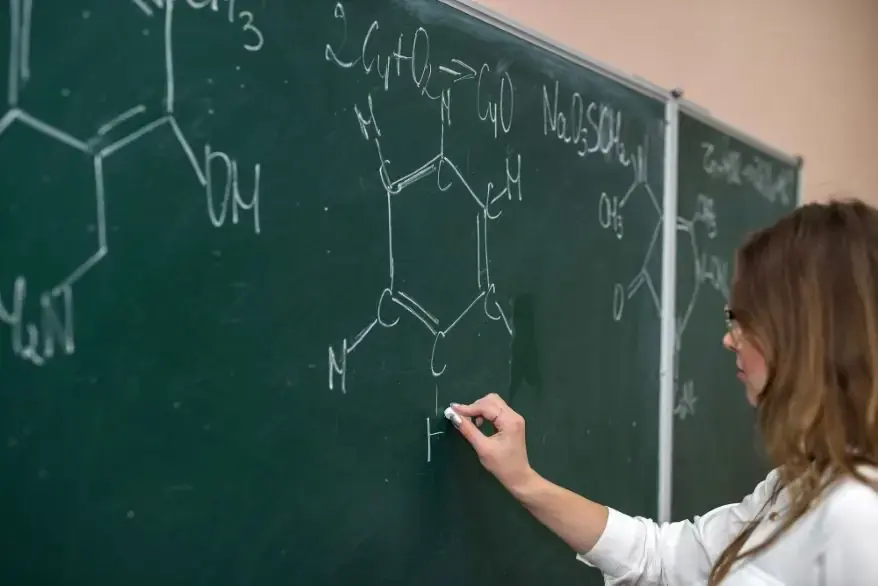

Naming an organic molecule correctly is, in fact, the first skill every chemistry student must lock down — yet it is also the one where marks are most often thrown away. Moreover, with 30+ practice problems and step-by-step solutions, this guide turns IUPAC nomenclature from a confusing rulebook into a repeatable five-step method. In addition, it covers alkanes, alkenes, alkynes, and functional-group naming.
However, If you want the complete overview before you drill, start with our Organic Chemistry Complete Guide
What Is IUPAC Nomenclature? (Why Standardized Naming Matters)
IUPAC nomenclature is the systematic method for naming chemical compounds published by the International Union of Pure and Applied Chemistry. Instead of memorising arbitrary common names, students learn a set of priority rules that produce exactly one correct name for every structure.
Why students struggle with IUPAC naming
Missing the longest continuous parent chain as well as picking a shorter, “easier-looking” one.
Numbering the chain wrong instead of applying the lowest-locant rule.
Listing substituents in number order rather than alphabetical order.
Forgetting the punctuation rules: commas between numbers, hyphens between a number and a word.
IUPAC Nomenclature Practice: The Complete Step-by-Step Guide
Work through these five steps in order and you will arrive at the correct name every time.

- Step 1: Firstly, Identify the parent chain (longest continuous carbon chain).
Scan the molecule for the longest unbroken run of carbon atoms. however, The chain does not have to be straight. If two chains have the same length, choose the one with more substituents; if they tie again, choose the one that includes double or triple bonds. - Step 2: Secondly, Number the chain (lowest-locant rule).
Number the parent chain so the first point of difference gives the substituents the lowest possible numbers. Functional groups out-rank alkyl groups for numbering, but the lowest-sum rule alone is not enough — apply the first point of difference. - Step 3: Additionally, Identify and, first, name substituents (alkyl groups, halogens).
- Next, name each attached group: methyl (-CH₃), ethyl (-C₂H₅), propyl, as well as the halogens fluoro-, chloro-, bromo-, and iodo-. In addition, you’ll see how electronic effects influence substituent naming
- Step 4: Eventually, Apply, first and foremost, functional-group priority (suffix vs prefix).
- Most importantly, the highest-priority functional group takes the suffix (-oic acid, -al, -one, -ol, -amine); meanwhile, every lower-priority group becomes a prefix (hydroxy-, oxo-, amino-). Use the functional group identification chart to keep the ladder straight.
- Step 5: Assemble, finally, the full name (alphabetical order, proper punctuation).
- Then, list substituents alphabetically, while ignoring the multiplicative prefixes di-, tri-, and tetra-. Additionally, separate numbers with commas, and numbers from words with hyphens: 2,3-dimethylbutane, not 2,3 dimethyl butane. Consequently, proper punctuation and alphabetical order ensure the name follows IUPAC conventions.
IUPAC Nomenclature practice Functional Group Priority Table
The priority ladder below is the single most useful reference for naming. However, The highest group wins the suffix; everything below it becomes a prefix.
| Priority | Functional group | Suffix | Prefix | Example |
| 1 (highest) | Carboxylic acid | -oic acid | carboxy- | CH₃COOH → ethanoic acid |
| 2 | Ester | -oate | alkoxycarbonyl- | CH₃COOCH₃ → methyl ethanoate |
| 3 | Amide | -amide | carbamoyl- | CH₃CONH₂ → ethanamide |
| 4 | Nitrile | -nitrile | cyano- | CH₃CN → ethanenitrile |
| 5 | Aldehyde | -al | oxo- (formyl-) | CH₃CHO → ethanal |
| 6 | Ketone | -one | oxo- | CH₃COCH₃ → propan-2-one |
| 7 | Alcohol | -ol | hydroxy- | CH₃OH → methanol |
| 8 | Amine | -amine | amino- | CH₃NH₂ → methanamine |
| 9 | Alkene | -ene | — | CH₂=CH₂ → ethene |
| 10 | Alkyne | -yne | — | CH≡CH → ethyne |
| 11 (lowest) | Alkane | -ane | alkyl- | CH₄ → methane |
Suffix vs prefix — the rule of thumb
Suffix = the principal (highest-priority) group only. Therefore, Prefix = every other functional group, plus all alkyl groups and halogens. Furthermore, if there is no functional group, the parent suffix is -ane, -ene, or -yne for single, double, or triple bonds, respectively.
Naming Alkanes, Alkenes & Alkynes — With Solved Examples
Straight-chain and branched alkanes
Straight chains are, in fact, the first eight alkanes you already know: methane, ethane, propane, butane, pentane, hexane, heptane, and octane. Moreover, branching is where the parent-chain rule, in particular, starts to matter.
Solved: (CH₃)₂CHCH₂CH₃. Firstly, The longest chain is four carbons → butane. A methyl group sits on carbon 2, so the name is 2-methylbutane.
Alkenes and alkynes: double/triple bond position numbering
The double or triple bond must be inside the numbered parent chain, as well as the suffix number tells you where it starts. Number so the bond itself — not a branch — gets the lowest number.
Solved: CH₃CH=CHCH₃. Four-carbon chain → butene. The double bond is between C2 and C3, so it is but-2-ene (not but-1-ene).
Cyclic compounds: cycloalkanes, cycloalkenes
Prefix the ring with “cyclo-” and number the ring so substituents get the lowest numbers: C₆H₁₂ is cyclohexane; a single methyl branch makes methylcyclohexane (no number needed). A ring with one double bond is a cycloalkene, e.g. cyclohexene.
Naming Compounds with Multiple Functional Groups
When two or more functional groups are present, priority decides which one takes the suffix — everything else becomes a prefix. Do not be tempted to give every group a suffix.
When to use suffix vs prefix: priority decides
Solved: HO-CH₂-CH₂-OH. Two -OH groups, neither outranks the other, so both become suffixes with a locant: ethane-1,2-diol.
Solved: CH₃CH(OH)CH₂CHO. Alcohol vs aldehyde — aldehydes outrank alcohols, so -aldehyde is the suffix (-al) and -OH becomes the prefix hydroxy-. Name it 3-hydroxybutanal.
Compounds with halo + hydroxy + carbonyl groups
Additionally, Halogens are always prefixes (never suffixes). Combine them with the functional-group ladder: a bromo- and hydroxy-substituted ketone is named with the ketone suffix for example, -one, the -OH as hydroxy-, and the -Br as bromo-, all listed alphabetically with correct locants.
Common Mistakes in IUPAC Nomenclature
| Mistake | Wrong | Correct | Why |
| Wrong parent chain | 1-methylbutane | 2-methylbutane | Longest chain is 4 C, not 3 |
| Wrong numbering | 3-methylbutane | 2-methylbutane | Lowest locant wins |
| Alphabetical order errors | 2-methyl-3-ethylpentane | 3-ethyl-2-methylpentane | “e” before “m” |
| Missing punctuation | 2,3 dimethyl butane | 2,3-dimethylbutane | Comma + hyphen required |
Wrong parent chain selection — always re-scan for the longest continuous carbon chain, even if it bends.
Incorrect numbering — apply the first point of difference, not just the lowest sum.
Alphabetical order errors — ignore di-, tri-, sec- and tert- when alphabetising substituents.
30+ IUPAC Nomenclature Practice Problems with Solutions
Try each set, first of all, before checking the answer key. Moreover, the first two sets show full working; meanwhile, the remaining sets give the condensed answer.
Missing punctuation — commas between numbers, hyphens between letters and numbers.
Set A: Basic alkanes
1. CH₄ → Methane
2. CH₃–CH₂–CH₃ → Propane
3. (CH₃)₂CHCH₂CH₃ → 2-Methylbutane
4. CH₃(CH₂)₄CH₃ → Hexane
5. (CH₃)₃C–CH₃ → 2,2-Dimethylpropane
6. CH₃CH₂CH(CH₃)CH₂CH₃ → 3-Methylpentane
7. (CH₃)₂CHCH(CH₃)₂ → 2,3-Dimethylbutane
8. CH₃(CH₂)₅CH₃ → Heptane
9. (CH₃)₃CCH₂CH₃ → 2,2-Dimethylbutane
10. CH₃CH₂CH₂CH(CH₃)CH₃ → 2-Methylpentane
Set B: Alkenes & alkynes
11. CH₂=CH₂ → Ethene
12. CH₃CH=CH₂ → Propene
13. CH₃CH=CHCH₃ → But-2-ene
14. CH₃CH₂C(CH₃)=CH₂ → 2-Methylbut-1-ene
15. CH≡CH → Ethyne
16. CH₃C≡CH → Propyne
17. CH₃C≡CCH₃ → But-2-yne
18. CH₂=CH–CH₂–CH₃ → But-1-ene
Set C: Compounds with functional groups
19. CH₃OH → Methanol
20. CH₃CH₂OH → Ethanol
21. CH₃CHO → Ethanal
22. CH₃CH₂CHO → Propanal
23. CH₃COCH₃ → Propan-2-one (acetone)
24. CH₃COOH → Ethanoic acid
25. CH₃CH₂COOH → Propanoic acid
26. CH₃CH₂CH₂OH → Propan-1-ol
27. CH₃CH(OH)CH₃ → Propan-2-ol
28. CH₃CH₂Br → Bromoethane
29. CH₃CHClCH₃ → 2-Chloropropane
30. CH₃CH₂CH₂NH₂ → Propan-1-amine
Set D: Challenge — multiple functional groups
31. HO–CH₂–CH₂–OH → Ethane-1,2-diol (ethylene glycol)
32. CH₃CH(OH)CH₂CH₃ → Butan-2-ol
33. HOCH₂CH(OH)CH₂OH → Propane-1,2,3-triol (glycerol)
34. CH₃COCH₂CH₃ → Butan-2-one
35. OHC–CHO → Ethanedial (glyoxal)
CH₃COCH₃ → parent chain is three carbons (propane). The carbonyl =O makes it a ketone, highest group present, so the suffix becomes -one with the locant of the C=O. Enumerate so the C=O is at carbon 2 → propan-2-one.
Frequently Asked Questions: IUPAC Nomenclature practice
Q1: What does IUPAC stand for?
International Union of Pure and Applied Chemistry — in fact, the body that publishes the official naming rules for organic compounds.
Q2: How do I choose the parent chain?
Pick the longest continuous chain of carbon atoms. On a tie in length, choose the chain with the most substituents; if still tied, the one with the most double/triple bonds.
Q3: When is the ‘e’ dropped from the alkane suffix?
Drop the terminal ‘e’ when the suffix that follows begins with a vowel: butane becomes butan- + -ol = butanol, and butan- + -oic acid = butanoic acid. Keep it before a consonant prefix (butan-2-one keeps the ‘a’, the ‘e’ is dropped before -one).
Q4: What is the difference between the common name and the IUPAC name?
Common names (acetone, acetic acid, neopentane) are historical or trivial and do not encode structure. The IUPAC name is systematic — propan-2-one, ethanoic acid, 2,2-dimethylpropane — and lets you reconstruct the full structure from the name alone.
References
- Hellwich, K., Hartshorn, R., Yerin, A., Damhus, T. & Hutton, A. (2020). Brief guide to the nomenclature of organic chemistry (IUPAC Technical Report). Pure and Applied Chemistry, 92(3), 527-539. https://doi.org/10.1515/pac-2019-0104
- El-Zohry, A. M. (2020). Excited-state dynamics of organic dyes in solar cells. Solar Cells – Theory, Materials and Recent Advances. https://doi.org/10.5772/intechopen.94132
This article was written by Juveriya Khan and reviewed for editorial accuracy by our editorial team. It has not yet undergone independent review by a professional.
- Author
- Latest Posts

Vidisha Jain is an educator, Chemistry Subject Matter Expert, and passionate science communicator dedicated to making fundamental science engaging and accessible. She holds a Master of Science (M.Sc.) in Chemistry from Panjab University, Chandigarh, combining a strong foundation in chemical sciences with practical instructional expertise.
Currently serving as a Science Teacher at Mind Tree School, Vidisha specializes in translating complex scientific principles, chemical concepts, and laboratory dynamics into intuitive lessons for young learners. Her work focuses on fostering critical thinking, conceptual clarity, and curiosity in science classrooms, helping students bridge the gap between theoretical chemistry and real-world applications.
As an author for ENTECH Magazine, Vidisha shares insights into chemical science, effective STEM learning strategies, and classroom-tested approaches to mastering core scientific concepts.