Scientists at the University of Bonn have developed a revolutionary, low-cost filter. It...
Microplastic Filter-Scientists Copied Fish Biology to Solve the Microplastics Crisis

Estimated reading time: 5 minutes
Scientists at the University of Bonn have developed a revolutionary, low-cost microplastic filter. This innovative Microplastics Filter is inspired by fish and mimics the gill systems of filter-feeding fish. It is capable of removing over 99% of microplastic fibers from washing machine wastewater. It prevents clogging by utilizing a funnel-shaped design that guides particles away rather than blocking the filter. This is a significant step toward reducing textile pollution.
Also Read: Basics of Wastewater Treatment explained Simply
How this Microplastic Filter works (Based on Fish Gills)
System with Gill Arches:
The filter uses comb-like structures called denticles. These structures mimic the gill arches of fish, such as anchovies. In fish, these gill arches are responsible for capturing plankton.
Semi-cross-flow filtration system:
Water flows through a porous funnel wall rather than directly hitting a barrier. This allows clean water to pass through while also capturing particulates.
Self-Cleaning Mechanism:
The funnel shape directs trapped microfibers toward a collection point. This design prevents the filter from becoming clogged. Unlike typical filters, it maintains efficiency even as it collects debris.
Periodic Cleaning:
The collected plastic is periodically compressed into compact pellets or removed using suction. Finally, it is disposed of with the general waste.
Hamann, L., Reuß, C., Herzog, H., Schreiber, K., Geitner, C., & Blanke, A. published their findings under the title “A self-cleaning, bio-inspired high retention filter for a major entry path of microplastics” in December 2025
ENTECH STEM Magazine has included this research in its list of the Top 10 Biotechnology Discoveries and Innovations of 2025.
Potential Benefits of Microplastic Filter
Improved Water Quality and Environmental Protection
- This microplastic filter technology can remove more than 99% of plastic fibers from washing machine wastewater. Therefore, it helps reduce the amount of microplastic pollution entering rivers, oceans, and other water bodies.
- Cleaner wastewater leads to a healthier environment for aquatic ecosystems. It reduces the impact of plastic waste on marine life and also the broader food chain.
Reduced Plastic Pollution and Waste Management
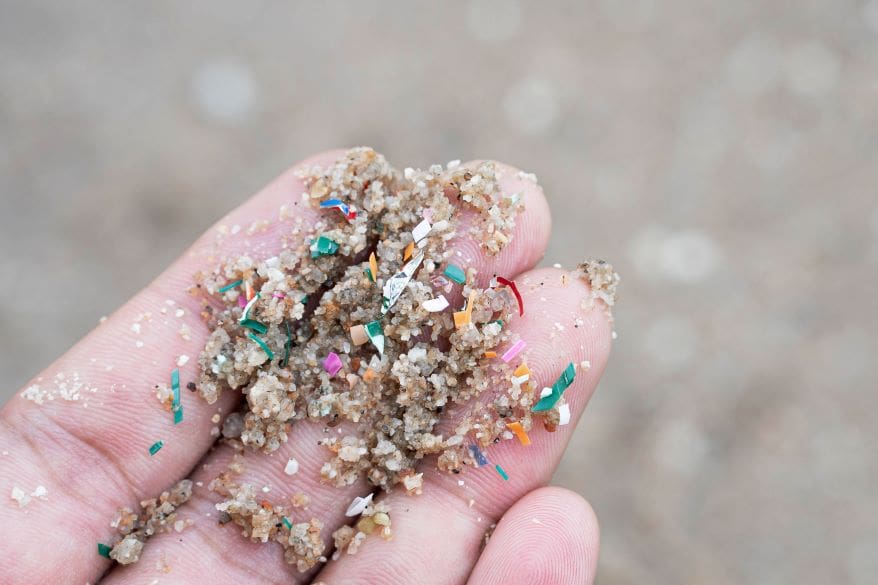
- The ability of this microplastic filter to capture a significant portion of plastic fibers from household wastewater can contribute to overall efforts to reduce plastic pollution and waste.
- By preventing the release of these microplastics into the environment, the microplastic filter technology can not only help mitigate the long-term accumulation of plastic waste but also its associated environmental and health risks.
Improved Wastewater Treatment Efficiency
- The integration of this microplastic filter technology into existing wastewater treatment plants can enhance the overall efficiency and performance of the treatment process.
- By removing a substantial number of plastic fibers, the microplastic filter can help reduce the burden on downstream treatment stages and improve the overall quality of the treated effluent.
Health and Safety Benefits
- Reducing the presence of microplastics in wastewater can have positive implications for human health, as these tiny particles can potentially enter the food chain and accumulate in the human body.
- The cleaner wastewater can also contribute to safer irrigation practices and reduce the risk of exposure to harmful contaminants for agricultural workers and consumers.
Educational and Career Opportunities: Microplastics Filter
Biomimicry and Bioinspired Engineering
- Studying the structural and functional design principles of the fish gill arch system to further optimize the performance and efficiency of the wastewater filtration technology
- Exploring the application of biomimicry and bioinspired approaches to solve other environmental and engineering challenges related to water treatment as well as resource management
- Investigating the integration of natural design principles with advanced materials and manufacturing techniques to develop innovative, nature-inspired solutions
Membrane Technology and Filtration Science
- Advancing the understanding of the underlying mechanisms and materials used in the patent-pending microplastic filter, such as the membrane structure, pore size, and flow dynamics
- Developing novel membrane materials, coatings, or surface modifications to enhance the filtration capabilities, fouling resistance, and long-term durability of the system
- Exploring the scalability and optimization of the filtration process for various wastewater treatment applications, including household, municipal, and industrial settings
Microplastics and Plastic Pollution Research
- Investigating the sources, distribution, and environmental fate of microplastic fibers and other plastic contaminants in wastewater streams
- Studying the potential impacts of microplastics on aquatic ecosystems, food webs, and human health, and identifying effective mitigation strategies
- Developing advanced analytical techniques and monitoring methods to accurately quantify and characterize the presence of microplastics in different environmental matrices
Environmental Engineering and Process Optimization
- Optimizing the design, scale-up, and implementation of the wastewater filtration system to improve its efficiency, reliability, and cost-effectiveness for various applications
- Integrating the filtration technology with other wastewater treatment processes, such as biological treatment or advanced oxidation, to achieve holistic improvements in water quality
- Developing computational models and simulation tools to predict the performance and identify the critical parameters influencing the filtration process.
Reference
Hamann, L., Reuß, C., Herzog, H., Schreiber, K., Geitner, C., & Blanke, A. (2025). A self-cleaning, bio-inspired high retention filter for a major entry path of microplastics. npj Emerging Contaminants, 1(1), 18. DOI: 10.1038/s44454-025-00020-2
Additionally, to stay updated with the latest developments in STEM research, visit ENTECH Online. Basically, this is our digital magazine for science, technology, engineering, and mathematics. Also, at ENTECH Online, you’ll find a wealth of information.
- Author
- Latest Posts

I am a Master’s qualified in Science with focus on Zoology and Entomology and am a passionate, curiosity-driven science enthusiast aiming to transform complex scientific ideas in a manner that are easy to understand hence, educate, and inspire.
I have an experience of working on the projects in the field of Entomology which has provided me hands-on experience with various research techniques. Besides, I have also gained experience of lab work as well as developed communication skills during the course of my bachelors and masters.
With a strong foundation in life sciences and a growing interest in Medical and Biological research, I have cultivated a writing style that merges scientific facts with creativity.
My experience in teaching has also taught me to develop an understanding of what are the interests of people and how to communicate them effectively.
I am committed to lifelong learning, actively engaging in Interdisciplinary learning, so as to broaden my perspective.