Leukemia is a type of cancer that affects the blood and also bone marrow. It occurs when the body produces an abnormal number of white blood cells. This can interfere with the production of normal…
CytoDiffusion-AI Blood Analyzer Beats Human Experts at Detecting Leukemia
Estimated reading time: 4 minutes
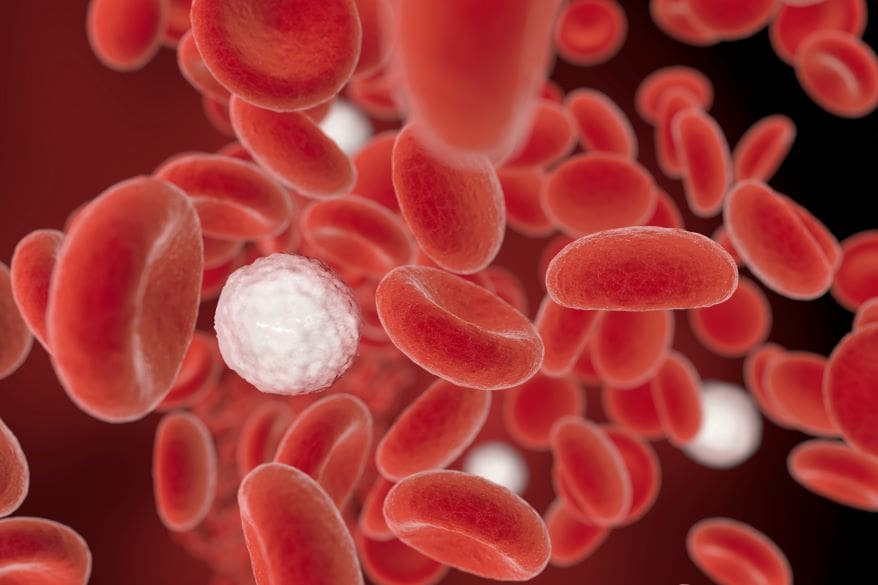
Researchers have recently developed a new AI system called CytoDiffusion. It could change how blood disorders, such as leukemia, are detected by analyzing blood cell morphology. In particular, CytoDiffusion in leukemia detection represents a groundbreaking advance. Leukemia is a type of cancer that affects the blood and also bone marrow. It occurs when the body produces an abnormal number of white blood cells. This can interfere with the production of normal blood cells. It can also weaken the immune system.
The system of CytoDiffusion works with remarkable sensitivity and can also assess its own uncertainty. In tests, CytoDiffusion detected abnormal cells linked to conditions like leukemia more accurately than existing systems. It can quantify its own uncertainty in predictions, which is useful for clinical support. Unlike methods that only separate cell types based on fixed features, CytoDiffusion models the entire distribution of blood cell shapes. It also analyzes their appearances. Interestingly, CytoDiffusion in leukemia identification is particularly valuable given the complexity of blood cell morphology in cancer. This approach allows for more accurate identification of cells. Thus, allowing it to accurately identify both normal and rare or abnormal blood cells.
Simon D., Julian G. et. al conducted this research and published it under the title “Deep generative classification of blood cell morphology” in November 2025.
ENTECH STEM Magazine has included this research in its list of the Top 10 Biotechnology Discoveries and Innovations of 2025.
Potential Benefits
Improved and Earlier Diagnosis of Blood Disorders
- CytoDiffusion can analyze blood cell morphology with remarkable sensitivity. This ability can enable earlier and more accurate detection of blood disorders. It is especially useful for conditions like leukemia, as CytoDiffusion in leukemia detection can provide insights beyond standard techniques.
- This can allow for prompt medical intervention. Early treatment improves the chances of success and leads to better patient outcomes. These benefits can have a significant impact on the daily lives of people affected by these conditions.
Reduced Anxiety and Faster Treatment Decisions
- The AI system’s awareness of its own uncertainty can provide valuable information to healthcare professionals, allowing them to make more informed and timely decisions about the next steps in the diagnostic and treatment process.
- This can help reduce the anxiety and uncertainty experienced by patients and their families while awaiting test results or treatment plans, enabling them to navigate the healthcare system more efficiently.
Enhanced Accessibility and Democratization of Healthcare
- The AI-based analysis of blood cell morphology has the potential to be more accessible and scalable compared to traditional diagnostic methods, which often require specialized expertise and equipment.
- This can make blood disorder screening more widely available, particularly in resource-limited or remote areas, improving access to early detection and potentially reducing healthcare disparities. Therefore, CytoDiffusion in leukemia diagnosis could make a major difference in clinical practice.
Educational and Career Opportunities: CytoDiffusion
Medical Imaging and Computer Vision
- Advancing the computer vision and image analysis algorithms used by CytoDiffusion to extract and interpret the relevant features from blood cell images
- Exploring the integration of deep learning, machine learning, and other AI techniques to enhance the accuracy, robustness, and interpretability of the blood cell analysis
- Investigating the use of multimodal data, such as combining blood cell images with other clinical or genomic information, to improve the diagnostic capabilities of the AI system
Hematology and Blood Disorder Diagnostics in CytoDiffusion
- Studying the complex morphological characteristics and biological signatures of different blood cell types and their relationship to various hematological conditions
- Developing a deeper understanding of the pathophysiology and disease progression of blood disorders, such as leukemia, to inform the design and training of the AI system
- Collaborating with medical professionals to validate the clinical utility and performance of the CytoDiffusion system in real-world diagnostic settings. In summary, ongoing studies using CytoDiffusion in leukemia have the potential to transform diagnosis and treatment.
Uncertainty Quantification and Explainable AI in CytoDiffusion
- Advancing the techniques used by CytoDiffusion to quantify and communicate the system’s own uncertainty, which is a critical aspect of building trust and enabling informed decision-making
- Exploring ways to enhance the interpretability and explainability of the AI system’s decision-making process, allowing healthcare professionals to understand the reasoning behind the provided diagnoses
- Developing novel approaches to seamlessly integrate the AI-based blood cell analysis into the existing clinical workflow and decision-making protocols
Reference
Deltadahl, S., Gilbey, J., Van Laer, C. et al. Deep generative classification of blood cell morphology. Nat Mach Intell 7, 1791–1803 (2025). https://doi.org/10.1038/s42256-025-01122-7
Additionally, to stay updated with the latest developments in STEM research, visit ENTECH Online. Basically, this is our digital magazine for science, technology, engineering, and mathematics. Also, at ENTECH Online, you’ll find a wealth of information.
- Author
- Latest Posts

I am a Master’s qualified in Science with focus on Zoology and Entomology and am a passionate, curiosity-driven science enthusiast aiming to transform complex scientific ideas in a manner that are easy to understand hence, educate, and inspire.
I have an experience of working on the projects in the field of Entomology which has provided me hands-on experience with various research techniques. Besides, I have also gained experience of lab work as well as developed communication skills during the course of my bachelors and masters.
With a strong foundation in life sciences and a growing interest in Medical and Biological research, I have cultivated a writing style that merges scientific facts with creativity.
My experience in teaching has also taught me to develop an understanding of what are the interests of people and how to communicate them effectively.
I am committed to lifelong learning, actively engaging in Interdisciplinary learning, so as to broaden my perspective.