Imagine a student who checks a phone calendar for reminders. Many adults with type 2 diabetes live by the same habit, but for a different reason. Their phones remind them to inject a daily dose of basal insulin. Missing a dose, or dreading the needle, is a real and common problem. Now, a single weekly injection may replace that daily ritual. The U.S. Food and Drug Administration approved Awiqli, also called insulin icodec, as the first once-weekly insulin for type 2 diabetes in pediatric patients aged ten and older. The same drug gained adult approval earlier in 2026. Endocrinologists Harpreet S. Bajaj and Ronald M. Goldenberg described the molecular and clinical story behind this analogue in a review published in touch REVIEWS in Endocrinology. Their article, with DOI 10.17925/EE.2023.19.1.4, explains why this design matters.
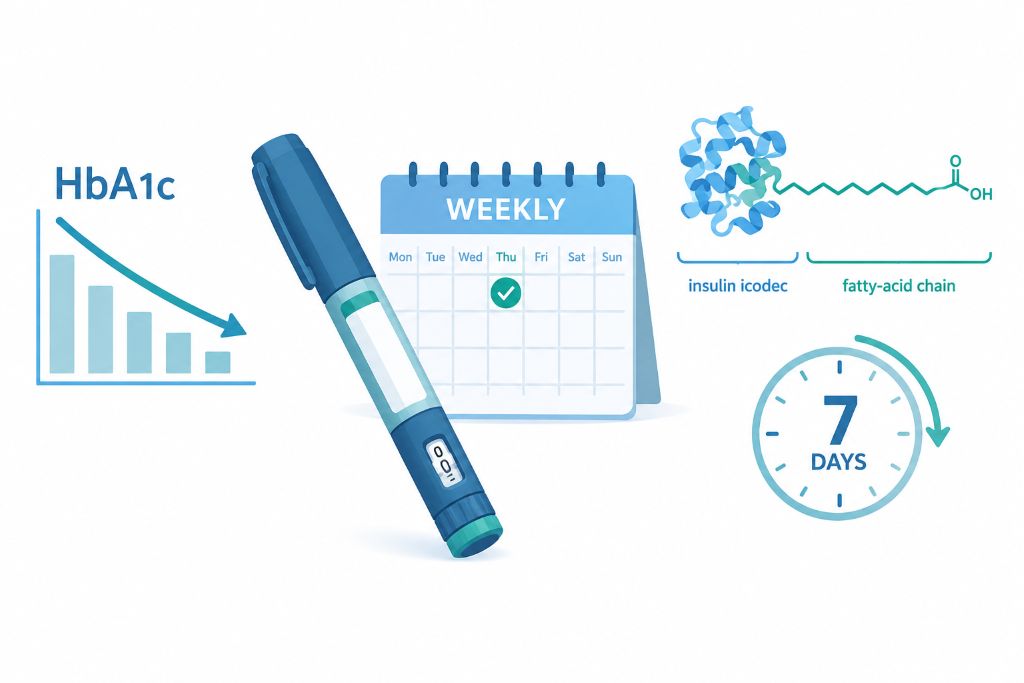
Fig. 1: Five Headline Takeaways from the Awiqli Approval.
Background: The Daily Needle and Its Hidden Costs
Basal insulin keeps blood sugar steady between meals and overnight. Doctors prescribe it for type 2 diabetes when other medicines no longer hit blood-sugar targets. For readers who want a clean breakdown of how this condition differs from type 1 diabetes, a student guide to the two main forms of the diseaselays out the contrast plainly. For many people, though, the treatment itself becomes a barrier. Roughly 150 to 200 million people worldwide need insulin therapy. Daily injections bring needle phobia, missed doses, delayed starts, and outright discontinuation. About one-third of people on daily insulin do not follow their prescribed schedule. Each barrier quietly raises blood sugar over time.
The Knowledge Gap Once-Weekly Insulin Aims to Fill
Researchers long wondered whether a basal insulin could last a full week. A weekly insulin could remove most adherence barriers at once. The challenge was chemistry, not desire. Natural insulin clears from the body quickly. Making a version that lingers safely for seven days required a new molecular design. That gap, between a useful idea and a working molecule, is exactly what once-weekly insulin for type 2 diabetes fills.
What the Science Means in Plain Language
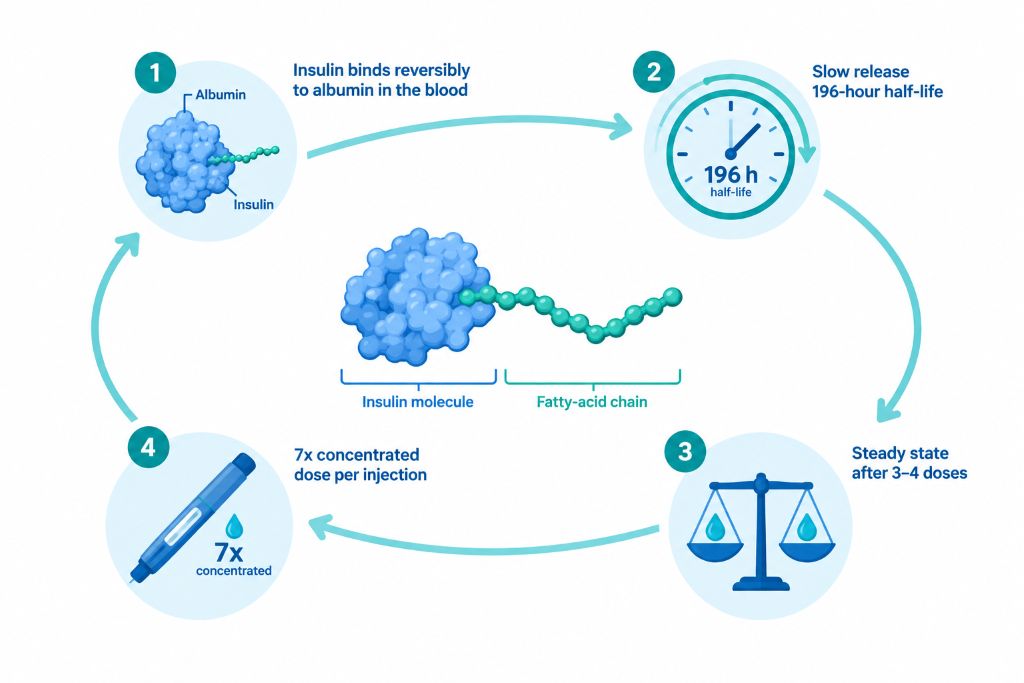
Insulin is a small protein that lowers blood sugar. A basal dose works like a slow, steady trickle. To stretch that trickle over a week, scientists changed the molecule. They swapped three amino acids and attached a fatty-acid chain, a C20 icosane fatty diacid. This chain lets insulin bind reversibly to albumin, a protein that floats in the blood. The insulin rides that protein and releases slowly. In a classroom, this works like a sponge that soaks up a liquid and releases it gradually. The result is a half-life of about 196 hours, close to seven days. Steady blood levels appear after three to four weekly doses. One unit of icodec lowers glucose as much as one unit of a daily basal insulin. A weekly dose therefore equals seven times a daily dose.
Key Findings: What the Pediatric Approval Shows
Why Children Aged Ten and Older Are Now Included
The pediatric decision rests on a single-dose study that enrolled 18 children aged ten and older. These children absorbed the first dose faster than adults. Pharmacometric modeling, a mathematical method, showed that blood levels match adult levels after the first few doses. As a result, the lower blood-glucose effect should mirror that seen in adults. One honest limit sits here. This study measured blood levels, not long-term outcomes, and enrolled only 18 children. The approval rests on that pharmacological sample plus modeling, not on a large pediatric outcomes trial.
The Mechanism That Makes a Week Possible
The core innovation lies in the molecule itself. Three amino-acid swaps strengthen the insulin’s structure. The added fatty-acid tail creates the albumin connection. The authors describe the half-life as roughly 196 hours, with steady state reached after three to four once-weekly injections. A loading dose can shorten that wait. In a phase II switch trial, a one-time loading dose helped people reach steady state faster than the usual three to four weeks. It also avoided the early fasting-glucose rise seen without a loading dose.
Fig. 2: A Fatty-Acid Chain Lets Insulin Icodec Ride Albumin for a Full Week.
Efficacy and Safety Across the ONWARDS Program
More than 4,200 people with type 2 diabetes took part in phase II and III trials. In insulin-naive patients, icodec produced a statistically comparable or superior HbA1c reduction versus daily basal insulin. ONWARDS 1, 3, and 5 showed superiority. ONWARDS 2, where people switched from a daily insulin, showed superiority and better treatment-satisfaction scores than insulin degludec. Rates of level 2 and level 3 hypoglycemia stayed similar to daily basals in type 2 diabetes. Weight gain ranged from 0.6 kg to 1.5 kg across phase II trials, clinically similar to glargine U100.
Challenges, Motivation, and the Road Ahead
Why Researchers Kept Pushing Despite the Hurdles
The motivation was never abstract. Daily injections fail people in real, measurable ways. Delay in starting insulin, fear of needles, and missed doses all drive poor blood-sugar control. A once-weekly option could ease most of these barriers at once. The difficulty was real, too. A weekly insulin cannot be reduced faster than once a week. After a hypoglycemic episode, a patient must wait longer to lower the dose. Exercise and reduced food intake during illness can also raise the risk. These unresolved questions explain why the drug reached type 2 diabetes before type 1. In fact, ONWARDS 6 showed higher hypoglycemia rates in type 1 diabetes despite similar control.
A Classroom Teacher’s Plain Observation
I have seen this pattern in my own teaching. Students forget a daily reminder but remember a weekly deadline. A single weekly task, by contrast, stays on their minds. The same logic drives basal insulin therapy. Fewer, more memorable events often beat frequent ones. That is why a once-weekly dose might improve adherence. It is not magic. It is simply a schedule people can actually keep.
Next Steps and Open Questions
Several questions remain open. Researchers want detailed continuous glucose monitoring data on the timing of hypoglycemia. They also want background-medication analyses to see how icodec behaves alongside other drugs. A fixed combination of icodec and semaglutide, called Icosema, has started a phase IIIa program. Such a pairing could cut injection burden from two shots to one a week. Future work should also test a less aggressive titration for people at higher hypoglycemia risk.
Conclusion: A Meaningful Step for Diabetes Care
Once-weekly insulin for type 2 diabetes is no longer a concept. It is an approved medicine for adults and, now, for children aged ten and older. The molecule’s fatty-acid tail gives it a week-long half-life. Trial data from over 4,200 people support comparable or better glucose control with similar hypoglycemia safety. Real questions remain about hypoglycemia timing and combination use. Still, cutting basal injections from 365 to 52 a year is a genuine advance. For students, educators, and curious readers, the lesson is clean. Smart chemistry can turn a daily burden into a weekly habit.
Bajaj, H. S., & Goldenberg, R. M. (2023). Insulin icodec weekly: A basal insulin analogue for type 2 diabetes. touchREVIEWS in Endocrinology, 19(1), 4–6. https://doi.org/10.17925/EE.2023.19.1.4
Nishimura, E., Pridal, L., Glendorf, T., et al. (2021). Molecular and pharmacological characterization of insulin icodec: A new basal insulin analog designed for once-weekly dosing. BMJ Open Diabetes Research & Care, 9(1), e002301. https://doi.org/10.1136/bmjdrc-2021-002301
National Institutes of Health. (2026). A single-dose study investigating the pharmacokinetic properties of insulin icodec in children and adolescents with type 2 diabetes (NCT05790681). ClinicalTrials.gov. https://clinicaltrials.gov/study/NCT05790681
This draft reads confidently and correctly, and the revisions land where they matter. Leading the key findings with the pediatric approval resolves the earlier mismatch between headline and body, and the explicit note that the decision rests on a single-dose pharmacokinetic study of 18 children plus modeling — not a long-term outcomes trial — is the most important line in the piece, because it steers an average reader away from assuming the drug "works the same" in children as in adults.
Mohammed Aftab is a Science Communicator at ENTECH STEM Magazine and a Doctor of Pharmacy (Pharm.D) graduate with a strong interest in pharmaceutical sciences, medicine, and public science education. His areas of interest include pharmacology, pharmacotherapeutics, clinical pharmacy, clinical research, rational drug use, evidence-based medicine, medication safety, and medication errors. His research focuses on assessing intravenous-to-oral drug switching practices in a tertiary-care teaching hospital, reflecting his interest in appropriate medication use and evidence-based healthcare.
Aftab specializes in explaining complex medical and pharmaceutical concepts in simple, clear, and easy-to-understand language. Using relatable everyday examples and practical analogies, he helps teenagers and the general public understand medicines, how drugs work in the body, common health conditions, and the science behind medical treatments. Through his work at ENTECH STEM Magazine, he aims to bridge the gap between scientific knowledge and public understanding, making reliable medical and scientific information engaging, accessible, and relevant to everyday life.