Understand Type 1 vs Type 2 diabetes. Explore their causes, symptoms, and treatments in this comprehensive guide.
Type 1 vs Type 2 Diabetes: A Simple Student Guide
Estimated reading time: 15 minutes
Diabetes may sound like one condition. However, it describes several related conditions. Each affects how the body handles glucose. Glucose is a sugar that fuels cells. Insulin helps glucose enter those cells. Without enough insulin, glucose remains in the blood. That can damage organs over time. Type 1 and type 2 diabetes both raise blood glucose. Yet, their causes differ greatly. Their treatments also differ. A student can develop either type. Still, type 2 develops more often in adults. That pattern is changing worldwide. The International Diabetes Federation estimates 589 million adults have diabetes globally. Understanding the difference between type 1 and type 2 diabetes helps students reject harmful myths. It also helps friends offer better support. Knowledge can replace fear with practical action.
Key Takeaways
- Type 1 diabetes is an autoimmune condition. The immune system destroys insulin-making beta cells.
- Type 2 diabetes involves insulin resistance. The body cannot use insulin efficiently.
- Neither condition results from laziness or poor character.
- Type 1 needs insulin from diagnosis. Type 2 treatment varies by person.
- Diabetes symptoms need prompt medical attention. Diagnosis requires laboratory testing.
- A school plan helps students manage diabetes safely.
These points offer a starting map. The rest of this guide explains each point. It uses simple language first. It also adds useful science when needed. Remember that online articles cannot diagnose anyone. A qualified clinician should assess symptoms and test results. Early care can prevent dangerous emergencies.
Type 1 vs Type 2 Diabetes: The Essential Difference
Diabetes begins with a problem involving insulin. Insulin is a hormone made by pancreatic beta cells. It acts like a key. The key helps glucose enter many body cells. When insulin action fails, blood glucose rises. Yet, type 1 and type 2 fail differently. This distinction matters for treatment. The ADA classification guidance separates diabetes types using clinical features and testing. Insulin action is the central idea.
What happens in type 1 diabetes?
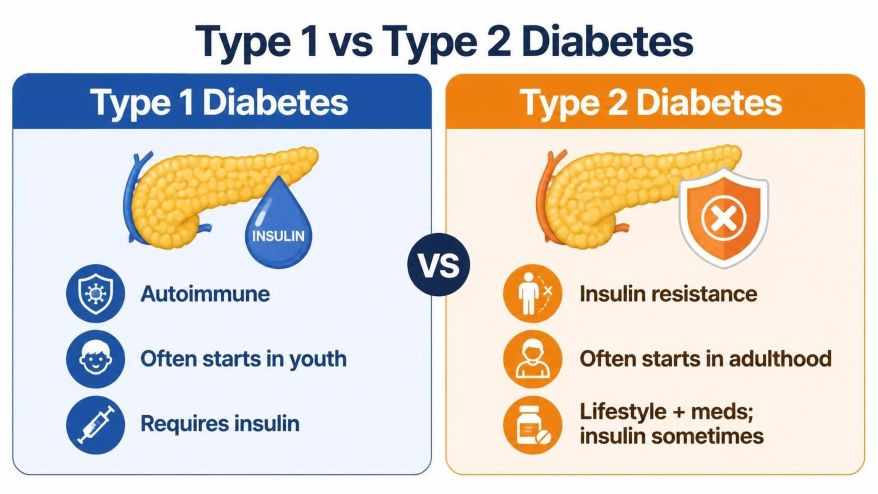
Type 1 diabetes is usually an autoimmune disease. Normally, the immune system helps your body fight infections. In type 1 diabetes, however, the immune system mistakenly attacks beta cells in the pancreas. These beta cells make insulin.
As beta cells are damaged and die, the body produces much less insulin. Over time, the body does not have enough insulin to move glucose (sugar) into cells for energy. Because of this, people with type 1 diabetes need insulin treatment to live. Type 1 diabetes is not caused by anything the person did. It is driven by the immune system, and no blame is involved.
Type 1 diabetes can start at any age. It often begins in childhood, but it can also start in teenagers or adults. So age alone cannot tell you which type of diabetes someone has. Some people may also have genes that increase their risk. Family history can raise the chance of developing type 1 diabetes, but many people have no relatives with the disease. Scientists are still working to understand what triggers it.

What happens in type 2 diabetes?
Type 2 diabetes usually develops when the body becomes resistant to insulin. This means muscle, liver, and fat cells do not respond well to insulin. At first, the pancreas makes extra insulin to keep blood sugar close to normal. Over time, the beta cells may not be able to make enough insulin to keep up. When there is not enough insulin for the body’s needs, blood glucose levels rise, leading to type 2 diabetes.
Type 2 diabetes can be influenced by many factors, including genetics, age, sleep, physical activity, diet and food access, and body weight. Because of this, insulin resistance is not a personal failure. Type 2 diabetes can also affect young people. For example, during puberty the body naturally becomes more resistant to insulin. Family history can also increase risk. Some medicines and other health conditions may also contribute. For these reasons, clinicians consider the whole situation and should not make assumptions based solely on a person’s appearance.
Finally, students deserve care that is respectful and evidence-based. Lifestyle changes can help many people, but they do not replace medicine when medicine is needed. Respectful conversations can lead to better health outcomes.
A quick comparison: type 1 vs type 2 diabetes
| Feature | Type 1 diabetes | Type 2 diabetes |
|---|---|---|
| Main problem | Autoimmune beta-cell destruction | Insulin resistance and declining insulin supply |
| Insulin at diagnosis | Usually very low | May be normal, high, or low |
| Typical treatment start | Insulin is essential | Nutrition, activity, medicines, and sometimes insulin |
| Usual onset pattern | Often rapid | Often gradual |
| Can it occur at any age? | Yes | Yes |
| Is it caused by eating sugar? | No | No |
This table simplifies a complex reality. Some people do not fit neatly. For example, adults can develop autoimmune diabetes. Other people have rare diabetes forms. Doctors may use antibody and C-peptide tests. These tests help clarify confusing cases. The American Diabetes Association recommends individualised classification and care. Accurate diagnosis guides safer treatment.
Causes and Risk Factors in Type 1 vs Type 2 Diabetes
Students often ask one simple question: “What caused it?” The answer depends on the type of diabetes. But no matter the type, the explanation should never blame or shame anyone.
Diabetes is influenced by biology—factors such as genes, the immune system, hormones, the environment, and time. So a person can do many things the right way and still develop diabetes.
That’s why clear, accurate explanations matter. They can protect mental health and also reduce harmful myths and misinformation.
Type 1 diabetes causes an immune mistake.
Students often ask one simple question: “What caused it?” The answer depends on the type of diabetes. But the explanation should never blame or shame anyone. Diabetes is influenced by biological factors, such as genes, the immune system, hormones, and the environment, as well as by time. That means a person can do many things the right way and still develop diabetes. This is why clear, accurate explanations matter. They can protect mental health and help reduce harmful myths and misinformation.
Type 2 diabetes risk factors: many influences
Type 2 diabetes has many possible contributors. For example, a close family history can raise risk. In addition, higher blood pressure and abnormal blood fats can also play a role. Previous gestational diabetes is another risk factor, and polycystic ovary syndrome (PCOS) can contribute as well. Limited sleep and chronic stress may affect glucose control. At the same time, social conditions matter too—such as whether there are safe places to exercise and whether healthy food is affordable. Because of this, context should be part of every discussion.
Weight can influence insulin resistance, but it never tells the whole story. For instance, people with smaller bodies can still develop type 2 diabetes, and people with larger bodies may not. Moreover, stigma can make people delay care. It can also increase stress and worsen eating problems. Therefore, it helps to use person-first language during discussions. Say “a person with diabetes”, not “a diabetic”. In the end, stigma harms health, so respectful language supports better conversations.
Important myths to leave behind
- Myth: People get diabetes from eating sugar alone.
Fact: Diabetes has several biological causes and risks. - Myth: Only adults get type 2 diabetes.
Fact: Young people can develop type 2 diabetes. - Myth: Type 1 diabetes disappears with exercise.
Fact: Type 1 requires insulin replacement. - Myth: A student with diabetes cannot play sports.
Fact: Planning supports safe participation.
Myths can seem harmless during casual talk. However, they can isolate students with diabetes. Therefore, a better approach starts with curiosity. First, ask what support the student wants. Next, respect their privacy around devices and injections. Also, avoid acting like their glucose manager. Finally, encourage them to seek trained adult help. Kindness works better than guessing or assuming.
Symptoms, Diagnosis, and Emergencies
Symptoms can look similar in type 1 vs. type 2 diabetes. For example, when blood sugar is high, the body pulls extra water out through the kidneys. This can cause strong thirst and frequent urination. Because the body’s cells may not get enough usable fuel, a person may feel fatigued and very hungry. Because symptoms can overlap, they should be checked by a clinician. Testing can confirm whether diabetes is present and which type it may be.
Common diabetes symptoms students should know
Possible symptoms include:
- Feeling very thirsty and needing to urinate often
- Feeling more tired than usual
- Blurry vision
- Unplanned weight loss (more common in type 1 diabetes)
- Cuts that heal slowly
- Repeated infections
Type 2 diabetes may not cause many symptoms at first. That is why screening can be important for some people. No matter which type of diabetes it is, symptoms should not be ignored. A student with new symptoms needs support from a trusted adult. Tell a parent, school nurse, or clinician. Do not attempt a diagnosis from internet quizzes. A blood glucose check may provide useful information. Still, laboratory tests establish the diagnosis. The ADA’s diabetes classification article explains that clinicians combine test results with clinical findings. Professional care protects safety.
How clinicians diagnose diabetes
Clinicians may use several tests to assess diabetes. One common test is the A1C test. It shows the average blood sugar level over the past few months. Doctors may also use a fasting plasma glucose test, which measures blood sugar after a period of not eating. Another option is an oral glucose tolerance test. Sometimes, if a person has clear symptoms, doctors may also use a random plasma glucose test.
Often, doctors repeat the test or use a second test to confirm the results. But if symptoms are strong and blood sugar is very high, treatment may begin without waiting for a repeat test. Clinicians also check which type of diabetes is present. Thereafter, lab results help guide the next steps. Antibody tests can help confirm type 1 diabetes. Doctors may also use a C-peptide test to see how much insulin the body is still making.
If a person has severe symptoms, doctors may also check for ketones. They also consider other factors, such as pregnancy, certain medicines, and other illnesses. Because doctors consider several factors, diagnosis can take some time. This time is used to ensure the results are correct. It is not an unnecessary delay. Patients should feel free to ask questions. Asking questions helps people understand the diagnosis and prepares them for the next steps in their care plan.
Diabetic ketoacidosis needs urgent action
Diabetic ketoacidosis, or DKA, is a medical emergency. First, it occurs when the body lacks insulin. Without insulin, the body breaks down fat for energy. As a result, it creates acidic chemicals called ketones. DKA can occur at the time of a type 1 diabetes diagnosis. It can also happen if insulin delivery stops. Therefore, symptoms may include vomiting, belly pain, deep breathing, and confusion. Because DKA can become life-threatening, seek emergency care immediately. A fruity odor to the breath can occur with DKA. So can extreme sleepiness or dehydration. Do not wait for every sign. Emergency clinicians can test glucose, ketones, and blood acidity. They provide fluids, insulin, and electrolyte treatment. Schools should have emergency procedures. Families should follow the student’s medical plan. The Entech guide on ketones in urine offers additional background. Fast action can save lives.
Type 1 vs Type 2 Diabetes Treatment and Daily Care
Type 1 vs. Type 2 Diabetes: Treatment aims to keep blood sugar within a safer range. It also helps prevent problems now and later. The best plan depends on the type of diabetes. It also depends on the person’s age, goals, available resources, and other health conditions. Because of these factors, care should be personalized. There is no single “perfect” plan that works for everyone. Diabetes care teams often include doctors, nurses, pharmacists, dietitians, and diabetes educators. Working together helps support the day-to-day choices a person needs to make.
Type 1 Diabetes treatment: insulin is Essential.
Insulin resistance explained: even though type 1 diabetes starts with too little insulin, some people can still develop reduced insulin sensitivity over time. This is different from Type 1 vs. Type 2, as explained, where insulin resistance comes first. People with type 1 diabetes need insulin every day. Some people use insulin injections, while others use an insulin pump. Long-acting insulin helps cover your body’s basic needs. Meanwhile, rapid-acting insulin is used for meals and to correct high blood sugar. Some pumps can automatically adjust insulin using glucose readings. Even so, people still need training, supplies, and ongoing support.
At the same time, students should carry any emergency items their clinician recommends, because insulin is life-sustaining. Also, food is not “off limits.” Instead, people learn how to count carbohydrates. Then they match the carbs they eat to their insulin plan. In addition, physical activity can lower blood sugar. However, emotions, illness, and stress can raise it.
Finally, continuous glucose monitors can show glucose trends over time. Finger-stick testing may still be needed in some situations. Plans should include clear steps for treating low blood sugar right away. With good preparation, people often feel more confident.
Type 2 diabetes treatment: several tools work together
Treatment for Type 2 often starts with education. Nutrition support focuses on sustainable patterns. Regular movement can improve insulin sensitivity. Better sleep can also help. Doctors may prescribe medicines, including metformin or other options. Some people need insulin. This does not mean they “failed.” It simply meets a medical need. The treatment plan changes over time. Flexible care responds to real life.
Students should avoid extreme diet trends. Cutting food too much, too fast, can be unsafe. A registered dietitian can provide personalized advice tailored to your needs. Families also have different budgets and food preferences, so good care works with real life—not against it. Movement can include walking, sports, dancing, or active games. The best activity is the one you enjoy and can do again and again. If you’re new to exercise, start slowly. Even small steps matter.
Food, exercise, sleep, and medicines
Food supports learning, growth, and health. Diabetes does not require one universal diet. Balanced meals often include fiber-rich carbohydrates, protein, and vegetables. Timing may matter for certain medicines. Hydration also matters during sports and hot weather. A care team can explain individual meal plans. Never change insulin doses without instructions. Balance beats rigid rules.
Exercise can change glucose quickly. Students using insulin should know their activity plan. They may need glucose checks before sports. They may also need a snack. Coaches need relevant emergency information. School staff should know how to contact help. After activity, delayed low glucose can occur. This makes post-exercise monitoring useful. Safety planning supports participation.
Sleep affects hormones and concentration. Poor sleep can make glucose management harder. Stress can do the same. Students should not handle this alone. Counseling can support diabetes distress or anxiety. Teachers can offer reasonable accommodations. Friends can offer calm support. Mental health belongs in diabetes care. Well-being means more than glucose numbers.
Low blood glucose: recognise and treat it.
Low blood sugar is called hypoglycaemia. It can happen when someone takes insulin or certain diabetes medicines.
Signs can include:
- shakiness
- sweating
- hunger
- irritability
- dizziness
- confusion
Please follow the student’s health plan right away. They may need fast-acting glucose, such as glucose tablets or juice. Check their blood sugar again when the plan tells you to. Hypoglycemia needs quick treatment. If the student cannot swallow, do not provide food or drink. If they are unconscious, having a seizure, or very confused, call emergency services. If glucagon has been prescribed and you are trained to use it, a trained person may give it. Stay with the student until help arrives. Never punish a student for low-blood-sugar behavior. Their brain needs fuel. Emergency response skills matter at school.
A practical school-day checklist
- Keep diabetes supplies within approved reach.
- Tell staff where emergency glucose supplies are stored.
- Carry fast-acting carbohydrates when the plan requires them.
- Check glucose at the times your plan lists.
- Eat planned snacks before long activities.
- Tell an adult about low-glucose symptoms immediately.
- Keep a phone contact available for urgent questions.
This checklist is not a replacement for medical orders. Each student has individual targets and supplies. Families should update school plans each year. Teachers should respect private health information. Peers only need details when the student agrees. A supportive friend can locate an adult. They do not need to become a nurse. Privacy deserves protection.
Talking about diabetes with friends
A simple explanation can reduce awkwardness. Try saying, “My body has trouble using insulin.” You can add details only if desired. Friends may ask about sensors or pumps. Answer only what feels comfortable. They should never touch devices without permission. Good friends listen without judging food choices. They also act quickly during emergencies. Boundaries and support can coexist.
Learning about diabetes can also inspire science. The pancreas uses specialized cells. The immune system can make errors. Technology can track glucose every few minutes. Pharmaceutical research continues improving treatments. For example, Entech explores oral insulin delivery research. Research news can be exciting. Still, students should distinguish research from approved routine care. Scientific literacy helps readers judge claims.
When to speak with a healthcare professional
Talk with a healthcare professional if you have ongoing thirst or frequent urination. Also get advice if you notice unexplained weight changes or strong tiredness. Before starting any supplements marketed for diabetes, check with a clinician first. Some products claim to “cure” diabetes, but those promises are not realistic. Don’t stop prescribed medicine based on advice from social media. If you keep having high or low blood sugar, contact your care team. If you have severe symptoms, follow your emergency plan immediately. Getting trusted medical care works better than online claims.
Conclusion
Type 1 and type 2 diabetes are different conditions but both affect how the body uses blood sugar Type 1 diabetes happens when the immune system attacks insulin-making cells so insulin is needed every day Type 2 diabetes happens more often when the body does not respond well to insulin and it can sometimes be managed with lifestyle changes and other treatments.
For students, the most important message is this: diabetes should be understood and managed with care, not blame. If symptoms appear, they should be checked by a clinician. And if blood sugar gets too low, quick action is essential.
Frequently Asked Questions About Type 1 vs Type 2 Diabetes
Can type 1 diabetes become type 2 diabetes?
No. They are different conditions. A person with type 1 can also develop insulin resistance. However, that does not turn type 1 into type 2. Both conditions may require careful glucose management. Different causes require individualized care.
Can a student prevent type 1 diabetes?
There is no proven lifestyle method preventing type 1 diabetes. It is an autoimmune condition. Some high-risk people may benefit from screening discussions. Ask a clinician about family risk. Screening can provide earlier support.
Can type 2 diabetes be prevented?
Some type 2 cases may be delayed or prevented. Healthy routines can lower risk for certain people. These include activity, nutritious foods, sleep, and medical follow-up. Genetics and social conditions still matter. Prevention should never become blame.
Do people with diabetes need to avoid all sugar?
No. Insulin is essential for type 1 diabetes. Some people with type 2 also use insulin. Others use non-insulin medicines. The right treatment depends on medical needs. Insulin use does not define someone’s effort.
What should a friend do during a low glucose episode?
Stay calm and get trained adult help. Follow the student’s documented emergency plan. Offer fast glucose only when appropriate. Call emergency services for unconsciousness or seizures. Never leave the person alone. Quick support matters.
References
- American Diabetes Association Professional Practice Committee for Diabetes. (2026). Standards of care in diabetes—2026 (Supplement). Diabetes Care. https://doi.org/10.2337/dc26-S002
- Kharroubi, A. T., & Darwish, H. M. (2015). Diabetes mellitus: The epidemic of the century. World Journal of Diabetes, 6(6), 850–867. https://doi.org/10.4239/wjd.v6.i6.850
Editorial Note: This article was written by Ramya Dobbala and reviewed for editorial accuracy by our editorial team. It has not yet undergone independent review by a professional.
- Author
- Latest Posts

Ramya Dobbala is a pharmacist and science communicator dedicated to bridging the gap between complex pharmaceutical research and public understanding. A 2024 B.Pharmacy graduate, Ramya has a strong foundational background in formulation science, having spearheaded research into the evaluation and formulation of anti-acne creams. Her work focused on optimizing topical delivery systems to enhance treatment efficacy and skin health.
Transitioning from the laboratory to the forefront of scientific discourse, she now leverages her technical expertise to translate intricate healthcare concepts into accessible, engaging content. As an author and communicator, Ramya is passionate about empowering audiences with evidence-based insights, particularly in the realms of dermatology and pharmaceutical innovation.


