Explore the connection between diabetes and mental health to understand how one impacts the other for better overall wellness.
Diabetes and Mental Health: How Blood Sugar Can Affect the Brain

Living with diabetes involves much more than checking glucose levels. A person may think about food, medicines, sleep, and exercise daily. Unexpected glucose changes can also create fear and frustration. At the same time, stress and emotional struggles may complicate diabetes care. This creates a close connection between the body and brain. Blood sugar changes can affect concentration and daily functioning. Meanwhile, depression, anxiety, and distress can influence self-care behaviours. Therefore, diabetes management should consider emotional well-being alongside glucose control. The relationship between diabetes and mental health is complex and two-way. Understanding this connection may help patients seek support earlier. It may also help families and healthcare teams provide better care. After all, successful diabetes management involves supporting the whole person.
Key Takeaways: Diabetes and mental health
- Diabetes can affect mood, thinking, and emotional well-being.
- Hypoglycaemia can cause confusion and changes in behaviour.
- Long-term diabetes may increase risks for cognitive decline.
- Stress can make blood sugar management more difficult.
- Poor sleep may worsen mood and daily self-care.
- Depression can reduce motivation for medication adherence.
- Diabetes distress differs from clinical depression.
- Emotional health should be part of routine diabetes care.
- Support from professionals can improve self-management.
- Better care addresses both the brain and body.
Diabetes management requires repeated decisions throughout each day. These decisions can become emotionally tiring over time. Therefore, psychological support deserves a place within diabetes care. The connection also works in the opposite direction. Emotional problems may affect eating and medication routines. As a result, mental well-being can influence glucose management.
Understanding Diabetes and Mental Health
Diabetes is mainly a metabolic condition. However, it can affect more than blood sugar levels. The brain also needs stable body functions to work well. Diabetes and mental health are linked in several ways. Daily treatment can cause stress and affect emotions. Long-term stress can also make it harder to manage diabetes.
Current diabetes guidance recognizes psychosocial health as an important part of care. The American Diabetes Association recommends attention to emotional well-being and behavioral health. Screening can identify concerns needing additional support (American Diabetes Association Professional Practice Committee, 2024).
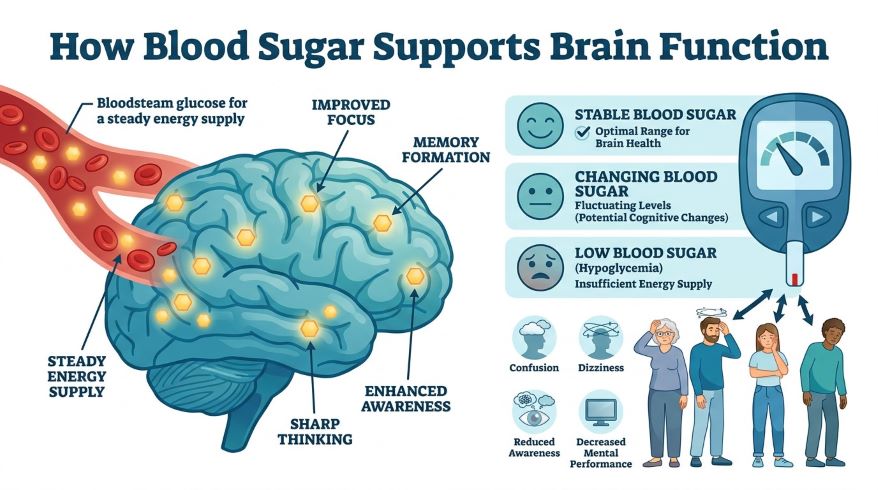
How Blood Sugar Supports Brain Function
The brain needs a steady energy supply. Glucose is one of its main energy sources. Large changes in glucose levels can affect how the brain works. Low blood sugar can affect thinking and awareness. Severe hypoglycemia can also reduce mental performance. Symptoms may differ from person to person. McCrimmon et al. (1999) studied people with and without diabetes. They examined the symptoms of low blood sugar. The results showed that people can experience these symptoms in different ways.
However, one blood sugar reading cannot explain every mood change. Emotional symptoms may have many causes. If symptoms continue, a health professional should assess them.
Diabetes and the Long-Term Brain
Long-term diabetes may affect brain health in several ways. These effects may involve blood vessels and body processes. They can also differ from person to person. Cognitive problems are known complications of diabetes. They may cause mild thinking problems or dementia. Older adults may face a higher risk of ongoing cognitive decline. Biessels and Despa (2018) described how diabetes may affect thinking and memory. They explained that blood vessel damage and brain changes may both play a role. They also noted that these problems are important in patient care. Cognitive decline does not happen to everyone with diabetes. The risk depends on many factors. Good diabetes care and overall health management may help protect brain health.
Diabetes and Mental Health: Mood, Stress, and Emotional Burden
Living with diabetes can cause ongoing emotional stress. People must make health decisions every day. These demands can lead to worry and tiredness. Some people worry about future health problems. Others fear sudden low or high blood sugar. Money problems can add more stress. Emotional problems can also affect diabetes care. A person with depression may have less energy or motivation. Anxiety may increase worry about blood sugar levels.
This two-way link needs kind and supportive care. People with diabetes should not be blamed. Healthcare teams should find problems and offer practical help.
Diabetes Distress Is Different From Depression: Diabetes and Mental Health
Diabetes distress is the emotional stress caused by diabetes care. It may include frustration and tiredness from treatment. People may feel overwhelmed by their daily tasks. Depression is different from diabetes distress. It can cause lasting sadness and a loss of interest. A health professional should assess depression.
Both conditions can happen at the same time. However, they are not the same. Identifying the correct condition helps people receive the right support.
Stress Can Affect Daily Diabetes Care
Stress affects the body and behavior. It can make healthy routines harder to follow. People may forget or miss their medicines. Some people eat more when they feel stressed. Others choose different foods. Some people exercise less. Stress can also disturb sleep. These changes can make blood sugar harder to control. Stress management can support diabetes care. However, people respond to stress in different ways.
Research links diabetes-related stress to problems with following treatment plans. Emotional stress can also make treatment more difficult. Kind and clear communication can help identify these problems (Świątoniowska-Lonc et al., 2021).
When Mood Affects Diabetes Self-Management
Low mood can reduce energy and motivation. Daily diabetes tasks may then feel overwhelming. This can affect medicine use. Depression can also change eating habits. People may exercise less during difficult times. They may also miss medical appointments.
Recent reviews support combining diabetes and depression care. Team-based care may improve mental health and self-care. It may also help people follow their treatment plans (Shimu et al., 2025).
How Low Blood Sugar Can Affect Mood and Thinking
Hypoglycemia happens when blood sugar becomes too low. Symptoms can appear quickly. The brain may not work well when it lacks glucose. Common symptoms include shaking and sweating. A person may also feel hungry or have a fast heartbeat. Confusion can occur during severe episodes. Low blood sugar can also change mood and behavior. Some people may feel angry or anxious. Others may have trouble thinking clearly.
McCrimmon and colleagues studied low blood sugar symptoms in different groups. They found that symptoms can vary from person to person. People may also have different levels of awareness of hypoglycemia (McCrimmon et al., 1999).
Why Hypoglycemia Can Feel Emotionally Intense
The brain needs glucose to work well. Low blood sugar can affect brain function. Symptoms may start suddenly and feel frightening. Fear may continue after a severe episode. Some people may worry about having another low blood sugar event. This fear can affect treatment choices. For example, a person may avoid exercise. Another person may keep their blood sugar too high on purpose. People should discuss these concerns with a healthcare professional.
Treatment plans for low blood sugar should fit each person. Patients should understand their treatment plan. Family members may also need education.
Signs That Require Immediate Attention
Severe hypoglycemia is a medical emergency. Loss of consciousness needs urgent help. Seizures also need immediate medical care.
Warning signs include:
- Severe confusion or inability to respond normally.
- Loss of consciousness.
- Seizures or convulsions.
- Inability to safely swallow food.
- Serious behavior changes during suspected hypoglycemia.
These symptoms need quick medical help. Follow the person’s emergency treatment plan. Call emergency services if the situation is difficult. Do not change insulin or other medicines without medical advice. Tell a healthcare professional about repeated low blood sugar. Treatment changes should be made after a proper medical review.
Diabetes and Mental Health: Sleep, Stress, and Medication Adherence
Sleep affects the body and emotions. Poor sleep can reduce focus and energy. It can also make daily diabetes care harder. Diabetes can disturb normal sleep. Worry about blood sugar at night may keep people awake. Some diabetes complications can also reduce sleep quality.
Poor sleep can make it harder to cope with stress. Tiredness may increase stress and irritability. This can make diabetes care more difficult. Sleep should be discussed during regular health visits. Patients should report ongoing sleep problems. Healthcare professionals can help find the cause.
Poor Sleep Can Create a Difficult Cycle
Too little sleep can affect focus during the day. A tired person may forget important tasks. They may also find it harder to take medicines on time. Tiredness can reduce physical activity. Meal planning may also feel harder. People may have stronger emotional reactions.
Sleep and diabetes care are closely linked. Better sleep may support healthy daily habits. Ongoing sleep problems still need medical attention. Research on diabetes and depression also shows that sleep is important. Lifestyle habits can affect both conditions. Combined care may help manage these related problems (Kok & Alalwan, 2025).
Medication Adherence and Emotional Health
Taking medicine involves more than remembering each dose. A person’s beliefs and feelings also matter. Money problems can create extra challenges. Depression may reduce motivation. Anxiety may increase fear of side effects. Diabetes distress can cause treatment fatigue. Research shows that stress and depression can make diabetes care harder. Clear communication and support can help people follow their treatment plans (Świątoniowska-Lonc et al., 2021).
Patients should not feel ashamed about missed doses. They should talk openly about any problems. Finding the cause can help healthcare professionals offer practical solutions.
Four Ways to Support Better Daily Routines
- Use simple reminders for medicines and appointments.
- Discuss side effects with a qualified healthcare professional.
- Keep diabetes supplies in an accessible location.
- Ask family members for practical support when needed.
Simple routines can reduce daily stress. However, one plan will not work for everyone. Care plans should fit each person’s needs and treatment. Medicine changes should always be guided by a healthcare professional. Do not stop prescribed medicine without advice. A pharmacist can also answer questions about medicines.
Supporting Brain Health and Emotional Well-Being
Brain health is an important part of long-term diabetes care. This includes both physical and emotional health. Healthy habits can support the whole body. Regular medical checkups are important. Blood pressure and heart health also matter. Many factors affect brain health.
Diabetes and mental health are closely linked. Finding emotional problems early may improve outcomes. People do not need to wait until symptoms become severe.
Build a Supportive Healthcare Team
Diabetes care may involve several health professionals. For example, doctors and diabetes educators can help patients manage their condition, while pharmacists can explain how to take their medicines. In addition, mental health professionals can offer emotional support. Psychologists can teach coping skills, and psychiatrists can assess and treat mental health conditions. Because each professional has a different role, team-based care can help meet a patient’s physical and emotional needs. In fact, research shows that combining mental health support with diabetes care may reduce emotional distress and help people follow their treatment plans (Shimu et al., 2025).
Clear communication is also important. Patients should feel safe when sharing their concerns. Therefore, emotional symptoms should receive the same attention and care as physical symptoms.
Track Patterns Without Self-Blame
Blood sugar checks provide helpful information. However, the results do not define a person’s value. Many factors can affect blood sugar levels, including stress, illness, poor sleep, and the timing of medicines. Because of this, it is more helpful to look for patterns instead of expecting perfect results.
If the same concerns happen often, talk with a healthcare professional. They can help find possible causes and suggest useful changes. As a result, people may feel less blame and worry. Most importantly, blood sugar results should guide healthcare decisions, not cause shame. With clear and kind education, checking blood sugar can become easier and more useful.
Support Healthy Brain Habits
Several healthy habits can support overall health. For example, regular physical activity may improve mood and help control blood sugar. In addition, choosing healthy foods can support physical and emotional well-being. Keeping a regular sleep schedule may also improve daily energy. Furthermore, spending time with supportive people can reduce loneliness, while stress-management skills can provide extra help.
However, healthy habits should not replace medical care. For instance, depression and anxiety may require help from a mental health professional. In the same way, ongoing problems with thinking or memory should be checked by a healthcare professional.
Understanding Brain Chemistry and Motivation
Brain signals can affect how people feel, act, and stay motivated. For example, the brain’s reward system may influence habits, choices, and health behaviors. However, diabetes care is about more than motivation. Complex treatment plans can be difficult to follow. In addition, emotional stress and social problems can make diabetes care even harder.
Understanding these factors can improve patient education and reduce blame. Therefore, people need support and understanding rather than judgment. A future article could explain dopamine and other brain signals in more detail. It could also describe how some medicines affect these signals. This article could then link to that topic for readers who want to learn more.
When Should Someone Seek Professional Support?
Occasional stress is normal. Ongoing emotional problems need attention. Early support can improve daily life. Talk to a healthcare professional if sadness continues. Ongoing anxiety also needs care. Losing interest in usual activities can be a warning sign. Severe diabetes distress also needs support. Discuss major sleep changes with a healthcare professional. Trouble following a treatment plan may point to other problems.
Get emergency help if you have thoughts of self-harm. Call local emergency services or a crisis line right away. Tell someone you trust. Mental health care is part of overall health care. Asking for help is a form of self-care. No one should face serious emotional problems alone.
Conclusion
The relationship between diabetes and mental health deserves serious attention. Diabetes affects more than glucose levels. It can influence mood, stress, sleep, and thinking. The connection also works in reverse. Emotional struggles can affect medication adherence and self-care. Therefore, successful diabetes management should address both directions.
Frequently Asked Questions
Can diabetes affect mental health?
Yes. Diabetes can create emotional stress through daily management demands. Glucose changes may also temporarily affect thinking and functioning. Depression, anxiety, and diabetes distress can also occur.
Can low blood sugar affect mood?
Yes. Hypoglycemia can affect behavior and mental functioning. Some people experience irritability, anxiety, or confusion. Severe hypoglycemia requires urgent medical attention.
Does diabetes increase cognitive decline risk?
Research links diabetes with several forms of cognitive dysfunction. Older adults may face greater risks of progressive decline. However, cognitive decline is not inevitable for everyone.
What is diabetes distress?
Diabetes distress involves emotional strain from managing diabetes. It can include frustration, worry, and treatment exhaustion. It differs from clinical depression.
Reference
- American Diabetes Association Professional Practice Committee. (2024). 5. Facilitating positive health behaviors and well-being to improve health outcomes: Standards of care in diabetes—2024. Diabetes Care, 47(Supplement_1), S77–S110. https://doi.org/10.2337/dc24-S005
- Kok, M., & Alalwan, T. A. (2025). The interface of depression and diabetes: Treatment considerations. Frontiers in Endocrinology. https://pmc.ncbi.nlm.nih.gov/articles/PMC11760355/
- Author
- Latest Posts

Ramya Dobbala is a pharmacist and science communicator dedicated to bridging the gap between complex pharmaceutical research and public understanding. A 2024 B.Pharmacy graduate, Ramya has a strong foundational background in formulation science, having spearheaded research into the evaluation and formulation of anti-acne creams. Her work focused on optimizing topical delivery systems to enhance treatment efficacy and skin health.
Transitioning from the laboratory to the forefront of scientific discourse, she now leverages her technical expertise to translate intricate healthcare concepts into accessible, engaging content. As an author and communicator, Ramya is passionate about empowering audiences with evidence-based insights, particularly in the realms of dermatology and pharmaceutical innovation.