Learn about the new juvenile diabetes mellitus treatment approved by the FDA, offering hope with Tzield for children.
Juvenile Diabetes Treatment: Type 1 Diabetes Options Explained

Today, type 1 diabetes can develop at any age. At the same time, children and teenagers can develop type 2 diabetes as well. Therefore, healthcare professionals first need to determine which type of diabetes a child has before deciding on juvenile diabetes mellitus treatment.
For children with type 1 diabetes, insulin is essential because the pancreas produces insufficient insulin. However, treatment involves much more than insulin alone. Glucose monitoring, nutrition, physical activity, diabetes education, technology, school support, and emergency planning are also important. The encouraging news is that diabetes care has changed significantly. Continuous glucose monitoring (CGM), insulin pumps, and automated insulin delivery systems can now help many children manage glucose more effectively. The 2026 American Diabetes Association (ADA) Standards of Care recommend offering CGM at diagnosis or as soon as possible and offering automated insulin delivery to appropriate children and adolescents with type 1 diabetes.
What Is “Juvenile Diabetes”?
“Juvenile diabetes mellitus treatment” is an older name that generally refers to type 1 diabetes. Type 1 diabetes is an autoimmune condition. In this condition, the immune system mistakenly attacks the insulin-producing beta cells in the pancreas. As the immune system damages beta cells, the body produces less insulin. Insulin is important because it helps glucose move from the bloodstream into cells. Cells then use glucose for energy. Without enough insulin, glucose remains in the bloodstream. As a result, blood glucose rises. Over time, a lack of insulin can also cause the body to break down fat and produce ketones. If ketones build up significantly, diabetic ketoacidosis (DKA) can occur. Therefore, untreated type 1 diabetes can become a medical emergency.
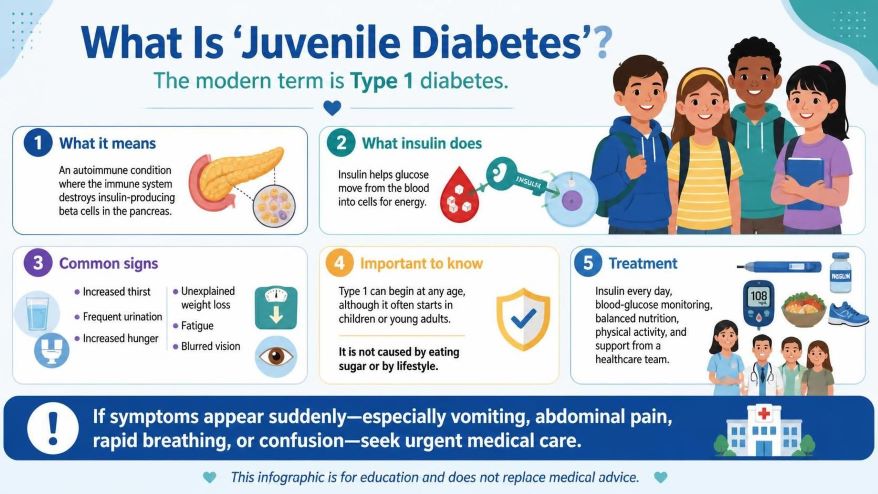
Juvenile Diabetes vs Type 1 Diabetes
The terms can be confusing, so the distinction is worth remembering.
| Term | Meaning | Current use |
|---|---|---|
| Juvenile diabetes | Older term commonly used for childhood-onset type 1 diabetes | Not the preferred modern term |
| Type 1 diabetes | Autoimmune diabetes involving destruction of insulin-producing beta cells | Preferred clinical term |
| Type 2 diabetes | Diabetes involving insulin resistance and progressive problems with insulin production | Can also occur in children and adolescents |
Therefore, a child with diabetes should not automatically be assumed to have type 1 diabetes simply because of age. An accurate diagnosis helps determine the appropriate treatment.
Type 1 vs Type 2 Diabetes in Children
Type 1 and type 2 diabetes are different diseases. In type 1 diabetes, the immune system attacks the pancreas’s insulin-producing beta cells. As a result, the body produces little or no insulin, making insulin replacement essential.
In type 2 diabetes, the body becomes resistant to insulin, and insulin production may eventually decrease. Treatment can include lifestyle changes, medications, and sometimes insulin therapy. Because treatment differs between the two conditions, families should work with a healthcare professional to confirm the diagnosis and develop an appropriate care plan.
What Are the Main Juvenile Diabetes Treatment Options?
For children with type 1 diabetes, treatment usually involves several connected areas.
| Treatment | Main purpose | Key point |
|---|---|---|
| Insulin | Replaces insulin the body cannot make adequately | Essential for type 1 diabetes |
| Glucose monitoring | Shows current glucose and trends | CGM is an important option |
| Diet and nutrition | Supports growth and helps coordinate food with insulin | Children still need balanced nutrition |
| Exercise | Supports physical and emotional health | Activity can change glucose levels |
| Emergency care | Helps prevent or treat severe glucose problems | Families need a clear emergency plan |
These treatments work together. Therefore, juvenile diabetes treatment should be viewed as a comprehensive management plan rather than a single medication or device.
Insulin Treatment for Type 1 Diabetes
Insulin is the foundation of type 1 diabetes treatment.
Because children with type 1 diabetes cannot produce enough insulin, they need insulin replacement.
Insulin may be given using:
- Multiple daily injections
- Insulin pens
- Insulin pumps
- Automated insulin delivery systems
The exact type, timing, and dose of insulin depend on the individual child. For that reason, families should never copy another person’s insulin schedule. Instead, the child’s diabetes team should develop an individualized plan.
Why is insulin necessary?
After a meal, the body breaks down carbohydrates into glucose. Insulin helps glucose enter the cells. In type 1 diabetes, the body does not make enough insulin. As a result, glucose builds up in the blood. Insulin treatment replaces the missing hormone and helps the body use glucose for energy. The 2026 ADA Standards of Care recommend insulin therapy for children and teens with type 1 diabetes. They also support choosing an insulin delivery method based on each person’s needs.
Continuous Glucose monitoring
Checking blood sugar is an important part of juvenile diabetes treatment. A blood glucose meter checks sugar from a small blood sample. A continuous glucose monitor, or CGM, checks blood sugar levels frequently and shows whether they are rising or falling.
Therefore, CGM can help families see whether glucose is:
- Rising
- Falling
- Relatively stable
- Above the target range
- Below the target range
Many CGM systems can send alerts. These alerts can help children who may not notice or be able to explain low blood sugar. The 2026 ADA Standards of Care recommend offering CGM at the time of diagnosis or soon after. Children may use it alone or with help from a caregiver. However, CGM does not replace diabetes education.
Insulin Pumps and Automated Insulin Delivery
Diabetes technology has improved greatly. An insulin pump delivers rapid-acting insulin through a small device. Such devices can reduce the need for frequent injections.
An automated insulin delivery (AID) system uses three parts. It combines a glucose sensor, an insulin pump, and a computer program. The program adjusts insulin delivery based on glucose levels.
In simple terms:
CGM → glucose information → algorithm → insulin delivery
This approach can reduce some of the daily burden of diabetes management.
The 2026 ADA Standards of Care recommend AID systems for children and teens with type 1 diabetes. They must be able to use the system safely. Caregivers can help when needed.
If AID is not an option, an insulin pump may be used instead. The best choice depends on each child and family.
Cost, access, family preference, technical skills, school support, and the child’s needs all matter. The ADA also recommends ongoing education. Families should learn how to use the technology and fix common problems.
Diet and Nutrition
Children with type 1 diabetes still need healthy food to grow and develop. Diabetes does not mean a child must follow a very strict diet. Instead, nutrition lessons can help families understand how food affects blood sugar.
A diabetes-friendly eating pattern can include:
- Vegetables
- Fruits
- Whole grains
- Beans and legumes
- Protein-rich foods
- Healthy fats
- Appropriate portions of carbohydrate-containing foods
Carbohydrate awareness
Carbohydrates are important in diabetes care because the body changes them into blood sugar. Many families learn to count carbohydrates. This helps the diabetes team match mealtime insulin to food.
Children’s food needs change as they grow. Growth, puberty, sports, illness, hunger, and activity can affect blood sugar. Therefore, families should update the child’s food plan over time. A dietitian or diabetes educator can offer personal guidance when needed.
Exercise and Physical Activity
Physical activity is an important part of a healthy childhood. Children with type 1 diabetes can participate in:
- Running
- Swimming
- Cycling
- Football
- Dancing
- Gymnastics
- Team sports
- Other recreational activities
However, exercise can affect glucose in different ways. For example, glucose may fall during or after some activities. In other situations, intense exercise can temporarily raise blood glucose levels. Therefore, children using insulin need an individualized exercise plan. The 2026 ADA Standards of Care recommend 60 minutes or more of moderate-to-vigorous physical activity each day for children and adolescents with diabetes, including muscle- and bone-strengthening activity at least 3 days per week. Glucose should be monitored around physical activity according to the child’s diabetes plan. Children and caregivers should also know how to recognize and treat hypoglycemia. If a child has marked hyperglycemia with moderate or large ketones, intense exercise should be avoided, and the diabetes care plan should be followed.
Emergency Care
Good diabetes management includes knowing what to do when glucose becomes dangerously low or high. Two important emergencies are severe hypoglycemia and diabetic ketoacidosis.
Hypoglycemia
Hypoglycemia means blood glucose is too low.
Symptoms may include:
- Shaking
- Sweating
- Hunger
- Dizziness
- Weakness
- Irritability
- Confusion
- Difficulty concentrating
If the child is awake and able to swallow, treatment should follow the individualized diabetes care plan.
Severe hypoglycemia can cause:
- Loss of consciousness
- Seizures
- Inability to swallow safely
Families should discuss glucagon with their healthcare team and ensure caregivers know when and how to use it.
What Is Diabetic Ketoacidosis?
Diabetic ketoacidosis, or DKA, is a serious medical emergency.
It happens when the body does not have enough insulin. Without enough insulin, the body burns fat for energy. This process creates ketones. Too many ketones can make the blood dangerously acidic.
Possible warning signs include:
- Very high blood glucose
- High ketone levels
- Excessive thirst
- Frequent urination
- Nausea
- Vomiting
- Abdominal pain
- Deep or rapid breathing
- Severe tiredness
- Confusion
If DKA is suspected, urgent medical care is required. Do not wait for symptoms to become severe. Families should also have a written sick-day plan from their diabetes care team.
What Happens During Illness?
Illness can make diabetes harder to manage. Infections and other illnesses can raise stress hormones. These hormones may increase blood sugar. Children may also eat less or vomit. This can make diabetes care harder. Therefore, families should create a sick-day plan before a child becomes ill.
The plan may explain:
- How often to check glucose
- When to check ketones
- How to maintain fluids
- When to contact the diabetes team
- When emergency care is needed
Blood sugar goals should match each child’s needs. The 2026 ADA Standards of Care state that an A1C below 7% is appropriate for most children and teens with diabetes. However, goals may differ based on the child’s health and circumstances.
Never stop insulin without professional guidance. A child with type 1 diabetes still needs insulin even when they are not eating normally.
Blood Sugar Goals for Children With Type 1 Diabetes
For example, a different goal may be considered when a child:
- Has frequent hypoglycemia
- Cannot recognize low glucose
- Has limited access to CGM or advanced insulin technology
- Has difficulty monitoring glucose
- Has other health factors affecting A1C
Therefore, parents should not compare one child’s A1C target to another child’s. The child’s healthcare team should individualize the goal.
Why Continuous Monitoring Matters
Diabetes management is closely linked to the frequency and quality of glucose monitoring. CGM can provide information about time in range, time below range, and time above range. This is useful because A1C alone does not show the full glucose pattern. For example, two children could have similar A1C results while having completely unique numbers of highs and lows. Therefore, healthcare teams may use CGM data alongside A1C.
Juvenile Diabetes Mellitus Treatment at School
Children spend much of their day at school. Therefore, diabetes care must continue there. School staff should be familiar with the child’s diabetes care plan.
Depending on the child, school staff may need to know how to
- Recognize hypoglycemia
- Respond to CGM alerts
- Support glucose monitoring
- Help with diabetes technology
- Provide access to food or fast-acting carbohydrate
- Respond to emergencies
- Contact parents or the diabetes team
Type 1 diabetes affects more than blood sugar. Children may feel frustrated, different from classmates, or tired of daily care. Parents may also worry about blood sugar, low blood sugar, school, sports, and checking their child’s levels at night.
The 2026 ADA Standards of Care state that students with diabetes should be supported at school in using prescribed diabetes technology, including CGM, insulin pumps, connected insulin pens, and automated insulin delivery systems.
Emotional Health and Family Support
Therefore, emotional well-being should be part of diabetes care. Talk with the diabetes team if a child shows:
- Persistent sadness
- Anxiety
- Diabetes-related distress
- Fear of hypoglycemia
- Avoidance of diabetes care
- Eating concerns
- Problems coping with the diagnosis
Support from diabetes educators, mental health professionals, and peer-support programs can be helpful when appropriate.
Can Type 1 Diabetes Be Cured?
At present, there is no routine cure that eliminates the need for insulin in established type 1 diabetes.
However, research continues into areas such as the following:
- Cell replacement
- Immune therapies
- Pancreatic islet transplantation
- New insulin-delivery technologies
Families should be careful with products or programs that claim to permanently cure type 1 diabetes without strong scientific evidence.
Can Children With Type 1 Diabetes Live a Normal Life?
Yes. With appropriate treatment and support, children with type 1 diabetes can participate in school, sports, travel, hobbies, family activities, and social events. However, planning is important.
A child may need to carry the following:
- Glucose monitoring supplies
- Insulin
- Fast-acting carbohydrate
- Ketone-testing supplies when advised
- Emergency medication when prescribed
- Other diabetes equipment
As the child grows, they can gradually take more responsibility for their diabetes care. Parents and caregivers should support that transition while maintaining appropriate supervision.
10 Things Parents Should Know After a Type 1 Diabetes Diagnosis
- Insulin is essential.
- Learn how to monitor glucose.
- Understand how CGM works if one is prescribed.
- Learn the symptoms and treatment of hypoglycemia.
- Know the warning signs of DKA.
- Have a written sick-day plan.
- Learn how food affects glucose.
- Plan safely for exercise and sports.
- Coordinate diabetes care with school staff.
- Attend regular appointments with the diabetes care team.
Most importantly, ask questions whenever something about the treatment plan is unclear.
Conclusion: Type 1 diabetes management
In conclusion, juvenile diabetes mellitus, now called type 1 diabetes, requires lifelong insulin treatment, regular glucose monitoring, balanced nutrition, and medical support. With consistent care, children can stay healthy and active.
Frequently Asked Questions About Juvenile Diabetes Treatment
Is juvenile diabetes the same as type 1 diabetes?
Yes, juvenile diabetes is an older term for type 1 diabetes. However, type 1 can develop at any age, so the modern term is more accurate and inclusive today.
What is the main treatment for juvenile diabetes?
The primary treatment for juvenile diabetes mellitus is daily insulin replacement. Additionally, patients monitor blood glucose levels, balance carbohydrate intake, exercise safely, and attend regular medical appointments to prevent complications and maintain health.
Do children with type 1 diabetes need insulin every day?
Yes, children with type 1 diabetes generally need insulin every day. Therefore, treatment of juvenile diabetes mellitus requires consistent dosing, glucose monitoring, healthy meals, and medical guidance to maintain safe blood glucose levels.
Can children with type 1 diabetes use a CGM?
Yes, children with type 1 diabetes can use continuous glucose monitors (CGMs). These devices track glucose levels throughout the day. Additionally, CGM supports the treatment of juvenile diabetes mellitus by improving monitoring.
Do children with type 1 diabetes need insulin every day?
Yes, children with type 1 diabetes usually require insulin every day because their bodies produce little or none. Thus, treatment of juvenile diabetes mellitus includes personalized dosing and safety monitoring.
Reference
- Bahal, M., Pande, V., Dua, J., & Mane, S. (2024). Advances in type 1 diabetes mellitus management in children. Cureus, 16(8), e67377. https://doi.org/10.7759/cureus.67377
- International Society for Pediatric and Adolescent Diabetes. (2022). ISPAD clinical practice consensus guidelines: Diabetes education in children and adolescents. Pediatric Diabetes, 23, 1229–1242. https://doi.org/10.1111/pedi.13418
- Cobry, E., et al. (2022). Continuous glucose monitoring and type 1 diabetes in children. Frontiers in Endocrinology, 13. https://pmc.ncbi.nlm.nih.gov/articles/PMC9196217/
- Author
- Latest Posts

Ramya Dobbala is a pharmacist and science communicator dedicated to bridging the gap between complex pharmaceutical research and public understanding. A 2024 B.Pharmacy graduate, Ramya has a strong foundational background in formulation science, having spearheaded research into the evaluation and formulation of anti-acne creams. Her work focused on optimizing topical delivery systems to enhance treatment efficacy and skin health.
Transitioning from the laboratory to the forefront of scientific discourse, she now leverages her technical expertise to translate intricate healthcare concepts into accessible, engaging content. As an author and communicator, Ramya is passionate about empowering audiences with evidence-based insights, particularly in the realms of dermatology and pharmaceutical innovation.