Jawaharlal Nehru, popularly known as Chacha Nehru, called such a practice the scientific temper.
Author
Associate Professor of Physics (Rtd), Nehru Arts and Science College, Kanhangad, Kerala
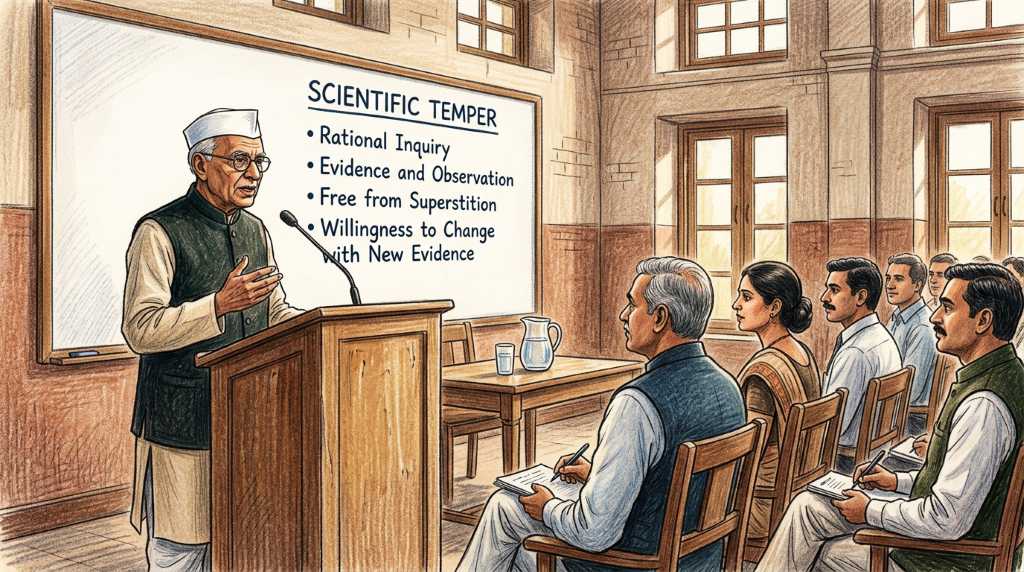
Science is a way of living, not a collection of equations and instruments. However, Practicing science helps us to ask questions, search for evidence, and examine our beliefs and concepts. Additionally, Jawaharlal Nehru, popularly known as Chacha Nehru, called such a practice the scientific temper. He said science is not only working in laboratories or learning equations, but is the way to understand the world we live in and solve the problems we encounter. India has made great progress in science and technology. Moreover, We have colleges, universities, national research laboratories, space centers, and institutions working at the frontiers of science. But building these institutions has not helped much to develop scientific temper.
Between April and September 1944, Jawaharlal Nehru was imprisoned by the British at Ahmednagar Fort in Maharashtra. During this period, he wrote “The Discovery of India”, one of his best-known books. In the chapter in the book “Ahmednagar Fort Again”, he explained the importance of the scientific attitude.

Nehru wrote:
“The applications of science are inevitable and unavoidable for all countries and peoples today. But something more than its application is necessary. It is the scientific approach, the adventurous and yet critical temper of science, the search for truth and new knowledge, the refusal to accept anything without testing and trial, the capacity to change previous conclusions in the face of new evidence, the reliance on observed fact and not on pre-conceived theory, the hard discipline of the mind—all this is necessary, not merely for the application of science but for life itself and the solution of its many problems.”He also observed:
“The scientific temper points out the way along which man should travel. It is the temper of a free man.” These words expressed a simple but powerful idea.
Additionally, Recognizing the importance of scientific temper, the Constitution of India, under Article 51A(h), lists among the fundamental duties of every citizen the duty to develop “the scientific temper, humanism and the spirit of inquiry and reform.” Constitutions of other countries also recognize the importance of science. Germany and Japan protect the freedom of scientific and academic work, while Spain and Brazil call upon the state to promote science and research. India’s provision is particularly significant because it explicitly places scientific temper and the spirit of inquiry among the duties of citizens. This constitutional commitment should inspire us to help children ask questions, seek evidence, examine beliefs critically, and remain willing to change their views when evidence demands it.

The astronomer and science communicator Carl Sagan often stressed the importance of scientific temper in children. However, He described this natural curiosity in his book The Demon-Haunted World: Science as a Candle in the Dark:
“Many of these children are natural-born scientists. They are curious, intellectually vigorous… Provocative and insightful questions bubble out them.”
-Carl sagan
For Sagan, curiosity was a natural gift that children should preserve and strengthen. However, Sagan observed a very interesting issue when he interacted with older students. While young children up to high school eagerly questioned everything around them, many students in secondary school appeared hesitant to ask questions. They often concentrated on memorizing facts and never tried to understand the ideas behind them.

Reflecting on this change, Sagan wrote:
“When I talk to high school seniors… the joy of discovery, the life behind the facts, has gone out of them.”
He concluded with a memorable observation:
“Something has happened between first and twelfth grade. And it’s not just puberty”
This shows that our schooling has a serious issue that kills curiosity when students reach higher secondary classes
Scientific temper develops through everyday practice, not merely through textbook lessons. Parents and teachers can help children develop it in several ways:
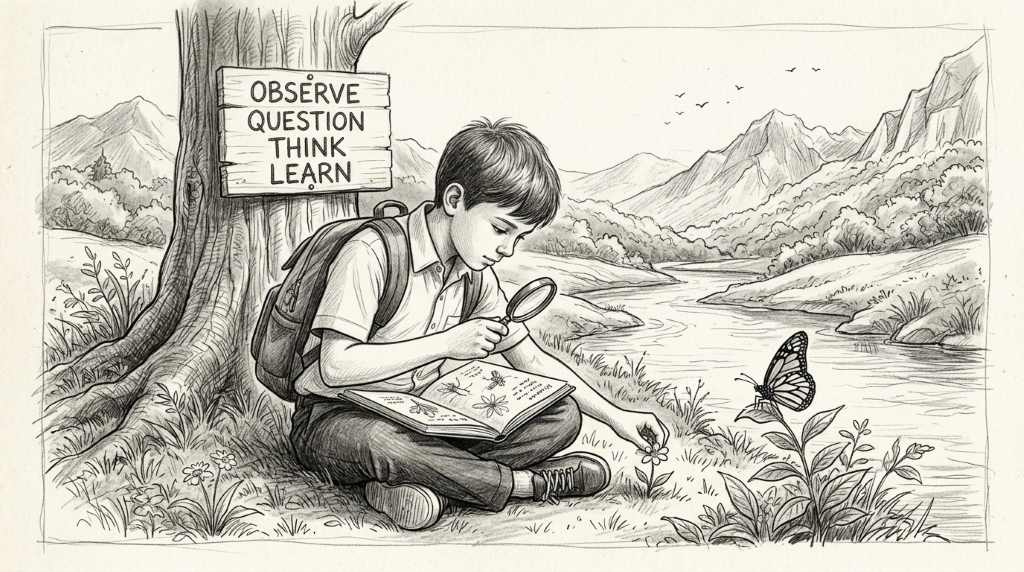
These habits cannot be developed in a day. They must be practiced for years from childhood onwards. Nehru’s birthday, November 14, is celebrated in India as Children’s Day. However, It is a fitting occasion to remember that children are not merely the future of our country; they are curious learners today. The way we respond to their questions can shape how they think throughout their lives. shows that our schooling has a serious issue that kill curiosity when students reach higher secondary classes.
Scientific temper begins with curiosity, questioning and evidence, and this article explores how we can nurture these essential qualities in the next generation.