Scientists discovered a new species of Euonymus in Southwest China and named it Euonymus maotaiensis.
A Newly Described Endemic Species of Euonymus (Celastraceae) from Southwestern China
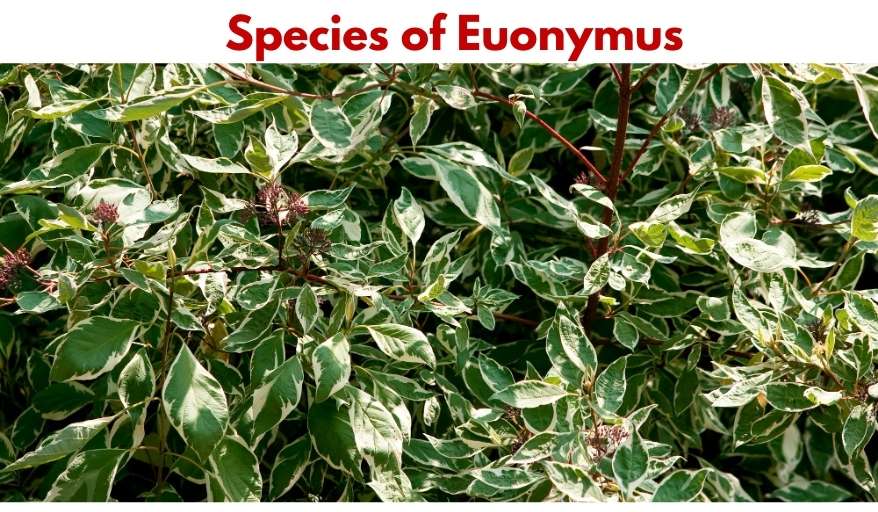
Scientists discovered a new species of Euonymus in Southwest China and named as Species of Euonymus (Celastraceae). This species of Euonymus was found in Guizhou Province, marking a major win for botany and biodiversity. Researchers published their findings in PhytoKeys in early 2026. This species of Euonymus belongs to the Celastraceae family. At first glance, it resembles other shrubs, but its unique flowers and fruit shape distinguish this species of Euonymus.
A Species of Euonymus (Celastraceae) from Southwestern China
Euonymus maotaiensis, a recently discovered species of Euonymus, grows in the limestone areas of Southwest China. Botanists noticed this species of Euonymus during field surveys, with no prior records existing. It features small greenish flowers, and its capsules exhibit a distinct 4-lobed shape. Taxonomy enables scientists to classify species of Euonymus by comparing DNA and physical traits, confirming its status as a new species of Euonymus. For instance, its leaf arrangement sets it apart from close relatives. Given its specific limestone habitat, this species of Euonymus may prove rare
Why Does Botany Matter to You?
While this may be true, you might ask why it matters. Plants provide oxygen, food, and medicine. Discovering a new species helps us understand ecosystems. At the same time, it protects nature. If you like nature and science, this could be your career path. STEM jobs are not just about coding or robots. Botany and environmental science are huge fields. You can find lucrative careers in research or conservation.
Explore STEM Career Opportunities
Many teens want to make a difference. To that end, STEM offers many paths. You could be a field biologist. You might work as a conservation scientist. Some people become plant geneticists. They use technology to improve crops. Others work in urban planning. They design green spaces for cities. After all, we need experts to solve climate change.
How to Start Your STEM Journey
At the present time, you can start learning. Take biology and chemistry in school. Join a science club. Look for internships at botanical gardens. All things considered, your education is the first step. You can read about exciting careers in paleontology to see other options. Or, learn how to identify plant parts to build your skills.
Is a Career in Science Hard?
To be sure, science requires hard work. You must have attention to detail. You need to be curious. As a result, you will find answers to big questions. What’s more, you get to travel. Botanists often visit remote forests. They search for rare plants. This discovery in China is a great example. To point out, it takes teamwork. Scientists from different universities collaborated. Together with local guides, they found the Euonymus maotaiensis.
The Future of Biodiversity
All in all, our planet still has mysteries. So far, we have not found every species. Every new plant is another piece of the puzzle. In reality, we must protect these species. If we don’t, they might go extinct. Provided that we keep exploring, we can save them. Analogous to a detective, a scientist looks for clues. This leads to discoveries that change the world.
Summing Up Your Options
To sum up, the discovery of Euonymus maotaiensis is exciting. It shows that science is always evolving. At this instant, you can choose your future. Will you be the one to find the next species? Whether you like engineering or ecology, STEM has a place for you. In short, keep learning and stay curious. Your career in STEM starts now.
Species of Euonymus: Conclusion
In conclusion, the study formally describes Euonymus maotaiensis as a new species within the Celastraceae family, discovered in southwestern China. Through detailed morphological comparisons and phylogenetic analyses, the authors demonstrate that E. maotaiensis is clearly distinct from all closely related taxa in the genus Euonymus, based on a suite of diagnostic features not present in its congeners is disclose.
Additionally, to stay updated with the latest developments in STEM research, visit ENTECH Online. Basically, this is our digital magazine for science, technology, engineering, and mathematics. Also, at ENTECH Online, you’ll find a wealth of information.
Reference:
- An, M. T., & Wu, X. (2026). Euonymus maotaiensis M.T.An & Xu Wu, sp. nov., a new species of Euonymus (Celastraceae) from southwest China. PhytoKeys, 270, 1–10. https://doi.org/10.3897/phytokeys.270.171340
- Author
- Latest Posts

I completed my Master of Science from the University of Allahabad in 2017 with a strong academic background in life sciences and chemistry. My specialization included Molecular Biology, Microbiology, Genetics, Plant Breeding, Phycology, Paleobotany, and Bioinformatics, along with Organic Chemistry, Inorganic Chemistry, and Physical Chemistry. This multidisciplinary training provided me with a comprehensive understanding of biological systems and analytical scientific approaches.
After completing my postgraduate studies, I gained valuable professional experience in both the education and social development sectors. I worked at A.M. Oxford Public School, where I was actively involved in guiding students toward academic excellence. In this role, I focused on creating an engaging learning environment, encouraging critical thinking, and nurturing students’ curiosity for scientific learning. My experience as an educator strengthened my communication, mentoring, and classroom management skills.
In addition to my teaching experience, I worked with Jeevan Jagriti Foundation, where I contributed to community-based initiatives aimed at improving educational access and awareness among underprivileged sections of society. Through this work, I participated in programs designed to support social development and promote the value of education in marginalized communities.
These professional experiences helped me develop strong interpersonal, leadership, and organizational skills while reinforcing my commitment to education and community service.