When soil dries, stomata close and slow transpiration. This keeps plants from losing too much water.
Transpiration and Its Importance in Water Movement
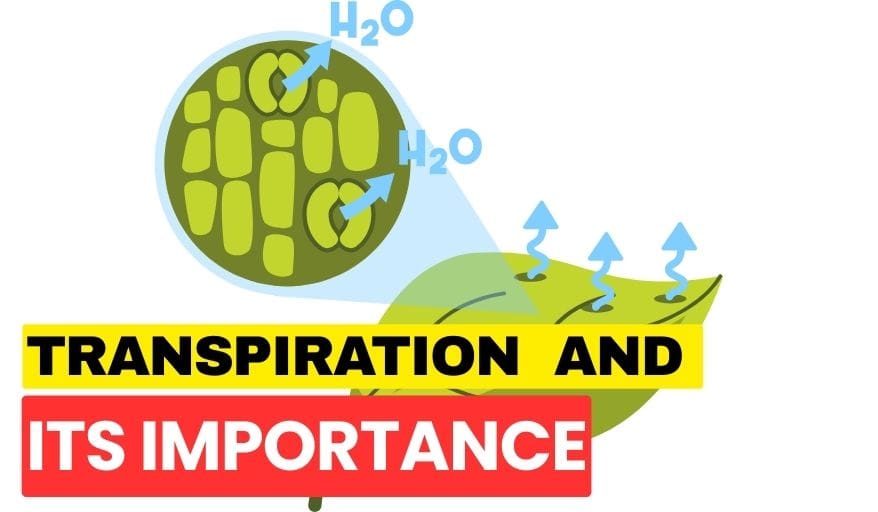
Transpiration and its importance in plants refers to the process where water exits through tiny openings in leaves. This process enables water to travel from the roots up to the leaves, carrying nutrients that nourish the entire plant. Transpiration and its importance also include cooling the leaves and maintaining their strength.
Additionally, transpiration and its importance play a major role in shaping the water cycle. Scientists have discovered that transpiration and its importance in plants accounts for about 60% of land evapotranspiration. For this reason, its significance is vital not only for maintaining water balance but also for supporting plant growth.
Understanding transpiration and its significance is essential for maintaining healthy plants.
Transpiration and its importance: Key Takeaways
- Transpiration is important for plants because it moves water and nutrients from roots to leaves. As a result, this process helps plants grow well.
- Stomata are very important in transpiration because they control how much water leaves the plant. For instance, stomata open to let out water vapor, but they close to keep moisture inside.
- Sunlight, temperature, and humidity affect transpiration rates. As a result, these factors can change how healthy a plant is.
- Good transpiration cools plants. It also helps the water cycle. This keeps the ecosystem balanced.
- To help transpiration, use mulch in order to keep soil wet. Additionally, watch the humidity, and finally, pick plants that save water
What Is Transpiration?
Transpiration and its importance:Definition
Transpiration and its importance lie in how plants let water vapor out into the air, mostly through tiny holes on leaves called stomata. In fact, you can think of transpiration like a plant breathing out water..
Transpiration means water vapor leaves the plant through stomata. It is a passive process, so the plant does not use energy for it. The process happens because water levels are different in the soil and the air.
The plant does not need to use energy for this. Instead, it happens because water moves from wet places to dry places. When the air is dry, water leaves the plant faster.
Also read: Discovering Growth: Key Functions of Plant Tissue Types
Transpiration and its importance:Process
Transpiration in plants happens in steps that move water from roots to leaves and then out. Here is how it works:
- Stomatal Transpiration: Most water leaves through the stomata.
- Cuticular Transpiration: A little water goes out through the waxy leaf surface.
- Lenticular Transpiration: A tiny bit leaves through small holes called lenticels.
Most water loss happens through the stomata on the leaf. Only a small amount leaves through the cuticle or lenticels.
Transpiration and its importance do more than just lose water. When water evaporates from the leaf, it pulls more water up from the roots. This brings nutrients from the soil to the whole plant. The process works like this:
- Stomata open so gases can move, and water leaves.
- Water leaving makes a pull inside the leaf.
- This pull moves water up through the plant’s xylem tubes.
- Water molecules stick together, making a stream from roots to leaves.
Transpiration helps plants move water and nutrients well. Most water a plant takes in is lost this way, but this is needed for the plant to stay healthy and grow.
Mechanisms in Plants

Transpiration and its importance: Stomata
Stomata are found on leaf surfaces. These small holes let water vapor out. Stomata open and close to control water loss. If the soil is dry, stomata may close. This helps the plant save water. Plants can close stomata when stressed by lack of water. Early plants could only react passively.
Modern plants use abscisic acid to close stomata. This helps them manage water loss better. When soil dries, stomata close and slow transpiration. This keeps plants from losing too much water. The number and size of stomata change water loss. Some plants have fewer stomata and lose less water. Others have more and lose more water.
Plants with fewer stomata use water better and handle stress well.
Also read: Plant Morphology: Identify Plant Parts and Their Roles
Transpiration and its importance:Water Movement
Water travels through plants in a special way. When water leaves the leaves, it creates a pull. This pull brings water up from the roots through tubes called xylem. For example, water molecules stick together and move as a group, so plants do not need energy for this movement. Instead, pressure differences and sticky water help the process. As a result, as water leaves the leaf, more water rises from the roots.
Consequently, this stream brings nutrients to all parts of the plant, which means transpiration helps plants get nutrients. When water evaporates at the leaf, it lowers tension. This makes water and nutrients move up faster. Most water taken in by roots leaves through the leaves. This helps spread nutrients through the plant.
- Transpiration makes negative pressure in the xylem.
- Water and nutrients travel from roots to leaves.
- Evaporation at the leaf helps water move up.
- Most water from roots is lost from leaves.
Water movement helps plants stay healthy and grow.
Factors Affecting Transpiration
Transpiration and its importance:Environment
The environment changes how much water plants lose because factors like sunlight, dry air, temperature, and soil moisture all matter. For example, more sunlight makes plants open their stomata wider, which lets more water vapor out. Similarly, dry air makes water leave the plant faster, while hot weather speeds up water movement. If the soil is dry, plants close their stomata to save water.
Wind also affects how much water plants lose. Wind blows water vapor away from leaves. This makes more water leave the plant. Humidity does the opposite. When the air is humid, less water leaves the plant. In contrast, more humidity makes it go down. Ultimately, these changes depend on how open the stomata are and how fast water vapor moves from the leaf to the air
Transpiration and its importance:Plant Type
Different plants lose water at different speeds, as you can see in crops and wild plants. For example, some plants have special leaf shapes or thick waxy layers, which help them keep water inside. In contrast, plants with bigger leaves lose more water. Woody plants like creosote bush shrink their leaf area when water is low. This helps them save water.
Plant types like C3, C4, and CAM lose water in different ways. C3 and C4 plants can lose water at night. This depends on their genes and the environment. Some plants have more stomata, so they lose more water. Others have fewer stomata and thus save water. Additionally, stomata on different leaf surfaces may react differently to the environment. Transpiration and its significance change with plant type and leaf features.
Transpiration and Its importance
Nutrients
Transpiration and its significance help plants move water and nutrients. Water goes from the roots up to the leaves. Nutrients travel with the water. Some people think only transpiration moves nutrients. But research shows plants get nutrients even when transpiration is low. Other things inside the plant help move minerals.
Plants still grow and get minerals even with less transpiration. Transpiration and its significance are still important for moving water. Nutrients can reach leaves even when transpiration slows down. Growth and transpiration often go together. If you manage water well, plants grow better.
Cooling
Transpiration and its significance also help cool plants. When water leaves the leaf, it takes heat away. This keeps leaves cooler. Plants avoid getting too hot. Here are ways transpiration cools plants:
- Water leaves the leaf and lowers its temperature.
- Plants stay cooler than the air around them.
- Transpiration can drop air temperature by 0.5 C to 4.0 C.
- Trees cool the air more than just shade.
- Cooling depends on sunlight and tree shape.
Green spaces feel cooler because of transpiration. It helps keep gardens comfortable. Healthy transpiration protects plants from heat damage.
Water Cycle
Transpiration and its significance help the water cycle. Plants send water vapor into the air. This vapor becomes clouds and rain. Growing healthy plants helps the water cycle work. Here are facts about transpiration and the water cycle:
- Transpiration returns about 39% of rain to the air.
- In Africa, plants give over 50% of yearly rainfall.
- Some places see up to 68% of rain recycled by plants.
- Globally, plants add 57% of evapotranspiration to precipitation.
- Tropical forests recycle more water than dry lands.
Caring for plants supports the water cycle. Transpiration and its significance keep ecosystems stable. Knowing this process helps you predict plant stress and improve crops. You can spot problems when transpiration fails. Signs include rolled leaves, slow growth, and yellow leaves. You can act early to keep plants healthy.
Tip: Keep humidity between 60-80% so stomata stay open. This helps photosynthesis and keeps plants growing well.
You support healthy Transpiration when you care for your plants. Transpiration helps your plants take in nutrients, stay cool, and balance water. You see stronger growth and better survival during heat or drought. Try these tips:
- Use mulch to keep soil moist.
- Adjust watering as days get shorter.
- Watch humidity to avoid plant stress.
- Pick plants with features that save water.
Your choices help plants thrive and keep the environment stable.
Frequently Asked Questions
What is the main purpose of transpiration?
Transpiration helps your plant move water and nutrients. It also cools leaves and supports the water cycle.
How do you know if your plant has healthy transpiration?
You see strong growth, green leaves, and no wilting. Leaves stay cool and do not roll up.
What factors increase transpiration in plants?
Sunlight, wind, and high temperature make transpiration faster. Dry air also increases water loss.
References
- Campos, W. V., Filho, J. T., & José, A. R. S. (2025). African Mahogany Under Saline Stress: An analysis of the transpiration response at different salinity levels. Plants, 14(5), 666. https://doi.org/10.3390/plants14050666
- Pei, D., Wei, X., Bai, Y., Wang, C., Liu, Y., & Jiang, S. (2022). Path analysis of the main control factors of transpiration in greenhouse, DRIP-Irrigated grapes in cold areas of northeast China. Water, 14(22), 3764. https://doi.org/10.3390/w14223764
- Cao, Y., Wang, Y., Zhang, N., Ning, C., Dang, N., & Jia, J. (2024). Unveiling the Dynamics of canopy transpiration: a novel model integrating stomatal and aerodynamic resistance in Semi-Humid forests. Forests, 15(11), 1945. https://doi.org/10.3390/f15111945
- Author
- Latest Posts

I completed my Master of Science from the University of Allahabad in 2017 with a strong academic background in life sciences and chemistry. My specialization included Molecular Biology, Microbiology, Genetics, Plant Breeding, Phycology, Paleobotany, and Bioinformatics, along with Organic Chemistry, Inorganic Chemistry, and Physical Chemistry. This multidisciplinary training provided me with a comprehensive understanding of biological systems and analytical scientific approaches.
After completing my postgraduate studies, I gained valuable professional experience in both the education and social development sectors. I worked at A.M. Oxford Public School, where I was actively involved in guiding students toward academic excellence. In this role, I focused on creating an engaging learning environment, encouraging critical thinking, and nurturing students’ curiosity for scientific learning. My experience as an educator strengthened my communication, mentoring, and classroom management skills.
In addition to my teaching experience, I worked with Jeevan Jagriti Foundation, where I contributed to community-based initiatives aimed at improving educational access and awareness among underprivileged sections of society. Through this work, I participated in programs designed to support social development and promote the value of education in marginalized communities.
These professional experiences helped me develop strong interpersonal, leadership, and organizational skills while reinforcing my commitment to education and community service.