Understand the TS of Stem differences between monocots and dicots. Learn how vascular bundle arrangement, secondary growth, and tissue structure define their adaptability.
T.S of Stem: Monocot vs. Dicot Differences

Estimated reading time: 11 minutes
Have you ever wondered why some plants grow tall and sturdy while others remain flexible and slender? The answer lies in the Stem Anatomy Comparison—a fascinating cross-section that reveals the inner workings of monocot and dicot plants. Monocots, with about 65,000 species, exhibit scattered vascular bundles, providing them with flexibility. Dicots, boasting over 250,000 species, display a ringed arrangement that provides strength and support. These structural differences define their growth patterns and highlight their unique adaptations to survive in diverse environments. By exploring these distinctions, you’ll uncover the secrets behind plant classification and function.
Key Takeaways
Stem Anatomy Comparison reveals important differences between monocot and dicot plants. In a dicot stem, vascular bundles are arranged in a ring around the central pith. These bundles are open because they contain cambium, which enables secondary growth and increases stem thickness over time. In contrast, a monocot stem has vascular bundles scattered throughout the ground tissue. The bundles are closed because they lack cambium, so secondary growth is generally absent. Dicot stems usually show distinct regions such as the cortex, endodermis, pericycle, and pith, while monocot stems have less clearly differentiated tissues. These structural differences help botanists identify plant groups and understand how stems support growth, transport water and nutrients, and provide mechanical strength.
Overview: TS of Stem Structure of Monocot and Dicot
The study of stem anatomy comparison is like peeking into the blueprint of plant life. These two groups, monocotyledons and dicotyledons, differ significantly in their internal anatomy, which directly impacts their growth, strength, and adaptability.
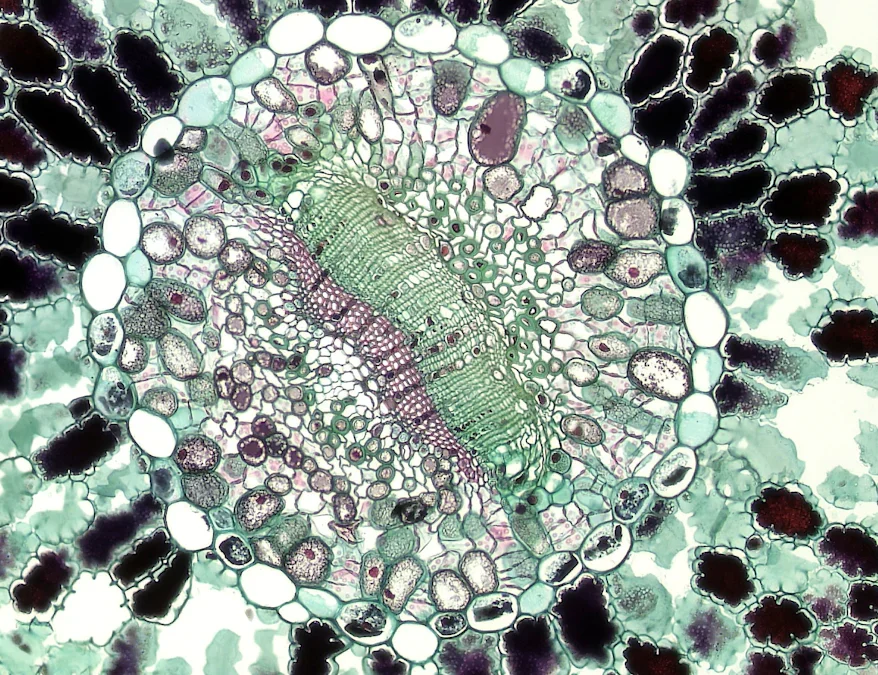
Characteristics of Monocot Stem
While studying stem anatomy comparison, Monocot stems are all about simplicity and efficiency. Their vascular bundles, which transport water and nutrients, are scattered throughout the stem. This scattered arrangement gives monocot stems a flexible structure, making them ideal for plants like grasses and bamboo that need to bend without breaking.
During the study of Stem Anatomy Comparison, the outer layer, or epidermis, is often coated with a waxy substance called cutin. This coating helps reduce water loss, especially in dry environments. Beneath the epidermis lies the hypodermis, composed of tough sclerenchymatous cells that provide extra support. Unlike dicots, monocots lack secondary growth, so their stems don’t thicken over time. Instead, they remain herbaceous and lightweight, perfect for rapid growth.
Characteristics of Dicot Stem
During the study of Stem Anatomy Comparison, Dicot stems, on the other hand, are built for durability and strength. Their vascular bundles are neatly arranged in a ring near the edge of the stem. This ringed pattern provides structural support, allowing dicots like oak trees and sunflowers to grow tall and sturdy.
Inside the stem, you’ll find a well-defined pith at the center, surrounded by layers of cortex and vascular tissue. The presence of cambium, a layer of dividing cells, enables secondary growth. This means dicot stems can increase in diameter over time, often developing woody characteristics. The epidermis in dicots is also distinct, often featuring tiny hair-like structures called trichomes that protect the plant from pests and excessive sunlight.
Importance of Studying the TS of Stem
By examining the Stem Anatomy Comparison, you can identify whether a plant is a monocot or dicot. This knowledge helps botanists classify plants, farmers choose crops suited to their soil, and gardeners understand how to care for their plants.
Moreover, the differences in stem structure reveal how plants have evolved to survive in diverse environments. Monocots thrive in open fields and grasslands, while dicots dominate forests and gardens. By studying these structures, you gain insights into the incredible diversity of plant life around you.
Key Structural Differences in the TS of Stem
When you examine the Stem Anatomy Comparison, the differences between monocot and dicot plants become strikingly clear. These distinctions, especially in vascular bundle arrangement, secondary growth, and ground tissue organization, reveal how these plants adapt to their environments and fulfill their roles in nature.
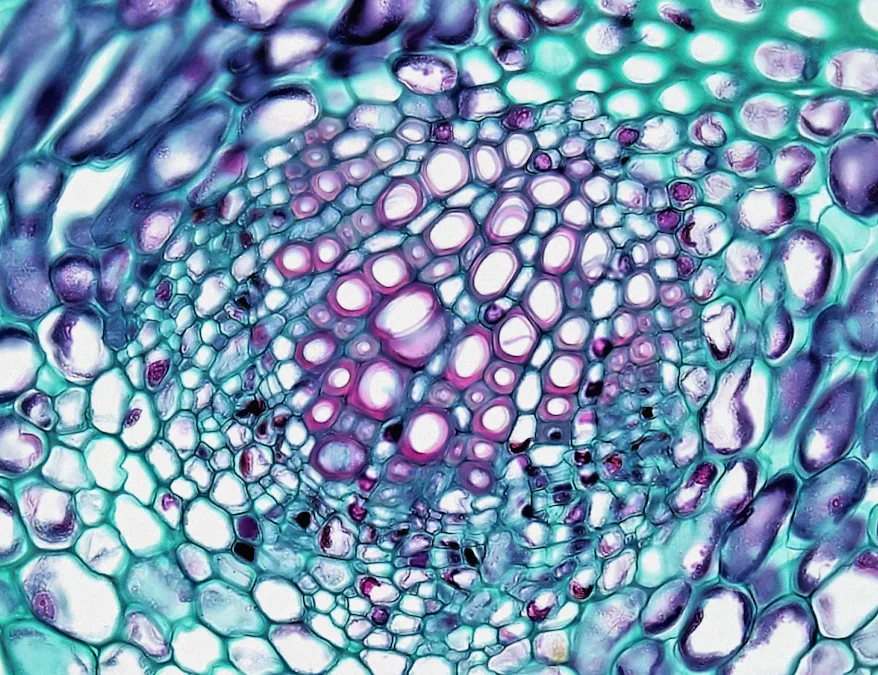
Vascular Bundle Arrangement
Scattered in Monocot Stem
During the study of Stem Anatomy Comparison, in a monocot stem, the vascular bundles appear scattered throughout the cross-section. This scattered pattern gives the stem flexibility, which is essential for plants like grasses, corn, and bamboo. The absence of a specific arrangement allows monocots to bend and sway without breaking, making them well-suited for windy or open environments.
The vascular bundles in monocots lack a cambium layer, which means they cannot produce secondary tissues. This feature keeps the stem lightweight and herbaceous, ideal for rapid growth. The scattered arrangement also ensures efficient transport of water and nutrients across the stem, supporting the plant’s survival in diverse conditions.
Ringed in Dicot Stem
In contrast, the dicot stem showcases a ringed arrangement of vascular bundles. This organized structure provides strength and rigidity, enabling dicots like oak trees and sunflowers to grow tall and sturdy. The vascular bundles in dicots are separated by a cambium layer, which plays a crucial role in secondary growth.
This ringed pattern supports the plant’s upright growth and enhances its ability to transport water and nutrients efficiently. The arrangement creates a balance between flexibility and strength, allowing dicots to thrive in various environments, from dense forests to cultivated gardens.
TS of Stem: Secondary Growth
Absent in Monocot Stem
During the study of Stem Anatomy Comparison, Secondary growth, which involves the thickening of stems, is absent in monocots. Without a cambium layer, monocots cannot produce secondary vascular tissues or periderm. This limitation keeps the monocot stem herbaceous and prevents it from developing woody characteristics. While this might seem like a disadvantage, it actually benefits monocots by allowing them to grow quickly and adapt to environments where speed is more critical than durability.
Present in Dicot Stem
During the study of Stem Anatomy Comparison, the dicot stem, however, undergoes secondary growth due to the presence of a cambium layer. This layer divides actively, producing secondary vascular tissues and periderm. Over time, this process increases the stem’s diameter, giving dicots their woody and robust structure. This feature explains why many dicots, such as trees and shrubs, can live for decades or even centuries. Secondary growth also enhances the plant’s ability to transport water and nutrients over long distances, ensuring its survival in challenging conditions.
Ground Tissue Organization
Uniform in Monocot Stem
During the study of Stem Anatomy Comparison, the ground tissue in a monocot stem is uniform and undifferentiated. This means there is no clear separation between the cortex and pith. The parenchyma cells in the ground tissue store nutrients and provide support, contributing to the stem’s overall flexibility. This uniformity simplifies the internal structure, making monocots efficient at allocating resources and growing.
Differentiated in Dicot Stem (Cortex and Pith)
During the study of Stem Anatomy Comparison, in a dicot stem, the ground tissue is distinctly differentiated into two well-defined regions: the cortex and the pith. To begin with, the cortex, situated just beneath the epidermis, often contains collenchyma cells that provide essential mechanical support, enabling the plant to maintain its structure. Meanwhile, the pith, located at the center of the stem, is composed of parenchyma cells that store vital nutrients and water. This clear differentiation not only adds complexity to the internal structure of dicots but also equips them to perform specialized functions, allowing them to adapt to a wide variety of environments.
During the study of Stem Anatomy Comparison, by delving deeper into these structural distinctions, you can better appreciate how monocots and dicots have evolved to meet their specific needs. For example, while monocots exhibit scattered vascular bundles that contribute to their growth patterns, dicots feature a ringed arrangement that enhances stability and efficient transport. Each of these unique characteristics plays a crucial role in the plant’s overall growth, survival, and ability to thrive in diverse environmental conditions.
Functional Implications of Monocot and Dicot Stem Structures

Adaptations to Growth and Environment
Flexibility and Rapid Growth in Monocot Stem
During the study of Stem Anatomy Comparison, The monocot stem is a marvel of adaptability, designed for speed and flexibility. Its scattered vascular bundles allow the stem to bend and sway without breaking, making it ideal for plants like grasses, corn, and bamboo. This flexibility helps monocotyledons thrive in open fields and windy environments. The absence of secondary growth ensures that the stem remains lightweight and herbaceous, enabling rapid vertical growth.
The hypodermis in the monocot stem, composed of sclerenchymatous cells, adds mechanical support while maintaining flexibility. This unique combination allows monocots to grow quickly, adapt to changing conditions, and survive in environments where resilience matters more than rigidity.
Strength and Longevity in Dicot Stem
During the study of Stem Anatomy Comparison, the dicot stem, on the other hand, prioritizes strength and durability. Its ringed vascular bundle arrangement provides structural support, enabling plants like oak trees and sunflowers to grow tall and sturdy. The presence of a cambium layer significantly facilitates secondary growth, enabling the stem to thicken over time and develop woody characteristics. Consequently, this feature enables dicots to survive for decades or even centuries, showcasing their evolutionary advantage.
During the study of Stem Anatomy Comparison, the hypodermis in the dicot stem, composed of collenchymatous cells, plays a dual role by balancing structural support with elasticity. This combination not only allows dicots to endure environmental stress but also helps them maintain an upright posture, ensuring their stability. Furthermore, the differentiated ground tissue, which includes a distinct cortex and pith, adds another layer of complexity and functionality. Together, these features contribute to the plant’s long-term survival, adaptability, and resilience in diverse environments.
Case Study
Exploring real-world examples can deepen your understanding of the monocot and dicot TS of stem structures.
1: Corn (Monocot)
During the study of Stem Anatomy Comparison, Corn, a staple crop worldwide, showcases the unique features of a monocot stem. Its stem is circular and surrounded by a dermis layer coated with a wax-like substance called cutin. This coating reduces water loss, making corn well-suited for dry or windy environments. Inside, the vascular bundles are scattered throughout the stem, ensuring efficient water and nutrient transport. This scattered arrangement also gives the stem flexibility, allowing it to withstand strong winds without breaking.
The ground tissue in corn stems is uniform, storing nutrients and providing support. This simplicity enables rapid growth, which is essential for crops grown in large-scale farming. Farmers often rely on corn’s ability to grow quickly and adapt to varying conditions, making it a vital food source globally. Corn’s monocot stem embodies this idea, thriving in challenging environments through its adaptable structure.
The above case study reveals how the structural differences between monocot and dicot stems influence their growth patterns and ecological roles.

Conclusion
During the study of Stem Anatomy Comparison, the TS of the stem reveals the fascinating differences between monocot and dicot stems, showcasing how nature tailors plants for survival. The scattered vascular bundles in the monocot stem highlight flexibility and rapid growth, while the ringed arrangement in the dicot stem emphasizes strength and longevity. These structural variations reflect their unique adaptations to diverse environments and functions. Understanding these distinctions gives you valuable insights into plant classification and evolution. Whether you’re a botanist, gardener, or curious learner, exploring the TS of stem deepens your appreciation for the intricate design of monocotyledons and dicots.
FAQ’s
1. What is the main difference between monocot and dicot stems?
The primary difference lies in the arrangement of vascular bundles. In monocot stems, vascular bundles are scattered throughout the stem, while in dicot stems, they are arranged in a ring near the edge. This structural variation impacts their growth, flexibility, and ability to adapt to different environments.
2. Why don’t monocot stems undergo secondary growth?
Monocot stems lack a cambium layer, which is essential for producing secondary tissues. Without this layer, monocots cannot thicken or develop woody characteristics over time. This absence keeps their stems lightweight and herbaceous, making them ideal for rapid growth and flexibility.
3. How does the ground tissue differ in monocot and dicot stems?
In monocot stems, the ground tissue is uniform and undifferentiated, primarily composed of parenchyma cells. In contrast, dicot stems have differentiated ground tissue, divided into the cortex and pith. This differentiation allows dicots to store nutrients and water more efficiently while providing additional support.
4. Can you identify a plant as monocot or dicot by looking at its stem?
Yes, examining the (transverse section) TS of stem can help you identify whether a plant is a monocot or dicot. Look for the vascular bundle arrangement: scattered bundles indicate a monocot, while a ringed pattern suggests a dicot. This method is a key tool for botanists and plant enthusiasts.
5. Are there any similarities between monocot and dicot stems?
Yes, both monocot and dicot stems have an epidermis that protects the plant from environmental stress and water loss. The epidermis in both types often features a waxy cuticle and stomata for gas exchange. Despite their differences, these shared features highlight their common evolutionary traits.
References
Chaffey, N. (2014). Raven biology of plants, 8th edn. Annals of Botany, 113(7), vii. https://doi.org/10.1093/aob/mcu090
Sreenivasulu, N., & Wobus, U. (2013). Seed-Development Programs: A Systems Biology–Based Comparison Between Dicots and Monocots. Annual Review of Plant Biology, 64(1), 189–217. https://doi.org/10.1146/annurev-arplant-050312-120215
Taiz, L., Møller, I. M., Murphy, A., & Zeiger, E. (2023). Plant Physiology and Development. In Oxford University Press eBooks. https://doi.org/10.1093/hesc/9780197614204.001.0001
Nelissen, H., Gonzalez, N., & Inzé, D. (2016). Leaf growth in dicots and monocots: so different yet so alike. Current Opinion in Plant Biology, 33, 72–76. https://doi.org/10.1016/j.pbi.2016.06.00
- Author
- Latest Posts

Neha Adikane holds a Master’s degree in Environmental Science from Pune University, bringing a unique blend of scientific expertise and creative writing skills to her craft. She specializes in creating engaging, insightful, and impactful content across various niches. With a passion for translating complex ideas into simple, relatable narratives, she excels at crafting blogs, articles, website content, and social media posts that captivate readers and drive engagement. Neha’s background in environmental science adds depth to her writing, allowing her to effectively cover topics related to sustainability, eco-awareness, and scientific innovations.