Know the value of vocational skills for students. Ramya Kotha explains how hands-on tinkering builds entrepreneurial thinking and resilience.
What Happens when You Give Children a Lab and Step Back? Vocational Skills for Students

Estimated reading time: 8 minutes
Vocational Skills for Students: A Note for Readers
India’s National Education Policy 2020 (NEP 2020) is a national framework that shifted schooling away from exam scores alone. It pushes schools to build skills, encourage independent thinking, and connect learning to real-world problems. One of its key tools is the Atal Tinkering Lab (ATL) — a hands-on innovation space where students work with electronics, tools, and technology to solve practical problems. ATL-based projects are a direct reflection of NEP 2020’s vision: experiential, skill-based, and innovation driven education. The goal is to produce not just students who pass tests, but problem-solvers, innovators, independent thinkers, and industry-ready learners — future engineers, scientists, and entrepreneurs. In short, equip students with highly valuable vocational skills.
I did not walk into this with a grand plan. When I started setting up the vocational lab at Kendriya Vidyalaya Tirumalagiri, I was learning as I went — figuring out how to arrange workbenches, where to place equipment, how to organise a space so it would actually be used. Senior faculty showed me how. The conservator staff helped shift all the equipment and workbenches without complaint. The students did not wait on the sidelines either — rather they actively participated in the setup itself. Without that collective support, it would have been impossible.
That is where it started — not with a lesson plan, but with everyone working together to build something from nothing.
The Vocational Lab Was Not the Point
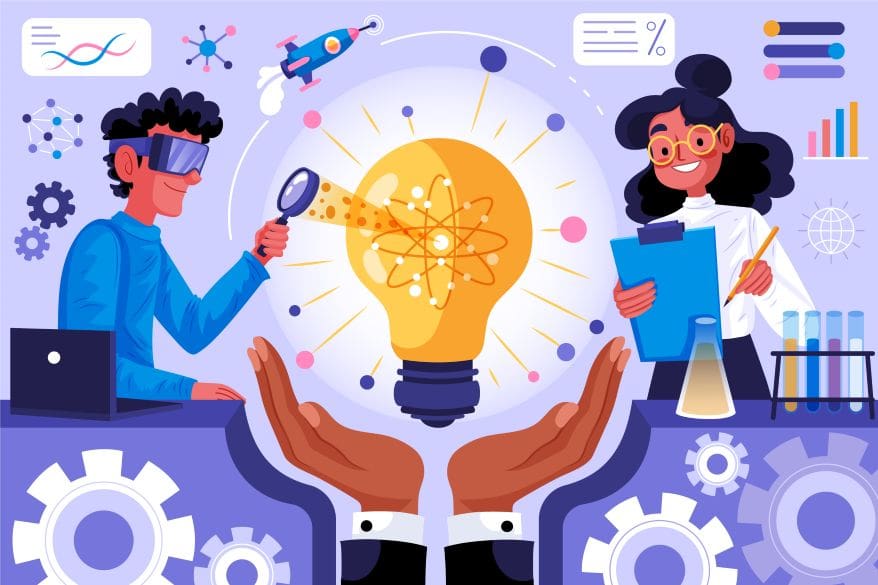
Once the space was ready, students began working on a variety of hands-on projects, directly showcasing practical vocational skills. The projects were varied: 3D printing, mug and T-shirt printing, Arduino-based circuits, hydraulic cranes, robotic arms, smart dustbins, and also automatic lighting systems. Students designed 3D models using Tinkercad and learned Python coding through Google Colab — skills that helped a group qualify for and participate in the KVS (Kendriya Vidyalaya Sangathan) National Hackathon, a competitive innovation event held across India’s central school network, where our students presented original technology solutions.
These were not isolated tasks. Students picked up components, asked questions, made mistakes, and tried again.
One of the clearest examples was the lemon battery experiment. Students connected a lemon to a simple circuit and watched it power a small LED. Through that single experiment they understood how chemical energy converts to electrical energy — not as definitions to memorize, but as things they could point to. They also learned to blink an LED using Arduino, worked through basics of voltage, current and resistance, and studied schematic diagrams. Another group used breadboards and resistors to build series and parallel circuits — understanding the difference not through a textbook, but by breaking and rebuilding the circuit with their own hands.
Students also worked with the Cretile app, building projects using electronic component blocks that made circuit logic visible and easy to manipulate. This helped students who found traditional circuit diagrams difficult — they could see the circuit working in real time.
Vocational Lab: More Than Technology
The vocational lab was never only about electronics. As part of Kaushal (skill) projects under the theme “Work with Machines”, students built a working model of a catapult – understanding levers, force, and mechanical advantage through something they assembled themselves. They also completed a project on financial planning, which introduced them to basic budgeting in a practical context. Not every vocational skill is technical. Understanding money is one too.
Students made nursery beds, planted seeds, and genuinely enjoyed working with soil. The germination project — watching what they planted actually sprout — connected them to a living process in a way no diagram could. Others made hand fans using motors, wrote the process down step by step without being asked, and presented them. Students created posters on the importance of vocational skills, and made crafts — swans, Christmas stars — that required precision and planning.
Bagless days under NEP brought Warli painting, Cheriyal painting, bookbinding, and best-out-of-waste projects. None of this is peripheral. A student who can plan, execute, and document a craft project is practising the same sequence an engineer uses — just with different materials.
When Students Ask Questions You Did Not Expect
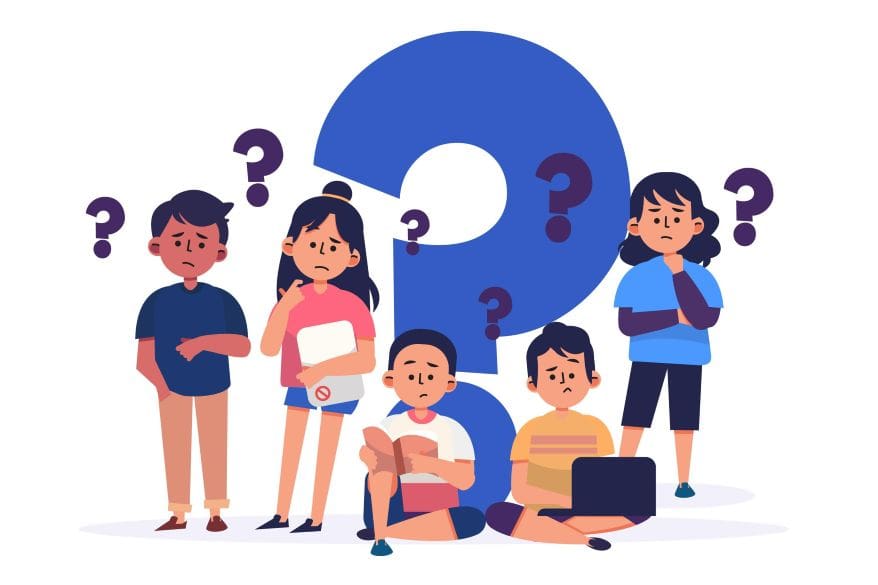
Some students started asking about quantum computing and cryptography — on their own, outside any syllabus. They had been working through Scratch games and Python, had understood basic logic, and began wondering what lay further ahead. They asked. We talked. They went and read more themselves.
I am not claiming they mastered these topics. But a school student arriving at quantum cryptography through their own curiosity, while simultaneously building vocational skills is a signal that the environment is doing something right.
Projects That Came From Paying Attention
The most meaningful projects were not the most technically complex. Interestingly, they were the ones where students noticed a real difficulty in someone’s life and tried to address it.
1) Obstacle-detecting stick for visually impaired individuals:
This was a sensor-based mobility aid that alerts users to nearby objects, helping them navigate daily environments more safely and independently. Students researched the needs of visually impaired people, selected suitable sensors, and built and tested a working prototype.
2) Hand-gesture display system for speech-impaired individuals
This was a device that translates hand gestures into visible text or symbols, enabling communication without words or voice.
3) Anti-sleep alarm system
This was a a wearable alert device to detect driver drowsiness and trigger an alarm, reducing the risk of fatigue-related road accidents.
These ideas did not come from a list I gave them. They came from students paying attention to people around them who faced real difficulties. You cannot schedule that kind of thinking. But you can create conditions where it grows – transforming these empathetic observations into real-world solutions while building essential vocational skills for students.
Two Moments I Keep Coming Back To
When I first joined, there was a drone in the lab that had not flown in a long time. A group of students decided they wanted it to work. They examined it, reasoned through what could be wrong, troubleshot it step by step — and got it airborne. The look on their faces when it finally flew is not something a marks sheet captures.
The second incident was during lab setup. The 3D printer was connected but not printing correctly. Students checked whether the drivers had been installed — they had not — installed them, then found output was appearing at the wrong end of the page. They cleaned the printer head, adjusted the settings, and got the result they wanted. These were not set up as learning exercises. They were just things that were broken. And the students fixed them.
Why it Matters — A Note for Parents
Parents often ask: what is the long-term value of these activities?
Here is what I have actually observed:
- Collaborative teamwork – students learn to divide tasks, depend on each other, and deliver together.
- Resilience – debugging code or correcting a faulty circuit teaches them to fail and persist, not give up.
- Life and communication skills – setting up a lab, presenting a project, estimating the cost of materials: these are real-world skills that classroom exams rarely test.
- Entrepreneurial thinking – working under school constraints, estimating project costs, and meeting deadlines teaches students to think and operate like professionals.
- Independent confidence – students who build something with their hands and see it work carry that confidence into other areas of their lives.
Finally, and most importantly: this kind of learning helps students think like engineers and entrepreneurs, not just exam-takers.
You Do Not Need a Full Vocational Lab to Start
One concern I hear from other schools is “infrastructure”. The vocational lab helped — but it was not the only way. Even while our lab was being set up, students kept working using:
- Tinkercad: free, browser-based 3D modelling and circuit simulation
- Scratch: free, beginner programming — works on any computer or smartphone
- Simple circuit boards: easily available around for under ₹200 ($3 USD) approximately
- School laptops or personal phones: enough to simulate circuits and write code
Teachers do not need to be experts. They can learn alongside students using free online resources and help students set up these tools in a computer lab or on their own devices. Starting small — one Scratch game, one simulated circuit — costs almost nothing and builds the mindset that all the more expensive projects are built on.
What This Work Actually Requires
I went into this thinking my job was to teach. What I did not expect was how much the students would drive their own learning — and how much I would need to step back to let that happen.
The vocational lab works because it was built as a shared space, not a display. Students who help set up a lab treat it differently than those who simply walk into one. Staff who invest in making it functional create an environment that invites real use. Nothing here happened because of one person.
What I would want another school to take from this is not the project list. It is the conditions that made the projects possible: real tools, real problems, and the trust that students can handle both.
Additionally, to stay updated with the latest developments in STEM research, visit ENTECH Online. Basically, this is our digital magazine for science, technology, engineering, and mathematics. Further, at ENTECH Online, you’ll find a wealth of information.
- Author
- Latest Posts

KVM Ramya holds an M.Tech in Embedded Systems from CMR College of Engineering, Hyderabad, and is a Vocational Instructor at Kendriya Vidyalaya Tirumalagiri, a central government school in Hyderabad, India. A UGC NET-qualified educator, she has completed IIT Delhi’s Continuing Education Program in Quantum Computing and Machine Learning, and has conducted faculty development sessions on quantum computing for college faculty. Her work spans hands-on electronics, AI, IoT prototyping, and project-based learning under India’s NEP 2020 framework.
She can be reached at https://www.linkedin.com/in/kotha-ramya/