From building a growth mindset to exploring future careers, discover how robotics education prepares students to become tomorrow's innovators.
Teaching Tomorrow: How AI & Robotics Shape Mindsets and Careers
Estimated reading time: 7 minutes
Robotics Education: Introduction
Lessons Beyond Technology
When I first stepped into a classroom to teach robotics, I believed my role was to instruct children on how to build and program machines. I had lesson plans ready, activities designed, and outcomes clearly defined. However, I soon realised something unexpected: I wasn’t just imparting robotics education, I was witnessing a learning journey, a transformation in the way children think, respond, and also grow.
A Shift From Answers to Questions
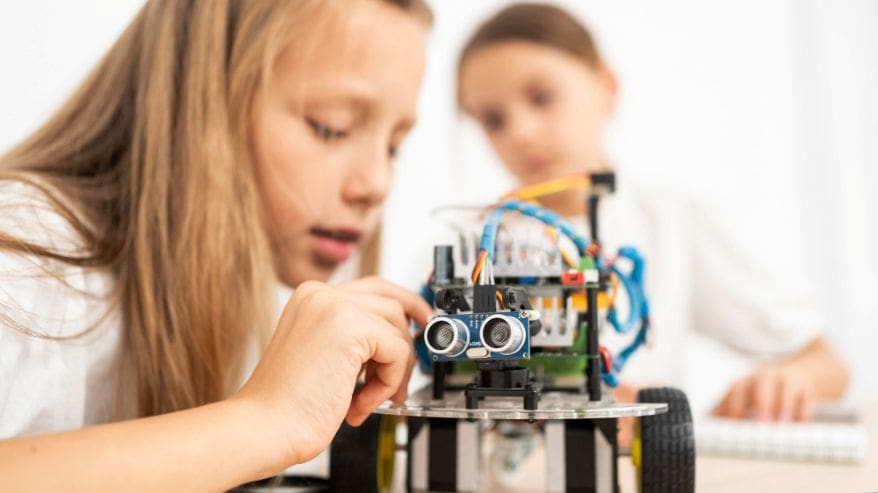
I still remember one of my early classes. A group of learners was working on a simple obstacle avoidance robot. It sounded easy in theory, but in reality, nothing was going as planned. The robot veered off track, sensors didn’t respond correctly and frustration began to build.
One learner looked at me and said, “Ma’am, it’s not working. Can you fix it?”
In that moment, I had a choice. I could either step in and solve the problem for them or step back and encourage them to figure it out. I chose the latter.
Instead of providing answers, I started asking questions: What, which, and how?
“What do you think is causing the problem?”
“Which part can we test first?”
How can we fix this?
At first, there was silence, then hesitation, and gradually, curiosity took over.
They started checking connections, re-reading their code, and testing one change at a time. The robot didn’t magically start working, but something else began to happen; their mindset began to shift.
Nurturing a Growth Mindset and Resilience in Robotics Education
Over time, I observed a powerful change in them. Learners who once said, “I can’t do this,” began to say, “Let me try again.” They stopped fearing mistakes and started embracing them. Robotics education created an environment where failure was not embarrassing; it was expected. More importantly, it was useful.
This is where I truly understood the meaning of a growth mindset. It wasn’t something I had to teach explicitly; it developed naturally through the process. Every error message, every wrong connection, and every unexpected result became a learning opportunity. Learners began to believe that improvement comes from effort, not instant success.
In addition to this, I witnessed resilience take shape most authentically. There were moments of frustration, robots that refused to move, codes that wouldn’t compile, and ideas that didn’t work. But instead of giving up, the learners persevered. They learned to pause, rethink, and try again. The joy they felt when their robot finally worked was not just about success; it was about perseverance.
Developing Deeper Critical Thinking
As a teacher, I found these moments far more rewarding than any perfect outcome.
What fascinated me the most was how robotics sharpened their critical thinking skills. Learners began asking deeper questions. They didn’t just follow instructions; they analysed, experimented as well as made decisions. They predicted outcomes, tested hypotheses and also improved their designs step by step. I could see them evolving into problem-solvers, not just learners.
Robotics education taught me that the most important lessons are not about technology—they are about perseverance, confidence, and the courage to keep trying.
Educational Pathways in Robotics

Watching my students grow from curious learners into confident creators made me realise that the true impact of robotics extends far beyond the classroom. It sparks a passion that can shape future careers, inspire innovation, and open doors to endless possibilities. If you are a student eager to take your interest in robotics to the next level, here is a roadmap to guide your journey. Robotics offers a wide range of formal and vocational educational pathways for learners interested in this dynamic field. At the school level, learners can begin with STEM-based programs, coding clubs, and platforms like Scratch and Tinkercad, which introduce basic programming and design concepts.
At the undergraduate level, students can pursue degrees such as B.Tech or B.E. in Robotics, Mechatronics, Electronics, or Computer Science. These programs typically span 3–4 years and include credits in subjects like programming, embedded systems, artificial intelligence, and control systems. Course content combines theory with practical lab work, where students build and program robots using languages like Python, C++, and tools such as Arduino IDE.
Assessment methods include written exams, project-based evaluations, lab performance, and presentations. Many institutions also emphasise internships and sponsored projects in collaboration with industry partners, allowing students to gain real-world exposure.
Vocational courses and certifications in robotics, IoT, and automation are also available through short-term programs (3–12 months), focusing on hands-on skills. Learners can earn certifications in robotics platforms, AI tools, and programming, enhancing employability. For those inclined towards research, postgraduate programs (M.Tech, MS) and PhDs offer opportunities to work on funded projects in areas like automation, healthcare robotics, and smart systems. These programs often involve publishing research papers and collaborating with industry and academic experts.
Career Opportunities in Robotics Education
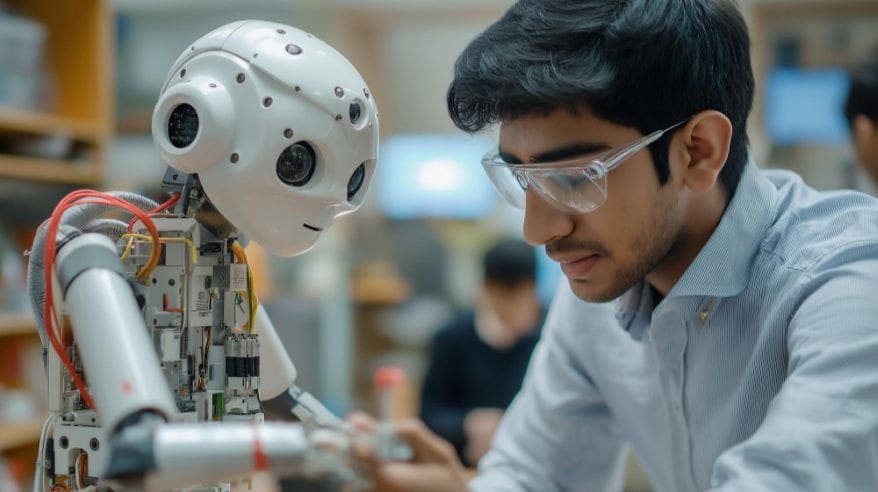
As automation and artificial intelligence continue to transform the world, robotics has become one of the most exciting career fields for the future. Students interested in robotics can explore diverse career paths such as Robotics Engineer, AI Specialist, Automation Engineer, Embedded Systems Developer, Research Scientist, or Product Designer.
These opportunities span across industries, including:
- Manufacturing and Automation
- Healthcare and Medical Robotics
- Space and Aerospace Technology
- Defence and Security
- Smart Cities and Infrastructure
- Technology and Innovation Startups
For those who enjoy creativity, coding, problem-solving, and innovation, robotics also offers opportunities in research and entrepreneurship, allowing young innovators to develop their own solutions and technologies. As the demand for intelligent systems continues to grow, robotics provides a pathway to exciting careers that can shape the future and make a real impact on society.Whether you dream of building robots, designing smart technologies, or solving global challenges, robotics offers endless possibilities to turn your passion into a profession.
“The future is not something we enter; it is something we create. Through innovation, curiosity, and perseverance, today’s learners become tomorrow’s creators.”
Challenge Callout Box: Your First Step into Robotics Education
🚀Your Challenge!
- Visit Tinkercad Circuits (free online platform).
- Create a simple circuit using a battery and an LED.
- Connect the components and make the LED light up. If you can, try adding a switch to turn it ON and OFF!
🔍Innovation Challenge
- Look around your home and identify one everyday problem.
- Sketch a robot or smart device that could solve it.
- Label its features and explain how it would work.
Innovation begins with observation, and every great invention starts with an idea.
Conclusion: Robotics Education
Building a career in robotics requires a combination of curiosity, consistency, and hands-on practice. Learners should start by exploring basic coding, electronics as well as simple DIY projects such as line-following robots or smart devices. Reading about emerging technologies, following industry trends and also learning from online platforms can strengthen their understanding.
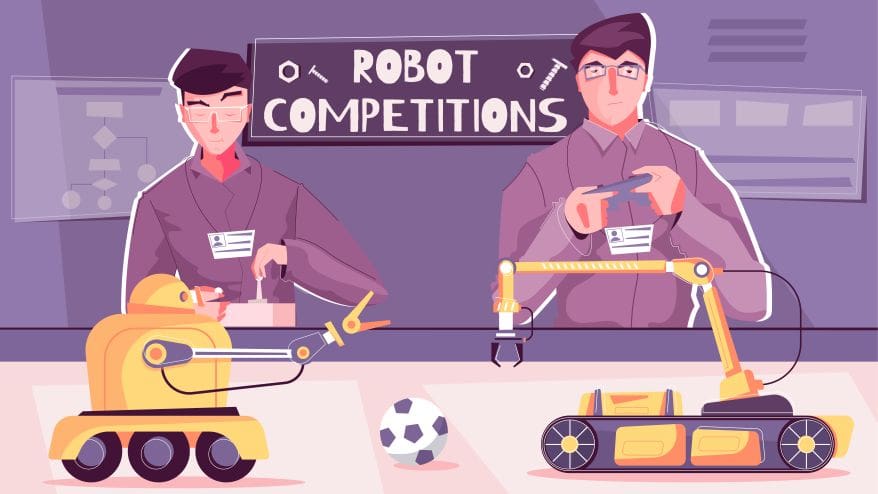
Participating in workshops, competitions, and robotics clubs provides practical exposure and helps in networking with like-minded learners. Visits to science centers, innovation labs, and tech exhibitions can further inspire creativity. Most importantly, learners should focus on learning by doing. Experimenting, failing and improving are key parts of the journey. By gradually building skills and staying updated with advancements, learners can successfully turn their passion for robotics into a rewarding and future-ready profession.
Additionally, to stay updated with the latest developments in STEM research, visit ENTECH Online. Basically, this is our digital magazine for science, technology, engineering, and mathematics. Further, at ENTECH Online, you’ll find a wealth of information.
References:
- The Global Rise of Robotics in Education: A Comprehensive bibliometric analysis. (2025). International Journal of Engineering Trends and Technology, 73(3). https://doi.org/10.14445/22315381/ijett-v73i3p119
- Screpanti, L., Miotti, B., & Monteriù, A. (2021). Robotics in Education: A smart and innovative approach to the challenges of the 21st century. In Lecture notes in networks and systems (pp. 17–26). https://doi.org/10.1007/978-3-030-77040-2_3
- Author
- Latest Posts

As a dedicated Coding and Robotics Instructor, I am on a mission to ignite the spark of curiosity and creativity in the next generation of tech enthusiasts.
I firmly believe in the philosophy of “learning by doing.” My teaching approach centers around interactive and engaging experiences that allow learners to experiment, make mistakes, and discover innovative solutions. Whether it’s introducing coding logic through game development or guiding learners to engineer their robots, I aim to empower learners to think critically and problem-solve effectively.
In the fast-paced world of technology, there’s always something new to explore. I am committed to my own continuous learning journey, staying updated with the latest advancements in coding languages, robotics frameworks, and educational methodologies to ensure that my learners receive the most relevant and up-to-date knowledge.