This reminds us how even the simplest things - like H₂O hold wonders and inspire scientists.
Wonders in Science: The Triple Point of Water

Estimated reading time: 4 minutes
Have you ever imagined a magical moment when water melts, boils, and freezes all at once? This is not a fantasy but a fascinating natural phenomenon called the triple point of water. It’s one of the most extraordinary wonders in the world of science!
What Is the Triple Point of Water? Exploring the Unique States
The triple point of water is a very special condition where water simultaneously exists in three different states—solid (ice), liquid (water), and gas (water vapor)—all perfectly balanced. This happens at one specific temperature and pressure: exactly 0.01 degrees Celsius (273.16 Kelvin) and a pressure of about 611.7 pascals (a tiny fraction of normal atmospheric pressure).
Imagine a tiny moment when ice cubes, liquid water, and steam peacefully coexist without one overpowering the other. That’s the triple point, and it’s a delicate dance of nature at the molecular level.
Triple Point of Water: Why is it so Special?
Usually, water changes state depending on temperature—ice melts above 0°C, and water boils at 100°C at standard pressure. However, at the triple point, all phase changes occur in harmony. Ice melts and freezes, water evaporates and condenses, and ice sublimates (turns directly into vapor), all at the same time. It’s the only set of conditions where all three phases coexist in equilibrium.
This is rare and happens because the energy exchanges between these phases equalize perfectly, with molecules constantly shifting from one phase to another but without any net change. Such equilibrium is what makes the triple point a unique and fixed point in the thermodynamic world.
Also Read: Exploring the Complex World of Ice Phases at Room Temperature
Science Behind the Triple Point of Water Phenomenon: Why at This Temperature?
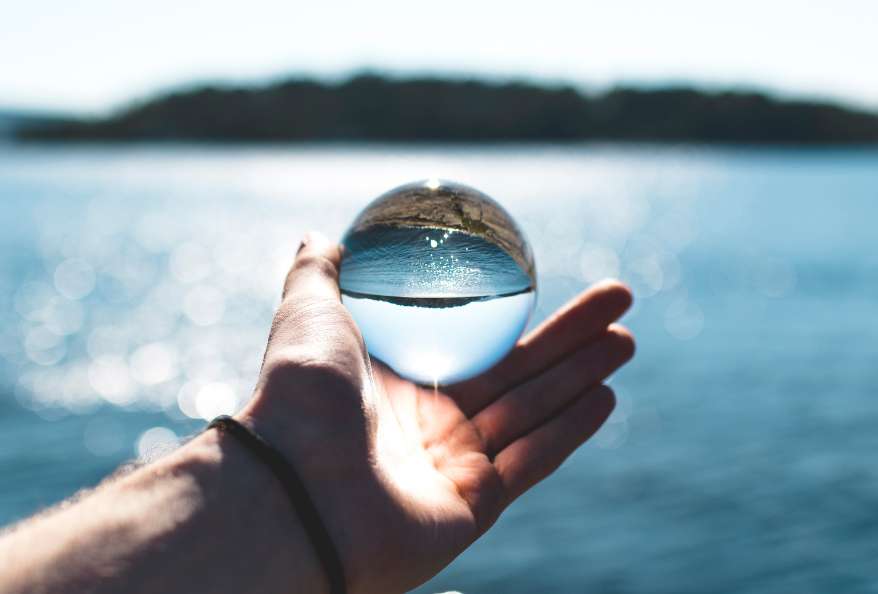
The triple point’s precise temperature and pressure arise from water molecules’ intrinsic physical and chemical properties. The structure of ice, liquid water, and vapor takes a delicate balance of molecular energy and pressure to coexist.
Water molecules form different bonds in each state. In ice, molecules line up in a structured lattice, trapping them in place. In liquid water, the bonds break and reform rapidly, allowing fluid motion. As vapor, molecules move freely and spread apart.
At 0.01°C and 611.7 pascals, the molecules’ energies perfectly match the amount needed to maintain this coexistence. A tiny change in temperature or pressure disrupts this balance, tipping water into one specific phase. This fixed point arises from intermolecular forces and water’s unique molecular geometry, which behaves distinctively unlike many other substances.
Also Read: Crooked Forest Mystery
Why the Triple Point of Water Matters?
The triple point of water is far from just a scientific curiosity; it underpins crucial practical and scientific uses:
- Defining the Kelvin Temperature Scale: The triple point was used to define the Kelvin, the base unit of temperature in science, ensuring all temperature measurements worldwide are consistent. Scientists set the Kelvin based on the exact temperature of water’s triple point, making it a global yardstick for temperature precision.
- Calibration of Scientific Instruments: Laboratories use water’s triple point to calibrate thermometers and temperature sensors. Because it’s a reproducible and stable reference, it guarantees accurate measurements in chemistry, physics, and engineering.
- Study of Phase Transitions: Understanding triple points helps scientists analyze how materials behave under different temperatures and pressures, especially for materials research, planetary science, and cryogenics.
- Industrial Applications: Processes like freeze-drying rely on knowledge of triple points to remove moisture without damaging delicate substances, preserving food, medicines, and biological samples.
As explained by renowned physicist Howard Yoon, “The triple point of water is nature’s perfect balance, a beautiful equilibrium where ice, water, and steam live as one.” This tiny marvel embodies the delicate balance and wonder of the physical world.
Also Read: Mystery of Gravity Hills
Water’s triple point reminds us how even the simplest things – like H₂O hold mysteries that challenge and inspire scientists. From defining temperature scales to inspiring awe, the triple point of water is a tiny but mighty wonder in science.
Additionally, to stay updated with the latest developments in STEM research, visit ENTECH Online. Basically, this is our digital magazine for science, technology, engineering, and mathematics. Further, at ENTECH Online, you’ll find a wealth of information.
Reference:
- Lin, B., Jiang, J., Zeng, X. C., & Li, L. (2023). Temperature-pressure phase diagram of confined monolayer water/ice at first-principles accuracy with a machine-learning force field. Nature Communications, 14(1), 4110. https://doi.org/10.1038/s41467-023-39829-z
- Author
- Latest Posts

Ashwini Kshirsagar holds a graduate degree in Chemistry and a postgraduate degree in Environmental Science from Shivaji University, Kolhapur. With a strong foundation in scientific principles and a creative flair, she blends her expertise in environmental science with skills in technical writing, graphic design, and video editing. Proficient in Adobe software, Ashwini excels at transforming complex scientific concepts into clear, engaging, and visually compelling content. Her unique ability to merge science and storytelling allows her to create impactful communication materials that are both informative and accessible to a wide audience.