Design algorithms can shape strong, light structures, yet engineers rarely trust a black box, so researchers are building copilots that keep people in charge.
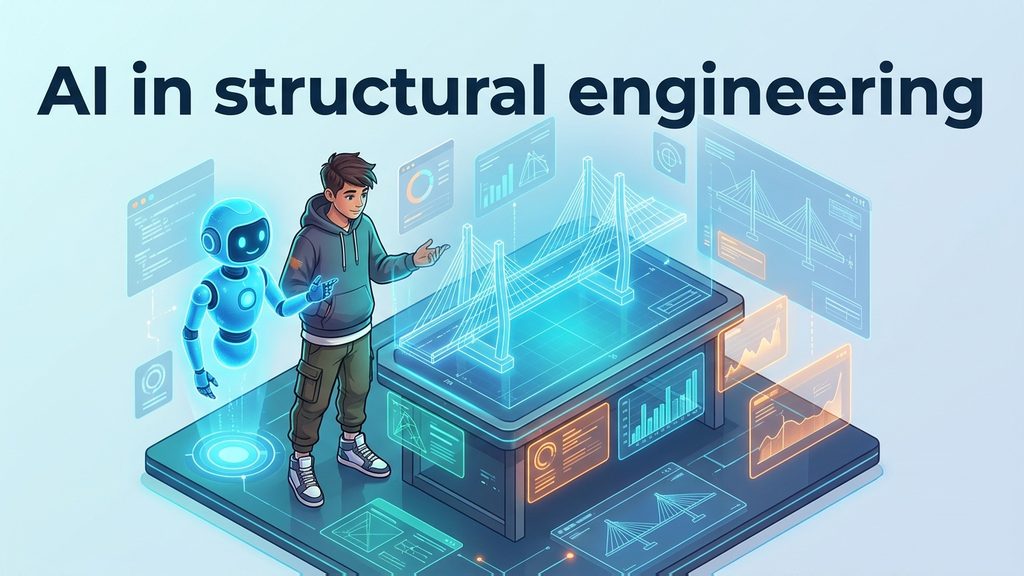
Every bridge, aircraft wing and bicycle frame begins as a question. Where should the material go, and where can it safely be left out? For decades, engineers answered with experience, sketches and repeated calculation. Today, however, software can search countless shapes for the answer. The results are often lighter and stronger than any hand-drawn layout. Yet many engineers still hesitate, because they cannot steer the search. AI in structural engineering is now being built to solve that trust problem. The newest idea, in short, is a copilot and not an autopilot. One example is a new tool from MIT researchers, described in late 2026. This explainer therefore covers the problem, the fix and the future it suggests.
The key method is called topology optimization. In simple terms, it treats design as a mathematics problem. First, the engineer defines a space that material is allowed to fill. Then the loads, the supports and a material budget are added. After that, an algorithm removes material wherever it does little work. As a result, the final shape often looks organic, like bone or coral. Because the computer tests each step with physics, the layout is efficient. Engineers call this approach inverse design, since it starts from the goal. The method is powerful, but it normally runs without any human input.
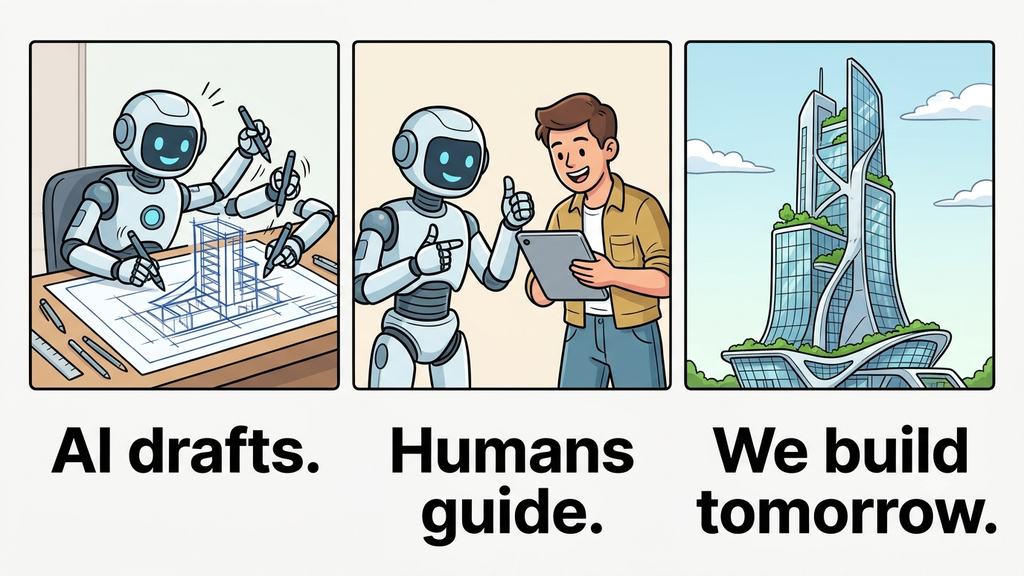
Fig. 1: Software Drafts, People Guide
What Topology Optimization Already Delivers
The track record, in fact, is impressive across many industries. According to the MIT team’s paper, aircraft parts have shed up to 64% in weight. Antenna designs, similarly, have gained as much as 250% more bandwidth. Racing engineers have also used the method to improve a sidecar component. In buildings, the benefit could be environmental as well as financial. Studies cited in the paper report concrete savings of at least 25% to 30%. That matters, because using less concrete lowers the footprint of construction. Lighter structures therefore save money, fuel and raw materials together. With such results, the method should surely be everywhere by now. Outside aerospace and car making, however, its use remains limited.
Why Engineers Still Hesitate
The main obstacle is not the mathematics but the experience of using it. Classic topology optimization works as a black box. The engineer sets up the problem and then simply waits. Only at the end can anyone judge whether the design is acceptable. Sometimes, for instance, many thin bars meet at a single awkward joint. Such a joint may be optimal on screen yet very hard to weld or cast. Designers then thicken parts by hand, which can quietly reduce performance. Surveys of practitioners, meanwhile, point to time, learning curves and opacity as barriers. Trust is especially important when the product is a building or a bridge. So the real challenge for AI in structural engineering is returning control.
How AI in Structural Engineering Brings People Back In
One answer for AI in structural engineering is human-in-the-loop design. Instead of waiting, the engineer steps in while the shape is still forming. An earlier tool called HiTop, for example, pauses the search after fifty rounds. At that point, a rough layout of bars and gaps is already visible. The engineer then circles a region and asks for thicker members there. Afterward, the algorithm finishes the job with that instruction included. This keeps the calculation simple, so results arrive in minutes. A full buckling calculation, by contrast, can take hours on a laptop. However, choosing the right region often needs several trial runs. That repeated guessing became the next bottleneck to remove.
An AI Engineering Copilot That Predicts Your Next Edit
The new work therefore adds machine learning to that pause. Specifically, a neural network studies the half-finished design as an image. It then marks the region an engineer would most likely want to change. Finally, the software draws an ellipse around that spot as a suggestion. Importantly, the engineer can move, resize or ignore the suggestion. To train the model, the team built nearly 110,000 example designs. However, each example carried a simulated human choice, not a real one. In one set, the choice was always the longest structural member. A second set, meanwhile, flagged the most complicated joint in the layout. Senior author Josephine Carstensen said the aim is to “tap into the brains of the designers.”
What the Demonstrations Showed
First, the team tested the copilot on a classic L-shaped bracket. Its suggestion appeared in about a tenth of a second. The user then spent roughly 15 seconds adjusting the highlighted region. Overall, the whole design session finished in just under six minutes. As a result, the bracket resisted buckling under a 39% higher load. Buckling, for reference, is the sudden sideways bending of a slender part under compression. There was a cost, because the design became about 10% more flexible. For comparison, direct buckling optimization took between 4.5 and 55.5 hours. In a second test, a crowded joint went from six members to five. Consequently, the tightest angle between members roughly doubled, which eases fabrication.
Why a Quick Human Check Can Beat Brute Force
The comparison with brute-force computing deserves a closer look. In principle, an algorithm can optimize directly against buckling. During the team’s benchmark, however, that route ran for many hours. With default settings, it also produced disconnected fragments of material. A carefully tuned version performed far better on buckling alone. Nevertheless, it took more than two days and sacrificed much stiffness. The copilot route, by contrast, accepts a smaller gain for far less effort. AI in structural engineering does not have to chase the perfect number. Instead, it can deliver a good, buildable answer during an early design meeting. That trade suits the concept stage, when ideas change every day.
Limits of Today’s AI Design Copilot
These results are promising, yet they come with clear limits. In fact, the authors describe the work as a proof of concept. Above all, the training choices were generated by rules, not by practicing engineers. Real designers may care about looks, cost or site conditions instead. The model’s raw predictions were also far from perfect on unseen designs. Its average overlap score was 0.58 on a scale that ends at 1. Even so, a rough suggestion is quick for a person to correct. For now, users can only make a region thicker or thinner. Formal comparisons with traditional methods are also left for future work. Next, the team plans to collect choices from expert designers.
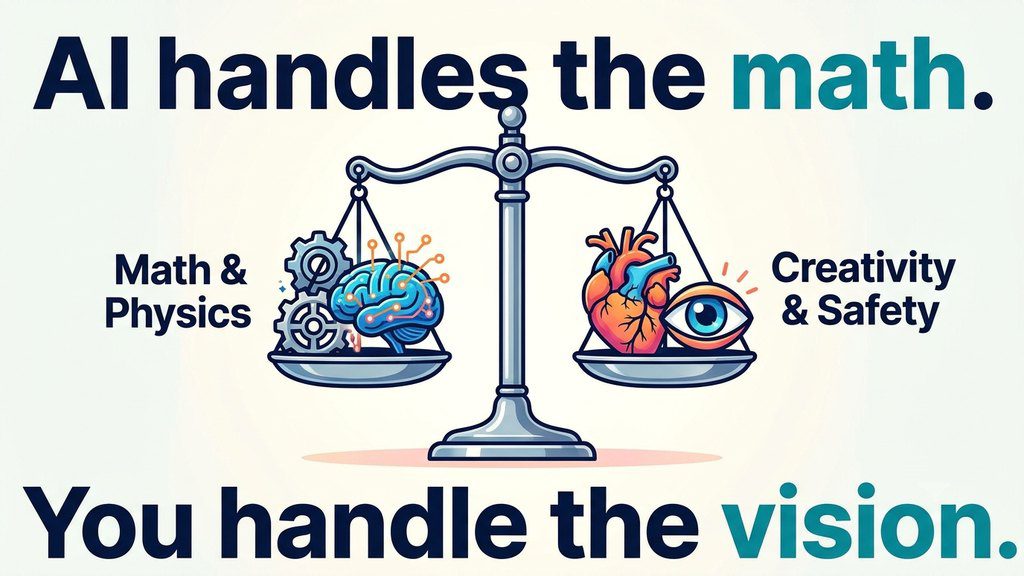
Fig. 2: Calculation and Judgment in Balance
What AI in Structural Engineering Means for Business and Careers
If AI in structural engineering matures, the business case could spread beyond aerospace. Small design firms, after all, rarely own large computing clusters. A workflow that runs in minutes on a laptop, therefore, lowers the entry barrier. Material savings could also matter more as carbon rules tighten. In addition, designs that are easier to weld, bolt or print cost less to build. The same pattern is appearing in AI-assisted circuit board work and factory inspection. In each case, software proposes options and a specialist approves them. Companies that capture their experts’ choices may gain a lasting advantage. Those records could eventually train a copilot that knows a firm’s style. Responsibility, however, stays with the licensed engineer who signs the drawings.
Skills Students Should Build Now
For students, AI in structural engineering is encouraging and not threatening. The copilot needs a person who understands why structures fail. Therefore, mechanics, materials and buckling theory remain essential subjects. Knowing how parts are actually made is just as valuable. For instance, a joint that suits casting may not suit welding. Basic coding and data skills help as well, because these tools are software. Students can already explore interactive topology optimization apps and public datasets. The MIT team, for example, has shared its training data online. Above all, practice judging a design and explaining your reasons clearly. That habit is exactly what a human-in-the-loop workflow rewards.
New Roles for Engineers and Founders
Career paths will shift, not vanish. For instance, structural designers may spend less time redrawing and more time deciding. Meanwhile, new specialists will be needed to build and test these tools. Computational design, simulation and AI-based quality inspection are growing areas. Entrepreneurs could package such copilots for specific trades, such as steel fabrication. Others might offer checking services that confirm machine-shaped designs are safe. Lead author Dat Ha, notably, now works as a structural designer in industry. His path suggests that research skills and practice can travel together. In the coming years, therefore, the best designs will be shared work. Algorithms will explore, and people will decide what deserves to be built.
The Lasting Lesson for Future Builders
The lesson reaches beyond brackets and bridges. Powerful algorithms are most useful when experts can question them. AI in structural engineering shows how that partnership might work in practice. First, the machine explores options at a speed no person can match. Then a trained eye spots what the equations left out. As a result, the final design reflects both calculation and experience. Better tools may replace this particular copilot within a few years. Even so, the need for accountable human judgment will remain. For future engineers, that is a hopeful and practical message. Learn the physics well, and the software becomes a capable teammate.
References
Ha, D. Q., Alam, M. F., Buehler, M. J., Ahmed, F., & Carstensen, J. V. (2026). AI-guided human-in-the-loop inverse design of high performance engineering structures. Communications Engineering. https://doi.org/10.1038/s44172-026-00818-x
This explainer sets out clearly why powerful design algorithms have been slow to win engineers' trust and how a suggestion-making copilot could keep people in charge. It is careful to present the MIT work as an early proof of concept trained on simulated choices, and it states the trade-offs alongside the gains. The business and career sections are reasoned outlooks, not forecasts. For full detail and context, readers should refer to the original paper in Communications Engineering and the MIT News release listed in the references.
Editorial note
This article is an ENTECH explainer based on the paper AI-guided human-in-the-loop inverse design of high performance engineering structures by Dat Quoc Ha, Md Ferdous Alam, Markus J. Buehler, Faez Ahmed and Josephine V. Carstensen (Communications Engineering, 2026, Article in Press) and on the MIT News release of November 13, 2026. The paper is licensed under CC BY-NC-ND 4.0; this article summarizes it in our own words. The short quotation comes from the MIT News release. The paper lists funding from the MathWorks Fellowship and the MIT Generative AI Consortium, and the authors declare no competing interests. The illustrations are AI-generated and do not show the real software. Readers should consult the original paper for the complete methods and results.
Dr. Sandeep Mukund Shiyekar is a distinguished civil engineer, academic leader, and continuum mechanics researcher with over 20 years of expertise in structural engineering, advanced materials, and computational mechanics. He holds a Ph.D. from IIT Bombay and completed prestigious post-doctoral research at Virginia Tech’s Aerospace Engineering Department under a NASA federal grant, where he worked on structural damage tolerance and progressive failure analysis for NASA and Airbus projects.
Throughout his career, Dr. Shiyekar has served as Professor, Head of Department, and College Principal, mentoring four Ph.D. scholars and over twenty postgraduate students. He is an expert in Finite Element Analysis (FEA), using advanced computational tools like ABAQUS, MSC.Marc, and STAAD.Pro to evaluate functionally graded materials, composite laminates, and structural dynamics. He has led over 200 structural design projects, secured major competitive research grants—including ₹12.85 Lakhs from ISRO—and published a NASA Technical Report alongside numerous peer-reviewed papers and book chapters.
As a Chartered Engineer and an active member of international engineering bodies, Dr. Shiyekar brings world-class research experience to ENTECH Magazine, sharing authoritative insights on computational mechanics, aerospace-grade structures, and smart materials innovation.