Bioremediation methods for soil uses living creatures to make dirty soil clean. First, it gets rid of bad things. Then it helps the environment get better. Also, it is usually better for the environment than…
Bioremediation Techniques for Soil and Water Pollution Control
Bioremediation methods for soil uses living creatures to make dirty soil clean. First, it gets rid of bad things. Then it helps the environment get better. Also, it is usually better for the environment than other ways to clean.
Bioremediation is safer for nature and can cost less. For example, tiny living things like bacteria and fungi are crucial because they change harmful chemicals into safer ones. This helps clean the environment in a natural and affordable way
Bioremediation can happen naturally, but people can speed it up. To take care of soil, we need to understand how it works. People can help by adding air or food for tiny living things in the soil. This helps them break down harmful stuff better and faster.
Key Takeaways
Ex Situ Bioremediation Techniques for Soil
Ex situ bioremediation involves removing infected soil from its original location. After people remove the soil, they treat it in a controlled place to clean the pollution. As a result, this method allows for better monitoring and management of the cleanup process.
Landfarming is a common way to clean soil by taking it away and spreading it in thin layers on the ground. Workers then add tiny living things, like bacteria, to help break down the harmful chemicals in the soil. They also mix the soil regularly to add air and keep the tiny living things active so they can clean the soil better
Composting is a way to clean soil by mixing dirty soil with organic materials like plant waste. This helps tiny living things grow and work faster to break down harmful stuff in the soil.
In situ Bioremediation Techniques for Soil
In situ bioremediation cleans polluted soil right at the place it is found without digging it up. This way, the area stays undisturbed, and it costs less and needs less work than moving the soil.
One method is bioventing, where air is added to the soil to help tiny living things break down dirt faster. Another method is phytoremediation, where plants take in or break down harmful chemicals from the soil, making the place cleaner and safer.
Microorganisms Used in Bioremediation of Soil
Microorganisms are the backbone of bioremediation. Different kinds of bacteria and fungi are used depending on the type of pollution. For example, some bacteria can break down oil, while others can clean up heavy metals. These tiny living things help remove harmful substances and make the soil healthy again.
Bioremediation often uses Pseudomonas bacteria because they can break down a wide range of toxic chemicals. Similarly, Mycobacterium bacteria are effective at breaking apart tough chemicals like polycyclic aromatic hydrocarbons (PAHs), which are made of several linked rings. These bacteria help clean polluted areas by changing dangerous compounds into safer materials.
Fungi like Trametes versicolor help break down tough parts of plants called lignin and other natural materials. This fungus is very good at cleaning harmful chemicals and making the environment safer
Benefits and Limitations of Bioremediation of Soil

Bioremediation helps the environment in many ways. It is safer than using chemicals and lowers the risk of creating new pollution. Thus, it supports natural processes and cleans up polluted places without harmful chemicals. It costs less, uses less energy, and harms the land less. Overall, it is a gentle, natural method to clean soil and water.
Bioremediation often costs less than traditional cleanup methods. This is because it uses natural processes and needs less heavy equipment and digging. However, how well it works depends on things like temperature, soil acidity (pH), and if there is enough natural food for the microbes that clean the pollution.
Some pollutants are difficult for microbes to break down. Furthermore, the long duration of bioremediation may hinder its effectiveness in situations requiring quick cleanup.
Case Studies of fundamentals of bioremediation methods
Many case studies show bioremediation works well to clean dirty soil. For example, in California, researchers used landfarming to clean a site polluted with petroleum. They added minerals and carefully watched how tiny living things worked. They were able to significantly reduce the dangerous hydrocarbon levels as a result.
Scientists cleaned the soil at an old industrial site in New Jersey using native plants. Over the course of multiple growing seasons, these plants absorbed heavy metals from the soil. This method helped clean the soil and also brought back local plants and animals, making the area healthy again.
Monitoring and Evaluation of Bioremediation of Soil

Monitoring is critical to see how well bioremediation is working. Regularly testing soil samples helps determine if the pollution levels are going down. It also shows how active and healthy the tiny living things that clean the soil are.
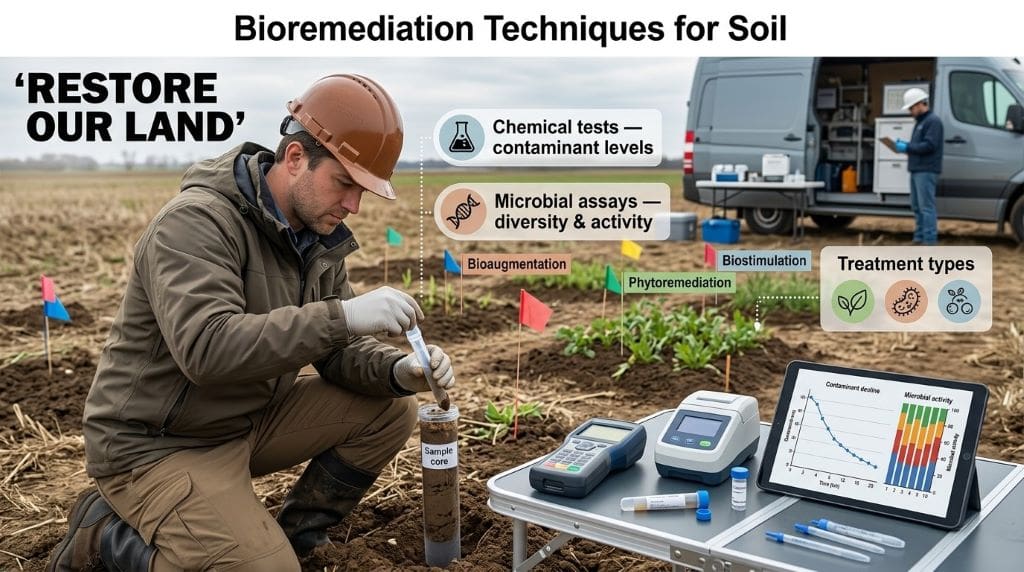
Different ways are used to monitor the progress of bioremediation. Chemical tests measure how much pollution is left over time. Tests on microbes show how many types there are and how active they are in breaking down pollutants.
By using both chemical tests and microbe tests together, researchers can see how well bioremediation is working overall. This enables them to assess the effectiveness of the cleanup and identify any necessary modifications.
Future Trends in Bioremediation of Soil

The future of bioremediation looks bright as science and technology improve. One new idea is to use genetically changed microbes. Scientists can make these tiny living things special so they break down certain pollutants faster and better. This will help clean the environment more quickly and effectively.
Scientists are now combining bioremediation with new technologies like nanotechnology. Tiny particles called nanoparticles help microbes work faster to break down harmful chemicals. Researchers are also using artificial intelligence to improve bioremediation and solve problems more quickly.
To sum up, bioremediation is a useful way to clean polluted soil. It offers many benefits, like being safe for nature and often costing less. But it also has some limits. Research and new ideas will enhance bioremediation and increase its use for environmental protection.
Frequently Asked Questions
What is bioremediation of soil?
Bioremediation of soil is a process where tiny living things like microorganisms, plants, or enzymes are used to clean and restore polluted soil. In this process, they break down harmful pollutants into safer substances, thereby helping to make the soil healthy again.
What are the main types of bioremediation techniques?
The two main ways to do bioremediation are called ex situ and in situ. In the ex situ method, the polluted soil is dug up and cleaned somewhere else. In contrast, the in situ method cleans the soil right where it is, without moving it.
What is ex situ bioremediation?
Ex situ bioremediation means digging up the polluted soil and treating it somewhere else, like in special piles, fields, or tanks. This controlled setup helps break down the pollutants faster by giving microbes the right conditions to work better
Additionally, to stay updated with the latest developments in STEM research, visit ENTECH Online. Basically, this is our digital magazine for science, technology, engineering, and mathematics. Furthermore, at ENTECH Online, you’ll find a wealth of information.
References
- Atuchin, V. V., Asyakina, L. K., Serazetdinova, Y. R., Frolova, A. S., Velichkovich, N. S., & Prosekov, A. Y. (2023b). Microorganisms for Bioremediation of Soils Contaminated with Heavy Metals. Microorganisms, 11(4), 864. https://doi.org/10.3390/microorganisms11040864
- Wang, F., Fang, L., & Shi, Z. (2024). Bioremediation of contaminated soil by fungi: a call for research. Journal of Fungi, 10(10), 684. https://doi.org/10.3390/jof10100684
- Da Silva, I. G. S., De Almeida, F. C. G., Da Rocha E Silva, N. M. P., Casazza, A. A., Converti, A., & Sarubbo, L. A. (2020). Soil Bioremediation: Overview of Technologies and Trends. Energies, 13(18), 4664. https://doi.org/10.3390/en13184664
- Author
- Latest Posts

I completed my Master of Science from the University of Allahabad in 2017 with a strong academic background in life sciences and chemistry. My specialization included Molecular Biology, Microbiology, Genetics, Plant Breeding, Phycology, Paleobotany, and Bioinformatics, along with Organic Chemistry, Inorganic Chemistry, and Physical Chemistry. This multidisciplinary training provided me with a comprehensive understanding of biological systems and analytical scientific approaches.
After completing my postgraduate studies, I gained valuable professional experience in both the education and social development sectors. I worked at A.M. Oxford Public School, where I was actively involved in guiding students toward academic excellence. In this role, I focused on creating an engaging learning environment, encouraging critical thinking, and nurturing students’ curiosity for scientific learning. My experience as an educator strengthened my communication, mentoring, and classroom management skills.
In addition to my teaching experience, I worked with Jeevan Jagriti Foundation, where I contributed to community-based initiatives aimed at improving educational access and awareness among underprivileged sections of society. Through this work, I participated in programs designed to support social development and promote the value of education in marginalized communities.
These professional experiences helped me develop strong interpersonal, leadership, and organizational skills while reinforcing my commitment to education and community service.