Smart Pump Control Saves Energy with AI-Style Math Methods
Smart pump control uses mathematical algorithms to help pumps find their most efficient operating point. As a result, industries can reduce electricity use and lower maintenance costs.

Smart Pump Control Saves Energy with AI-Style Math Methods
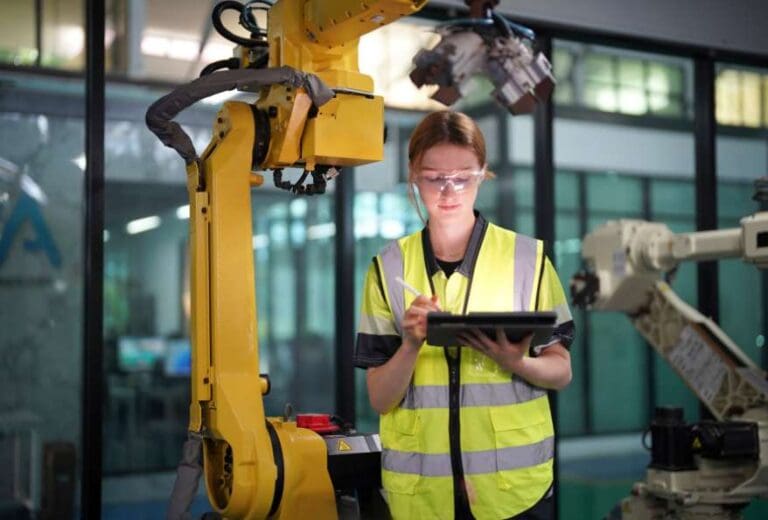
How Production Engineers Turn Ideas into Efficient Manufacturing Systems

Mechanical Advantage of Gears and Levers: Key Concepts and Applications

Laser Drilling Gets a Million-Times Speed Boost!
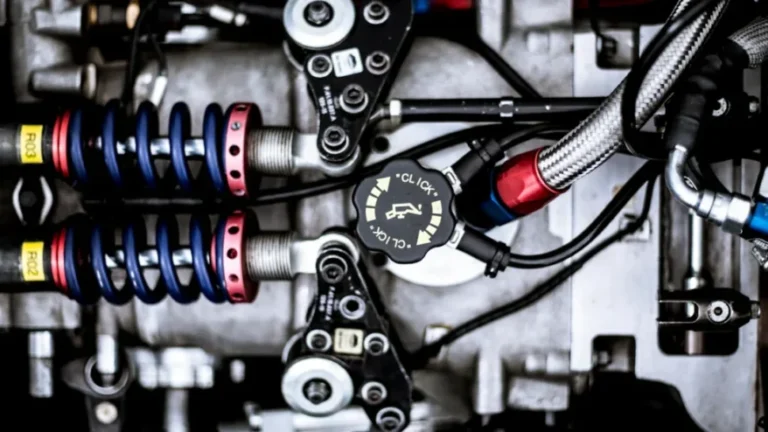
B Tech Mechanical Engineering Course Outline and Subjects

Ultimate Roadmap for Mechanical Engineering: A Guide to Success
Mechanical engineering is one of the oldest and broadest branches of engineering. It focuses on the design, development, analysis, manufacturing and maintenance of machines and mechanical systems. By applying principles of physics, mathematics and materials science, mechanical engineers create technologies that make work easier, improve industrial processes and solve practical problems.
From automobile engines and aircraft systems to household appliances, industrial robots and power generation equipment, mechanical engineering influences many aspects of modern life. It combines scientific understanding with creativity and technical problem-solving to turn ideas into working machines and products.
Today, mechanical engineering continues to evolve through advances in automation, robotics, computer-aided design, advanced materials and sustainable energy technologies. At ENTECH STEM Magazine, explore the concepts, applications and innovations that make mechanical engineering an important part of science, technology and modern industry.
Mechanical engineering includes several interconnected areas. Each contributes to the design, performance and improvement of machines, equipment and mechanical systems.
Engineering mechanics helps explain how forces affect objects and mechanical systems. It includes the study of statics, which deals with forces on objects at rest, and dynamics, which examines motion and the forces associated with it.
Machine design applies these principles to develop components and mechanisms that perform specific functions. Engineers consider factors such as strength, movement, material selection, reliability and operating conditions when designing machines.
Thermodynamics studies heat, energy and their conversion from one form to another. It helps engineers understand how engines, turbines, refrigerators and power plants operate.
Heat transfer focuses on how thermal energy moves through conduction, convection and radiation. These principles are important in designing cooling systems, heat exchangers, boilers and thermal equipment.
Fluid mechanics studies the behaviour of liquids and gases. It helps engineers understand how fluids move through pipes, pumps, turbines, channels and other systems.
This knowledge is used in applications such as water distribution, aircraft aerodynamics, hydraulic machinery, ventilation systems and power generation.
Manufacturing engineering focuses on converting raw materials into useful products. Mechanical engineers study processes such as machining, casting, welding, forming and additive manufacturing.
They also work with manufacturing equipment, production methods and quality requirements to improve product performance and manufacturing efficiency.
Mechanical components must be made from materials that can withstand the conditions in which they operate. Materials science examines the structure, properties and behaviour of metals, polymers, ceramics and composite materials.
Mechanical engineers use this knowledge to select suitable materials based on strength, weight, durability, temperature resistance and cost.
Computer-Aided Design (CAD) software allows engineers to create detailed digital models of mechanical components and systems. These models help visualise designs and identify potential issues before manufacturing begins.
Computer-Aided Engineering (CAE) tools can simulate how components respond to forces, heat and other operating conditions. Finite Element Analysis (FEA) and Computational Fluid Dynamics (CFD) are widely used techniques in mechanical design and analysis.
Mechanical engineering has applications across many industries because machines and mechanical systems are essential to modern infrastructure, transportation and manufacturing.
Automobiles depend on mechanical systems such as engines, transmissions, suspension systems, brakes and steering mechanisms.
Mechanical engineers contribute to vehicle design, testing, manufacturing and performance improvement. The growth of electric mobility has also expanded their work into battery cooling, vehicle structures, thermal management and electric powertrain integration.
Aircraft and spacecraft require carefully designed mechanical structures and systems. Mechanical engineering contributes to propulsion, aerodynamics, landing gear, thermal management and structural design.
Engineers also study how materials and components perform under demanding operating conditions.
Robotics combines mechanical design with electronics, sensors and computing. Mechanical engineers develop robot structures, joints, actuators and movement mechanisms.
Industrial robots are used in manufacturing, assembly, inspection and material handling. Robotics also has applications in healthcare, agriculture, research and space exploration.
Mechanical engineering plays an important role in energy production and conversion. Steam turbines, gas turbines, wind turbines, pumps and heat exchangers all depend on mechanical engineering principles.
Engineers work on improving the efficiency, reliability and performance of these systems. They also contribute to renewable energy technologies and energy-efficient equipment.
Many everyday products rely on mechanical engineering. Refrigerators, air conditioners, washing machines, kitchen appliances and power tools contain mechanical components and moving systems.
Mechanical engineers help develop products that are functional, durable, safe and efficient.
New materials, digital tools and intelligent systems are expanding the possibilities of mechanical engineering.
Additive manufacturing creates objects by building them layer by layer from a digital model. It allows engineers to produce complex shapes and specialised components that may be difficult to manufacture using conventional methods.
Applications include prototyping, aerospace components, medical devices and customised industrial parts.
Artificial intelligence can support engineering tasks such as design optimisation, equipment monitoring and manufacturing analysis. AI-based tools can help engineers explore different design options and identify patterns in equipment performance.
When combined with engineering knowledge and simulation, these tools can support better-informed design decisions.
A digital twin is a digital representation of a physical machine, product or system. It can use real-world operating data to help engineers understand performance and evaluate possible changes.
Predictive maintenance uses equipment data to identify signs of changing machine conditions. These approaches can help organisations plan maintenance and improve equipment reliability.
Research into advanced materials is creating new possibilities for mechanical design. Lightweight alloys, composites, ceramics and other engineered materials can offer useful combinations of strength, durability and thermal performance.
These materials are important in aerospace, automotive engineering, energy systems and high-performance manufacturing.
Mechanical engineers contribute to sustainability by developing systems that use less energy and materials. They work on efficient engines, renewable energy equipment, improved heating and cooling systems and technologies that reduce manufacturing waste.
These developments connect mechanical engineering with environmental protection and sustainable industrial growth.
Mechanical engineering may interest students who enjoy physics, mathematics, design, machines and practical problem-solving. School-level knowledge of mechanics, electricity, geometry and basic mathematics provides a useful foundation for exploring the subject.
Undergraduate mechanical engineering programmes commonly cover engineering mechanics, thermodynamics, fluid mechanics, strength of materials, machine design, manufacturing technology, heat transfer and engineering drawing. Students also gain practical experience through laboratories, workshops, computer-aided design and engineering projects.
Graduates can explore career opportunities in several areas, including:
Mechanical engineers work in industries such as automotive manufacturing, aerospace, energy, robotics, consumer products, industrial equipment and research.
Mechanical engineering connects scientific principles with the machines and systems that shape the modern world. It helps explain how engines generate motion, how turbines produce power, how machines are designed and how manufacturing technologies turn ideas into products.
Whether you are exploring engineering branches, learning about machine design or considering a future engineering career, mechanical engineering offers a wide range of subjects to discover.
ENTECH STEM Magazine brings together educational articles, expert insights and technology-related content to help students explore science, technology, engineering and mathematics. Explore our mechanical engineering resources to discover the ideas, technologies and innovations shaping the future of engineering.