Researchers developed a groundbreaking technique that allows for the ultrafast and ultraprecision processing of transparent materials like glass—a process one million times faster than current methods!
Laser Drilling Gets a Million-Times Speed Boost!
Estimated reading time: 4 minutes
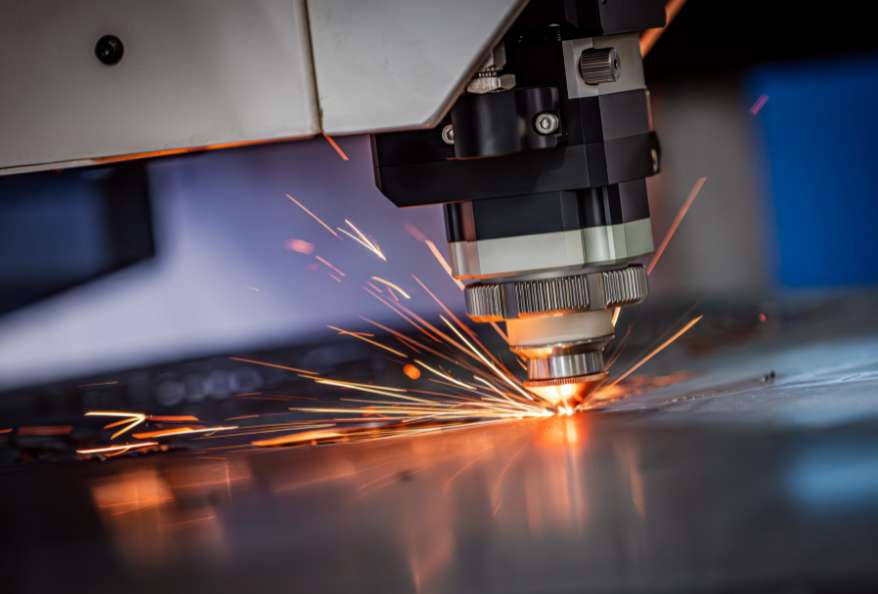
Scientists have achieved a groundbreaking leap in laser drilling technology, increasing the speed by a staggering one million times compared to traditional methods. Today, femtosecond lasers are at the forefront of innovation in science, medicine, and manufacturing. These lasers have extremely high peak intensity, which makes them incredibly effective in drilling and shaping materials. However, one major issue remains: they often operate at remarkably low machining speeds.
Key Takeaways: Laser Drilling
- Scientists have drastically improved laser drilling technology, achieving speeds one million times faster than traditional methods.
- The Bessel Transient and Selective Laser absorption technique temporarily alters material properties, allowing for high-speed and precise drilling.
- This innovative approach can drill microholes in materials like glass in just 20 microseconds, using lower laser power for energy efficiency.
- Laser drilling has significant implications for industries like microelectronics and biomedical devices, enhancing precision in manufacturing.
- Future research may adapt this technique for various materials and applications, potentially transforming product design and manufacturing processes.
Harnessing the Power of Transient Excitation in Laser Drilling
The secret lies in a new technique called Bessel Transient and Selective Laser (TSL) absorption. Instead of relying on multiple laser pulses to slowly erode the material, this method uses a single, cleverly shaped pulse to alter the material’s properties temporarily. First, a shaped laser pulse creates a channel of excited electrons within the material. This makes the material much more receptive to a second laser pulse. Further, it rapidly heats and evaporates the material along the pre-excited channel.
Laser Drilling: How it Works?
This innovative method harnesses the power of laser pulses that alternate between picosecond and microsecond intervals. By generating a long channel of excited electrons within the material, researchers can heat the area selectively through targeted energy absorption. This results in high-speed manufacturing without compromising quality.
Ultra-Fast and Precise
This approach achieves incredible speeds. Imagine drilling a millimeter-deep hole in glass in just 20 microseconds—that’s 20 millionths of a second! Furthermore, the technique produces exceptionally precise and uniform holes. Hence, free from the cracks that plague traditional methods. The method also uses significantly lower laser power, making it more energy-efficient.
The Role of Transparent Materials
Transparent materials like glass, diamond, and sapphire are valued for their hardness and optical transparency. Yet, they present unique challenges when it comes to machining. Interestingly, lasers have emerged as promising tools for tackling these challenges by modifying the internal structure of these materials effectively.
Laser Drilling and its Impact on Industries
This revolutionary technique has massive implications for numerous industries. For example, it could greatly accelerate the manufacturing of advanced microelectronics and biomedical devices, often integrating with a 3d laser scanning service for enhanced precision. Moreover, it often requires extremely precise and high-speed material processing. The ability to create tiny, high-aspect-ratio holes in materials like glass opens up new possibilities for 3D microfluidics and other advanced technologies.
A Paradigm Shift in Manufacturing
In short, the development of Bessel TSL absorption represents a significant advancement in laser processing. This breakthrough is poised to significantly impact various fields. Thus, particularly those requiring precise and high-speed material removal.
Future Applications
Beyond the immediate applications, this new technology opens doors to further exploration and innovation. Future research could focus on adapting the technique for different materials and exploring its potential in other areas like additive manufacturing and micro-machining. The ability to temporarily alter material properties at such a granular level opens up new possibilities for material scientists and engineers. Thus, this could lead to entirely new product designs and manufacturing processes. The possibilities are truly vast.
Additionally, to stay updated with the latest developments in STEM research, visit ENTECH Online. Basically, this is our digital magazine for science, technology, engineering, and mathematics. Furthermore, at ENTECH Online, you’ll find a wealth of information.
Reference:
- Zhang, Y., Koike, T., Yoshizaki, R., Ren, G., Shibata, A., Kiriake, S., Hasegawa, R., Nagasawa, I., Nagato, K., Sugita, N., & Ito, Y. (2025). Ultra-high-speed laser drilling of transparent materials via transient electronic excitation. Science Advances. https://doi.org/10.1126/sciadv.adv4436
- Author
- Latest Posts

Neha Adikane holds a Master’s degree in Environmental Science from Pune University, bringing a unique blend of scientific expertise and creative writing skills to her craft. She specializes in creating engaging, insightful, and impactful content across various niches. With a passion for translating complex ideas into simple, relatable narratives, she excels at crafting blogs, articles, website content, and social media posts that captivate readers and drive engagement. Neha’s background in environmental science adds depth to her writing, allowing her to effectively cover topics related to sustainability, eco-awareness, and scientific innovations.