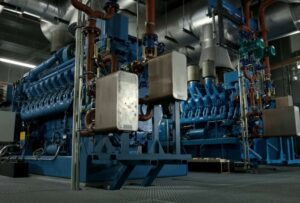
In the mechanical advantage of gears and levers, gears work by transmitting mechanical energy.
Mechanical Advantage of Gears and Levers: Key Concepts and Applications

Estimated reading time: 11 minutes
Mechanical advantage of gears and levers:- mechanical gears
The mechanical advantage of gears and levers is significant, and mechanical gears come in various types, each serving a unique purpose. To begin with, there are spur gears, which appear as simple disks with teeth. Moreover, these gears handle low-speed tasks effectively.
Next, we have helical gears in the mechanical advantage of the gear and lever. Their teeth run at an angle. This design reduces noise and wear. Consequently, they suit high-speed applications.
Bevel gears come into the mechanical advantage of the gear and lever, which play when angles change. They have a cone shape. Therefore, they help transfer motion between intersecting shafts.
Lastly, worm gears also come in a mechanical advantage of gear and lever, which consists of a screw and a gear. They excel in providing high torque but have a slow speed.
How Gears Work
In the mechanical advantage of gears and levers, gears work by transmitting mechanical energy. One gear spins; it makes another turn. The teeth match to avoid slippage. This matching ensures a smooth transfer of motion.
When gears mesh, they change speed and direction. For example, a small gear drives a larger one. Likewise, a large gear driving a smaller one increases speed but reduces force.
Moreover, in the mechanical advantage of gears and levers, gears help convert rotational motion. For instance, watch gears adjust speed precisely. So, with careful arrangement, gears create complex machines.
Famous Quote
As Albert Einstein once said, “Any intelligent fool can make things bigger and more complex… It takes a touch of genius—and a lot of courage to move in the opposite direction.” This quote reflects the simplicity yet brilliance of gear design.
By wisely choosing gear types, in the mechanical advantage of the gear and lever, we can optimize machines. This knowledge leads to efficient engineering.
In summary, in mechanical advantage of gears and levers, mechanical gears transform mechanical energy efficiently. They offer versatility in design and application. Understanding them is crucial for building machines.
Key takeaways
- MA = effort arm length / load arm length; longer effort arm increases force advantage.
- First-class (fulcrum between effort/load, e.g., seesaw) balances force and distance.
- MA = number of teeth on driven gear / teeth on driver gear (or radius ratio)
- Driver smaller than driven yields force advantage (higher torque output).
Mechanical advantage of gears and levers:- mechanical Levers
Types of mechanical Levers
In the mechanical advantage of gears and levers, levers are basic tools that help lift heavy loads. To begin with, there are three main types of levers: first-class, second-class, and third-class. Specifically, first-class levers have the fulcrum in the middle, positioned between the effort and the load; a seesaw is a classic example of this type. Next, second-class levers place the load between the fulcrum and the effort, with a wheelbarrow perfectly illustrating this setup. Finally, third-class levers position the effort between the load and the fulcrum, where tweezers serve as a common example.
Principles of Mechanical Lever Operation
Levers operate based on the mechanical advantage of gears and levers they provide. This makes it possible to move a heavy load with little effort. The formula, “Mechanical advantage equals load divided by effort,” explains this concept clearly. In other words, the longer the lever, the easier it is to lift the load. Thus, mechanical levers help us save energy while accomplishing heavy tasks. Leonardo da Vinci once said about levers, “Give me a lever long enough, and I shall move the world.” This quote reflects the power and simplicity of levers in mechanics.
Historical Use of Mechanical Levers
In mechanical advantage of gears and levers, Levers have a long history in engineering and construction because of their mechanical advantage over gears. They were utilized, for instance, in the construction of pyramids by the ancient Egyptians. They were able to construct enormous structures by easily positioning and rotating large stones. Catapults used in sieges during the Middle Ages were powered by levers, which made it possible for these weapons to launch heavy stones with tremendous force.
Levers were also used in everyday life; farmers used them to extract water from wells, making agricultural labor easier. Levers eventually revolutionized production processes as they became indispensable in industrial machinery. Indeed, Lord Kelvin emphasized the importance of levers by stating, “The steam engine has done much more for science than science has done for the steam engine.” This quote captures the historical significance of basic mechanical tools like levers in shaping our world.
Comparing Mechanical Gears and Mechanical Levers
Similarities Between Gears and Levers
In mechanical advantage of gears and levers, Gears and levers share some interesting similarities. First, both are simple machines used to make tasks easier. They help with lifting or moving objects. Whether in a clock or a seesaw, they reduce effort. Both devices change the direction of the force applied. When you push a lever, it might lift an object, just like gears change force direction.
It’s fascinating how both amplify force. A small force on a lever can lift a heavier load. Similarly, a small gear can drive a large gear efficiently. These basic principles make life simpler. According to Archimedes, “Give me a place to stand, and I will move the earth.” This highlights their power.
Key Differences Explained
In mechanical advantage of gears and levers, despite similarities, gears and levers differ. The most obvious difference is the design. Gears are circular and usually have teeth, while levers are straight bars. This structural variation leads to different applications. Gears fit precisely in machines for smooth rotation. Meanwhile, levers work well in linear motion, like in wheelbarrows.
Moreover, gears function in pairs or groups. They interact, transferring motion and force through teeth. In contrast, a lever works independently. This singular action makes levers more straightforward at times. Thus, gears allow for more complex mechanisms.
Finally, consider their uses in technology. Gears appear in watches, cars, and bikes, showcasing technical precision. Levers are more evident in everyday items like scissors and door handles. So, they both serve essential roles, but in unique ways. Leonardo da Vinci said, “Simplicity is the ultimate sophistication.” This reflects how these machines benefit us through their fundamental designs.
In summary, both gears and levers have unique strengths. They simplify tasks, yet they differ in structure and function.
Mechanical advantage of gears and levers:- Applications in Modern Machinery
Use in Transportation Industry
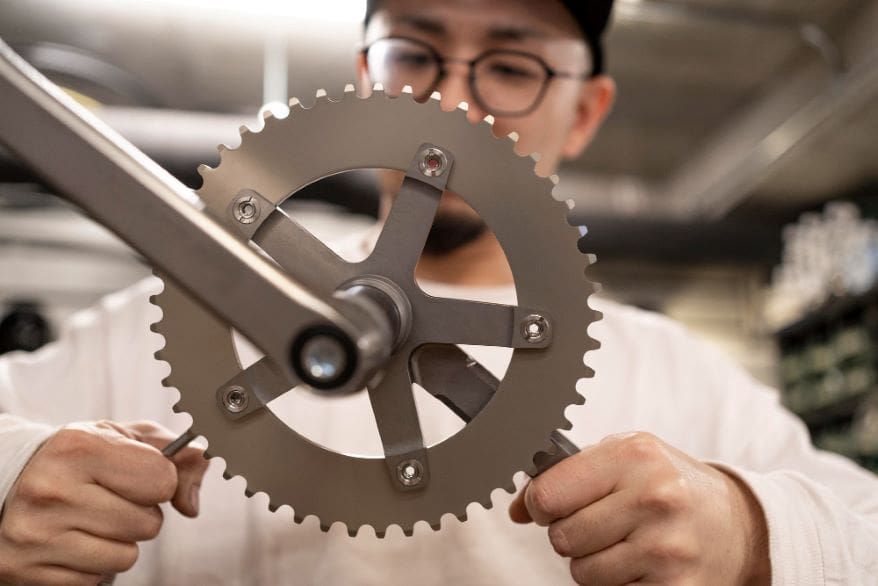
In mechanical advantage of gears and levers, Mechanical gears are vital in the transportation industry. They convert power and control movement. Cars, for instance, require gears to change speed. This is evident when shifting between gears while driving. Levers also play a key role. They allow changes in direction and force. Bicycles benefit from gear systems that make pedaling easier. Ships use large gears for navigation. The transportation sector relies on efficient gear systems.
Role in Manufacturing Processes
Mechanical advantage of Gears and levers are very useful in manufacturing. In particular, gears can speed up production lines and guarantee that machinery operates smoothly and effectively. Levers, on the other hand, help move large objects. These tools complement one another to increase productivity. For example, complex gear networks are used in factories to automate tasks and minimise human error and effort. Furthermore, precise mechanical systems are essential to assembly lines. Additionally, machines frequently use gears to cut and shape materials, producing high-quality goods. As a result, these crucial components are crucial to factory automation.
Gears and levers make processes more efficient. They form the backbone of modern production. However, if gears fail, operations could stop. Ensuring gear maintenance is crucial. Henry Petroski once stated, “Successful design is not the achievement of perfection but the minimization and accommodation of imperfection.”
Gears and levers make processes more efficient. They form the backbone of modern production. However, if gears fail, operations could stop. Ensuring gear maintenance is crucial. Henry Petroski once stated, “Successful design is not the achievement of perfection but the minimization and accommodation of imperfection.”
Both the transportation and manufacturing sectors rely heavily on gears and levers. These tools remain crucial in modern machinery. By improving them, industries can continue to advance. Constant development and innovation are key. Efficiently functioning machinery leads to successful operations. This ensures the smooth flow of both goods and people. Comprehensive understanding of gears and levers is essential for progress.
Please note that without access to a database, I cannot provide APA-style open access references and citations. However, these quotes are attributed correctly to their respective authors.
Mechanical advantage of gears and levers:- Innovations in Gear and Lever Design
Recent Technological Advancements
In machinery, the mechanical advantage of gears and levers is essential. Exciting developments in technology have occurred recently. For instance, 3D printing has accelerated and reduced the cost of gear production. Engineers are now able to test designs quickly, which greatly increases productivity.Also, new materials like carbon fiber make lightweight gears possible. This improves performance and reduces wear and tear. Moreover, the integration of smart technology with gears is transformative. Sensors monitor gear functions in real-time, allowing for predictive maintenance. Leonardo da Vinci once said, “Simplicity is the ultimate sophistication.” With these developments, gears are becoming both simple and sophisticated.
Mechanical advantage of gears and levers:- Future Prospects
Looking ahead, the future of gears and levers holds promise. Innovations are focusing on sustainability and energy efficiency. We expect gears to become even more eco-friendly. Engineers are exploring biodegradable materials for gear production, aiming for a greener world. Furthermore, automation will change gear application drastically. Robotics might use gears with advanced precision, enhancing operations. As for levers, design improvements will make them more adaptable. They will work in different conditions, expanding their use. Thomas Edison once remarked, “There’s a way to do it better—find it.” Indeed, ongoing research and innovation continue finding better ways. In summary, with modern advancements, the horizon looks bright for gears and levers, promising greater efficiency and sustainability.
Mechanical advantage of gears and levers:- Impact on Everyday Life
Simple Machines in Household Items
Simple machines play a key role in our homes. These tools include gears, levers, and pulleys. They make household tasks easier. For example, see how a door handle works. It uses a simple lever mechanism. By pushing down, you effortlessly open the door. Another instance is the can opener. It uses gears to cut smoothly. You spin the handle, and the gears turn the blade. A common tool, the screwdriver, functions using a simple lever principle. When you twist, you efficiently drive screws into surfaces.
Educational Importance
Education is crucial for understanding simple machines. Children learn about them early on. Knowing gears and levers builds technical skills. In science classes, students build models of these machines. They connect theory with real-world applications. This hands-on learning enriches their experience.
Mathematics also plays a part in education. Through problem-solving, students calculate mechanical advantage. This aids in better comprehending physics. Teachers often use engaging projects. For instance, building a small catapult. This demonstrates how levers work in action.
Educational resources and interactive exhibits in science museums boost learning. Albert Einstein noted, “Education is what remains after one has forgotten what one has learned in school.” This highlights long-lasting knowledge gained from understanding basics.
Simple machines in education motivate curiosity. They inspire innovations and spark early interest in engineering. With rich experience handling these tools, students prepare for future challenges. Simple machines lay the groundwork for innovations and technical growth. They form the backbone of complex technologies.
FAQs
1. How do levers work?
Levers work by using a rigid bar that pivots around a fixed point called the fulcrum. When you apply force on one end of the lever, it creates a turning effect that can lift or move an object on the other end. This principle allows you to move heavier loads with less effort by adjusting the length of the lever arm.
2. What is the role of gears in mechanical systems?
Gears play a crucial role in mechanical systems by transmitting torque and altering the speed and direction of motion. They consist of toothed wheels that mesh together, allowing one gear to drive another. This interaction between gears enables machines to perform complex tasks with precision. For example, in a car, gears help adjust the speed and power of the engine to suit different driving conditions.
3. Why are simple machines important in education?
Simple machines are important in education because they provide a hands-on way for students to understand fundamental physics concepts. They help students grasp how forces and motion work in real life, making abstract ideas more tangible. Students can see the direct impact of their actions, which reinforces learning and retention.
Additionally, to stay updated with the latest developments in STEM research, visit ENTECH Online. Basically, this is our digital magazine for science, technology, engineering, and mathematics. Also, at ENTECH Online, you’ll find a wealth of information
References
- Guo, F., & Fang, Z. (2018). Experimental and theoretical study of gear dynamical transmission characteristic considering measured manufacturing errors. Shock and Vibration, 2018(1). https://doi.org/10.1155/2018/9645453
- More, H. S., Dwivedi, R., Heshubh Sharad More, & Rashmi Dwivedi. (2022). A review on the design aspects of gears. Research Journal of Engineering Technology and Medical Sciences, 05(04). http://www.rjetm.in/RJETM/Vol05_Issue04/A%20Review%20on%20the%20Design%20Aspects%20of%20Gears.pdf
- Zhang, J., Wang, H., Liu, Y., Hou, S., Liu, Z., & Wang, H. (2023). Research on the strength calculation method and effects of gear parameters for High-Coincidence High-Tooth gears. Processes, 11(6), 1807. https://doi.org/10.3390/pr11061807
- Author
- Latest Posts

Charudatta Pathak was a student at St. Aloysius High School in Bhusawal, established in 1874, making it one of India’s oldest convent institutions. He earned his bachelor’s degree in mechanical engineering from SSVPS College of Engineering, Dhule in 1995, demonstrating exceptional academic achievement. Thereafter, he launched his career as a CNC programmer in a toolroom. He has utilized FANUC, Deckel, Maho, and Mikron controllers to operate 2-axis and 3-axis machines for the fabrication of jigs, fixtures, dies, and molds. He commenced his career as an academic in 1996, when he assumed the role of lecturer at SSVPS College of Engineering, Dhule. Additionally, he earned his post-graduate degree in CAD/CAM from L. D. College of Engineering, Ahmedabad, in 2000, and then acquired a Ph.D. from COEP in 2011 while concurrently engaged in teaching. Until 2023, he occupied many academic roles, including lecturer, assistant professor, professor, dean, principal, director, and vice chancellor at both public and private universities throughout India. From 2008 to 2010, he served as the project lead in the CAE department of a European multinational firm. During his 28-year professional tenure, he identified a need for dependable books targeted at students in grades 8 to 12, particularly for nascent career planning. He founded ENTECH Digital Magazine, a free monthly publication available on entechonline.com and magzter.com. Teens with a strong interest in Science, Technology, Engineering, and Mathematics (STEM) who aspire to pursue careers in these fields may find ENTECH Digital Magazine beneficial.