Private Cloud vs Public Cloud for Public Sector Systems: Rethinking Infrastructure Choices in 2026
Understand the implications of public cloud migration for government agencies, focusing on data control and operational strategy.

Private Cloud vs Public Cloud for Public Sector Systems: Rethinking Infrastructure Choices in 2026

How to Perform an Office 365 to Office 365 Migration?
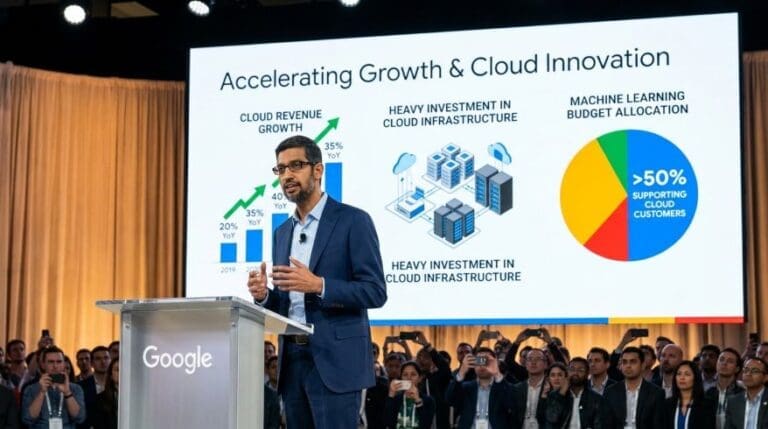
This Google Event can Change Your Career Forever – Here’s How
Common Data Risks Facing Organizations Using Cloud Technologies
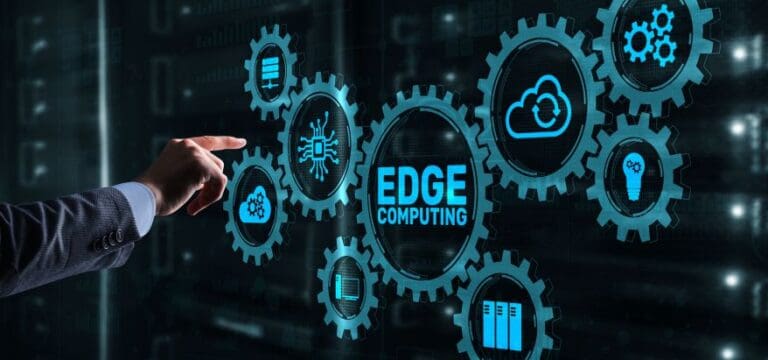
WISE Architecture: A New Wave in Wireless Edge Computing

Cloudflare Outage 18th November 2025: What Really Happened?
Why Businesses in Columbia Need Cloud Migration Services Now

Emerging Web Hosting Technologies Shaping the Future

Google Cloud’s Automotive AI Agent for Smarter Driving Experiences

Edge Computing Explained in 5 Easy Steps
The world is becoming increasingly connected. Smartphones, sensors, industrial machines, vehicles, and smart devices generate enormous amounts of data every day. Processing all this information through distant, centralised data centres can create delays and increase network traffic. Edge Computing offers another approach by bringing computing resources closer to where data is generated and used.
Edge Computing is a distributed computing approach in which data processing, storage, and applications operate at or near the source of data. Instead of sending every piece of information to a central cloud server, an edge system can process relevant data locally. This can reduce response times, conserve network bandwidth, and support applications that need real-time decisions.
At ENTECH Magazine, our Edge Computing category explores the technologies, architectures, and applications behind this approach. We cover its relationship with Cloud Computing, the Internet of Things, 5G networks, artificial intelligence, and the connected systems shaping modern industries.
Edge Computing moves computing and data-processing capabilities closer to the devices and locations that generate information. These resources may operate on connected devices, local servers, gateways, or computing infrastructure near the network’s edge.
Traditional cloud-based systems often send data to centralised data centres for processing and storage. This model provides access to powerful computing resources and services. However, some applications need faster responses or cannot continuously transfer large amounts of data to remote locations.
Edge Computing addresses these requirements by allowing certain tasks to happen locally. For example, a factory sensor may send information to a nearby edge computer, which can analyse it and support a timely response. Only selected information may then be sent to a central cloud platform for further analysis or storage.
An edge computing system usually involves several connected components:
These components work together to distribute computing tasks. Time-sensitive processing can take place near the data source, while more resource-intensive tasks can run in a central data centre or cloud environment.
The exact architecture depends on the application. Some systems process information directly on a device, while others use gateways or nearby servers as intermediate computing layers.
Edge Computing and Cloud Computing are related approaches, but they serve different purposes.
Cloud Computing provides on-demand access to shared computing resources such as servers, storage, networks, and software services. These resources are commonly hosted in centralised data centres.
Edge Computing distributes some computing and storage resources closer to users, devices, and data sources. It is particularly useful when applications need low response times, local processing, or reduced dependence on continuous data transfer.
The two approaches often work together. An edge device may process immediate sensor data locally, while a cloud platform stores historical information and performs large-scale analysis.
Neither approach replaces the other in every situation. The choice depends on application requirements, network conditions, cost, security, and performance.
Edge Computing combines several areas of computer science, electronics, networking, and software engineering.
The Internet of Things connects physical devices that collect and exchange data. Sensors, smart appliances, industrial equipment, and connected vehicles are common examples.
Edge Computing helps IoT systems process information closer to these devices. This can reduce the amount of data sent across networks and support faster responses.
Modern communication networks support the exchange of data between connected devices and computing infrastructure. 5G networks can support applications that require high data rates, connectivity for many devices, and low-latency communication.
Multi-access Edge Computing (MEC) places computing capabilities close to users within or near the access network. It can support services such as connected vehicles, industrial applications, and interactive digital experiences.
Edge AI refers to running artificial intelligence models on or near the devices that collect data. This allows certain AI tasks to take place without sending every input to a remote cloud service.
Applications include image recognition, industrial monitoring, smart cameras, and voice-enabled devices. Edge AI can also support systems that need to continue operating when network connectivity is limited.
Distributed computing divides processing tasks across multiple connected computers or devices. Edge Computing uses this principle to distribute workloads between devices, local computing nodes, and central infrastructure.
Edge applications often rely on compact computers, processors, microcontrollers, gateways, and specialised hardware. These components must balance computing performance, energy consumption, physical size, cost, and environmental conditions.
Edge Computing has applications across industries where connected devices generate large amounts of information or require timely responses.
Factories use sensors and connected equipment to monitor machines, production lines, and industrial processes. Edge systems can analyse local data and help identify unusual operating conditions.
Connected medical devices can collect information and support local processing. Edge infrastructure may also help healthcare organisations manage data generated by connected equipment, subject to strict privacy and safety requirements.
Vehicles generate data from cameras, sensors, navigation systems, and other onboard components. Local processing supports time-sensitive vehicle functions, while connected infrastructure can provide additional information and services.
Smart city systems use connected sensors to monitor traffic, public infrastructure, energy use, and environmental conditions. Edge Computing can help process information near the location where it is collected.
Retailers and logistics companies use connected systems to monitor inventory, track assets, and analyse operational data. Edge processing can support local decision-making in warehouses, stores, and distribution networks.
Smart agriculture systems use sensors, connected equipment, and monitoring technologies to collect information about soil, weather, and crops. Edge Computing can help process this information close to farms and agricultural devices.
Edge Computing offers several potential benefits:
However, edge deployments also introduce challenges. Organisations must manage many geographically distributed devices and computing nodes. These systems can have limited processing power, storage, and energy resources.
Security is another important concern. Every connected device and edge node needs appropriate protection, monitoring, and software updates. Managing compatibility and coordinating workloads across different hardware platforms can also increase system complexity.
Edge Computing is likely to become increasingly important as connected devices, industrial automation, smart infrastructure, and artificial intelligence continue to develop.
The combination of Edge AI, 5G, IoT, and Cloud Computing is creating new ways to distribute data processing across digital systems. Future applications may support more responsive industrial systems, connected transport, smart cities, and intelligent devices.
Edge Computing also creates opportunities for professionals working in computer engineering, networking, embedded systems, cloud architecture, cybersecurity, and artificial intelligence.
Explore ENTECH Magazine for more insights into Edge Computing, Cloud Computing, IoT, edge AI, distributed systems, and the technologies connecting the physical and digital worlds.