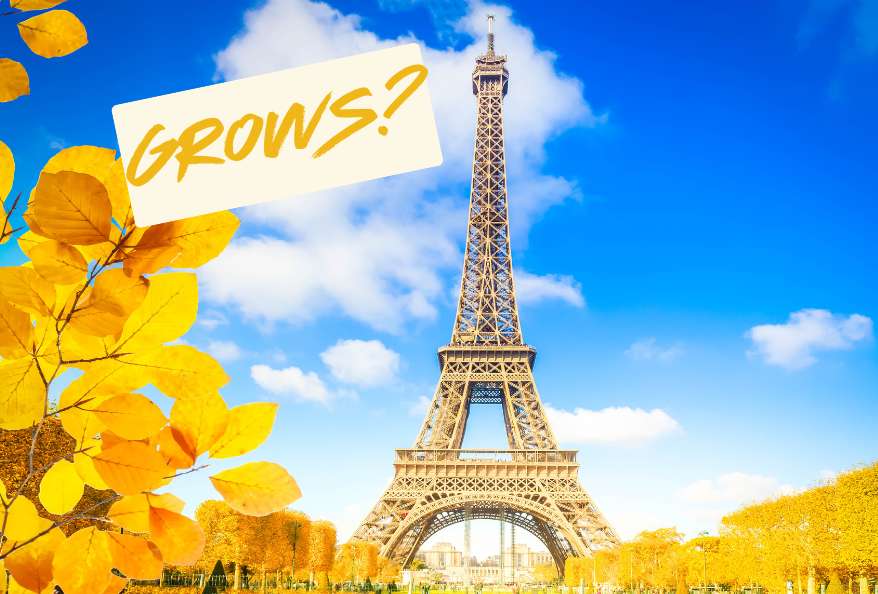
The tower breathes with the seasons—expanding in summer and contracting in winter, returning to its normal height or even shrinking slightly on cold days.
Eiffel Tower Grows in Summer? Wonders in Science
Estimated reading time: 4 minutes
Did you know that the iconic Eiffel Tower actually grows taller in summer? It sounds unbelievable, but this famous Paris landmark can increase in height by up to 15 centimeters (about 6 inches) during hot days! This fascinating natural phenomenon is a perfect blend of physics and engineering, and it beautifully illustrates the science of thermal expansion.
The Science Behind Why the Eiffel Tower Grows in Summer
The Eiffel Tower is made mostly of puddled iron, a type of metal that expands when heated and contracts when cooled. This process is called thermal expansion. When the temperature rises in summer, the iron molecules inside the tower vibrate faster and move slightly farther apart. As a result, the entire structure grows.
Thermal Expansion and the Eiffel Tower’s Summer Growth

Thermal expansion is a common behavior in solids. As heat increases, atoms or molecules in materials move more energetically and take up more space. In the case of the Eiffel Tower, this expansion causes it to stretch vertically, making it taller by up to 15 centimeters.
Interestingly, because the sun heats one side of the tower more than the other, the tower also leans very slightly away from the sun. This tilt is so small that tourists can’t notice it, but scientists can measure this movement precisely.
What Makes the Eiffel Tower’s Expansion Special?
Unlike many structures, the Eiffel Tower was designed with these temperature changes in mind. Gustave Eiffel, the tower’s engineer, built it to be flexible and resilient. The tower’s rivets and joints allow the metal parts to expand, contract, and even bend slightly without damage.
This smart engineering ensures that the seasonal growth and shrinkage happen safely every year. The tower breathes with the seasons—expanding in summer and contracting in winter, returning to its normal height or even shrinking slightly on cold days.
The Role of Material and Design
Metal expands about 12 microns per meter per degree Celsius increase in temperature. Considering the Eiffel Tower’s height of 300 meters, this small expansion per meter adds up to a noticeable stretching of the entire structure during Paris’s hot summers.
The tower’s open lattice structure makes the effect more visible compared to solid buildings, which is why this phenomenon is so well-known and studied.
As engineer and historian states, “The Eiffel Tower’s growth in summer is a stunning example of how science and engineering work together to create marvels that endure the test of time.”
This tiny, elegant expansion captures human ingenuity and nature’s power in one breathtaking symbol.
Also Read: Universe – A Journey Through Time
Eiffel Tower Grows in Summer: Why Does This Matter?
The Eiffel Tower’s summer growth is more than just an interesting fact; it’s a real-world demonstration of physics that impacts many areas:
- Engineering and Safety: Designing structures to handle thermal expansion is crucial for safety. Bridges, railways, and skyscrapers all use flexible joints or design features to prevent damage from temperature changes.
- Material Science: Studying the Eiffel Tower helps scientists understand how iron and similar materials behave under temperature variations, guiding innovations in construction and design.
- Metaphor for Nature and Science: The tower’s seasonal changes are a reminder that even massive and seemingly permanent structures are part of the natural world, responding to the sun’s heat and the environment around them.
Conclusion
The Eiffel Tower’s growth in Summer is a remarkable reminder that science is everywhere!
This natural expansion demonstrates the power of thermal energy and the genius of Gustave Eiffel’s flexible design. By shrinking in winter and growing in summer, the tower not only stands tall as a symbol of Paris but also as a giant, living example of physics in action.
Next time you admire its beauty, remember you are witnessing a masterpiece that breathes with the sun and keeps on growing—summer after summer. This wonder captures the awe-inspiring blend of nature, science, and human ingenuity!
Additionally, to stay updated with the latest developments in STEM research, visit ENTECH Online. Basically, this is our digital magazine for science, technology, engineering, and mathematics. Further, at ENTECH Online, you’ll find a wealth of information.
Reference:
- Eiffel Tower. (n.d.). Materials Engineering – Purdue University. https://engineering.purdue.edu/MSE/about-us/gotmaterials/Buildings/patel.html
- Adhikari, S. K. (2017). Stability of Eiffel Tower is on the basis of structural design of human femur and its mathematical analysis. International Journal of Physics and Mathematical Sciences, 7(2), 1–21. Centre for Info Bio Technology. PDF Article
- Author
- Latest Posts

Ashwini Kshirsagar holds a graduate degree in Chemistry and a postgraduate degree in Environmental Science from Shivaji University, Kolhapur. With a strong foundation in scientific principles and a creative flair, she blends her expertise in environmental science with skills in technical writing, graphic design, and video editing. Proficient in Adobe software, Ashwini excels at transforming complex scientific concepts into clear, engaging, and visually compelling content. Her unique ability to merge science and storytelling allows her to create impactful communication materials that are both informative and accessible to a wide audience.