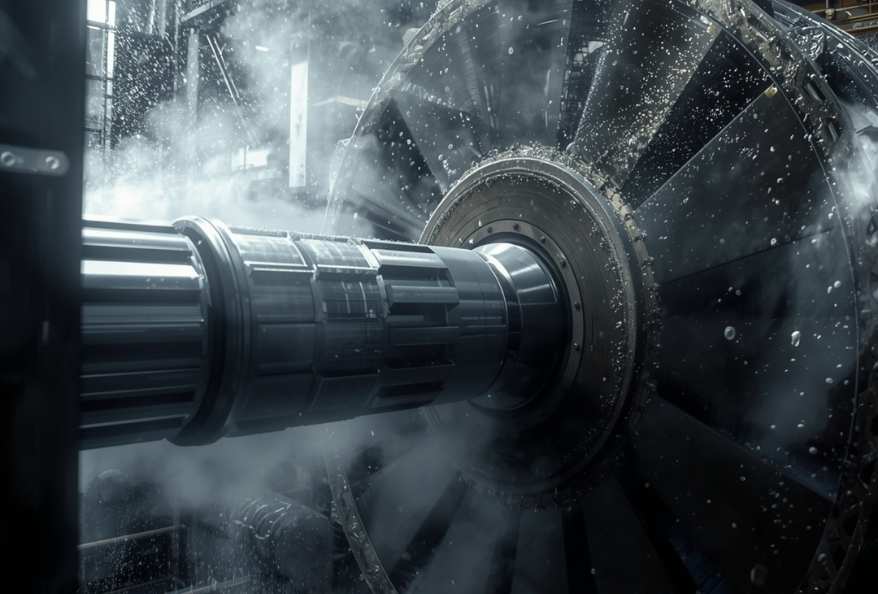
Erosion in turbine blades results from continuous particle and droplet impacts that degrade surface integrity over time.
Erosion Protection of Steam Turbine Blades Using LSP and HVOF Coatings
Estimated reading time: 9 minutes
Steam turbine blades work in tough conditions every day. Fast-moving steam carries water droplets that hit the blades again and again. Small solid particles also strike the surface. Over time, these impacts wear away the metal.
The damage starts small. Tiny pits form on the blade surface. As time passes, these pits grow larger. Cracks can then begin to form. As a result, the blades become weaker. Turbine efficiency drops, and maintenance costs rise.
Because of this problem, power plants need better ways to protect turbine blades. At the present time, advanced surface treatments offer new solutions. Two methods have gained attention: Laser Shock Peening (LSP) and High Velocity Oxy-Fuel (HVOF) spraying.
Researchers recently tested these methods on steam turbine blade material. They also studied what happened when both methods were used together. The results were clear. The treated surfaces were harder, stronger, and more resistant to erosion. They also lasted longer under harsh test conditions.
Key Takeaways on Erosion Resistance
- Erosion resistance is critical for turbine reliability.
- Steam turbine blades face continuous droplet impacts.
- Laser Shock Peening creates compressive residual stresses.
- HVOF coatings provide strong wear protection.
- HVOF-LSP delivered the best overall performance.
- Surface hardness reached 1500 HV0.5.
- Coating porosity decreased after laser post-treatment.
- Crack initiation became less likely.
- Coating life increased significantly.
- Blade protection improved under accelerated erosion conditions.
Why Erosion Resistance Matters for Steam Turbine Blades
Steam turbine blades work in tough conditions every day. Fast-moving steam carries water droplets that hit the blades again and again. Small solid particles also strike the surface. Over time, these impacts wear away the metal.
The damage starts small. Tiny pits form on the blade surface. As time passes, these pits grow larger. Cracks can then begin to form. As a result, the blades become weaker. Turbine efficiency drops, and maintenance costs rise.
Because of this problem, power plants need better ways to protect turbine blades. At the present time, advanced surface treatments offer new solutions. Two methods have gained attention: Laser Shock Peening (LSP) and High Velocity Oxy-Fuel (HVOF) spraying.
Researchers recently tested these methods on steam turbine blade material. They also studied what happened when both methods were used together. The results were clear. The treated surfaces were harder, stronger, and more resistant to erosion. They also lasted longer under harsh test conditions.
Common Effects of Erosion
- Surface pitting
- Material loss
- Crack initiation
- Fatigue damage
- Efficiency reduction
- Increased maintenance
- Shorter service life
Understanding the Causes of Blade Erosion
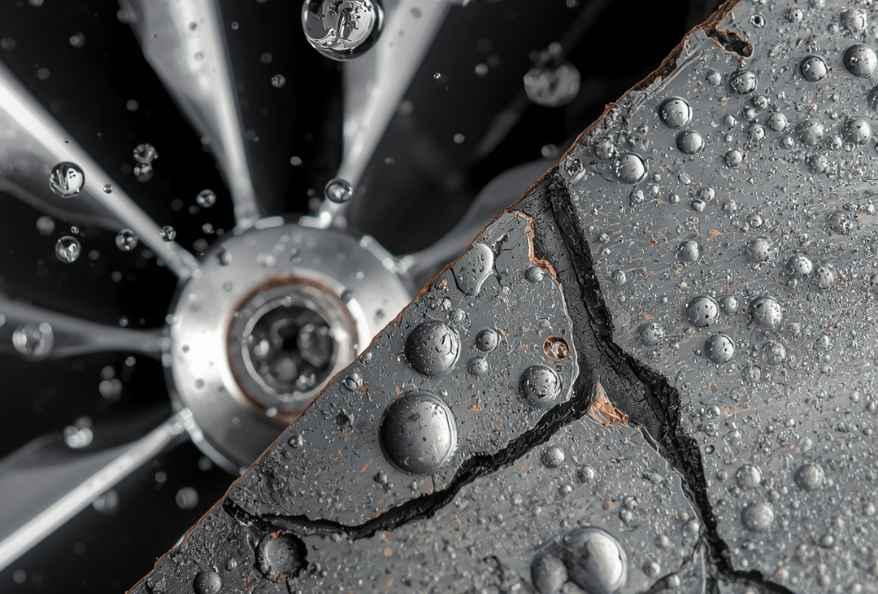
Blade erosion occurs when high-speed water droplets repeatedly strike the blade surface. Over time, these impacts create pits, craters, and surface damage. Solid particles carried by the steam make the problem worse by creating scratches that accelerate wear. As a result, blades experience combined erosion damage, reducing their performance and service life.
Main Sources of Erosion
- Water droplet impacts
- Solid particle impacts
- Surface scratching
- Repeated stress cycles
- Fatigue crack growth
What Is Laser Shock Peening?
Laser Shock Peening (LSP) is a surface treatment that uses powerful laser pulses to generate shock waves in the metal. These shock waves create compressive stresses and, in addition, refine the grain structure, thereby making the surface stronger and more resistant to wear.
Moreover, this process significantly improves fatigue life and helps the material withstand harsh operating conditions more effectively.
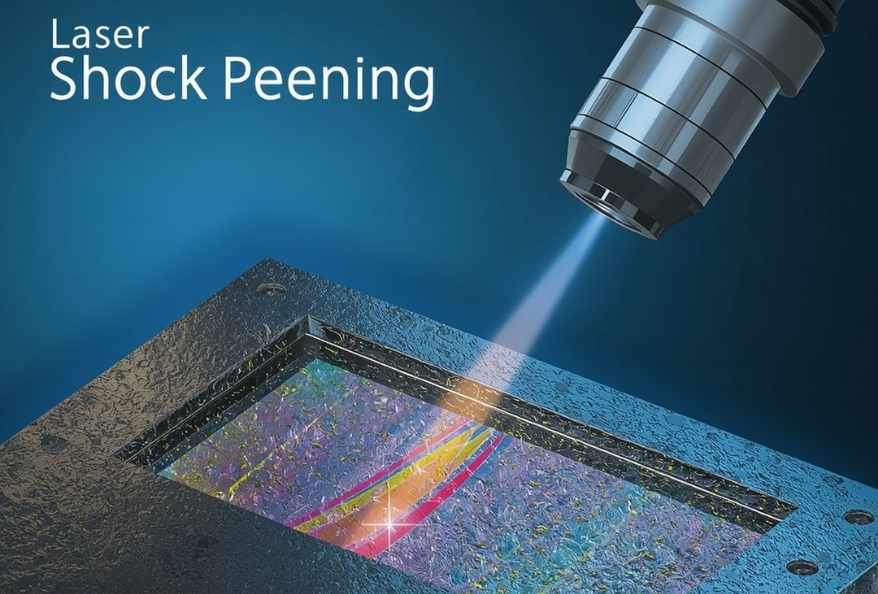
A key advantage of LSP is its ability to slow crack growth, which helps extend component life. Because the treatment affects deeper layers of the material, its benefits last longer than many traditional surface treatments, improving both fatigue and erosion resistance.
Benefits of Laser Shock Peening
- Increased hardness
- Grain refinement
- Compressive residual stresses
- Better fatigue resistance
- Improved erosion performance
- Enhanced durability
The Role of HVOF Coatings in Improving Erosion Resistance
High Velocity Oxy-Fuel (HVOF) spraying is a coating process that creates a dense, protective layer on a material’s surface. Tiny molten particles are sprayed at very high speed, thereby forming a strong coating that acts as a protective shield against wear and erosion.
In addition, this process improves surface bonding strength and enhances resistance to long-term mechanical damage under harsh operating conditions.
A WC-10Co-4Cr coating was used, which is well known for its high hardness and excellent wear resistance. Moreover, the coating bonded effectively to the base material. In addition, it contained very few pores, which further improved its structural integrity and performance.
Because pores can act as weak points where cracks begin, a dense coating provides better protection and longer service life. As a result, the overall durability of the coated surface is significantly enhanced. Consequently, the material becomes more resistant to erosion under high-speed particle and droplet impact conditions.
Advantages of HVOF Coatings
- High hardness
- Strong wear resistance
- Dense microstructure
- Improved durability
- Lower material loss
- Better protection
How Surface Treatments Changed Hardness and Residual Stress
Importantly, LSP generated deep compressive stresses within the material. As a result, these stresses help prevent cracks from initiating and growing, thereby improving resistance to fatigue damage.
Specifically, researchers measured compressive stresses of about −629 MPa. This value was significantly higher than those found in untreated samples. Therefore, it can be concluded that LSP improves performance not only through increased hardness but also through beneficial residual stress formation.
Key Mechanical Improvements
- Higher hardness
- Reduced crack growth
- Better fatigue resistance
- Improved load-bearing capacity
- Enhanced coating stability
Why the HVOF-LSP Process Performed Best
The researchers found that HVOF-LSP delivered the best performance among all five treatments. In this approach, the HVOF coating was applied first, followed by Laser Shock Peening (LSP).
In particular, the laser treatment reduced porosity and other coating defects. As a result, porosity dropped to just 1.08%. Consequently, with fewer pores, the coating had fewer weak spots where cracks could initiate.
In addition, LSP increased hardness and introduced beneficial compressive stresses. As a result, crack growth slowed, coating life increased, and the coating provided significantly higher erosion resistance.
Reasons for Superior Performance
- Lower porosity
- Higher hardness
- Better crack resistance
- Improved toughness
- Longer coating lifespan
- Stronger substrate protection
Erosion Test Results and Surface Damage Analysis
Researchers measured erosion pit size to evaluate damage after testing. The untreated samples showed the worst results, with pit depths reaching 2392 μm and widths reaching 3012 μm, indicating severe material loss.
Laser Shock Peening (LSP) reduced pit depth by 18.06% and pit width by 2.56%, making the surface stronger and more resistant to impacts. The coated samples performed even better, protecting the base metal during the early stages of testing.
Among all treatments, the HVOF-LSP coating lasted the longest and provided the highest erosion resistance, delivering the best overall protection.
Also Read : Corrosion Detection using AI
Industrial Benefits for Steam Turbine Blades
Steam turbines are essential for power generation, and blade damage can lead to costly repairs and downtime. The HVOF-LSP process improves erosion resistance, strengthens blade surfaces, and delays coating failure. As a result, turbine blades last longer, require less maintenance, and help power plants operate more efficiently.

Potential Industry Benefits
- This leads to a longer blade lifespan, allowing steam turbine components to operate effectively for extended periods without frequent replacement.
- It also helps reduce downtime by minimizing the need for shutdowns caused by blade damage or repair work.
- As a result, maintenance costs are lower because fewer repairs and inspections are required over the turbine’s operating cycle.
- In turn, system reliability improves as the blades maintain their structural integrity even under continuous high-speed steam and particle impacts.
- This further improves overall efficiency by ensuring smoother operation with less energy loss due to surface damage.
- Ultimately, operational safety is enhanced, since more durable blades reduce the risk of unexpected failures during high-stress operating conditions.
Erosion Resistance: Conclusion
Steam turbine blades face constant erosion from high-speed water droplets and solid particles. As a result, this continuous impact gradually reduces blade life and overall performance.
In order to address this issue, researchers compared several protection methods. They found that combining High-Velocity Oxy-Fuel (HVOF) coating with Laser Shock Peening (LSP) provided the best results. Specifically, the HVOF-LSP treatment increased hardness, reduced porosity, and improved crack resistance. Moreover, it delivered the highest erosion resistance among all tested methods.
According to the performance ranking:
HVOF-LSP > LSP-HVOF > UT-HVOF > LSP > UT
In conclusion, the study clearly indicates that HVOF-LSP is the most effective approach for protecting steam turbine blades and extending their service life.
Additionally, to stay updated with the latest developments in STEM research, visit ENTECH Online. Basically, this is our digital magazine for science, technology, engineering, and mathematics. Further, at ENTECH Online, you’ll find a wealth of information.
Frequently Asked Questions on Erosion Resistance
What causes erosion in steam turbine blades?
High-speed water droplets and solid particles strike blade surfaces during operation. Over time, these repeated impacts remove material and create surface damage. As a result, blade performance gradually decreases and maintenance requirements increase.
What is Laser Shock Peening?
To address this problem, researchers use advanced surface treatments such as Laser Shock Peening (LSP). This process uses powerful laser pulses to generate shock waves within the material. Consequently, the surface becomes stronger and more resistant to damage.
What is HVOF coating?
In addition to LSP, protective coatings can further improve durability. HVOF, or High Velocity Oxy-Fuel spraying, produces a dense and well-bonded coating on the blade surface. Therefore, it helps reduce wear, erosion, and material loss during service.
How much hardness did the HVOF-LSP treatment achieve?
To quantify its effectiveness, researchers measured the hardness of the treated surfaces. The HVOF-LSP treatment achieved a hardness value close to 1500 HV0.5, which was the highest among all tested conditions. As a result, it offered superior protection against erosion damage.
Reference
- Le, H., Ye, Y., Li, J., Guo, B., Liu, S., Yuan, X., Guo, K., Xie, Z., Xu, Z., & Li, X. (2026). Effect of Laser Shock Peening and High Velocity Oxy-Fuel Spraying Composite Modification on Erosion Resistance of 1Cr12Ni3Mo2VN Stainless Steel for Steam Turbine Blades. Technologies, 14(6), 343. https://doi.org/10.3390/technologies14060343
- Tang, Z., Gao, J., Xu, Z., Guo, B., Jiang, Q., Chen, X., Weng, J., Li, B., Chen, J., & Zhao, Z. (2023). Effect of laser shock peening on the fatigue life of 1cr12ni3mo2vn steel for steam turbine blades. Coatings, 13(9), 1524. https://doi.org/10.3390/coatings13091524
- Alqallaf, J., Ali, N., Teixeira, J. A., & Addali, A. (2020). Solid particle erosion behaviour and protective coatings for gas turbine compressor blades—A review. Processes, 8(8), 984. https://doi.org/10.3390/pr8080984
- Szala, M., Walczak, M., Łatka, L., Gancarczyk, K., & Özkan, D. (2020). Cavitation erosion and sliding wear of MCrAlY and NiCrMo coatings deposited by HVOF thermal spraying. Advances in Materials Science, 20(2), 26–38. https://doi.org/10.2478/adms-2020-0008
- Reza Kashyzadeh, K., Ridha, W. K. M., & Ghorbani, S. (2025). The influence of nanocoatings on the wear, corrosion, and erosion properties of AISI 304 and AISI 316l stainless steels: A critical review regarding hydro turbines. Corrosion and Materials Degradation, 6(1), 6. https://doi.org/10.3390/cmd6010006
- Author
- Latest Posts

Kottauppari Venkat Raghava
I am an Information Technology graduate (B.Tech) and a technology writer specialising in artificial intelligence, robotics, automation, and space technologies. I analyse complex scientific research and convert it into clear, practical insights for students, tech enthusiasts, and professionals. My work bridges the gap between academic research and real-world understanding by simplifying findings from peer-reviewed journals into engaging, easy-to-follow content. Alongside my writing, I have hands-on experience developing real-world projects, showcased on my GitHub, including an Expense Tracker web application for managing and visualising spending, and a Simple Video Summariser that generates concise insights from video content using automation techniques. I also produce research-driven articles on topics such as AI-powered corrosion detection, deep learning in engineering, and advanced automation systems. I follow a research-driven approach, ensuring every article is grounded in verified sources, industry knowledge, and practical applications. My goal is to make advanced technology accessible and meaningful, helping readers stay informed about innovations shaping the future.