A fiber laser cutting system uses a powerful beam to cut materials. It handles steel, aluminum, and other metals with ultra-precision.
Why More Factories Are Upgrading to Fiber Laser Cutting Systems

Estimated reading time: 9 minutes
Key Takeaways
- Fiber laser cutting systems cut materials 50% faster than traditional methods
- These machines reduce material waste by up to 30%
- Energy consumption drops by 25-35% compared to CO₂ lasers
- Maintenance costs decrease significantly with fewer moving parts
- High precision cutting improves product quality across all industries
Introduction
Modern factories are transforming rapidly. In fact, new machines make work simpler, faster, and more efficient. At this time, one significant change is the adoption of fiber laser cutting systems.
More factories are upgrading every year. Certainly, this allows them to handle larger orders and reduce costs. Moreover, these machines cut materials with clean, precise results. They also minimize human error and streamline production workflows. Therefore, companies can complete orders faster and keep customers satisfied. So, in today’s competitive market, adopting modern fiber laser cutting systems is essential.
What is a Fiber Laser Cutting System?
A fiber laser cutting system uses a powerful beam to cut materials. It handles steel, aluminum, and other metals with ultra-precision. The technology relies on laser diodes that generate focused light energy.
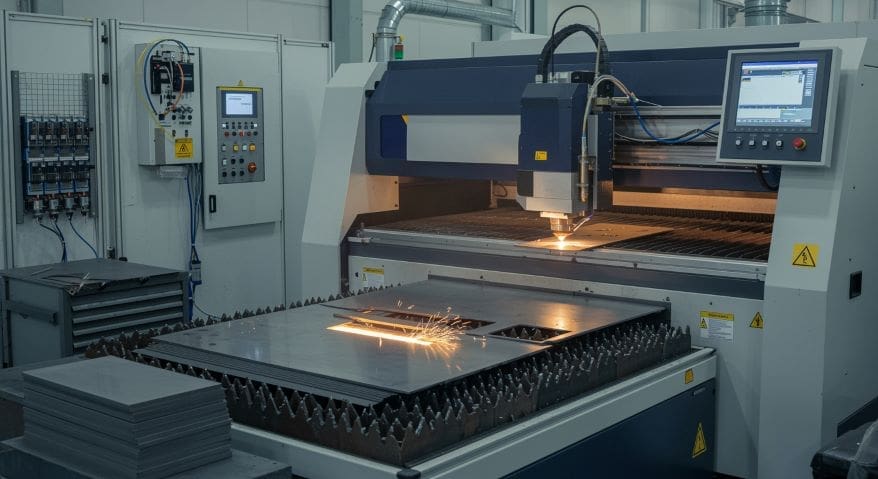
The laser beam is highly effective. It creates smooth, clean cuts every time. Additionally, it works remarkably quickly compared to older methods.
As a result, many companies now use automated laser cutting solutions. This upgrade significantly improves their production capabilities.
How the a Fiber Laser Cutting Systems Works
Fiber lasers use multiple laser diodes as their source. In detail, these diodes convert electrical energy into light energy efficiently. Thereafter, the light travels through an optical fiber cable to the cutting head. In general, this fiber contains rare earth elements like ytterbium for amplification.
The resulting beam has exceptional quality. So that, it focuses on the workpiece surface with extreme precision. The wavelength of 1070 nm is ideal for metal processing (Madić et al., 2024).
Why Factories Are Upgrading for a Fiber Laser Cutting System
Factories upgrade because they need better performance. Traditional cutting methods cannot match modern demands. Competition drives the need for superior results.
Let’s explore the main reasons behind this shift.
1. Faster Cutting Speed
Fiber laser machines operate at impressive speeds. They cut materials in significantly less time than alternatives.
Consequently, factories can produce more products daily. Higher output means better profitability for manufacturers.
2. High Accuracy
These machines deliver exceptional precision. They cut exactly according to programmed specifications. The beam quality ensures consistent results every time.
This precision reduces costly mistakes significantly. Product quality improves across all production runs.
Research shows that fiber lasers achieve superior cut quality. The focus position directly affects kerf width and surface smoothness. Proper calibration ensures minimal material distortion (Madić et al., 2024).
3. Less Material Waste
Fiber lasers optimize material usage effectively. They produce significantly less waste after each cut. The narrow kerf width preserves more usable material.
Therefore, companies save substantial money on raw materials. Waste reduction also benefits environmental sustainability efforts.
4. Low Maintenance
Fiber lasers require minimal maintenance compared to alternatives. They contain fewer moving parts than older systems.
This design results in fewer breakdowns over time. Maintenance costs drop significantly throughout the machine’s lifespan.
5. Energy Saving
These machines consume 25-35% less electricity than CO₂ lasers. Energy efficiency translates directly into lower operating costs. Monthly power bills decrease substantially for high-volume operations.
5 Benefits of Fiber Laser Cutting Systems
Upgrading to fiber laser systems delivers multiple advantages. Let’s examine the most significant benefits for manufacturers.
1. Better Product Quality
Clean, smooth cuts enhance the final product dramatically. Customers receive higher quality items with better edge finish. Surface roughness measurements show significant improvements over traditional methods.
2. Increased Productivity
Machines operate faster with longer uptime periods. Overall productivity increases by 40-60% in many facilities. Batch processing becomes more efficient and predictable.
3. Easy Automation
Fiber laser systems integrate seamlessly with automation. This integration reduces manual labor requirements substantially.
Many companies now deploy automated laser cutting solutions successfully. Efficiency gains justify the initial investment quickly.
4. Flexible Use
These machines handle various materials and shapes easily. Manufacturers gain more production flexibility with one system. Steel, aluminum, copper, and brass all cut efficiently.
5. Strong Performance
Fiber lasers withstand demanding production schedules reliably. They deliver consistent performance over many years. Long-lasting components reduce replacement costs significantly.
Comparison of a Fiber Laser Cutting System with Traditional Cutting Methods
Let’s compare fiber lasers with traditional cutting approaches.
Old Methods
Traditional methods like plasma and mechanical cutting have limitations:
- Slower cutting speeds reduce daily output
- More errors occur due to tool wear
- Material waste increases production costs
- High maintenance demands interrupt workflows
Fiber Laser Systems
Fiber laser systems offer clear advantages:
- Faster speeds increase throughput dramatically
- High accuracy eliminates costly rework
- Minimal waste saves material costs
- Low maintenance keeps machines running longer
These benefits explain why factories invest in industrial laser cutting equipment. Another key point, the return on investment typically occurs within 2-3 years.
3 Industries Using Fiber Laser Cutting
Multiple industries have adopted this cutting-edge technology. Each sector benefits from unique performance advantages.
Automotive Industry
Car parts demand extremely tight tolerances. Fiber lasers produce strong, accurate components consistently. Chassis brackets, body panels, and frame members cut perfectly.
Construction Industry
Small, delicate components require extremely careful cutting. Fiber lasers excel at intricate electronic parts manufacturing. Also, circuit board housings and connector plates cut without damage.
Aerospace Industry
Aircraft components must meet stringent accuracy standards. Fiber laser cutting ensures safety and quality simultaneously. Titanium and aluminum aerospace parts cut without contamination.
Role of Automation in Laser Cutting
Automation drives many factory upgrade decisions today. It transforms how manufacturers approach production planning.
Modern machines operate independently with minimal human intervention. They follow programmed instructions precisely for each task. CNC control enables 24/7 production when needed.
This capability reduces errors dramatically while saving time. Production consistency improves across all shifts and operators.
Automated laser cutting solutions continue gaining widespread adoption. Smart factories rely on this technology integration daily.
Advanced Control Features of a Fiber Laser Cutting Systems
Modern systems include sophisticated cutting heads with automated controls. Variable focus and beam diameter adjust automatically during cuts. In short, this ensures optimal results for different material thicknesses.
Some advanced systems even change nozzle types automatically. The telescopic magnification feature adjusts focal length as needed. These innovations reduce setup time between different jobs.
4 Cost Benefits for Factories
Initially, fiber laser machines represent a significant investment. However, they generate substantial savings over their lifetime. The payback period averages 24-36 months.
1. Lower Labor Cost
Automation minimizes manual work requirements substantially. In effect, labor costs decrease by 30-40% in many operations. Operators can manage multiple machines simultaneously.
2. Less Waste
Precise cutting produces less material waste per project. Scrap rates drop from 15% to under 5%. Thus, this savings compounds over thousands of cuts.
3. Fewer Repairs
Machines require minimal maintenance throughout their lifespan. Repair costs drop dramatically compared to older systems. Additionally, solid-state design eliminates many common failure points.
4. Faster Production
Higher production speeds mean more completed orders daily. Profit margins improve with increased throughput capacity. Customer satisfaction rises with faster delivery times.
3 Challenges in Upgrading to a Fiber Laser Cutting Systems
Upgrading presents several challenges for manufacturers. However, these obstacles are temporary and manageable.
1. High Initial Cost
New fiber laser systems require substantial capital investment. However, financing options make purchases more accessible.
2. Training Workers
Operators must learn new system controls and procedures. Training programs typically last 2-4 weeks. However, most manufacturers find employees adapt quickly.
3. Setup Time
Installation and calibration require careful planning and execution. Expect 2-3 weeks for complete system integration. Production may slow briefly during this transition.
Yet these challenges pass quickly once overcome. Long-term benefits far exceed temporary difficulties.
Future of Fiber Laser Cutting Systems
The future looks extremely promising for fiber laser technology. Also, continuous innovation drives new capabilities and efficiencies.
More Smart Features
Next-generation machines will incorporate advanced AI capabilities. In fact, they’ll analyze cutting data to optimize parameters automatically. Machine learning will predict maintenance needs before failures occur.
Better Speed and Accuracy
Future systems will cut even faster than today. Precision levels will reach unprecedented accuracy standards. In fact, new optics technology enables tighter beam focus.
More Automation
Factories will deploy completely automated production lines. Material handling, cutting, and quality inspection will integrate seamlessly. Additionally, smart factories will operate with minimal human intervention.
Environment Friendly Production using a Fiber Laser Cutting Systems
Firstly, reduced waste and lower energy consumption benefit the environment. Thereafter, carbon footprints shrink as efficiency improves. Thus, sustainable manufacturing becomes more achievable for everyone.
Career Opportunities in Fiber Laser Cutting Systems
Are you a 12th grader interested in advanced manufacturing? Fiber laser cutting offers excellent career prospects. As a matter of fact, this field combines technology, precision engineering, and problem-solving skills.
Entry-level positions require technical training. Many community colleges offer laser technology certificate programs. As I have noted, these programs typically last 6-12 months. By and large, you’ll learn machine operation, safety protocols, and basic programming.
The career path offers multiple advancement opportunities. At first, you might start as a machine operator. Then, you could become a programming specialist or maintenance technician. Eventually, you might advance to production manager or engineer.
Moreover, the job market looks strong for this field. Manufacturing is growing worldwide. Companies desperately need skilled workers who understand modern cutting technology. Automation skills make you even more valuable to employers.
This career also offers job security and stability. Every industry needs metal fabrication and cutting services. Your skills will remain in demand across multiple sectors. Plus, you’ll work with cutting-edge technology every day.
To start with, consider visiting local manufacturing facilities to see these machines. Also, talk to operators and ask about their career experiences. At the present time, many companies offer apprenticeships or on-the-job training programs. What’s more, this hands-on experience proves invaluable for your future success.
Conclusion
Fiber laser cutting systems represent cutting-edge manufacturing technology. In conclusion, they enable faster, more precise, and cost-effective production. Modern factories cannot compete effectively without this capability.
By implementing automated laser cutting solutions, companies improve significantly. They reduce waste, increase output, and boost profitability. Quality improvements satisfy customers and strengthen market position.
Therefore, more factories upgrade to fiber laser cutting systems annually. It’s a strategic investment that delivers measurable returns. Manufacturing success increasingly depends on this advanced technology.
The evidence is clear from both industry practice and research. Studies confirm that proper parameter optimization yields superior results.
Reference
Madić, M., Jovanović, D., & Janković, P. (2024). Fiber Laser Cutting Technology: pilot case study in mild steel cutting. Spectrum of Mechanical Engineering and Operational Research., 1(1), 1–9. https://doi.org/10.31181/smeor1120241
- Author
- Latest Posts

Charudatta Pathak was a student at St. Aloysius High School in Bhusawal, established in 1874, making it one of India’s oldest convent institutions. He earned his bachelor’s degree in mechanical engineering from SSVPS College of Engineering, Dhule in 1995, demonstrating exceptional academic achievement. Thereafter, he launched his career as a CNC programmer in a toolroom. He has utilized FANUC, Deckel, Maho, and Mikron controllers to operate 2-axis and 3-axis machines for the fabrication of jigs, fixtures, dies, and molds. He commenced his career as an academic in 1996, when he assumed the role of lecturer at SSVPS College of Engineering, Dhule. Additionally, he earned his post-graduate degree in CAD/CAM from L. D. College of Engineering, Ahmedabad, in 2000, and then acquired a Ph.D. from COEP in 2011 while concurrently engaged in teaching. Until 2023, he occupied many academic roles, including lecturer, assistant professor, professor, dean, principal, director, and vice chancellor at both public and private universities throughout India. From 2008 to 2010, he served as the project lead in the CAE department of a European multinational firm. During his 28-year professional tenure, he identified a need for dependable books targeted at students in grades 8 to 12, particularly for nascent career planning. He founded ENTECH Digital Magazine, a free monthly publication available on entechonline.com and magzter.com. Teens with a strong interest in Science, Technology, Engineering, and Mathematics (STEM) who aspire to pursue careers in these fields may find ENTECH Digital Magazine beneficial.