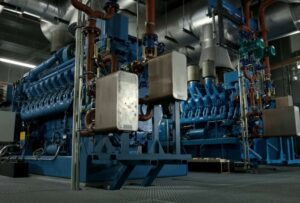
Modern sensors can generate high-resolution data that can greatly support root-cause analyses and better predictive insights when interpreted through KPIs like Cp, Cpk, OEE, FPY (first-pass yield), etc.
The Growing Importance of Production Visibility in Modern Manufacturing

As manufacturing systems grow into more complex, precise, and fast production cycles, the importance of real-time production visibility is becoming more critical than before. Production visibility in manufacuring allows end-to-end monitoring of operations, usually using a multilayer visibility structure that consists of KPIs of 3 layers: machine-level, line-level, and plant-level. In advanced manufacturing environments such as WayKen manufacturing, this structured visibility plays a key role in maintaining process stability and ensuring consistent quality across different production stages.
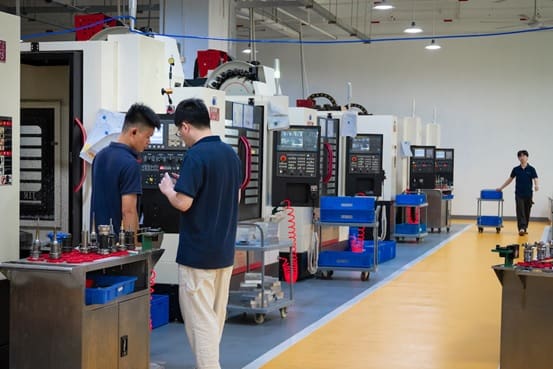
With today’s technology advancements and high data granularity, monitoring has become more convenient and also more important. Modern sensors can generate high-resolution data that can greatly support root-cause analyses and better predictive insights when interpreted through KPIs like Cp, Cpk, OEE, FPY (first-pass yield), etc. Studies by McKinsey & Company also show that productivity can be increased by 10 – 20% by implementing real-time monitoring systems.
Production Visibility Enabling Real-Time Monitoring of Machining
Modern machines can acquire data continuously. They operate at very high frequencies. CNC controllers, PLCs, and IIoT sensors enable this capability. This allows for real-time monitoring and processing. Many modern industries use industrial communication standards. They utilize OPC UA, which is a platform-independent, service-oriented standard. They also use MTConnect, a manufacturing-focused standard vocabulary. These standards facilitate a smooth flow of data across platforms. These standards enable easy transmission of data from different systems to centralized systems. This includes MES or cloud platforms. As a result, data collection and analysis become more convenient.
Production Visibility in Manufacturing in Modern Manufacturing Plants
In modern manufacturing plants, maintaining a real-time monitoring system has become a must. For example, understanding the semiconductor chip manufacturing process step by step can help grasp the importance of such visibility in high-precision industries. This is particularly true for operations relying on advanced CNC services, where machining accuracy, tool condition, and process stability must be tracked continuously. Real-time monitoring can make the overall process highly accessible, transparent, and also controllable. By creating such an active environment, engineers become able to spot issues the moment they occur, take corrective or preventive actions immediately, reduce rework, and prevent small defects from growing into bottlenecks for production. This is especially important for high-precision industries like aerospace, where even a minor defect can cause disastrous failures. According to IoT Analytics, over 60% of modern manufacturers are actively investing in machine connectivity to reach real-time production visibility.
Another smart decision manufacturers could make is establishing edge computing systems, at least in the segments where real-time analyses are highly critical. Edge computing means processing data locally, close to where it is generated. This significantly reduces the latency caused by sending all data to distant clouds or central servers. Edge computing can maintain latency levels under 10 milliseconds in most cases. Therefore, having this capability is highly beneficial when implementing closed-loop control systems that can respond to issues with minimal delay.

Improving Decision-Making Through Accurate Production Data
In traditional manufacturing environments, decision-making was largely based on manual reports. Therefore, many decisions were taken late and did not reflect the current state of production. This was one of the biggest challenges and a main reason for false judgments, slower response rates to issues, and inefficiencies. But now, with real-time production visibility systems arriving at the plants, more accurate and timely decisions can be made using real-time data streams.
One of the valuable opportunities many industries unlocked with real-time data access is the ability for dynamic scheduling. Rather than fixed planning, they can now effectively perform process design based on machine availability and work-in-progress (WIP) status. With this, modern plants can operate with optimum capacity utilization and resource allocation. Another highly required capability to stay competitive in volatile markets is the ability to adjust production according to rapid fluctuations in demand, which can also be enabled with dynamic scheduling.
Production visibility in manufacturing also enables predictive capabilities. Machine learning models can analyze data patterns to predict and forecast potential failures before they occur. This is a huge value addition to predictive maintenance strategies, which can reduce unplanned downtime by up to 30 – 50%, according to industry benchmarks.
Another important aspect of production visibility is data consolidation. Manufacturing Execution Systems (MES) gather data from multiple sources. They create a single, consistent view of production. This provides a clear view of the entire production line. It helps prevent miscommunications between departments. This approach effectively coordinates efforts across engineering, operations, and management layers.
Critical Role in Supporting Flexible and Responsive Manufacturing
We can see an increasing trend of modern manufacturing toward high-mix, low-volume (HMLV) production. That means, industry focuses more on producing a wide variety of products in smaller quantities. With that, many plants have to perform product changeovers frequently, increasing operational complexity. For such environments, having a strong production visibility system is essential to maintain efficiency and control.
Having the capability to perform a rapid setup verification before production begins is an extremely valuable opportunity for a manufacturer to avoid machine errors, calibration issues, and rejection of complete batches. Real-time visibility unlocks this ability as well. It also enables adjusting process parameters during the production, based on actual operating conditions.
Another value addition that comes to the shop floor along with visibility is responsiveness. With accurate and real-time monitoring, manufacturers can reduce variability across products, improve on-time delivery, and maintain effective coordination between planning and execution. Mass customization, another demanding requirement in modern production, is also supported by production visibility. With good visibility, individual tracking, inspection, and control of each product variant become much easier.
According to the World Economic Forum, advanced manufacturing facilities, also known as “lighthouse factories,” that possess strong visibility systems have shown higher capabilities in flexibility, responsiveness, and overall operational performance.
Extending Visibility Across the Manufacturing Value Chain
The benefits of production visibility in manufacturing extend across the entire manufacturing value chain, going beyond the shop floor. Modern visibility systems can integrate production data with Supply Chain Management (SCM) and Product Lifecycle Management (PLM) platforms, creating a connected and transparent ecosystem across different layers. This also supports Just-in-Time (JIT) manufacturing since it enables tracking the arrival time of raw materials, reducing inventory holding costs, and improving cash flow. As it allows better alignment between demand signals and production planning, overproduction and delays can also be minimized significantly.
Real-time production visibility in manufacturing enhances tracking of digital threads. This includes continuous data flow from design to production and through to delivery. Remote monitoring capabilities have reached a powerful stage. They now offer enhanced features and functionalities. That level of connectivity supports centralized decision-making. It enhances coordination across global operations. This creates full traceability and also supports lifecycle optimization of products.
Conclusion
Even though less discussed, production visibility has moved far beyond a supporting role and become a requirement in modern manufacturing. It holds the responsibility of enabling agile, data-driven operations and helps manufacturers stay competitive in Industry 4.0 environments. AI and automation are taking over more sectors in production systems. A strong, high-functioning visibility system must exist in every production ecosystem. Without proper visibility, manufacturers will struggle more with inefficiencies and challenges in scaling their processes in this highly evolving domain.
- Author
- Latest Posts

Charudatta Pathak was a student at St. Aloysius High School in Bhusawal, established in 1874, making it one of India’s oldest convent institutions. He earned his bachelor’s degree in mechanical engineering from SSVPS College of Engineering, Dhule in 1995, demonstrating exceptional academic achievement. Thereafter, he launched his career as a CNC programmer in a toolroom. He has utilized FANUC, Deckel, Maho, and Mikron controllers to operate 2-axis and 3-axis machines for the fabrication of jigs, fixtures, dies, and molds. He commenced his career as an academic in 1996, when he assumed the role of lecturer at SSVPS College of Engineering, Dhule. Additionally, he earned his post-graduate degree in CAD/CAM from L. D. College of Engineering, Ahmedabad, in 2000, and then acquired a Ph.D. from COEP in 2011 while concurrently engaged in teaching. Until 2023, he occupied many academic roles, including lecturer, assistant professor, professor, dean, principal, director, and vice chancellor at both public and private universities throughout India. From 2008 to 2010, he served as the project lead in the CAE department of a European multinational firm. During his 28-year professional tenure, he identified a need for dependable books targeted at students in grades 8 to 12, particularly for nascent career planning. He founded ENTECH Digital Magazine, a free monthly publication available on entechonline.com and magzter.com. Teens with a strong interest in Science, Technology, Engineering, and Mathematics (STEM) who aspire to pursue careers in these fields may find ENTECH Digital Magazine beneficial.