Great Barrier Microbiome Discovery Improves Reef Conservation
Great Barrier Microbiome Discovery Reveals New Species
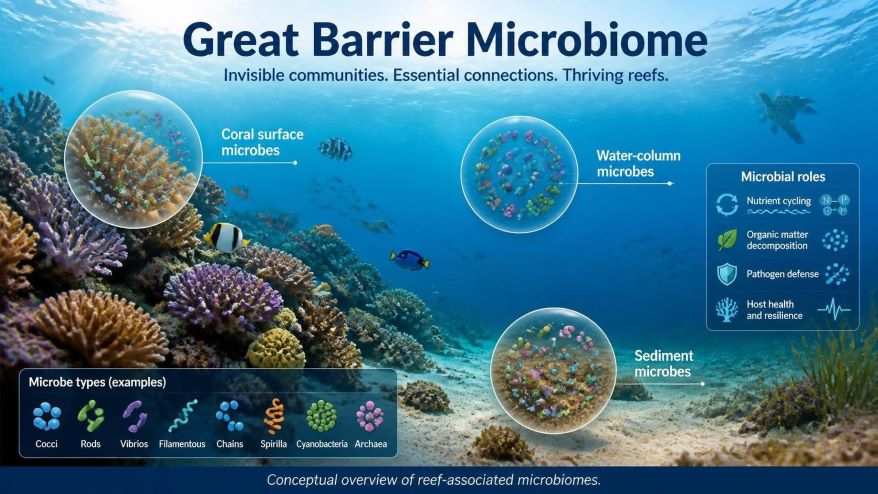
A study in Nature explores the Great Barrier Microbiome. Scientists studied tiny organisms that float in the water. They call this the planktonic microbiome. These microbes include bacteria, viruses, and tiny algae. They live all across the Great Barrier Reef. The researchers collected many water samples. They found that the microbiome changes with location and season. Near the shore, the microbes eat more nutrients from land. Far from shore, different microbes dominate. The study indicates that these tiny organisms play a big role in reef health. They recycle nutrients and support the food web. So, the Great Barrier Microbiome helps keep the entire reef system alive and working.
ENTECH STEM Magazine has included this research in its list of Top 10 STEM Discoveries and Innovations of July 2026.
Key Takeaways: Great Barrier Microbiome
The Great Barrier microbiome includes all tiny life forms floating in the reef’s water. Scientists studied these microbes in a paper published in Nature. They found bacteria, viruses, and small algae in many samples. These microbes change with location and season. Near the shore, microbes consume more of the land’s nutrients. Far from shore, other microbes are more abundant.
Great Barrier Reef Microbial Genomes Database
First, scientists built the Great Barrier Reef Microbial Genomes Database. This database stores DNA information from tiny microbes. As a result, researchers can now study the Great Barrier Microbiome in great detail. Furthermore, the database includes over 2,000 new microbial genomes. Consequently, scientists can identify who lives in the reef waters. In addition, they can see what each microbe does for the reef. Moreover, this tool helps track how the microbiome changes over time. Similarly, it reveals how pollution or warming affects these tiny life forms. Ultimately, this database serves as a vital resource for protecting the Great Barrier Reef. In short, it connects microbial genes to reef health in a powerful new way.
Discovery of New Bacterial Species in the Great Barrier Reef
First, scientists made an exciting discovery in the Great Barrier Reef. They found many new bacterial species. These species were previously unknown in Nature. As a result, the Great Barrier Microbiome is now much better understood. Furthermore, these new bacteria perform important jobs. For example, some break down organic matter. Others help cycle nutrients like nitrogen and sulfur. In addition, these bacteria form a hidden web of life in the water. Consequently, the reef’s health depends on them. Moreover, these discoveries show how much we still don’t know. Ultimately, discovering new bacterial species helps us better protect the reef. In short, the Great Barrier Microbiome holds many secrets, and we are just beginning to uncover them.
Viral Diversity in the Reef Microbiome
The Great Barrier Microbiome contains a huge variety of viruses. Scientists found many new viral species in the reef waters. These viruses infect bacteria and other microbes. As a result, they control the size of microbial populations. Furthermore, viruses help recycle nutrients. When they burst open host cells, they release carbon and other elements. Consequently, this process feeds other tiny life forms. In addition, viruses can move genes between bacteria. This process, called gene transfer, spreads new traits. For example, some bacteria gain resistance to heat or disease. Ultimately, viral diversity is a key part of the Great Barrier Microbiome. It keeps the whole reef system balanced and working.
Effects of Fishing Restrictions on Microbial Communities
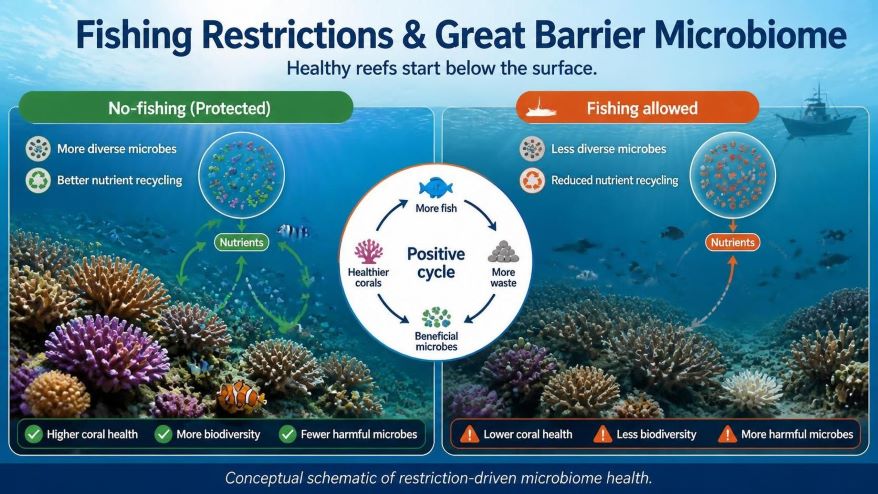
Scientists studied how fishing restrictions affect the Great Barrier Microbiome. They compared reef areas where fishing is banned with those where it is allowed. First, they found that protected reefs have healthier microbial communities. These areas show greater diversity of bacteria and viruses. As a result, nutrient recycling works better.
Furthermore, fewer harmful microbes live in protected zones. Consequently, corals stay stronger and less sick. In addition, the whole food web benefits from these changes. More fish mean more waste, which feeds microbes. This creates a positive cycle for reef health. Ultimately, fishing restrictions help keep the Great Barrier Microbiome stable and balanced. This study shows that protecting fish also protects the invisible life that supports the reef.
Marine Protected Areas and Reef Microbial Ecology
Marine Protected Areas help the Great Barrier Microbiome stay healthy. Scientists examined these protected zones on the reef. First, they found that protected areas have more diverse microbes. Bacteria and viruses thrive in these safe waters. As a result, nutrient recycling works much better.
Furthermore, harmful microbes are less common in protected zones. Consequently, corals face less disease and stress. In addition, the whole reef ecosystem benefits from this balance. More microbial diversity means stronger food webs. Ultimately, Marine Protected Areas are vital for reef microbial ecology. They give the Great Barrier Microbiome a safe space to function well. This shows that protecting large areas of the reef protects the tiny life that supports everything.
Newly Discovered Marine Crassvirales Viruses
Scientists found new marine Crassvirales viruses in the Great Barrier Microbiome. These viruses are a special group that infects bacteria. First, researchers discovered many unknown Crassvirales types in reef waters. As a result, the viral family tree has grown. Furthermore, these viruses likely control bacterial populations. Consequently, they help maintain a balanced microbial community. In addition, Crassvirales viruses play a role in nutrient recycling. When they burst open bacterial cells, they release carbon and other nutrients. This feeds other tiny life forms. Moreover, these newly discovered viruses show how much we still do not know. Ultimately, the Great Barrier Microbiome holds a treasure of hidden viral diversity. Each new virus adds a piece to the puzzle of reef health and function.
Metagenomics and Great Barrier Microbiome Biodiversity Monitoring
Metagenomics helps scientists monitor the Great Barrier Microbiome. This method reads DNA from all microbes in a water sample. First, researchers collect water from different reef areas. Then, they sequence all the genetic material inside. This reveals every bacterium, virus, and tiny algae present. As a result, scientists see the full microbial community at once.
Furthermore, metagenomics tracks changes over time. For example, it can show how warming water shifts the microbiome. Consequently, this tool acts as an early warning system. In addition, it identifies new species and functions. Ultimately, metagenomics is a powerful way to monitor reef biodiversity. It gives us a clear picture of the Great Barrier Reef microbiome and its health. This helps us protect the reef better for the future.
Environmental Drivers of Microbial Community Structure
Environmental factors shape the Great Barrier Reef microbiome in clear ways. Scientists studied the factors that drive microbial community structure on the reef. First, temperature plays a big role. Warmer waters change which microbes thrive. As a result, some bacteria grow more while others disappear.
Furthermore, nutrient levels also matter. Near the shore, land runoff adds more nutrients. Consequently, different microbes dominate there. In addition, ocean currents move microbes between reef areas. This mixes communities and spreads diversity. Similarly, light availability affects photosynthetic microbes. For example, tiny algae need sunlight to grow. Ultimately, these environmental drivers work together. They create the unique microbial pattern seen across the reef. Understanding this helps us predict how the Great Barrier Microbiome will respond to climate change.
Microbiome-Based Early Warning Systems for Reef Health
Scientists are building early warning systems for reef health using the Great Barrier Microbiome. First, they track changes in microbial communities over time. As a result, they can spot trouble before corals show damage. Furthermore, certain microbes signal stress from warming water. For example, harmful bacteria grow more when the reef is in danger. Consequently, these microbes act like a red flag. In addition, healthy microbes disappear when conditions get bad. This shift gives a clear warning sign. Similarly, viruses in the microbiome can also indicate problems. Ultimately, these microbial clues help managers act fast. They can quickly close fishing areas or reduce pollution. This shows that the Great Barrier Microbiome is a powerful tool for protecting the reef. It lets us see hidden problems before they become big disasters.
Future Applications of Great Barrier Microbiome
Future applications of reef microbiome research can help save the Great Barrier Microbiome. Scientists have many exciting ideas for conservation. First, they might use probiotics to boost coral health. Adding helpful microbes could make corals more resilient to heat. As a result, reefs may survive warming oceans better.
Furthermore, researchers could monitor the microbiome for early warning signs. This lets managers act before damage occurs. Consequently, we can protect the reef more effectively. In addition, scientists might engineer microbes to break down pollution. This could clean water near the reef. Similarly, restoring healthy microbiomes could help damaged reefs recover. Ultimately, these future tools all come from understanding the Great Barrier Microbiome. Each application turns knowledge into real action. This gives us new ways to protect the reef for generations to come.
Frequently Asked Questions: Great Barrier Microbiome
What is the planktonic microbiome of the Great Barrier Reef?
The Great Barrier Microbiome lives in the reef’s seawater. It includes tiny bacteria, archaea, viruses, and microbial eukaryotes. These small life forms do many important jobs. First, they recycle nutrients like carbon and nitrogen. As a result, the reef stays healthy and balanced.
Furthermore, they form the base of the food web. Consequently, all reef animals depend on them. In addition, these microbes help keep corals strong. They can even fight off diseases.
Why are microbes important to the Great Barrier Reef?
The Great Barrier Reef Microbiome is the base of the marine food web. First, these tiny microbes support photosynthesis. They help plants and algae turn sunlight into energy. As a result, the whole reef receives food. Furthermore, they recycle important nutrients like carbon and nitrogen. As a result, nothing is wasted in the reef ecosystem. In addition, these microbes keep the reef stable. They help balance the environment.
How can the reef microbiome help conservation efforts?
The Great Barrier Microbiome can tell us about reef health. Scientists found that microbial communities act like warning signs. First, they show the effects of climate change and pollution. For example, some microbes grow more when water gets too warm. As a result, scientists can detect heat stress early.
Furthermore, microbes respond to fishing activities. They shift when too many fish are taken. Consequently, these changes occur before major reef damage occurs.
Reference
Robbins, S., Terzin, M., Dougan, K. et al. The planktonic microbiome of the Great Barrier Reef. Nature (2026). https://doi.org/10.1038/s41586-026-10778-z
- Author
- Latest Posts

I completed my Master of Science from the University of Allahabad in 2017 with a strong academic background in life sciences and chemistry. My specialization included Molecular Biology, Microbiology, Genetics, Plant Breeding, Phycology, Paleobotany, and Bioinformatics, along with Organic Chemistry, Inorganic Chemistry, and Physical Chemistry. This multidisciplinary training provided me with a comprehensive understanding of biological systems and analytical scientific approaches.
After completing my postgraduate studies, I gained valuable professional experience in both the education and social development sectors. I worked at A.M. Oxford Public School, where I was actively involved in guiding students toward academic excellence. In this role, I focused on creating an engaging learning environment, encouraging critical thinking, and nurturing students’ curiosity for scientific learning. My experience as an educator strengthened my communication, mentoring, and classroom management skills.
In addition to my teaching experience, I worked with Jeevan Jagriti Foundation, where I contributed to community-based initiatives aimed at improving educational access and awareness among underprivileged sections of society. Through this work, I participated in programs designed to support social development and promote the value of education in marginalized communities.
These professional experiences helped me develop strong interpersonal, leadership, and organizational skills while reinforcing my commitment to education and community service.