Two powerful X-class solar flares in April 2026 show how the Sun’s magnetic energy can directly impact Earth’s technology, making space weather a real-world application of physics you study in school.
NASA Spots Double Solar Blast That Could Disrupt Earth
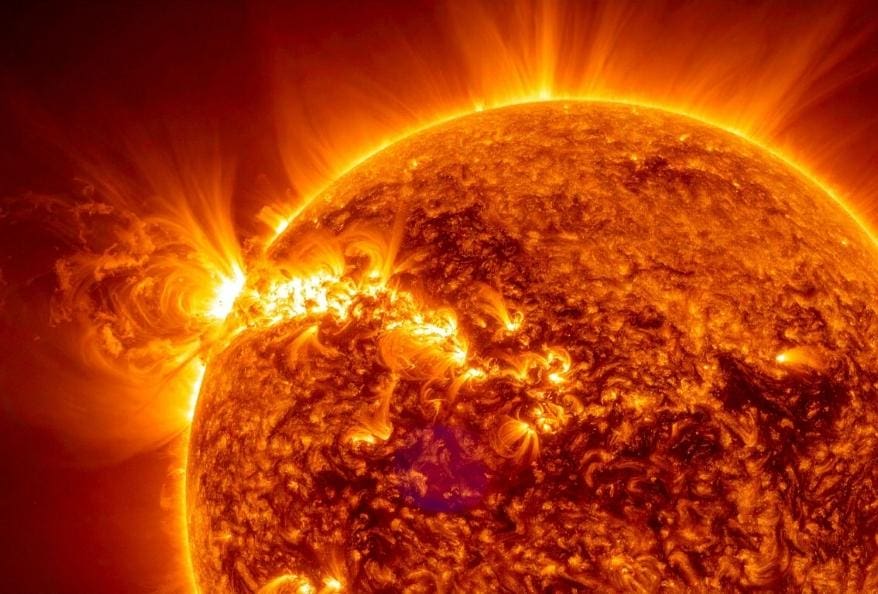
The Sun just had a big outburst. Not once, but twice — in a single night. On April 23 and 24, 2026, the Sun released two strong solar flares. The first peaked at 9:07 p.m. ET on April 23. The second peaked at 4:13 a.m. ET on April 24. So, these solar flares 2026 are not just a space story. They directly connect to the physics and chemistry you study in Grade 11 and 12. In short, let’s break it all down in plain language.
Key Takeaways
- The Sun fired two powerful X-class solar flares in April 2026.
- NASA’s Solar Dynamics Observatory watched and recorded both events.
- The first flare was classified X2.4 and the second was X2.5. X-class flares are the most intense type.
- Solar flares can disrupt radio signals, GPS, and power grids on Earth.
- Space weather forecasting is a real career. And it uses the physics you study in school.
- Scientists at NASA track flares using satellites and electromagnetic wave data.
What Are Solar Flares?
Solar flares are massive bursts of energy from the Sun. They are powerful bursts of energy. Flares and solar eruptions can impact radio communications, electric power grids, navigation signals, and pose risks to spacecraft and astronauts.
So, think about what that means for your daily life:
- Your phone’s GPS may give wrong directions.
- Also, radio signals used by pilots can go completely silent.
- Power grids in some countries can fail suddenly.
- And satellites that stream your internet can get damaged.
In short, solar flares are not just a space event. They are a real-world problem that scientists work hard to predict and manage.
How Does a Solar Flare Form?
In your Grade 11 physics class, you study magnetic fields. So, solar flares are a perfect real-life example of magnetic energy. The Sun has tangled, twisted magnetic field lines on its surface. When these field lines suddenly snap and realign, they release a huge burst of energy. Then, that energy travels through space as electromagnetic radiation — which is also in your Grade 12 physics syllabus.

To learn more about how magnetic fields and electromagnetic waves work, check out this helpful guide on electromagnetism for young learners on entechonline.com.
What Is the X-Class Scale?
Not all solar flares are the same. Scientists classify them using letters: A, B, C, M, and X. X is the strongest. X-class denotes the most intense flares, while the number provides more information about its strength.
- X2.4 — the first flare on April 23
- X2.5 — the second flare on April 24
Both are in the strong X-class range. Also, these are rare events. So, scientists around the world paid close attention.
How NASA Tracks Solar Flares in 2026
NASA uses a special spacecraft to monitor the Sun every second of every day. NASA’s Solar Dynamics Observatory watches the Sun constantly and captured images of both events.
What Is the Solar Dynamics Observatory?
TThe Solar Dynamics Observatory, or SDO, is a satellite. It studies the Sun in extreme ultraviolet light. In simple terms, it takes pictures of the Sun using light that human eyes cannot see. Moreover, the images from the April 2026 flares showed bright X-shaped bursts of solar material near the top of the Sun’s surface.
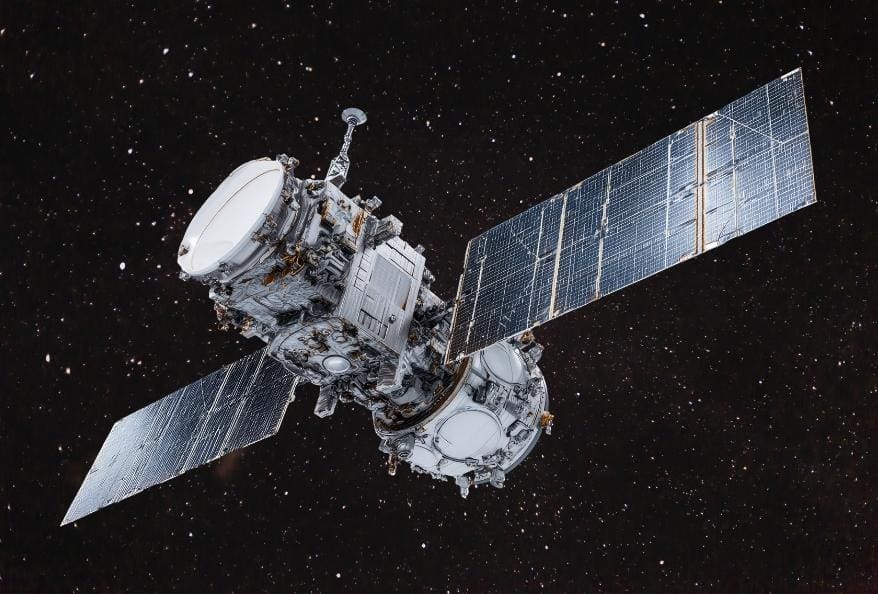
This connects directly to your Grade 12 optics chapter. For example, you study how different types of light — visible, ultraviolet, X-rays — behave differently. And the SDO uses this science every single day. So, if you want to understand how light and waves work in real-world science, read this article on optics physics for high school students on entechonline.com.
Who Monitors Space Weather on Earth?
NASA works as a research arm of the nation’s space weather effort. Additionally, it observes the Sun and the space environment constantly with a fleet of spacecraft. These spacecraft, in turn, study everything from the Sun’s activity to the solar atmosphere, as well as the particles and magnetic fields in space near Earth.
Next, for public warnings, NOAA’s Space Weather Prediction Center at spaceweather.gov is the U.S. government’s official source for space weather forecasts, watches, warnings, and alerts.
So, this is a full system — just like a weather forecast, but for space.
Real-World Impact of Solar Flares 2026
This is where things get exciting for students. These two flares are not just news. Also, they show how science subjects connect directly to real life.
Impact on Technology
- GPS systems can give incorrect readings during a flare.
- Also, radio blackouts can cut communication for pilots and ships.
- Power grids may experience sudden voltage spikes.
- And satellites orbiting Earth face extra radiation exposure.
So, the next time your GPS misbehaves, space weather could be the reason. Also, pilots and ship captains rely on radio signals every single day. As a result, even a short blackout can be dangerous for navigation.
Impact on Astronauts
Astronauts in space have no atmosphere to protect them. As a result, an X-class flare is a serious health risk. So, they must move to shielded parts of their spacecraft during these events.
Impact on the Economy
Space weather causes real financial damage. For example, power grid failures, satellite damage, and communication losses cost billions of dollars. So, companies and governments invest heavily in space weather prediction tools. As a result, this creates real jobs in astrophysics, electrical engineering, and data science.
What This Means for Solar Cycle 25
The Sun goes through an 11-year activity cycle. Right now, we are in Solar Cycle 25. The Sun is near the peak of this cycle. So, more flares like these are expected in the coming months.
Why Cycles Matter
At the peak of a solar cycle, sunspot activity rises sharply. Sunspots are cooler, darker patches on the Sun’s surface. But they are also the birthplace of solar flares. So, more sunspots means more chances for flares. As a result, scientists are watching Solar Cycle 25 very closely.
Understanding this cycle helps scientists make better predictions. And better predictions protect our satellites, power systems, and astronauts. After all, this is applied science working in real time.
Additionally, to stay updated with the latest developments in STEM research, visit ENTECH Online.
Frequently Asked Questions About Solar Flares 2026
What Happens in a Solar Flare?
The Sun has a very strong magnetic field. This field forms twisted loops on the Sun’s surface. Sometimes these loops get too tangled. Then they suddenly snap and reconnect. This snapping releases a huge burst of energy.
What is an X2.5 solar flare?
It is a strong solar flare in the X-class category. X is the most powerful class. Also, the number 2.5 shows its relative strength within that class.
What Are Solar Flares?
A solar flare is a sudden burst of radiation from the Sun’s surface. It happens when twisted magnetic field lines snap and reconnect. The flare releases light, X-rays, and high-energy particles into space. Scientists classify flares using letters — A, B, C, M, and X. X-class flares are the strongest. Each class uses numbers for more detail.
How does NASA know a flare is happening?
The Solar Dynamics Observatory watches the Sun in real time. So, it detects changes in ultraviolet and X-ray light and sends data back to Earth instantly.
References
- Interrante, A. (2026, April 24). Sun releases 2 strong solar flares. NASA Science – Solar Cycle 25 Blog. https://science.nasa.gov/blogs/solar-cycle-25/2026/04/24/sun-releases-2-strong-solar-flares-3/
- National Aeronautics and Space Administration. (n.d.). Solar Dynamics Observatory. NASA Science. https://science.nasa.gov/mission/sdo
- National Oceanic and Atmospheric Administration. (n.d.). Space Weather Prediction Center. https://spaceweather.gov
- Author
- Latest Posts

Kottauppari Venkat Raghava
I am an Information Technology graduate (B.Tech) and a technology writer specialising in artificial intelligence, robotics, automation, and space technologies. I analyse complex scientific research and convert it into clear, practical insights for students, tech enthusiasts, and professionals. My work bridges the gap between academic research and real-world understanding by simplifying findings from peer-reviewed journals into engaging, easy-to-follow content. Alongside my writing, I have hands-on experience developing real-world projects, showcased on my GitHub, including an Expense Tracker web application for managing and visualising spending, and a Simple Video Summariser that generates concise insights from video content using automation techniques. I also produce research-driven articles on topics such as AI-powered corrosion detection, deep learning in engineering, and advanced automation systems. I follow a research-driven approach, ensuring every article is grounded in verified sources, industry knowledge, and practical applications. My goal is to make advanced technology accessible and meaningful, helping readers stay informed about innovations shaping the future.