Scientists identified the golden orb found in Alaska's deep sea
Mystery of the Golden Orb Alaska: Your Gateway to Ocean Exploration Careers
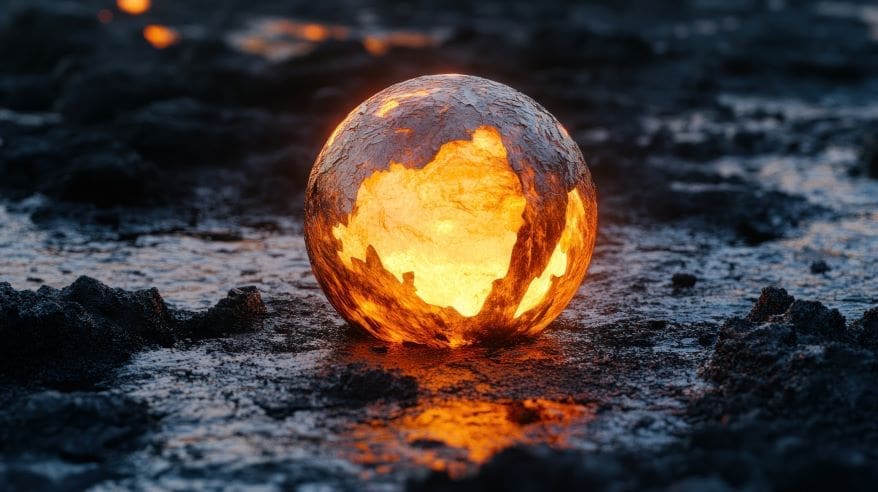
After two years of research, scientists found the answer. The golden orb Alaska researchers discovered was actually special. It came from a giant deep-sea anemone called Relicanthus daphneae.
Key Takeaways of Golden Orb Alaska
- Scientists identified the golden orb found in Alaska’s deep sea
- The orb was part of a giant sea anemone base
- NOAA offers exciting career paths in ocean exploration
- Biology, chemistry, and technology skills are essential
- Two years of scientific research solved this marine mystery
What Scientists Found in Alaska’s Deep Ocean
In 2023, NOAA explorers made an unusual discovery. They found a golden sphere on Alaska’s ocean floor. The object sat 3,300 meters below the surface. That’s over two miles deep!
At first, nobody knew what it was. Scientists guessed it might be an egg case. Others thought it could be a sponge. Social media exploded with theories. People around the world wanted answers.
As a result, the team collected the mysterious object (golden orb Alaska). They sent it to the Smithsonian for testing. What they found was surprising.
The Golden Orb Alaska Mystery Solved
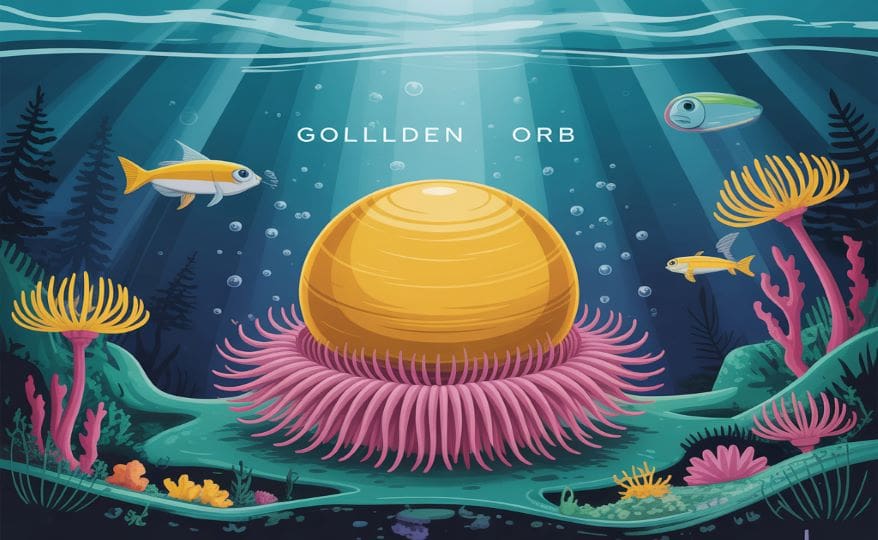
After two years of research, scientists found the answer. The golden orb Alaska researchers discovered was actually special. It came from a giant deep-sea anemone called Relicanthus daphneae.
To be specific, the orb was the anemone’s base. This part normally attaches the animal to rocks. However, The top of the anemone likely died or moved away. AS a result, Only the golden base remained behind.
How Scientists Identified the Golden Orb Alaska
The research team used multiple techniques. At First, they examined the object’s physical structure. As a result, They found it contained stinging cells called cnidocytes.
At the same time, they ran DNA tests. However, Initial tests didn’t work well. To illustrate, microscopic life on the specimen confused the results.
So that scientists could get clear answers, they used whole-genome sequencing. This advanced technique finally revealed the truth. The DNA matched a known deep-sea anemone.
Research Methods Used for Golden Orb
| Method | Purpose | Result |
|---|---|---|
| Physical examination | Study structure and cells | Found cnidocytes (stinging cells) |
| DNA barcoding | Initial identification | Inconclusive results |
| Whole-genome sequencing | Complete genetic analysis | Confirmed anemone identity |
| Mitochondrial genome analysis | Verify species match | 99% match to Relicanthus daphneae |
Career Opportunities in Ocean Exploration
This discovery of Golden Orb Alaska shows why ocean science matters. However, NOAA employs hundreds of marine scientists. They explore less than 5% of Earth’s oceans.
Above all, ocean careers offer adventure and discovery. You could be the next person to find something amazing. However, The field needs creative thinkers and problem solvers.
Top Career Paths to Consider
- Marine Biologist: At First, Study ocean life and ecosystems
- Oceanographer: Research ocean physics, chemistry, and geology
- ROV Pilot: Operate underwater robots for deep-sea exploration
- Genetic Analyst: Use DNA to identify marine species
- Ocean Engineer: Design equipment for underwater research
In essence, these careers combine science with technology. They require strong problem-solving skills. You’ll use cutting-edge tools every day.
Why Ocean Exploration Matters Today
The golden orb Alaska discovery proves an important point. Our oceans still hold countless secrets. In fact, we’ve explored more of space than our oceans.
What’s more, ocean research leads to medical breakthroughs. Scientists find new medicines from marine life. They also discover materials for technology.
For the purpose of national security, we need ocean data. Climate change affects ocean temperatures. Also, Rising seas threaten coastal communities worldwide.
By the Numbers
- 71% of Earth’s surface is ocean
- Only 20% of oceans have been mapped
- Over 230,000 known marine species exist
- Scientists estimate 2 million more species remain undiscovered
Getting Started on Your Ocean Career Path
At the present time, you can start preparing. Join your school’s science club. Look for marine biology summer camps. Additionally, Many universities offer programs for high school students.
In conclusion, the golden orb Alaska mystery shows science in action. It took patience, advanced technology, and teamwork. This could be your future career.
Also read: A Giant Star Just Changed Colors—And Scientists Are Freaking Out
Reference
- National Oceanic and Atmospheric Administration. (2026, April 22). Scientists reveal identity of mysterious ‘golden orb’ collected during NOAA expedition. NOAA. https://www.noaa.gov/news/scientists-reveal-identity-of-mysterious-golden-orb-collected-during-noaa-expedition
- Author
- Latest Posts

I am an inspirational writer and emerging science blogger with a deep-rooted passion for understanding and sharing the wonders of the world around us. My journey began with a Bachelor of Science in Chemistry from AKI’s Poona College of Arts, Commerce and Science, where I developed not only a strong foundation in scientific principles but also a mindset that values curiosity, observation, and critical thinking. Studying chemistry has taught me to approach problems with logic, to look beyond the obvious, and to see patterns where others might only see complexity. These experiences have shaped the way I perceive life and influence the way I express my thoughts, both scientifically and creatively.
I have always believed that knowledge is only as powerful as the way it is shared. This belief has guided me to create content that bridges the gap between science and everyday life. I aim to simplify complex scientific ideas so they become approachable, relatable, and engaging for everyone—whether someone has a formal background in science or is simply curious about the world. Science, in my view, is not confined to textbooks and laboratories; it is a way of thinking, understanding, and connecting with the world around us. By making science accessible, I hope to inspire curiosity, ignite learning, and encourage people to see the beauty and relevance of scientific discovery in their daily lives.
Alongside my love for science, I am deeply passionate about motivational writing. I believe words carry the power to transform perspectives, encourage self-reflection, and inspire action. By combining analytical thinking with creativity, I create content that is intellectually stimulating yet emotionally resonant. Whether I am breaking down a chemical concept, exploring a scientific phenomenon, or crafting motivational narratives, my goal is to communicate ideas in a way that is clear, meaningful, and impactful.
Through my work, I strive to empower my readers – not just by helping them understand the science around them, but by inspiring them to grow, learn, and realize their full potential. Every article, post, or story I write reflects my commitment to turning knowledge into inspiration. I want to spark curiosity, encourage self-improvement, and show that learning and personal growth are deeply connected. For me, writing is not just a craft; it is a way to touch minds, connect hearts, and make ideas come alive in a way that truly resonates.