A skin cancer detection app promises quick answers. Just snap a photo, get a risk score.
A Skin Cancer Detection App Just Got a Reality Check
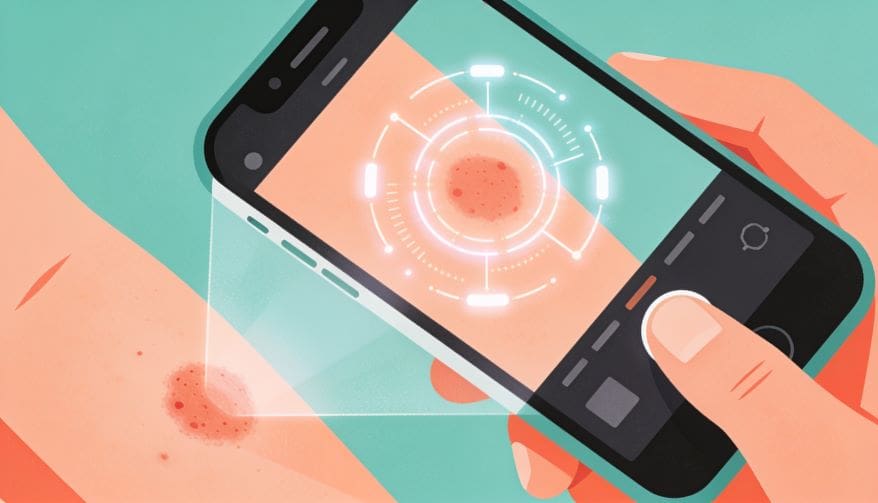
Millions of people use apps to check their skin. A skin cancer detection app promises quick answers. Just snap a photo, get a risk score. Sounds perfect, right? A massive new study tested this idea. Nearly 19,000 real people took part. As a matter of fact, the results surprised even the researchers. With this in mind, let’s look at what really happened.
Key Takeaways: Skin cancer detection app
- A skin cancer detection app was tested in a real trial.
- Researchers followed 19,009 adults for 12 months.
- The app did not significantly increase melanoma detection.
- It did increase visits for harmless skin spots.
- Healthcare costs rose by 34% more in app users.
What Did This Massive Study Test?
Researchers in the Netherlands ran this trial. They call it the SPOT-study. Provided that participants agreed, they got random group assignment. One group used a popular app. The other followed normal doctor visits (Smak Gregoor et al., 2025). So far, this remains one of the largest tests of its kind.
How the App Actually Works: Skin cancer detection app
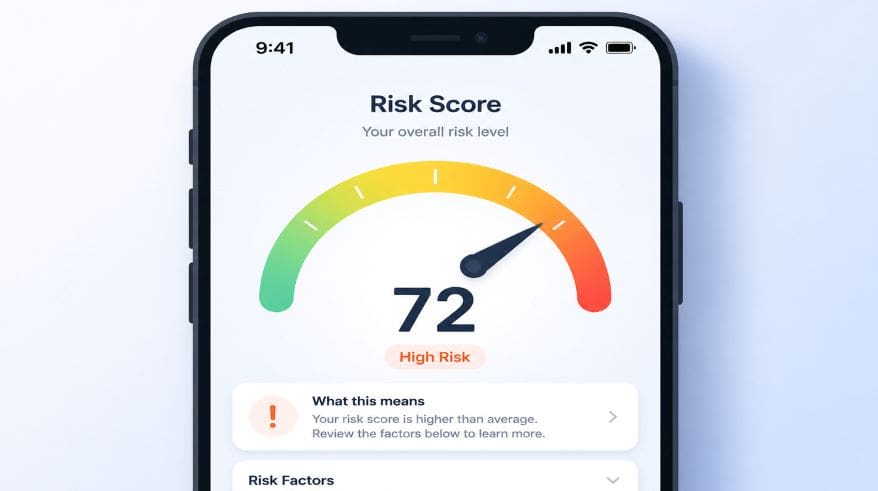
To illustrate the process, the app works simply:
- Users photograph a suspicious skin spot.
- An AI algorithm analyzes the image instantly.
- The app gives a risk score immediately.
- Dermatologists double-check results within 48 hours.
Together with this quick process, the app feels convenient. In effect, it promises fast, cheap skin screening for everyone.
Why the Results Surprised Everyone
At this point, expectations were high. Researchers expected more cancer detection in app users. That is not exactly what happened. As can be seen, cancer rates stayed nearly identical between groups.
Here’s what actually changed, to enumerate the findings:
- 34% higher total healthcare costs for app users.
- More visits for benign, harmless skin spots.
- More unnecessary biopsies and procedures performed.
- Only slight, non-significant increases in true cancer detection.
While it may be true that the app seems helpful, data tells a different story. In contrast, it mostly increased worry-driven doctor visits. All things considered, this raises real questions about accuracy.
Why Fewer People Than Expected Used It
Being that access was free, usage should have been high. Yet only 54% used the app in year one. By year two, usage dropped to just 17%. Take the case of comparison, national cancer screening programs reach 65-75% participation. To that end, trust and habit clearly matter too.
Frequently Asked Questions
1. What is a skin cancer detection app?
It’s software that uses AI to scan skin photos. It estimates cancer risk instantly.
2. Did the app actually detect more cancer?
No, not significantly. Cancer rates stayed nearly the same between groups.
3. Why did healthcare costs increase then?
More people visited doctors for harmless spots. This raised overall medical costs.
4. Should people stop using these apps?
Researchers suggest caution. The app may work better for higher-risk individuals specifically.
References
- Smak Gregoor, A. M., Sangers, T. E., Uyl-de Groot, C. A., Heijnsdijk, E. A. M., Nijsten, T. E. C., & Wakkee, M. (2025). The impact of a SmartPhone applicatiOn for skin cancer risk assessmenT on the healthcare system (SPOT-study): A randomized controlled trial. medRxiv. https://doi.org/10.1101/2025.11.18.25340297
- Islam, S., Wishart, G.C., Walls, J. et al. Advancing skin cancer detection through deep learning and fusion of patient metadata and skin lesion images. Sci Rep 16, 1968 (2026). https://doi.org/10.1038/s41598-025-26392-4
- Author
- Latest Posts

I am an inspirational writer and emerging science blogger with a deep-rooted passion for understanding and sharing the wonders of the world around us. My journey began with a Bachelor of Science in Chemistry from AKI’s Poona College of Arts, Commerce and Science, where I developed not only a strong foundation in scientific principles but also a mindset that values curiosity, observation, and critical thinking. Studying chemistry has taught me to approach problems with logic, to look beyond the obvious, and to see patterns where others might only see complexity. These experiences have shaped the way I perceive life and influence the way I express my thoughts, both scientifically and creatively.
I have always believed that knowledge is only as powerful as the way it is shared. This belief has guided me to create content that bridges the gap between science and everyday life. I aim to simplify complex scientific ideas so they become approachable, relatable, and engaging for everyone—whether someone has a formal background in science or is simply curious about the world. Science, in my view, is not confined to textbooks and laboratories; it is a way of thinking, understanding, and connecting with the world around us. By making science accessible, I hope to inspire curiosity, ignite learning, and encourage people to see the beauty and relevance of scientific discovery in their daily lives.
Alongside my love for science, I am deeply passionate about motivational writing. I believe words carry the power to transform perspectives, encourage self-reflection, and inspire action. By combining analytical thinking with creativity, I create content that is intellectually stimulating yet emotionally resonant. Whether I am breaking down a chemical concept, exploring a scientific phenomenon, or crafting motivational narratives, my goal is to communicate ideas in a way that is clear, meaningful, and impactful.
Through my work, I strive to empower my readers – not just by helping them understand the science around them, but by inspiring them to grow, learn, and realize their full potential. Every article, post, or story I write reflects my commitment to turning knowledge into inspiration. I want to spark curiosity, encourage self-improvement, and show that learning and personal growth are deeply connected. For me, writing is not just a craft; it is a way to touch minds, connect hearts, and make ideas come alive in a way that truly resonates.