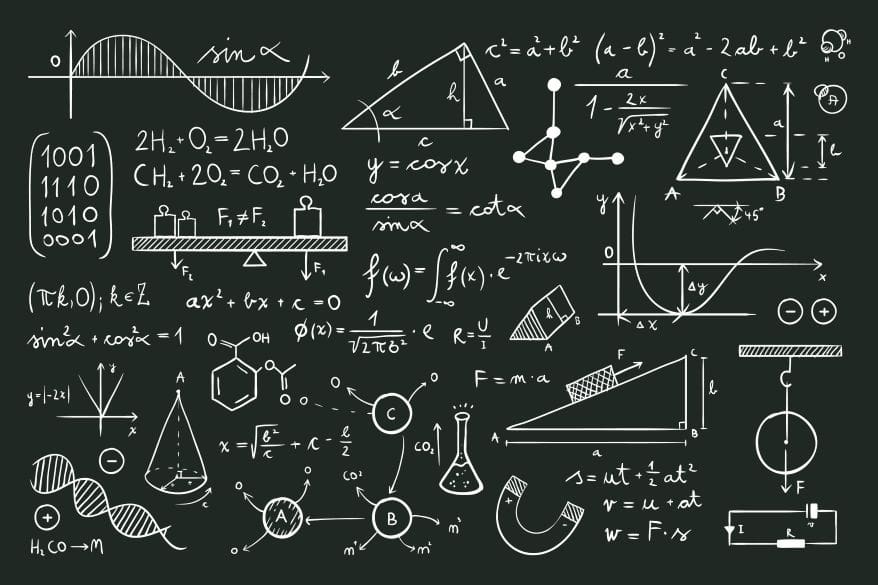
Google AI tools, are advancing mathematical research. They now help solve complex proofs faster than ever before.
Surprising Power: Google AI Tools Transform Mathematical Research
Estimated reading time: 3 minutes
AI Reshapes Mathematical Discovery
Recent studies show that Google AI tools are surprisingly effective at assisting mathematical research. Researchers across major institutions now use Google DeepMind systems to test complex proofs. The integration of AI into pure mathematics was once unthinkable, yet the results prove otherwise.
AI models trained by Google adapt fast to abstract problems. These systems go beyond pattern recognition. They can suggest relevant conjectures, optimize proofs, and even predict solutions to open problems. As a result, mathematicians gain deeper insight in less time.
How DeepMind’s AI Works in Mathematics
DeepMind’s mathematical research tools rely on reinforcement learning and graph neural networks. These components allow the system to analyze algebraic structures and geometric relationships. Instead of brute-force searching, it learns from patterns in successful theorems. This process reduces human trial and error.
The system uses symbolic reasoning alongside neural computation. Hence, it can balance creativity with logic. For instance, when analyzing knot theory and representation theory, DeepMind’s algorithms discovered entirely new structural patterns that previously went unnoticed. These models continuously evolve as they interact with mathematicians’ feedback.
The Data Behind the Progress in Google AI Mathematical Research
Mathematical datasets differ from text or image data. They require high logical consistency. Therefore, Google trained models using curated theorem libraries like Lean and HOL Light. Each dataset captures abstract reasoning, not visual correlations. This structured input allows AI to treat each mathematical operation as a decision node.
Such controlled environments enhance reliability. They also make results reproducible across mathematical fields. While standard AI models can misinterpret symbolic notations, Google’s refined data structuring nearly eliminates that issue.
Collaboration Between AI and Mathematicians
The relationship between machine and researcher is symbiotic. Mathematicians frame the problem. AI tools expand possible solutions beyond human prediction. Thus, collaboration significantly accelerates complex computations. Over time, these systems will redefine how we establish proofs.
Dr. Lisa Kaltenegger, a researcher involved in the trials, stated,
“AI does not replace mathematicians. It extends their reach into unexplored territories.”
This synergy proves how machine intelligence can complement human abstract thought. The accuracy of these models improves as they engage with more complex theories. Consequently, results are not only faster but also more precise.
Why Google’s Tools Stand Out
Several companies develop mathematical AI. Yet Google’s advantage lies in scalability. Its Tensor Processing Units (TPUs) allow high-speed symbolic calculations. The custom hardware platforms reduce computation time and energy use. In addition, integration with TensorFlow supports broader data handling and training ease.
Developers can now fine-tune models using open APIs within the Google ecosystem. This accessibility enables researchers worldwide to use advanced AI tools, even without vast infrastructure.
Future of Mathematical Research with Google AI Mathematical Research
The success of Google AI mathematical research tools signals a turning point for theoretical mathematics. These systems could soon help identify unsolved conjectures or visualize new symmetries in algebraic equations. Moreover, their efficiency saves thousands of research hours annually.
As AI learns to interpret symbolic logic with increasing precision, mathematics may transform into a more experimental yet data-driven science. Future breakthroughs may arise not just from human intuition but through collaborative reasoning between human intellect and artificial insight.
Additionally, to stay updated with the latest developments in STEM research, visit ENTECH Online. Basically, this is our digital magazine for science, technology, engineering, and mathematics. Also, at ENTECH Online, you’ll find a wealth of information.
Reference
- Georgiev, B., Gómez-Serrano, J., Tao, T., & Wagner, A. Z. (2025, November ). Mathematical exploration and discovery at scale. arXiv.org. https://arxiv.org/abs/2511.02864
- Author
- Latest Posts

Ashwini Kshirsagar holds a graduate degree in Chemistry and a postgraduate degree in Environmental Science from Shivaji University, Kolhapur. With a strong foundation in scientific principles and a creative flair, she blends her expertise in environmental science with skills in technical writing, graphic design, and video editing. Proficient in Adobe software, Ashwini excels at transforming complex scientific concepts into clear, engaging, and visually compelling content. Her unique ability to merge science and storytelling allows her to create impactful communication materials that are both informative and accessible to a wide audience.