Spread of Legionella Bacteria
This Everyday Water Mist Can Spread Legionella Bacteria Fast
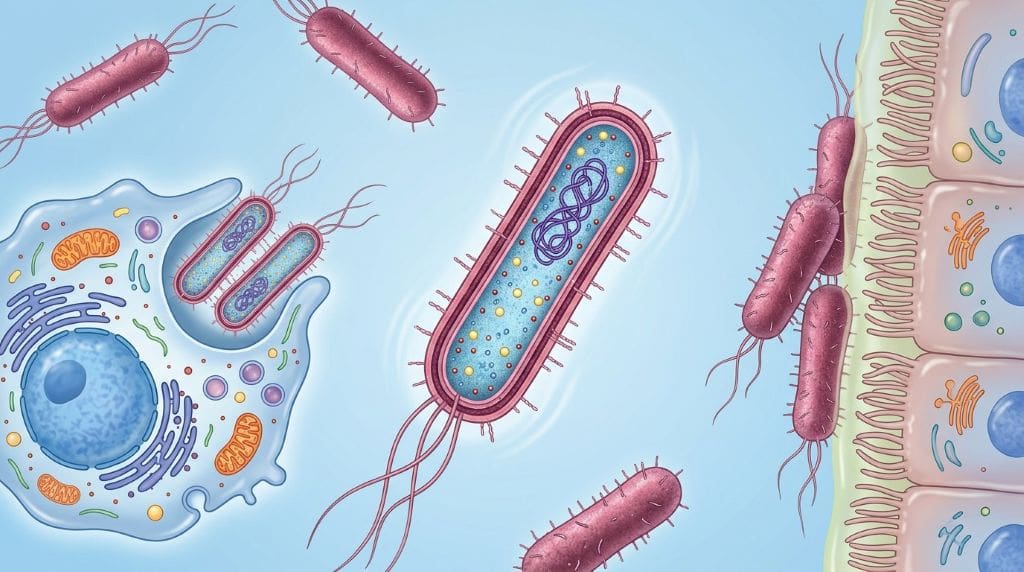
Legionella bacteria sound like a hospital problem. Yet they grow in everyday water systems. Hot tubs, showers, and cooling towers can spread mist. That mist can enter lungs during normal breathing. As a result, people may develop Legionnaires’ disease. The infection can cause pneumonia and severe illness. Older adults, smokers, and immune-weakened patients face higher risk. The CDC tracks cases and prevention guidance. CDC reports this risk (CDC, n.d.). At any rate, prevention starts with safer water care.
Key Takeaway of Legionella Bacteria
- Legionella bacteria grow in warm, stagnant water.
- People get sick after breathing contaminated water droplets.
- Legionnaires’ disease can cause serious pneumonia.
- Good building maintenance lowers risk.
- Early diagnosis with antibiotics is very effective.
- High-risk people should avoid unsafe hot tubs.
What is Legionella Bacteria and Why is it Dangerous?
Legionella bacteria live naturally in freshwater. Lakes and rivers are their original home. The problem starts when they enter engineered water systems. Hot water tanks, cooling towers, and large plumbing systems are ideal. According to the CDC, these systems provide a perfect environment.
After that, the bacteria multiply. They reach dangerous levels. You do not drink the infection. You inhale it. Tiny water droplets carry the bacteria into your lungs. This can cause Pontiac fever or Legionnaires’ disease. Pontiac fever feels like the flu. Legionnaires’ disease is a serious pneumonia. At this point, it becomes a medical emergency.
Also Read: Cyclosporiasis Disease
The Primary Breeding Grounds
To list the most common sources, we start with large buildings. Think of hotels, hospitals, and nursing homes. At the present time, these are the top risk areas.
- Showerheads and faucet aerators: These create mist. The mist is the delivery system.
- Hot tubs and whirlpool baths: The warm water is a perfect bath for bacteria.
- Cooling towers: These release fine mist into the air. The mist can spread over a wide area.
- Decorative fountains: Recirculating water creates a nice aerosol.
To illustrate, a single infected showerhead can expose hundreds of people. The stagnant water inside the pipes is the root cause. What’s more, the bacteria can form a biofilm. This slimy layer protects them from disinfectants. Provided that you clean only the water, the biofilm remains. The infection risk stays high.
Also Read: Vagus Nerve Stimulation
How Does the Legionella Bacteria Infection Actually Happen?
Legionella bacteria are not contagious. You cannot catch it from another person. So far, this is the most important fact to remember. The infection occurs only through respiration. You breathe in contaminated water vapor.
Prior to infection, the bacteria must reach your lungs. The body’s natural defenses sometimes fail. As a result, the bacteria infect the macrophages in your lungs. Macrophages are cells meant to eat germs. Legionella tricks them. It reproduces inside these cells. The lung tissue becomes inflamed.
Risk Factors for Severe Disease
Most healthy people do not get sick. The immune system stops the bacteria. With attention to specific groups, the danger is real. To enumerate these groups:
- Older adults: People over 50 are at greater risk.
- Smokers: Lung damage makes infection easier.
- People with weak immune systems: This includes cancer patients or transplant recipients.
- Those with chronic lung disease: COPD or asthma are major risk factors.
All in all, the CDC reports that about 1 in 10 people with Legionnaires’ disease die. To sum up, hospitals must be very careful. At this instant, we have strong antibiotics. Early detection saves lives.
How Can You Prevent Legionella Bacteria Growth at Home?
Legionella bacteria need warmth. They grow best between 77°F and 108°F. As a matter of fact, this is the exact temperature of many home heaters. Prevention is about temperature control. First, set your water heater high. The CDC recommends a minimum of 140°F (60°C) for storage tanks. After that, you need safety. Mix the hot water at the tap. Use a thermostatic mixing valve. This prevents scalding but kills bacteria. To explain, the hot water kills the germs. The mixing valve makes it safe for your skin.
Prevention of Legionella Bacteria Infection At Home
- Flush your taps: Run all taps for two minutes weekly. Do this for every faucet in your home.
- Clean showerheads: Remove and soak them in vinegar. Do this every three month.
- Drain hot tubs: Follow the manufacturer’s cleaning schedule.
- Remove dead ends: Pipes that end without a tap are dangerous. They hold stagnant water.
While this may be true, some people skip these steps. So as to prevent a big problem, make this a habit. At length, the effort is small compared to a hospital visit. Another key point is that rental properties need attention. Landlords must maintain water systems properly. To put it differently, if you rent, ask your landlord about water temperature logs.
What Should You Do if You Suspect Exposure of Legionella Bacteria Infection
Legionella bacteria infection has a long incubation period. Analogous to other pneumonias, symptoms appear 2 to 10 days after exposure. Look for fever, cough, muscle aches, and shortness of breath. Headaches and confusion are also common in older adults.
At the same time, remember that most coughs are not Legionnaires’ disease. Balanced against a cold, this disease gets worse quickly. To put it another way, if you have severe pneumonia after being in a hotel or hospital, tell your doctor. Take the case of a recent outbreak. In that case, asking about water exposure can lead to a faster diagnosis.
The Urine Antigen Test
The diagnosis is simple. At first, doctors use a urine antigen test. It looks for the Legionella bacteria cell wall. All of a sudden, you have an answer in 15 minutes. To the end that treatment starts early, this test is vital. By and large, patients respond well to fluoroquinolone or macrolide antibiotics.
With this intention, always act fast. After all, a delay of 24 hours increases the risk of death. In conclusion, this bacteria is a serious threat. At least now you know the facts.
Conclusion: Stay Vigilant and Stay Safe from Legionella Bacteria
Legionella bacteria is not going away. Summarizing the main points, water management is key. All things considered, you can control your environment. So long as you maintain hot water temperatures and clean fixtures, you lower the risk. To rephrase it, a small routine change prevents a big health crisis.
For the most part, this issue is about awareness. So far, the CDC has clear guidelines. In light of this information, test your water system. To that end, share this article with your building manager. All in all of what we have discussed, the power to prevent Legionnaires’ disease is in your hands.
Frequently Asked Questions On Legionella Bacteria
Is Legionella bacteria in all water?
Yes, it is natural in freshwater. However, it becomes dangerous only when it multiplies in warm, engineered made systems.
Can I get Legionnaires’ disease from drinking water?
No. The infection comes from inhaling aerosolized water. Drinking is safe provided the water is free from other contaminants.
How can I test my home for Legionella bacteria?
Professional testing is available. You can purchase a home test kit. You then send a water sample to a lab.
Does boiling water kill Legionella bacteria?
Yes, boiling kills it instantly. However, the real danger is in the mist (showers, hot tubs). Boiling your drinking water does not prevent inhalation.
Is the bacteria in my air conditioner?
No. Standard home air conditioners do not use water mist. Cooling towers in large buildings are the risk. Your window unit is safe.
References:
- CDC. Legionella. https://www.cdc.gov/legionella/
- Fields BS, Benson RF, Besser RE. Legionella and Legionnaires’ disease: 25 years of investigation. Clin Microbiol Rev. 2002 Jul;15(3):506-26. doi: 10.1128/CMR.15.3.506-526.2002. PMID: 12097254; PMCID: PMC118082.
- Author
- Latest Posts

I am Bhagyashree Khaire, a Bachelor of Pharmacy graduate with a strong curiosity for science, biology, and the way research helps improve healthcare. My background in pharmacy has given me a foundation in pharmaceutical concepts, biological processes, and drug-related knowledge, which motivates me to explore scientific topics and share them through writing.I enjoy reading, researching, and writing about topics related to biology, pharmacology, healthcare, and pharmaceutical sciences. I believe that scientific information should not only be accurate but also easy to understand, and I aim to present complex concepts in a simple and meaningful way for readers.
During my research work, I conducted secondary market research on Rutin and its pharmacological activities, where I explored available scientific literature, biological effects, therapeutic potential, and research insights related to this natural flavonoid compound. This experience helped me strengthen my skills in scientific research, literature analysis, and communicating technical information effectively.
I am passionate about building my journey in science correspondence and scientific writing by creating informative, research-based articles that connect scientific knowledge with people. I am interested in opportunities related to healthcare content, pharmaceutical writing, research communication, and science-based storytelling.
With a continuous learning mindset and a passion for science, I aim to contribute valuable insights through my writing and grow as a science communicator.