A robotic arm can repeat the same movement thousands of times, but what happens when its mechanical parts are not manufactured accurately? Even sophisticated software cannot completely compensate for loose joints, poorly aligned bearings, or structural components that bend under pressure. These physical limitations can influence how reliably a robot performs its tasks.
As robotics expands into manufacturing, healthcare, logistics, and research, engineers are paying closer attention to the components behind every movement. Sensors and artificial intelligence receive much of the attention, yet mechanical design and manufacturing precision remain equally important to dependable robotic systems.
The Hidden Engineering Behind Robotic Movement
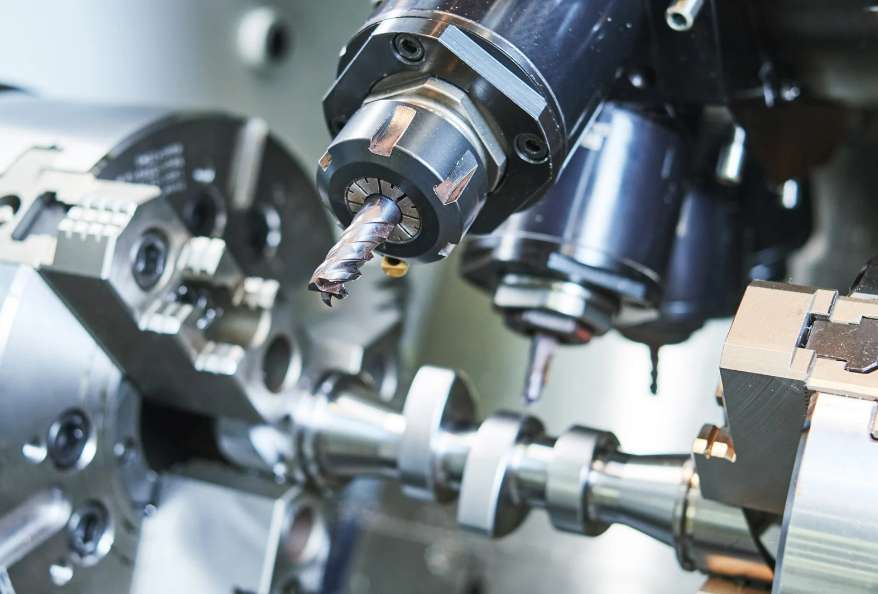
Fig. 1: Precision CNC Metal Machining
Robots rely on carefully coordinated mechanical assemblies. Motors generate motion, gearboxes control speed and torque, and bearings support rotating joints. Structural parts hold these systems together while maintaining their intended alignment.
Consider an industrial robotic arm handling electronic components. Its controller may calculate the correct position, but the physical mechanism must reproduce that movement. Excessive clearance in a joint or an incorrectly positioned mounting surface can contribute to errors at the end effector.
This is why robotic performance depends on more than programming. Mechanical stiffness, assembly accuracy, and component quality all influence how consistently a robot can move.
How Precision Manufacturing Supports Robotics
Robotic components often contain features that must fit together accurately. Bearing seats, threaded mounting holes, motor housings, and joint interfaces require appropriate dimensional control to support smooth operation.
Manufacturing methods such as CNC milling and turning help produce these features in metals and engineering plastics. Companies specializing in precision manufacturing, including YUANYI, work with components for robotics and automated equipment.
The important consideration is how a component functions within the complete assembly. A tolerance that is suitable for an external cover may not be appropriate for a bearing housing. Engineers therefore need to specify critical dimensions according to their actual mechanical purpose.
Why Robotic Parts Are Becoming More Complex
Modern robots are expected to perform increasingly varied tasks. Collaborative robots must operate around people, mobile robots need compact and durable structures, and specialized robotic devices often require components designed around limited installation space.
These requirements can result in unusual geometries, angled mounting features, internal pockets, and lightweight structural elements. Manufacturing such parts using conventional machining methods may involve several setups, particularly when important features appear on different surfaces.
For certain complex components, 5 Axis CNC Machining Services can improve tool access and reduce repeated workpiece repositioning. This approach is particularly useful for intricate robotic housings, arm segments, and mounting structures where multiple features must maintain accurate geometric relationships.
However, not every robotic component requires five-axis machining. Simpler parts may be manufactured more economically with standard three-axis milling or CNC turning.
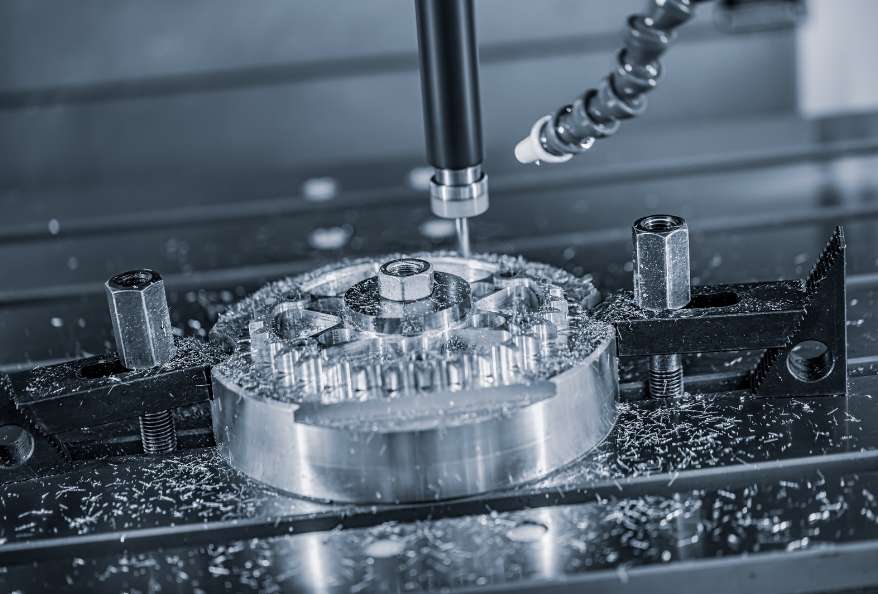
Fig. 2: Precision Manufacturing – Milling Machine
Precision Manufacturing: Balancing Weight, Strength, and Accuracy
Weight is an important consideration in robotic design, especially for moving arms and mobile platforms. Heavy components increase inertia and can place additional demands on motors and supporting structures.
Aluminum alloys are frequently selected for robotic frames and housings because they offer relatively low weight and useful mechanical properties. Steel may be preferred for components requiring greater stiffness or wear resistance, while certain engineering plastics can serve in covers, guides, and lightweight mechanisms.
Selecting a material involves more than comparing strength. Engineers must also consider vibration, thermal expansion, fatigue, environmental conditions, and manufacturing requirements. A lighter component provides little benefit if it cannot maintain its intended dimensions during operation.
Robotic development rarely moves directly from a computer model to a finished commercial system. Physical prototypes help engineers investigate problems that may not be obvious during digital design.
For example, an initial robotic gripper may reveal that its mounting bracket flexes when lifting an object. Engineers can then change the bracket geometry, select another material, or adjust the fastening arrangement before producing additional units.
Prototype testing can also reveal:
Unexpected movement or looseness in assembled joints.
Interference between neighboring mechanical components.
Excessive vibration during rapid acceleration.
Difficulties accessing fasteners during maintenance.
Finding these issues early helps reduce redesign costs and improves confidence before production quantities increase.
Why Inspection Matters After Machining?
A component may look correct while still containing dimensional differences that affect assembly. Critical holes, mating surfaces, and alignment features must therefore be checked against engineering requirements.
Coordinate measuring machines, micrometers, and other inspection equipment can help verify manufactured dimensions. Functional assembly tests provide additional information about how individual components interact.
Inspection cannot eliminate every possible operating problem, but it helps identify manufacturing discrepancies before parts are installed in larger robotic systems.
Precision Manufacturing for Robotics: Conclusion
The future of robotics depends on progress across software, electronics, materials, and mechanical engineering. Intelligent control systems can make robots more adaptable, but their capabilities still depend on physical components that function as intended.
Precision manufacturing supports that foundation by helping engineers create reliable joints, lightweight structures, and accurately assembled mechanisms. As robotic applications become more demanding, thoughtful component design, suitable manufacturing processes, and careful testing will remain essential to building machines that perform consistently in real-world environments.
Shreyas Kulkarni is a Chartered Electrical Engineer and renewable energy pioneer with over eight years of hands-on experience in the clean energy sector. He is the Co-Founder of UNICUS Energy, a leading provider of solar energy solutions in India, where he drives technical execution, system architecture, and clean tech deployment.
As an author for ENTECH Magazine, Shreyas focuses on making solar technology practical and understandable for students, engineers, and homeowners. His contributions include detailed guides on the inner workings of rooftop solar systems and deep dives into modern hardware advancements, such as lightweight solar panels and flexible photovoltaic materials.
Mayank Bhavasar is a Manufacturing Engineering and Industrial Management student at COEP Technological University, Pune, with a strong passion for robotics, modern manufacturing technology, and creative problem-solving. An academically accomplished engineer, Mayank achieved top national percentile scores and brings practical project experience from his work with organizations like the Unnati Foundation.
His technical interests lie at the intersection of industrial automation, smart manufacturing, robotic systems, and process optimization. Mayank combines his engineering coursework with hands-on technical skills and leadership experience, actively engaging in collaborative innovation and technology-driven social impact initiatives.
As an author for ENTECH Magazine, Mayank shares fresh, analytical perspectives on manufacturing automation, industrial systems, and robotics, translating complex engineering principles into engaging content for students and tech enthusiasts.