Learn how to align material flow, job identity, loading, and quality inspection in automated CNC tube bending lines to prevent production bottlenecks.
CNC Tube Bending Automation: Keep Material Flow and Job Identity Together
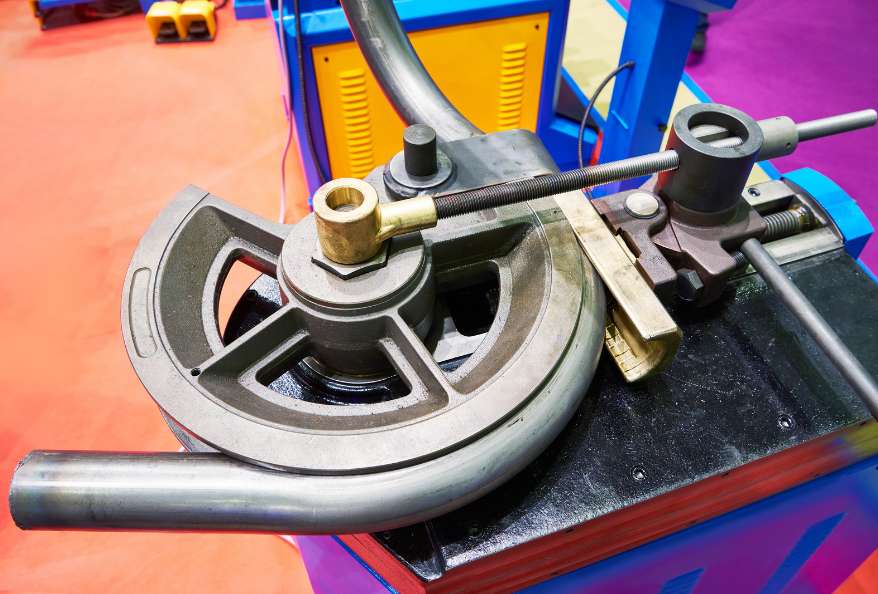
Estimated reading time: 7 minutes
A CNC bender can finish a component while the rest of its proposed production line still has no agreed way to move, inspect or identify it. Material flow and job identity therefore belong in the same engineering discussion when integrating CNC tube bending into automated setups. Loading, unloading and program management need clear boundaries, and springback compensation must remain connected to the approved material and part rather than becoming an unexplained setting carried between jobs.
For a factory handling changing tube designs, the difficult question is what happens between operations. Who confirms that the incoming tube belongs to the active program? Where does a part wait for inspection? What happens when the downstream station cannot accept it? A line proposal should answer these questions before its automatic cycle becomes the centre of the sales presentation.
CNC Tube bending: Draw the handoffs around the bender
Start with the material’s route through the proposed cell. Identify where stock arrives, where it is positioned for bending, how the formed part leaves and where its acceptance status becomes known. Draw these as physical handoffs with responsible owners. A process arrow without a handling method does not establish how the work will happen.
Zhuoran Machinery describes loading, unloading, cutting, transfer, inspection and sorting as activities that can be configured around the production rhythm and factory layout. Its CNC bending guidance also includes evaluation of integration with tube end forming equipment.
Use those categories to frame the discussion rather than assuming they describe the scope of every installation. For each handoff, ask whether the quoted arrangement includes the physical device, the controls connection and the required operator action. Identify where the buyer must provide something. Integration is a project responsibility that needs an owner.
Place inspection on the drawing too. If the proposed material flow takes a bent tube directly to another forming operation, clarify whether the part has already been accepted for that next step or is travelling under a defined pending-inspection status.
Let the downstream task challenge the cycle presentation
A demonstration of uninterrupted bending answers a limited question. For successful CNC tube bending automation, a flexible production line also needs to handle changes in work and interruptions in material flow, including occasions when the next process takes longer than the bending operation or cannot accept a component at all.
Ask the integration team to explain the intended waiting position and restart procedure in those conditions. That discussion should cover part support, identification and acceptance status, as well as the authorised equipment procedure. Do not infer a buffering or recovery capability from an animation that shows only smooth movement between stations.
Unloading deserves its own review. The completed tube may have a different shape and support requirement from the straight blank, so the proposed handling method should be assessed against the actual component, its surface requirements and the space available around the cell. A general label such as automatic handling leaves all of those application questions unanswered.
The useful design decision is where to place the boundary between automatic transfer and a supervised intervention. State that boundary openly. A defined manual action can be planned and trained; an unstated action simply appears later as an unexpected production dependency.
Also Read: How CNC Machining Helps Hardware Startups Scale Production
Preserve the approved process when the job changes
Define who owns the job record. Program management should connect a stored job with its approved drawing, tooling and material condition, with the division between controller functions and factory procedures settled before commissioning so that neither the supplier nor the production team assumes the other system contains information that nobody has actually recorded.
Zhuoran Machinery states that program storage, access control and production records depend on the selected control system. It also links springback compensation with material, radius, tooling and actual sample results, making the approved process context relevant to the saved settings.
For a proposed line using Zhuoran Machinery equipment, request a demonstration of the chosen controller’s program management functions with the intended changeover procedure. Confirm what staff can retrieve, what they must check separately and who is authorized to release a changed program.
Keep loading instructions beside the job identity. Changing a program while leaving a previous tube specification at the loading point creates a mismatch that software naming alone cannot resolve. Before restarting after a changeover, the responsible team should be able to show that the tube, tooling, program and inspection requirement all refer to the same approved job.
Keep forming variation inside the acceptance plan
The Fabricator’s CNC tube bending explanation connects the result with material, tooling, lubrication and the machine. It describes wall deformation and springback, including changes in the released geometry that make the actual tube and forming conditions relevant to acceptance.
Automatic transfer does not remove that variation. The inspection plan should define the drawing features to be checked and the handling of parts awaiting a decision, rather than assuming that an uninterrupted cycle proves an acceptable component. Fast movement of unclassified output only moves the uncertainty downstream.
Springback compensation belongs within this controlled process. Ask how an approved adjustment becomes associated with the relevant job, who verifies its result and what causes the next material batch to receive renewed review. If a changed setting is kept only in an operator’s memory, a later repeat order has already lost part of its manufacturing history.
Separate the source of a quality decision from the transfer action that follows it. The proposed sorting system needs a defined basis for acceptance, while any automated inspection function needs confirmation of the features it actually checks. An unchecked surface requirement remains unchecked even when the part reaches the accepted-output location.
Also Read: 5 Educational Paths to Enter Tungsten Carbide Manufacturing: Your Guide to a High-Demand Career
Rehearse the exception paths before releasing the cell
Prepare an integration acceptance checklist around events that interrupt ordinary flow. Review it with production, quality and the equipment supplier, then use the supplier’s authorized test and safety procedures to establish how the selected arrangement behaves in CNC tube bending automation environment.
- Identify the active drawing, program and incoming tube before loading begins.
- Check how the line handles a downstream station that cannot receive another part.
- Confirm where a component waits while its inspection result is unresolved.
- Record the intended route for rejected parts and prevent confusion with accepted output.
- Verify the job identity and material after an interrupted cycle or a changeover.
- Compare the accepted springback compensation settings with the released program record.
- Define which staff own restart approval and which conditions require supplier support.
This checklist is a set of review questions, not a claim that a particular machine already provides each function. Mark absent capabilities plainly and agree a workable process for them. The purpose is to expose the boundary of the proposal while it can still be changed.
Keep unresolved handoffs open. Signing off a whole cell because the bender completed a sample would leave the integration question unanswered. Assign the issue to a named project role and agree what evidence will close it, especially when the missing action falls between the machine supplier’s scope and the buyer’s handling arrangements.
Match automation to the work the factory can actually define
A stable part family and a frequently changing mix create different demands on material presentation, program management and inspection. Explain the intended work honestly during the project review. Future flexibility should be tied to defined applications and confirmed options, rather than treated as an unlimited property of an automated line.
Zhuoran Machinery’s production-flow approach gives buyers a basis for discussing these choices, but the final boundaries remain specific to the proposed installation. Loading, unloading and inspection scope need confirmation against the real factory arrangement, with manual responsibilities visible alongside automatic functions.
The strongest acceptance record follows a tube from identified stock to an identified result. It shows which job was run, which forming conditions were approved, what was inspected and where the part went next. When those connections survive a stop or a changeover, the line is easier to manage than a collection of automatic movements whose responsibilities end at the machine door.
Reviewed by Dr. Satish Chinchorkar on October 19, 2026Edited by Dinesh Joshi
Note: The article includes external links to third-party services; readers should independently evaluate any referenced platforms before engaging.
- Author
- Latest Posts

Shreyas Kulkarni is a Chartered Electrical Engineer and renewable energy pioneer with over eight years of hands-on experience in the clean energy sector. He is the Co-Founder of UNICUS Energy, a leading provider of solar energy solutions in India, where he drives technical execution, system architecture, and clean tech deployment.
As an author for ENTECH Magazine, Shreyas focuses on making solar technology practical and understandable for students, engineers, and homeowners. His contributions include detailed guides on the inner workings of rooftop solar systems and deep dives into modern hardware advancements, such as lightweight solar panels and flexible photovoltaic materials.