Learn about Concrete Scanning Technology: a game-changer in construction that improves safety and prevents costly mistakes.
5 Ways Concrete Scanning Technology Is Changing Construction
Estimated reading time: 6 minutes
Imagine having X-ray vision that lets you see through solid concrete. That sounds like something from a superhero movie, but it’s real. Especially, concrete scanning technology uses ground penetrating radar (GPR) to create images of what’s hidden inside slabs and structures: rebar, electrical conduits, post-tension cables, and hidden voids. Thus, this technology saves lives on construction sites. Also, it prevents costly mistakes. Indeed, it’s creating a whole new category of STEM careers that most students have never heard of. If you like radar, robots, and real-world problem solving, concrete scanning might be the career path you didn’t know existed.
What Exactly Is Concrete Scanning?
Actually, concrete scanning works a lot like the radar systems airports use to track planes. In fact, high-frequency radio waves go into the concrete. When they hit something different, such as rebar, conduit, or plastic pipe, they bounce back. Particularly, the machine measures how long each wave takes to return and builds a picture of what’s underneath.
Before any crew cuts, drills, or cores into concrete, they need to know what’s inside. In fact, hitting a live electrical line or a post-tension cable can cause serious injury or thousands of dollars in damage. That’s why professional concrete scan services are used on almost every major construction project. Companies like Bloodhound help construction teams map hidden hazards before work begins, turning a dangerous guess into a precise science.
1. It Uses the Same Technology as Airport Radar
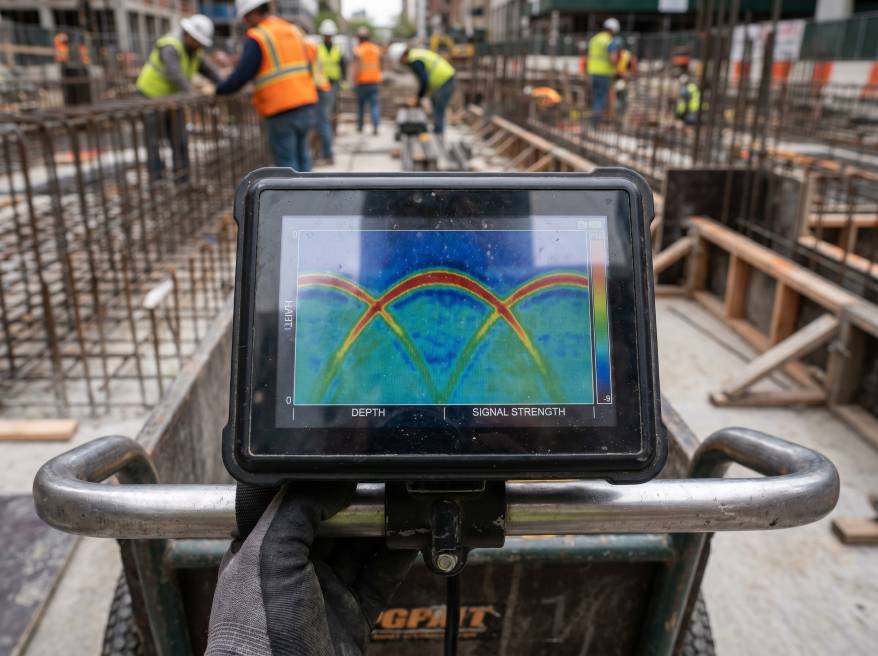
GPR sends radio waves into concrete at frequencies between 1 and 2 gigahertz. Thereafter, these waves travel through the material and reflect off anything with a different density. Basically, the physics of concrete scanning technology is identical to the radar systems that guide airplanes and predict weather.
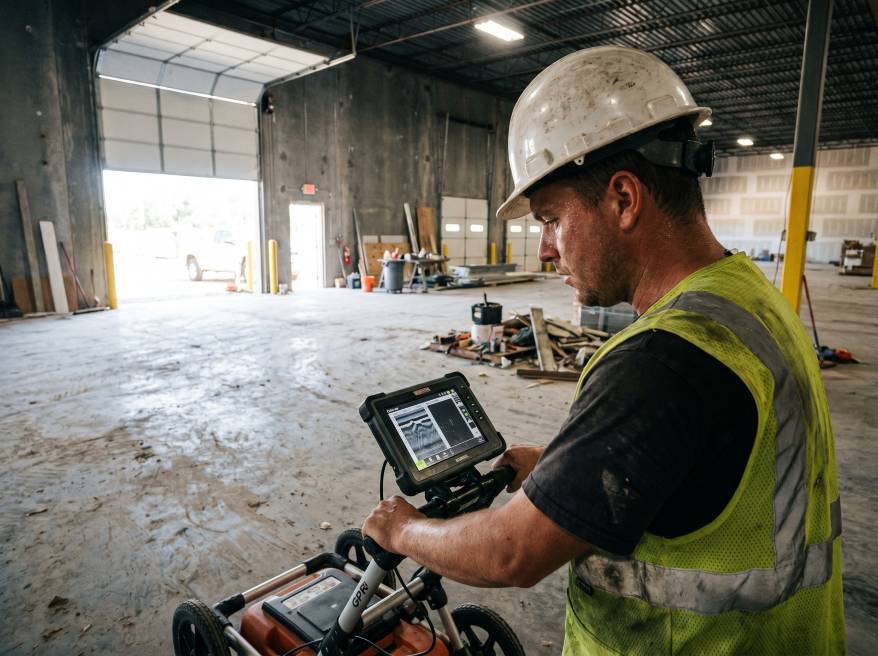
Modern GPR units are portable, battery-powered, and connect to tablets for real-time visualization. Eventually, a technician can scan an entire concrete slab in minutes and instantly see the results on screen. The technology has gotten cheaper and more accessible over the last decade, which means that more construction teams use it as standard practice.
2. AI and Drones Are Making Concrete Scanning Smarter
The field is changing fast. In 2025, researchers published an AI system using an enhanced YOLOv5 deep learning model that can detect defects in concrete from GPR scans in real time. The study, published in Nature Scientific Reports, showed that AI can identify cracks, voids, and corrosion with accuracy suitable for live deployment on drones.
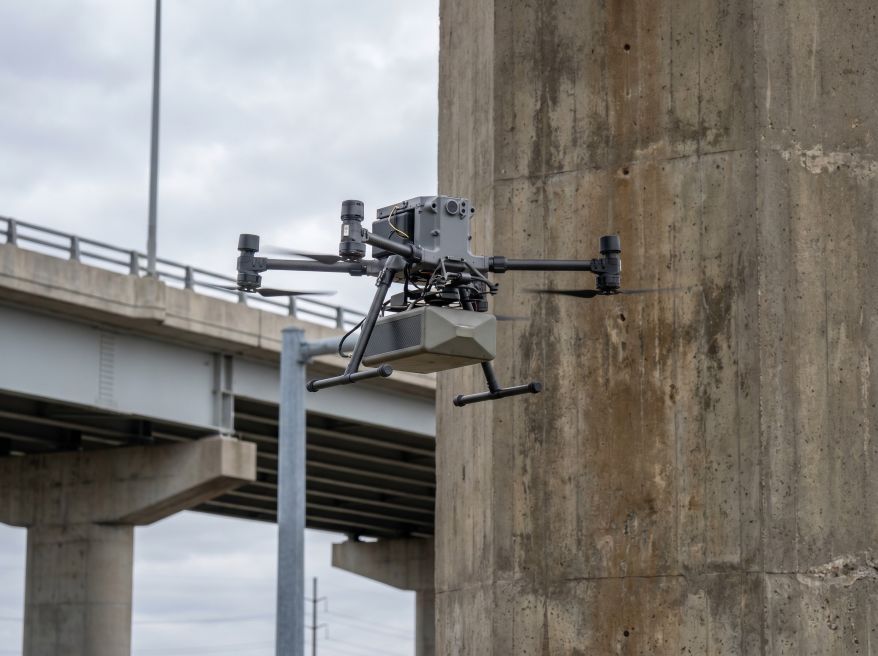
Engineers are now mounting GPR systems on drones to inspect bridge piers, dam walls, and high-rise structures. A 2024 IEEE study compared contact-based versus drone-mounted GPR for vertical structures and found drone systems can reach areas that are dangerous or impossible for human inspectors. This means coding skills and robotics knowledge are becoming just as valuable as construction experience in this field.
3. Concrete Scanning Saves Lives

Every year, construction workers are injured or killed when they accidentally cut into gas lines, electrical conduits, or post-tension cables. Concrete scanning prevents these accidents.
A 2025 study published in PMC/NCBI found that integrated construction monitoring systems combining 3D scanning with IoT sensors can reduce safety incidents by up to 63.8%. The research, available through PMC/NCBI, showed that real-time monitoring of concrete conditions helps teams spot hazards before they become emergencies.
The technology also detects voids, cracks, and corrosion before they cause structural failures. When you scan concrete before a project, you’re protecting the crew and everyone who will use that building for decades.
4. The Field Is Growing Fast
The global non-destructive testing (NDT) and inspection market was valued at approximately $15 billion in 2025. MarketsandMarkets projects it will reach $22.3 billion by 2030, growing at 8.3% annually. The concrete GPR segment alone is expanding at nearly 9.5% per year, according to GII Research, and is forecast to reach $223.5 million by 2032.
Here’s the part that matters for students: nearly 30% of current NDT professionals are over age 55, according to an ASNT Foundation report cited in industry analysis. That means tens of thousands of experienced technicians will retire just as demand for scanning services is climbing. The U.S. Bureau of Labor Statistics estimates over 6,000 NDT technician job openings per year, with total employment expected to exceed 72,000 by 2033. According to the Bureau of Labor Statistics, median pay for construction and building inspectors is over $60,000, while experienced Level II NDT technicians earn around $77,000.
5. You Can Start Without a Four-Year Degree
This is what makes concrete scanning technology stand out from other STEM careers. You don’t need a bachelor’s degree to get started. Most technicians begin with a high school diploma and learn on the job.
Many companies provide full training. You advance through the certification system run by the American Society for Nondestructive Testing (ASNT). Start as a trainee, then move to Level I, Level II, and eventually Level III technician. Each step brings higher pay and more responsibility. Certifications in GPR operation, ACI concrete testing, and OSHA safety training strengthen your resume.
If you’re interested in the broader engineering side, our guide on civil engineering fundamentals covers how structures are designed and built. Our article on what structural engineers do shows how concrete scanning fits into the bigger picture of construction and design.
The ASNT career pathways page lays out exactly what you need for each certification level, and many employers use these credentials as their hiring benchmark.
How to Start Exploring Concrete Scanning Today
You don’t need to wait until graduation. Here are concrete steps you can take right now:
- Look for GPR training programs from companies like Decifer, Proceq, and GSSI. Many have free online courses.
- Join ASNT as a student member. Membership gives you access to industry publications, networking, and job boards.
- Take relevant high school courses: physics, electronics, CAD, and computer science.
- Search for “concrete scanning technician trainee” or “NDT technician trainee” on job sites.
- Talk to your school counselor about career tech programs in construction technology or NDT.
Want to understand the sensor and automation side? Our article on instrumentation and control engineering explains how modern construction tech uses the same principles found in factory automation and robotics.
Conclusion: Concrete Scanning Technology
Concrete scanning is a behind-the-scenes STEM career with real impact. You get to work with radar, AI, and drone technology. You solve puzzles every day because every slab is different, and you never know exactly what you’ll find inside. And you help keep people safe.
That’s a lot for one career to offer. For students who love technology and want a hands-on job that actually matters, this one is worth a closer look.
- Author
- Latest Posts

Charudatta Pathak was a student at St. Aloysius High School in Bhusawal, established in 1874, making it one of India’s oldest convent institutions. He earned his bachelor’s degree in mechanical engineering from SSVPS College of Engineering, Dhule in 1995, demonstrating exceptional academic achievement. Thereafter, he launched his career as a CNC programmer in a toolroom. He has utilized FANUC, Deckel, Maho, and Mikron controllers to operate 2-axis and 3-axis machines for the fabrication of jigs, fixtures, dies, and molds. He commenced his career as an academic in 1996, when he assumed the role of lecturer at SSVPS College of Engineering, Dhule. Additionally, he earned his post-graduate degree in CAD/CAM from L. D. College of Engineering, Ahmedabad, in 2000, and then acquired a Ph.D. from COEP in 2011 while concurrently engaged in teaching. Until 2023, he occupied many academic roles, including lecturer, assistant professor, professor, dean, principal, director, and vice chancellor at both public and private universities throughout India. From 2008 to 2010, he served as the project lead in the CAE department of a European multinational firm. During his 28-year professional tenure, he identified a need for dependable books targeted at students in grades 8 to 12, particularly for nascent career planning. He founded ENTECH Digital Magazine, a free monthly publication available on entechonline.com and magzter.com. Teens with a strong interest in Science, Technology, Engineering, and Mathematics (STEM) who aspire to pursue careers in these fields may find ENTECH Digital Magazine beneficial.