Sewn Fabric Molds Make Material-Saving Concrete Beams
MIT and Boston University used sewn cotton molds to cast leaner concrete beams, with early load tests pointing toward further structural research.

Sewn Fabric Molds Make Material-Saving Concrete Beams

How Interlocking Brick Machines Work and Why They Matter for Sustainable Construction?

5 Ways Concrete Scanning Technology Is Changing Construction

How Material Choices Impact Efficiency on Commercial Construction Projects

Urban Regeneration through Nature-Based Solutions: Methods and Governance
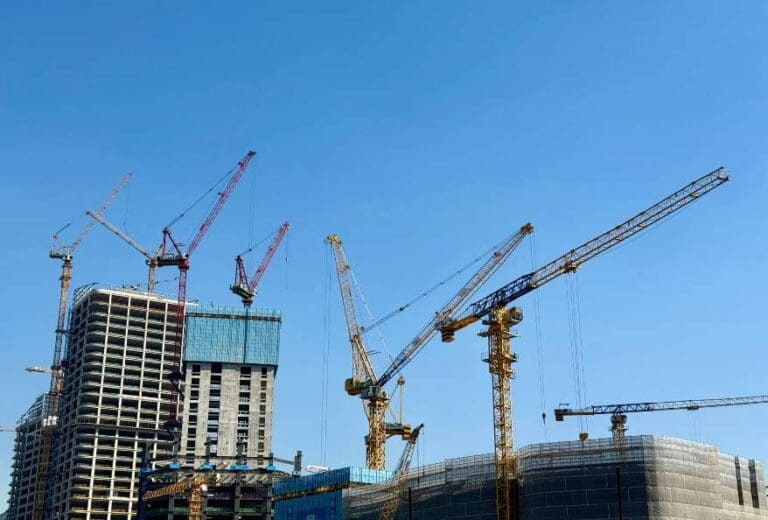
Top Challenges in Construction and How Construction Management Services Solve Them

Constructing Resilient Buildings: A Growing Need Amid Climate Change

Material Matters: Selecting the Perfect Gate for Any Property

Building More Than Rooms: The Student Accommodation Blueprint

The Ultimate Guide to Living Room Furniture Arrangements
Civil Engineering is a branch of engineering that focuses on planning, designing, constructing and maintaining the infrastructure used by society. It covers structures and systems such as buildings, bridges, roads, highways, railways, airports, dams and water supply networks. Civil engineers apply principles of mathematics, physics, materials science and environmental science to develop infrastructure that is safe, functional and durable.
Civil engineering plays an important role in urban development, transportation, environmental management and public infrastructure. At ENTECH STEM Magazine, this category brings together educational articles, technical insights and industry developments related to civil engineering. It helps students, aspiring engineers and technology enthusiasts understand how infrastructure is designed and how engineering contributes to the development of modern communities.
Civil engineering includes several specialised branches. Each focuses on a different aspect of infrastructure development, from studying soil conditions to designing large structures and managing construction projects.
Some important areas of civil engineering include:
Structural engineering focuses on analysing and designing structures that can safely withstand different loads and environmental conditions. These structures include buildings, bridges, towers, dams and industrial facilities.
Structural engineers study forces, stresses, materials and structural behaviour. They use engineering principles and computer-based tools to evaluate designs and ensure that structures meet relevant safety and performance requirements.
Geotechnical engineering studies the behaviour and properties of soil and rock. It plays an important role in determining whether the ground can support a proposed structure.
Engineers investigate soil strength, settlement, groundwater conditions and foundation requirements. Based on these studies, they design foundations and evaluate ground stability for buildings, bridges, roads, tunnels and other infrastructure projects.
Transportation engineering focuses on planning, designing and maintaining systems that move people and goods. It covers roads, highways, railways, airports, ports and urban transportation networks.
Engineers study traffic flow, road geometry, pavement materials, transportation planning and infrastructure safety. Furthermore, modern transportation engineering increasingly uses digital technologies and data analysis to improve mobility and traffic management.
Water resources engineering deals with the planning and management of water systems. It includes the design of dams, canals, reservoirs, irrigation networks, drainage systems and flood management infrastructure.
Engineers study hydrology, fluid mechanics and hydraulic systems to understand how water moves through natural and built environments. These principles help communities manage water supplies, reduce flood risks and develop reliable water infrastructure.
Environmental engineering applies scientific and engineering principles to address environmental challenges. It focuses on water treatment, wastewater management, pollution control, solid waste management and environmental protection.
Civil engineers working in this area develop systems that support cleaner water, improved sanitation and responsible resource management. In addition, environmental considerations increasingly influence the planning and construction of modern infrastructure.
Construction engineering focuses on the practical execution of infrastructure projects. It involves construction methods, materials, equipment, project planning, cost estimation and quality management.
Construction managers and engineers coordinate different project activities to meet technical requirements, budgets and schedules. They also work with architects, contractors, consultants and other engineering professionals.
Civil engineering supports many activities that shape modern communities and economies. Its applications extend beyond building construction and include large-scale public infrastructure and environmental projects.
Some important applications include:
Therefore, civil engineering connects technical knowledge with practical projects that improve infrastructure and quality of life.
Technology continues to transform how engineers plan, design, construct and maintain infrastructure. Digital tools and advanced materials are creating new possibilities for improving construction efficiency and structural performance.
Some important developments include:
Furthermore, drones, digital surveying tools and computer simulations are improving how engineers collect information and evaluate construction projects.
Civil engineering offers several educational pathways for students interested in mathematics, physics, design and infrastructure development. Students can explore diploma programmes, undergraduate engineering degrees and postgraduate specialisations.
Important subjects include engineering mechanics, structural analysis, building materials, surveying, geotechnical engineering, fluid mechanics, environmental engineering and construction management.
Practical learning is equally important. Laboratory experiments, field surveys, engineering projects and internships help students understand how theoretical concepts apply to real infrastructure projects. Students can also develop technical skills through computer-aided design, structural analysis and BIM software.
Career opportunities exist across construction companies, infrastructure developers, engineering consultancies, government departments and research organisations. Depending on their qualifications and interests, graduates may explore roles in structural design, site engineering, geotechnical engineering, transportation planning, construction management, quantity surveying and environmental engineering.
Students can also specialise in areas such as earthquake engineering, urban infrastructure, sustainable construction, water resources and smart infrastructure.
Civil engineering demonstrates how scientific and mathematical principles can shape the physical world. It connects mechanics, materials science, environmental science and technology to develop the infrastructure that communities depend on.
Through this category, ENTECH STEM Magazine brings together educational articles, technical explanations, industry insights and career-related resources on civil engineering. Readers can explore structural design, construction technology, transportation systems, geotechnical engineering, water resources and sustainable infrastructure.
Whether you are a student considering civil engineering as a career, an aspiring engineer interested in construction technologies or a technology enthusiast curious about how infrastructure is developed, explore our collection of civil engineering articles and discover how this field contributes to the future of our built environment.