Explore California wildfire deforestation rates as rising temperatures lead to faster forest loss and slower regrowth every year.
California Wildfire Deforestation Rates Reshape Forest Recovery Trends
Estimated reading time: 6 minutes
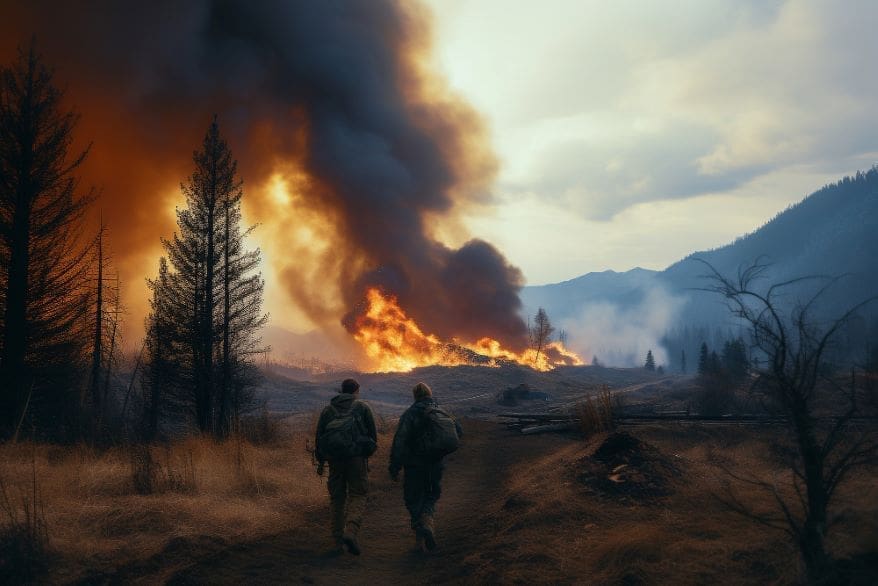
Wildfires now reshape forests at a fast rate. In California, wildfire deforestation rates keep rising each year. Climate shifts bring hotter and drier conditions. As can be seen, forests burn more often and recover less. In this case, repeated fires weaken young trees early. With this in mind, scientists report lasting forest loss trends. To put it another way, forests may not return in some regions. In short, this pattern shows how climate and fire together drive rapid ecosystem change.
TL;DR ‘California Wildfire Deforestation Rates’
The study, highlighted in news April 2026, shows fire-driven forest loss keeps rising each year. In fact, deforestation rates double within a few years in some forest types. To put it another way, forests burn faster than they regrow. In addition, reforestation efforts fail to match these losses. With the result that large areas stay without tree cover for long periods.
Key Takeaways
- Wildfires drive major forest loss globally
- Climate change raises fire frequency and intensity
- Some forests fail to regrow after repeated burns
- Ecosystems shift from forests to grasslands
- Data tools track long-term forest change
California Wildfires Reshaping Forest Deforestation Rates
Forests recover after small fires, yet frequent burns reduce tree growth ability. In California, wildfire deforestation rates show a steady increase in recent years. In general, scientists studied long-term forest patterns with care. They found recovery depends on climate conditions. Hot weather slows regrowth across many regions. In addition, changes in rainfall affect seed survival strongly.

To put it differently, forests need enough time between fires. When fires return too soon, trees remain weak and small. With the result that forest cover declines over time. In fact, this pattern appears clearly in California data. This idea links well with climate science lessons. Students can connect theory with real-world examples easily..
What Did Scientists Discover California Wildfire Deforestation Rates?
The study shows wildfire-driven forest loss is rising fast. In California, wildfire deforestation rates also show a clear increase in recent years. Generally, climate controls how forests respond to fires. In some places, forests turn into grasslands. This shift changes biodiversity and ecosystem balance.
To put it differently, repeated fires remove young trees early. Without young trees, forests cannot rebuild well. With this in mind, scientists used satellite data for clear results. These tools track change across large areas. Students can relate this to geography studies easily.
Why California Wildfire Deforestation Rates Matters for Climate Science
Climate change increases wildfire activity worldwide. In California, wildfire deforestation rates show a strong rise in recent years. In general, higher heat dries forests more quickly. Dry forests catch fire with ease. This creates a cycle of repeated damage.
With this in mind, forests store less carbon over time. This weakens climate control systems across the globe. In addition, forest loss affects soil and water cycles. With the result that ecosystems become less stable. Students studying science can see clear links here.
Real-Life Applications for Students
Students can apply this research in many areas. In California, wildfire deforestation rates offer real data for student projects. In general, environmental studies can track local fire effects. Geography students can map land changes with ease. Data students can explore satellite records for patterns.
Another key point, careers in climate science are growing fast. Experts use GIS and remote sensing tools daily. In addition, these skills match school subjects closely. With this in mind, learning becomes useful for future jobs..
Key Effects of Wildfire-Driven Forest Loss
- Reduced forest cover and biodiversity
- Increased soil erosion after fires
- Shift from forest to grasslands
- Lower carbon storage levels
- Higher risk of future fires
These points show how fires reshape ecosystems in deep ways. In California, wildfire deforestation rates highlight this growing impact clearly. In general, each point links with school science topics in a simple way. Students can build projects using these ideas with ease.
Another key point, these topics support career growth paths. In addition, they connect learning with real-world problems. With this in mind, students gain useful skills for future work.
Tools Scientists Use to Study Forest Change
Scientists use modern tools to track forest trends. In California, wildfire deforestation rates guide many of these studies. In general, satellite images give wide area coverage. Models also predict future forest conditions. These methods help scientists understand changes clearly.
Tools Used to Study Forest Change
| Tool | Purpose |
|---|---|
| Remote sensing | Track forest changes from space |
| Climate models | Predict future fire patterns |
| GIS mapping | Analyze land use changes |
| Ecological datasets | Study long-term forest trends |
| Field surveys | Check data accuracy on ground |
These tools help explain forest change in simple ways. In addition, students can explore them in school projects. Many free tools are available online for practice.
With this in mind, a short note connects tools to real life. Students can use simple software for analysis tasks. Schools now include such tools in learning programs. This makes study more practical and engaging.
Future Prospective: California Wildfire Deforestation Rates
Future prospects show rising risks for forest health and recovery. In California, wildfire deforestation rates rank among the highest in the world and continue to accelerate over time. In general, fire-driven forest loss follows an exponential trend, with no clear sign of slowing.
With this in mind, future forests may struggle to recover after repeated fires. Reforestation efforts already fall far behind the scale of damage. In addition, less than a small share of burned areas gets replanted in recent years. With the result that large forest regions may remain without tree cover for decades.
All things considered, ecosystems may shift toward grasslands in some areas. In fact, climate stress and fire together drive long-term change. Sooner or later, forest recovery may decline further without strong action. In short, the study highlights urgent need for better forest management and climate response.
Frequently Asked Questions
What is wildfire-driven deforestation?
Wildfire-driven deforestation means forest loss caused by repeated fires. In California, wildfire deforestation rates show a steady increase in recent years. In general, forests burn faster than they regrow, which reduces tree cover over time.
Why are wildfires increasing?
Wildfires are increasing due to rising heat and longer dry seasons. In California, wildfire deforestation rates show a clear rise linked to these conditions. In general, dry forests ignite more easily and burn for longer periods.
Can forests recover after fires?
Forests can recover after fires if conditions remain stable. In California, wildfire deforestation rates show recovery is becoming more difficult in recent years. In general, young trees need time and moisture to regrow well.
Reference
Safford, H. D., & Stewart, J. A. E. (2026). Deforestation and reforestation in a world hotspot of fire-driven forest loss: Trends in California conifer forests 1991–2023. Frontiers in Forests and Global Change, 9, 1764379. https://doi.org/10.3389/ffgc.2026.1764379
- Author
- Latest Posts

I completed my Master of Science from the University of Allahabad in 2017 with a strong academic background in life sciences and chemistry. My specialization included Molecular Biology, Microbiology, Genetics, Plant Breeding, Phycology, Paleobotany, and Bioinformatics, along with Organic Chemistry, Inorganic Chemistry, and Physical Chemistry. This multidisciplinary training provided me with a comprehensive understanding of biological systems and analytical scientific approaches.
After completing my postgraduate studies, I gained valuable professional experience in both the education and social development sectors. I worked at A.M. Oxford Public School, where I was actively involved in guiding students toward academic excellence. In this role, I focused on creating an engaging learning environment, encouraging critical thinking, and nurturing students’ curiosity for scientific learning. My experience as an educator strengthened my communication, mentoring, and classroom management skills.
In addition to my teaching experience, I worked with Jeevan Jagriti Foundation, where I contributed to community-based initiatives aimed at improving educational access and awareness among underprivileged sections of society. Through this work, I participated in programs designed to support social development and promote the value of education in marginalized communities.
These professional experiences helped me develop strong interpersonal, leadership, and organizational skills while reinforcing my commitment to education and community service.